Fifty-five years have passed since the inaugural broadcast of "Astro Boy," the nation's first TV anime series. Animation and gaming have since become the nation's leading industries. Key to these productions are voice actors, who give life to animation and game characters.
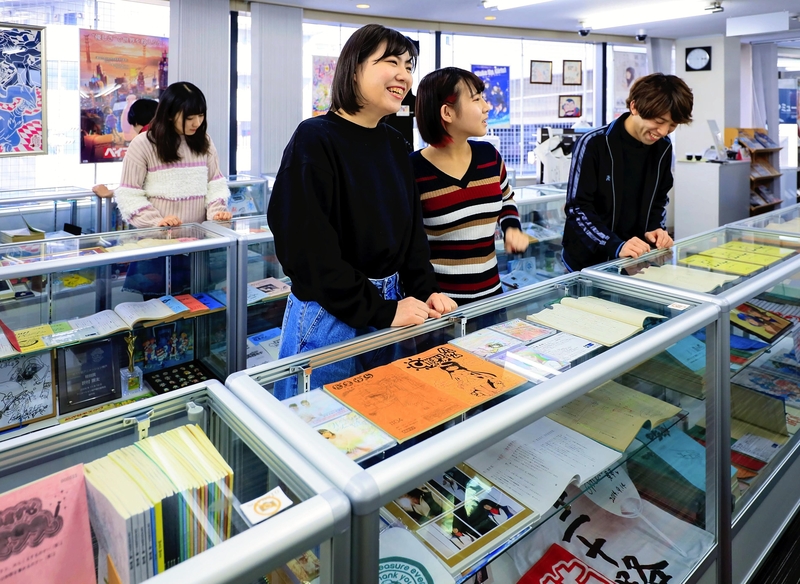
At Seiyuu Museum in Shibuya Ward, Tokyo, visitors can trace the history of voice acting and animation by viewing scripts from anime productions and other related items.
The museum showcases a large array of scripts from popular TV programs, including "Okasan to Issho" (With my mom), "Dragon Ball" and "Pokemon." Voice-over scripts from many foreign films such as "Star Wars," can also be found.
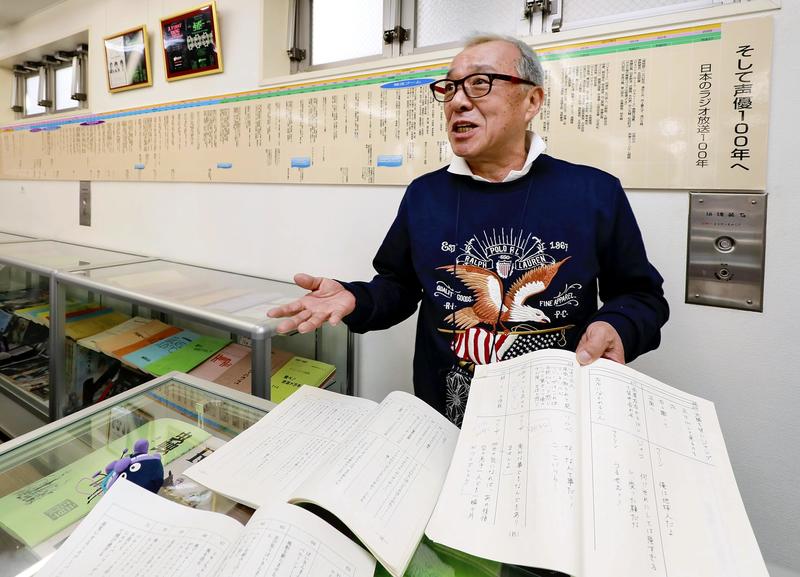
The scripts on display show how voice actors sought to improve their performances by drawing lines at sections where they should take a breath or noting where they should express surprise, among other pointers.
Voice actor Ryusei Nakao, 67, known for his role as Baikinman in "Soreike! Anpanman," said that font sizes on scripts have become larger recently so veterans like him can more easily read the lines. Nakao belongs to the voice actor agency that runs the museum.
A chronological display at the museum charts the history of voice acting in Japan. It says a boom in radio dramas took place from around 1950 to 1953, which included the NHK radio drama "Kimi no Na wa" (Your name). Japanese-dubbed foreign TV series became popular from around 1954 to 1960, and in 1963, "Astro Boy" was broadcast for the first time. As animation programs successively debuted and commercial TV companies began airing foreign films around the time, work opportunities for voice actors increased.
According to Nakao, the term seiyu (voice actor) was coined around 1980. Until then voice-overs were usually performed by theater company actors -- full-time voice actors were a rarity.
However, the number of young people aiming to become voice actors has risen sharply thanks to the popularity of anime and the emergence of idol voice actors.
The number of names of male and female voice actors published in Seiyu Meikan (Voice actor directory), a supplement to the specialized magazine Seiyu Guranpuri (Voice actor grand prix), reached 1,371 this year, a roughly fourfold increase from 2001.
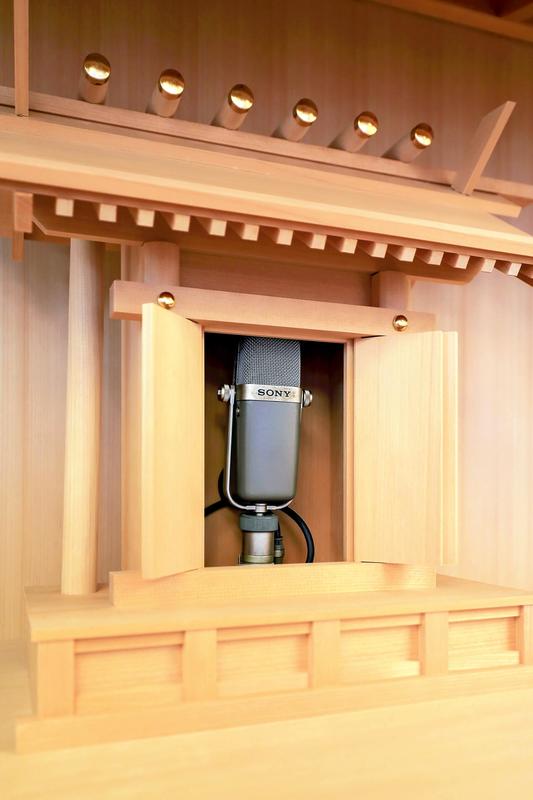
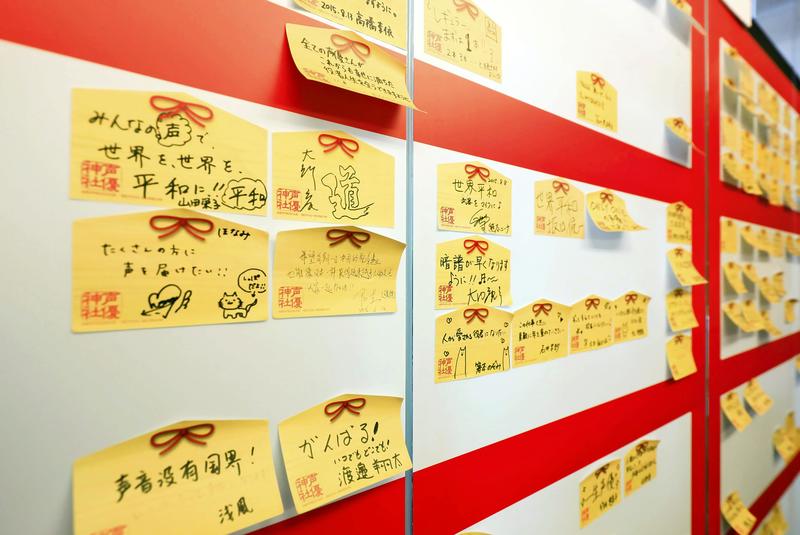
Seiyu Jinja (Voice actor shrine) can be found at the back of the museum's exhibition space, where visitors, including voice actors, hang ema votive wooden tablets. Some are inscribed with the wishes of aspiring voice actors such as "I hope an agency offers me a contract," or "I will definitely become a voice actor."
"It would be great if we can pass down what we have achieved to other generations through this museum," Nakao said.
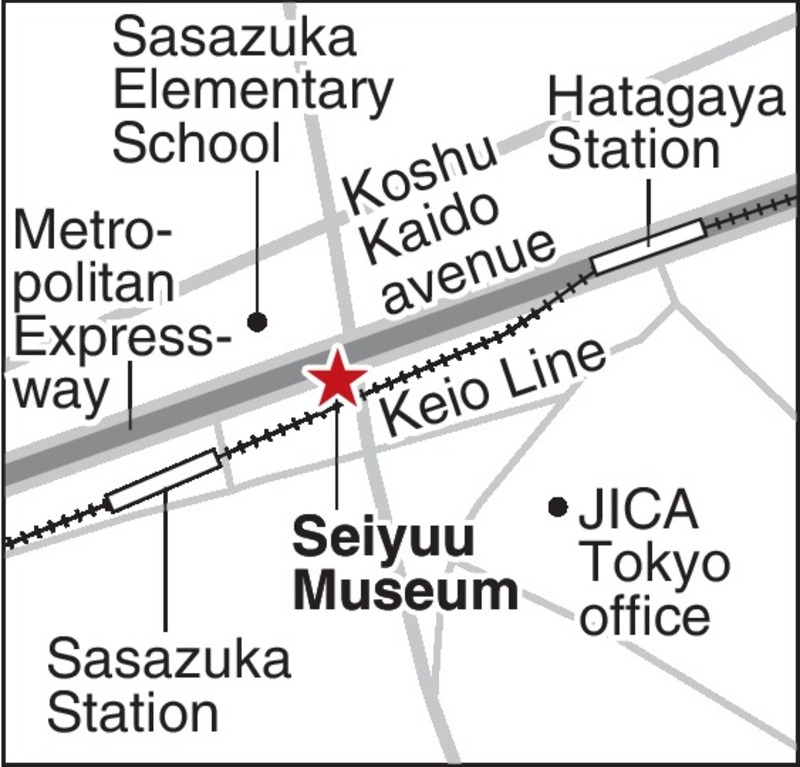
-- Seiyuu Museum
The museum opened in August 2015 and features materials collected by 81produce Co., a major agency that represents about 300 voice actors. Mari Shimizu, one of the actors who has voiced the main character in "Astro Boy," serves as the museum's honorary director. A voice actor training school run by 81produce also occupies the building where the museum is located.
Address: second floor of BOF5 Sasazuka, 1-52-18 Sasazuka, Shibuya Ward, Tokyo
Open: 11 a.m. to 4 p.m. Closed on Sundays, Mondays, and the year-end and New Year's holidays
Admission: Free
Inquiries: (03) 3460-8400
Read more from The Japan News at https://japannews.yomiuri.co.jp/