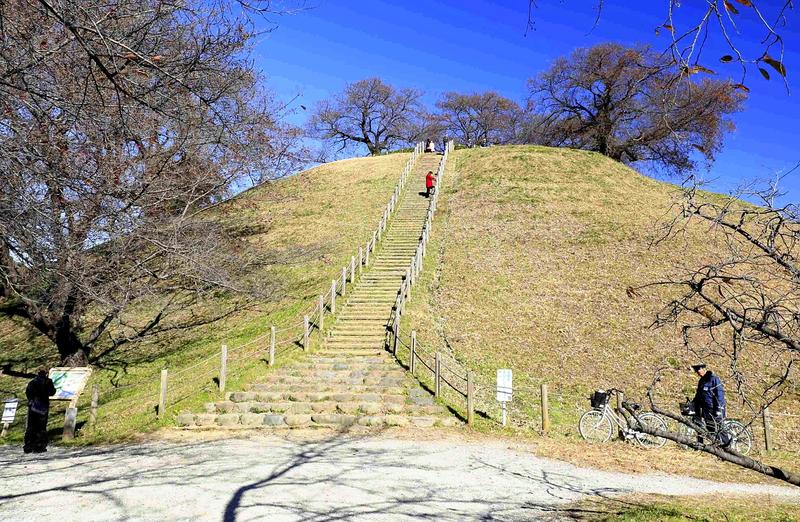
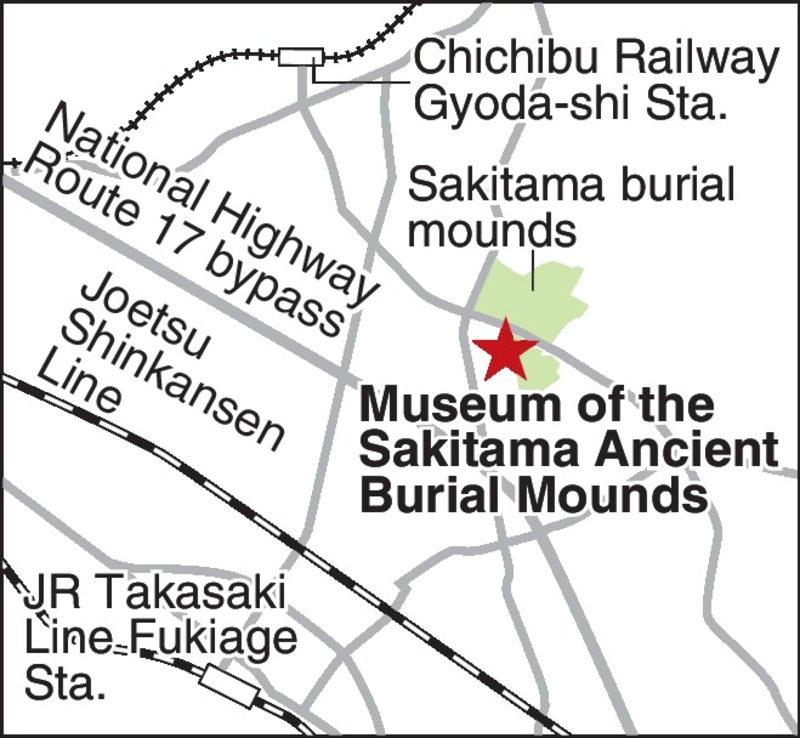
The Saitama Prefectural Museum of the Sakitama Ancient Burial Mounds is located among a group of nine ancient burial mounds, including large-scale examples about 100 meters long, that were built between the latter half of the fifth century and the early seventh century.
The mounds belonged to a powerful regional clan, and are in the center of what used to be called the Sakitama county of Musashi Province up until the Nara period (710-794), at the latest. Saitama Prefecture was named after the county in the early period of the Meiji era (1868-1912), when Japan's han fiefdom system was replaced with the prefectural system.
An enormous number of artifacts were discovered in an archaeological excavation launched by the prefecture in 1967. The Sakitama Museum opened in 1969 to manage and display the artifacts, and it subsequently took its current name in 2006.
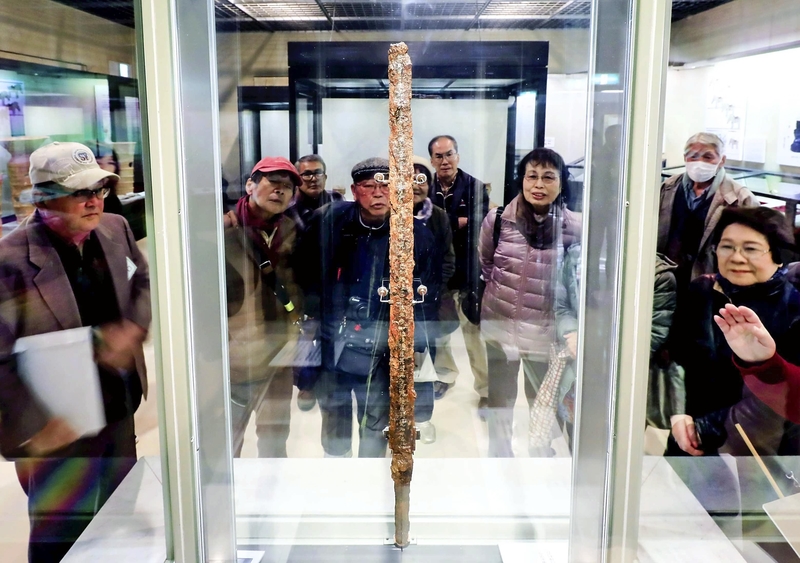
There are 107 national treasures in its collection. One of the highlights is the Kinsakumei Tekken, an iron sword inlaid with gold that was found among the funerary goods in the Inariyama Burial Mound.
The 73.5-centimeter-long sword has an inscription in gold that begins, "Inscribed in the seventh month of the shingai year." The shingai year is thought to be 471, though some believe it to be 531.
An X-ray examination in 1978 of the rust-covered sword revealed gold kanji Chinese characters on both sides. After the rust was removed, 115 characters emerged. This was the largest number of characters found inscribed on an iron sword from the Kofun period (ca 300-ca 710). What's more, the characters remained clearly legible.
The sword -- deemed a once-in-a-century discovery -- is now kept in a special display case to prevent oxidation.
The inscription is thought to describe the life of the person who was buried in the mound. It reads, "I and my ancestors have served as guards for the royal family for generations. I serve the great King Wakatakeru and have contributed to his rule over the whole land."
King Wakatakeru is predominantly thought to be Emperor Yuryaku. The inscription shows how the Yamato court -- Japan's first unified state -- ruled over leading clans in the Kanto region.
At the museum, visitors were heard saying in amazement, "It's unbelievable that the gold characters remain so clear."
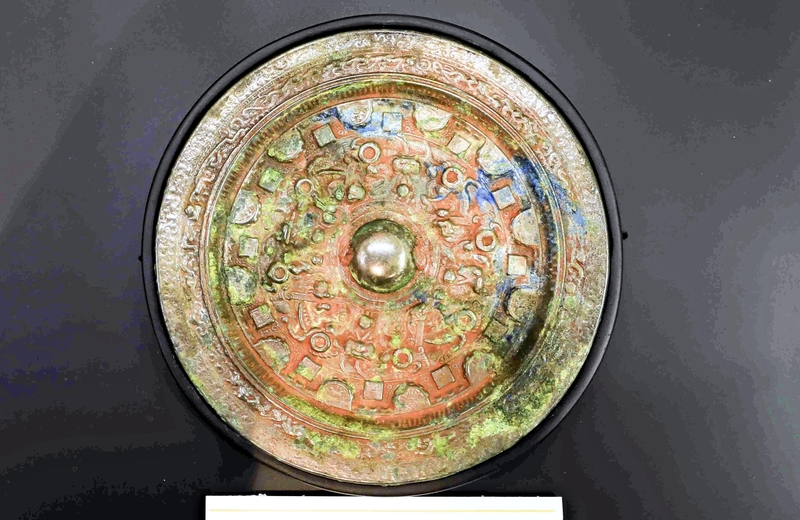
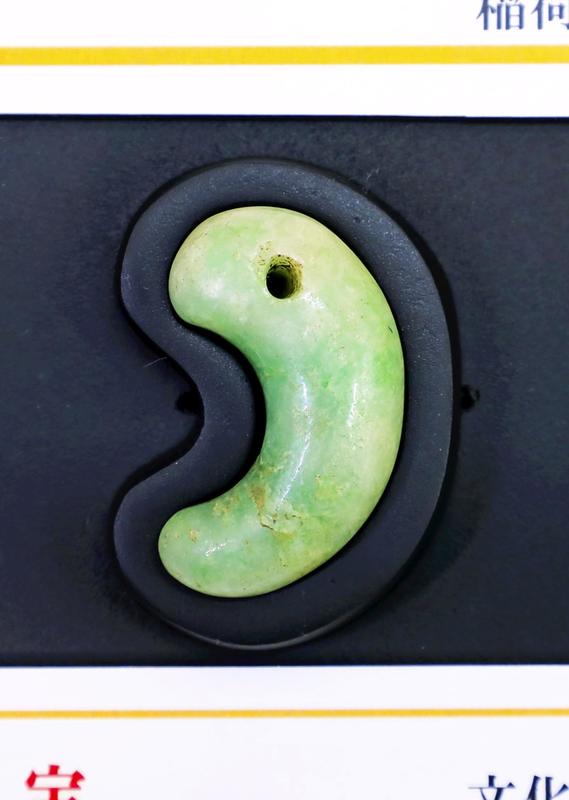
Other national treasures on display include a mirror and a magatama comma-shaped bead.
A museum staff member said: "The magatama may have been made out of jade from the Sea of Japan coast. There might have been some kind of exchange" between the regions.
Museum director Yoshinori Seki, 59, said, "I want visitors to feel the romance of a hidden ancient world via the many national treasures that slumbered in the burial mounds."
-- The Saitama Prefectural Museum of the Sakitama Ancient Burial Mounds
A special exhibition running until Feb. 18 features a reproduction of the Kinsakumei Tekken gold-inlaid iron sword that was made in 2013 by contemporary masters. The reproduction is displayed next to the original, allowing visitors to appreciate the skill of the craftsmen who lived 1,500 years ago.
Address: 4834 Sakitama, Gyoda, Saitama Prefecture
Opening hours: 9 a.m. to 4:30 p.m. (until 5 p.m. in July and August). Closed Mondays and around the New Year season
Admission: 200 yen (100 yen for students of high school age and up, free for elementary and junior high school students)
Inquiries: (048) 559-1111
Read more from The Japan News at https://japannews.yomiuri.co.jp/