KAWASAKI -- The nation's road development went into overdrive after World War II, with the nation's first expressway, the Meishin Expressway's 71-kilometer stretch connecting Ritto, Shiga Prefecture, and Amagasaki, Hyogo Prefecture, opening in July 1963. The complete expressway opened in 1965.
Four years later, the Tomei Expressway also fully opened, halving the travel time between Tokyo and Osaka from the dozen hours it had taken on regular national highways. This infrastructure led to a significant shift in logistics between the nation's two big cities and the development of areas along the way.
However, traffic violations such as sightseers parking at the edge of the road or driving in the wrong direction occurred one after another when the Meishin Expressway opened, causing a series of accidents.
As of April 2016, the total length of expressways in Japan was about 9,000 kilometers. Central Nippon Expressway Co. (NEXCO Central) has jurisdiction over about 2,000 kilometers of that length, including the Tomei and Chuo expressways.
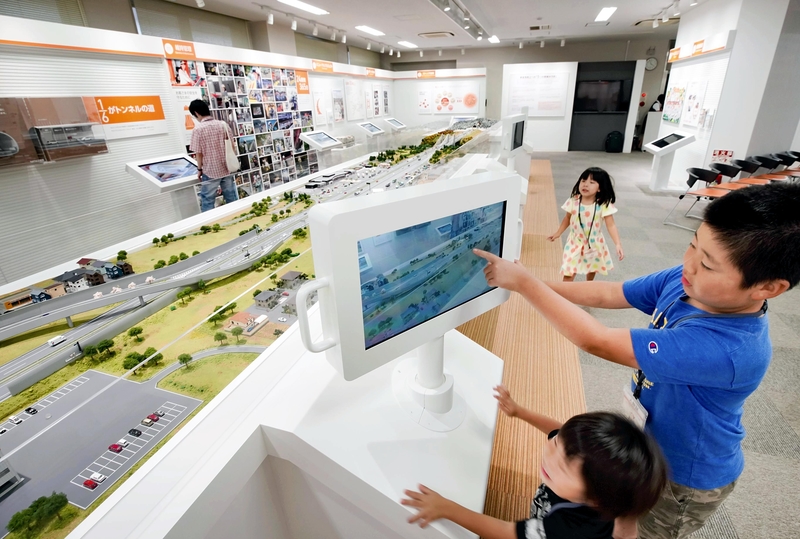
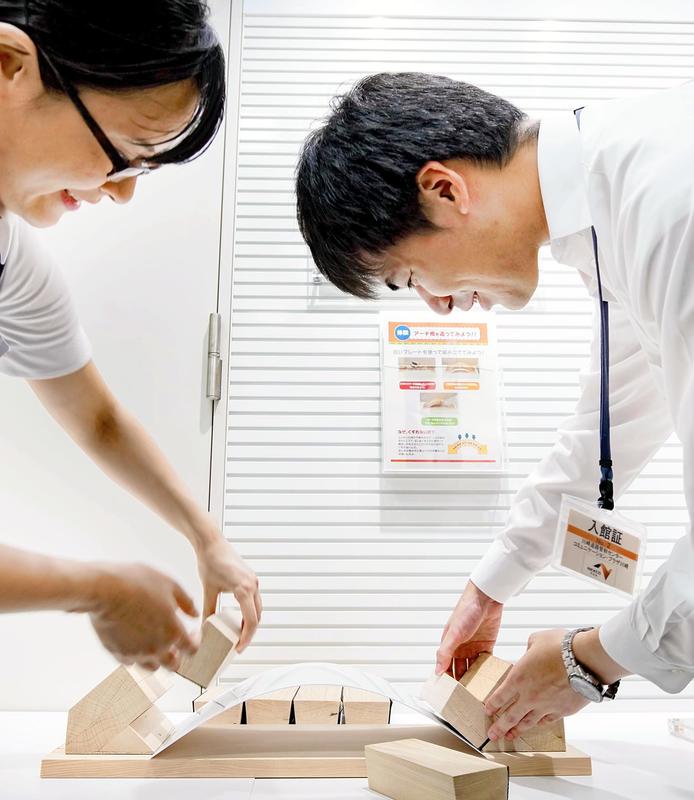
The main attraction of the company's NEXCO Central Communication Plaza Kawasaki museum is a 10-meter-long miniature model that faithfully re-creates an expressway to show how snow is plowed and bridges are inspected. Augmented reality screens set around the miniature display details such facilities as rest areas when the screens are turned toward the items on the model.
At an Oekaki drawing theater, a popular section for children, drawings of cars turn into animation and run on a big screen.
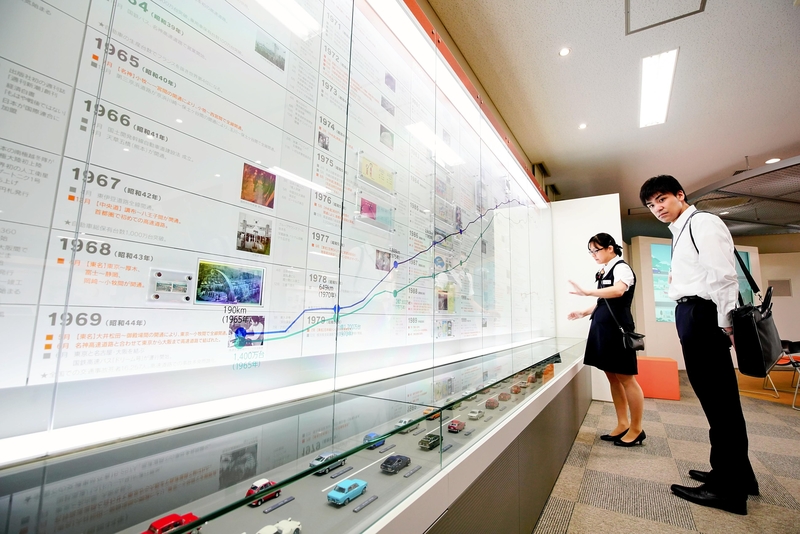
A timeline titled "The roads that activate Japan" introduces the development of roads since the 1950s, noting the opening years of major expressways. Beneath the timeline, toy cars modeled after automobiles that represent each decade are displayed with the timeline. Among them, the three-wheel mini-truck Midget evokes nostalgia for the Showa era (1926-89).
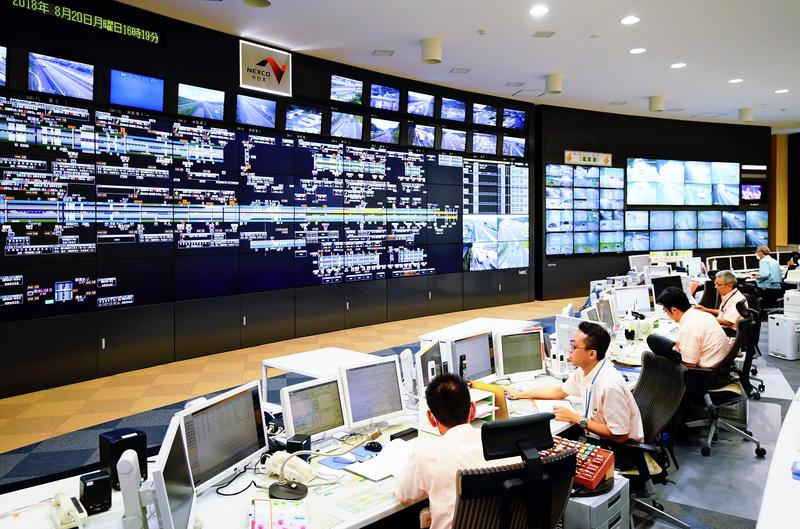
Visitors can also go upstairs to look at the Kasawaki traffic control center. A huge monitor screen that occupies an entire wall shows images of roads captured by cameras, as well as various types of constantly updated information such as the locations of traffic jams and accidents, and times required for traveling between exits.
Local homemaker Ayako Nakamura, 42, visited the museum with her three children. "We learned about pavement technology for better drainage and construction methods for tunnels and bridges. We realized that many people work around the clock to ensure safety," Nakamura said.
-- NEXCO Central Communication Plaza Kawasaki
Opened in April 2012 as a facility to promote expressway projects. Its exhibits were renovated in March this year.
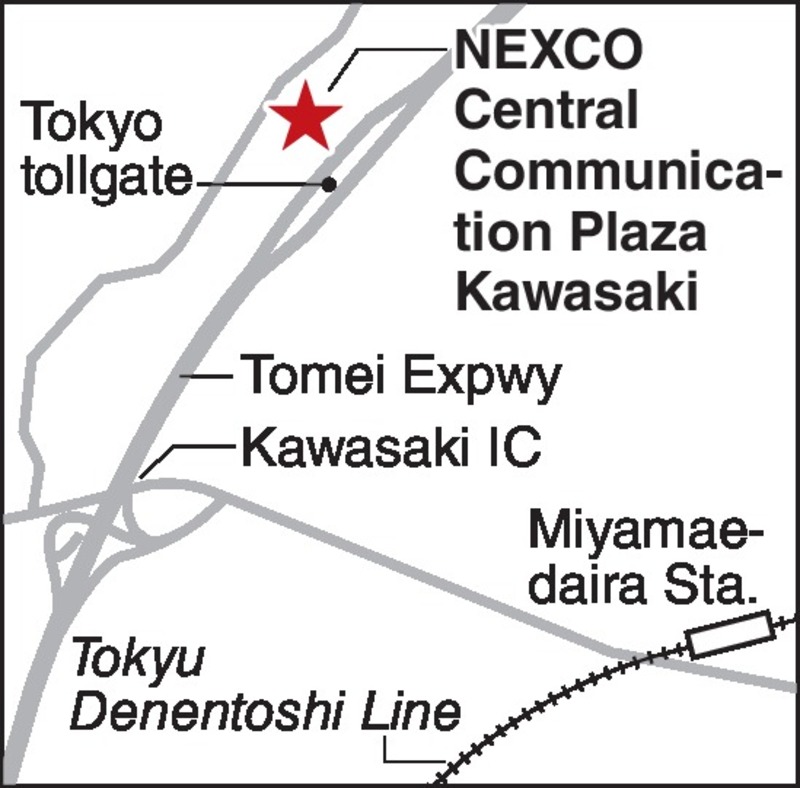
Take a bus from Miyamaedaira Station on the Tokyu Denentoshi Line and get off at Tomei Mukogaoka Entrance. From there it is a minute's walk to the museum.
A similar facility named Communication Plaza Fuji in Fuji, Shizuoka Prefecture, was recently renovated.
Address: 1-1 Nanpeidai, Miyamae Ward, Kawasaki
Open: 10 a.m. to 5 p.m. (Closed during the year-end and New Year period)
Admission: Free
Information: (044) 866-8730
Read more from The Japan News at https://japannews.yomiuri.co.jp/