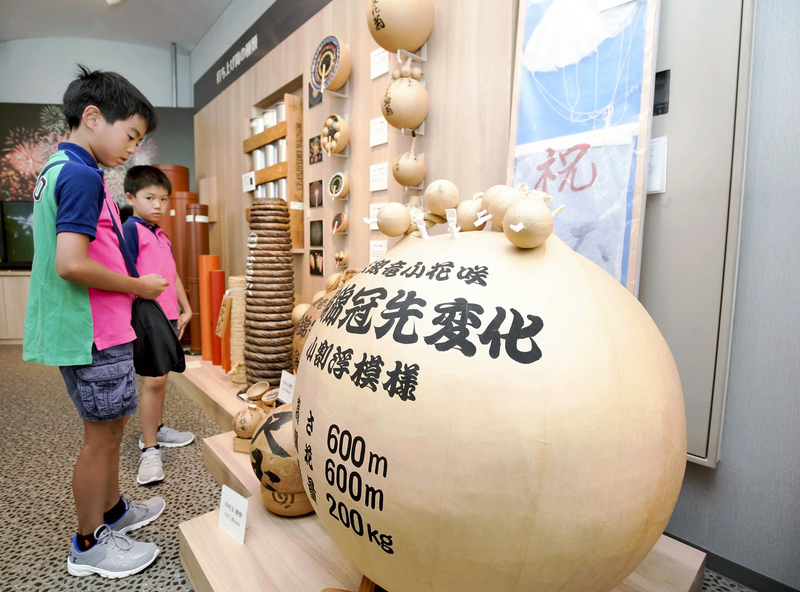
The Ryogoku Fireworks Museum is located near the Sumidagawa river in Sumida Ward, Tokyo. When entering the museum through a walkway decorated with aerial firework designs, visitors will see a life-size model of a san-shaku dama firework shell, which measures 90 centimeters in diameter and weighs 200 kilograms.
When launched, a firework like this rises 600 meters in the air and explodes over 600 meters in diameter. San-shaku dama fireworks are the highlight of various events, including the Nagaoka Hanabi fireworks festival in Niigata Prefecture, one of Japan's largest.
Heavy iron launch tubes are displayed along with the firework shell. It is also interesting to see precious vintage documents such as "Kajutsu Hihoki" written in around 1834 and "Hanabi Hihoroku" written in around 1851, both of which stipulate secret production methods for fireworks in the Edo period (1603-1867).
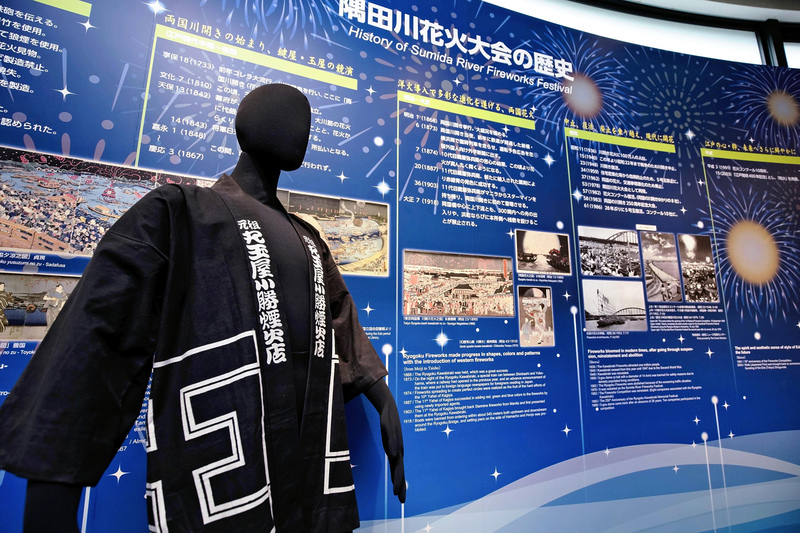
The museum also allows visitors to trace the roots of the Sumida River Fireworks Festival, which marked its 41st edition this year. As I looked at panels explaining its history, museum official Akira Higakure, 72, told me, "The Sumida River Fireworks Festival helped spread such events across the country."
In 1732, many people died across the country due to the Great Famine of Kyoho and cholera epidemic. In the following year of 1733, the eighth shogun Tokugawa Yoshimune had about 20 fireworks launched at a water god festival he held to mourn the dead and eliminate disease, an event said to be the origin of fireworks festivals.
The Kagiya family, pioneers in the field of pyrotechnics, was in charge of the fireworks. A Tamaya branch later broke off from the Kagiyas, leading to the practice of calling "Kagiya! Tamaya!" as the two families jointly held fireworks events.
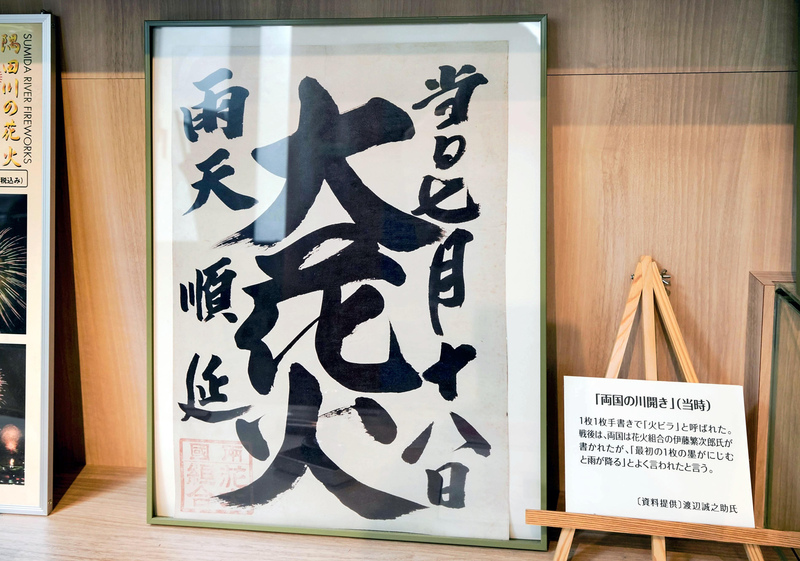
The Sumida River Fireworks Festival has overcome numerous threats to its survival. From wartime through 1947, the festival was canceled, and in 1962, the event was suspended again due to worsened traffic conditions in the surrounding areas and the awful smell of the river. The launch site was relocated to the current place and the state of the river so improved that people can now fish for gobies, according to Higakure. As a result, the event was resumed in 1978. Since then, it has continued to attract fireworks lovers from across the country as a traditional summer event.
I couldn't go to any fireworks festivals this summer, so I left the museum feeling sated. As I closed my eyes, big fireworks exploded behind my eyelids.
-- Ryogoku Fireworks Museum
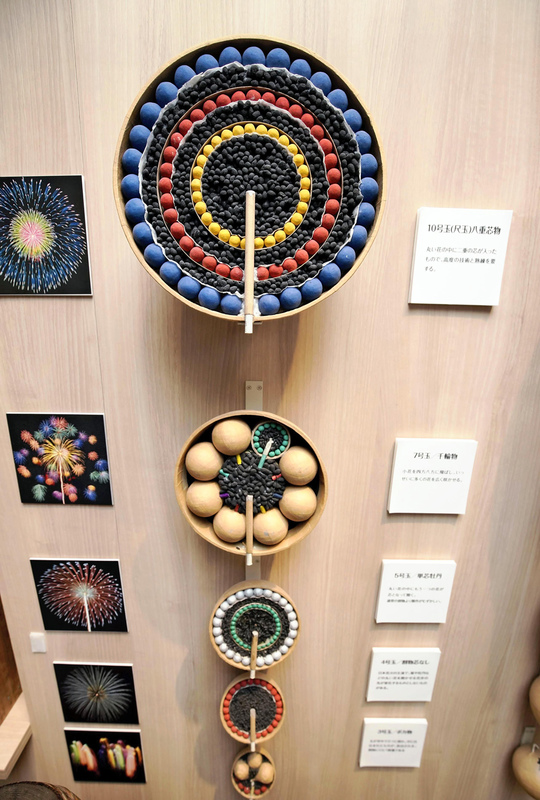
Opened in 1991. A video introducing how to make firework shells is shown, along with pictures of fireworks in the Showa era (1926-1989) and colored woodblock prints created in the Edo period and Meiji era (1868-1912).
Address: Sumitomo Fudosan Ryogoku Building 1F, 2-10-8 Ryogoku, Sumida Ward, Tokyo
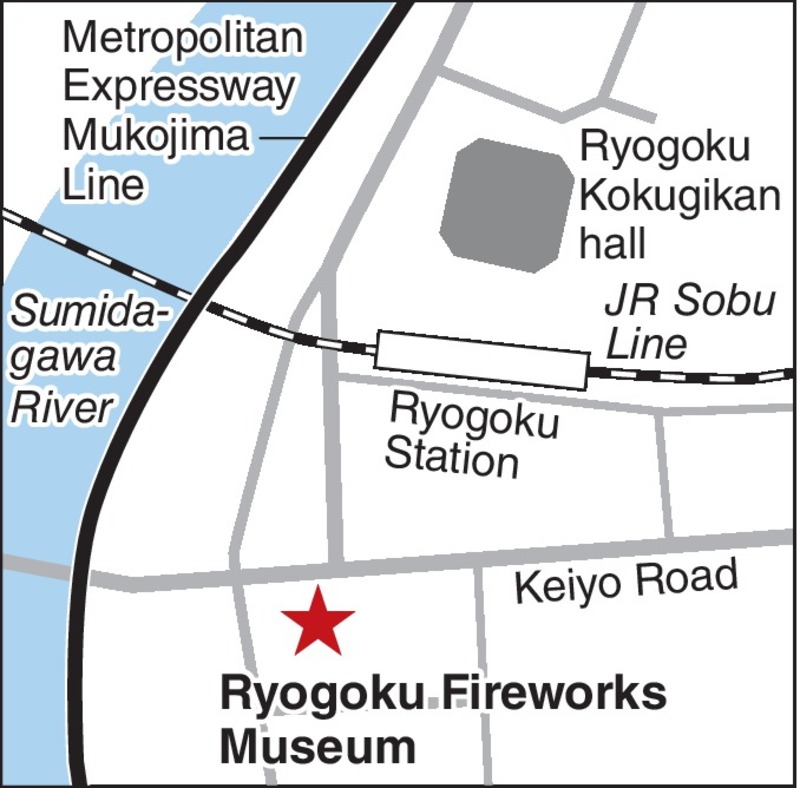
Open: From noon to 4 p.m. (Open from Thursday to Sunday, and every day in July and August)
Admission: Free
Inquiries: (03) 5608-6951 at the Sumida Ward tourism association
Read more from The Japan News at https://japannews.yomiuri.co.jp/