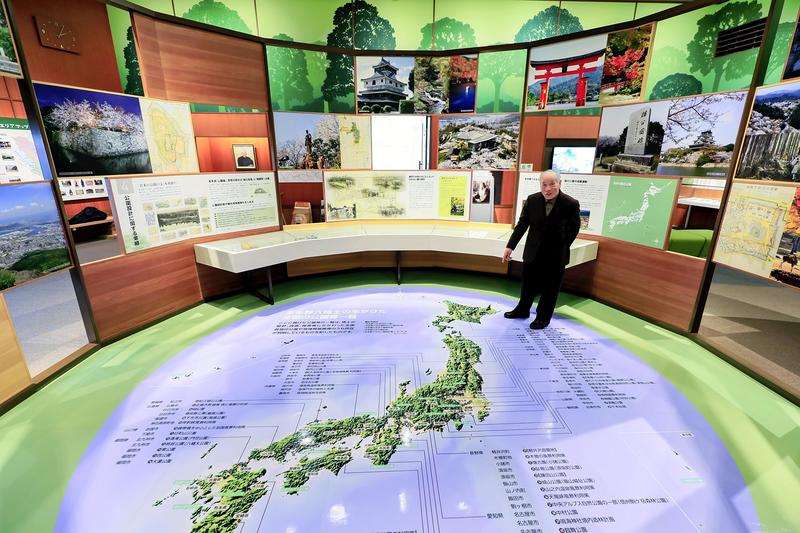
The names of famous parks are written on a big floor map of Japan at Honda Seiroku Kinenkan (Seiroku Honda memorial museum) in Kuki, Saitama Prefecture. They include Hibiya Park in Chiyoda Ward, Tokyo; Kairakuen park in Mito; and Ohori Park in Fukuoka.
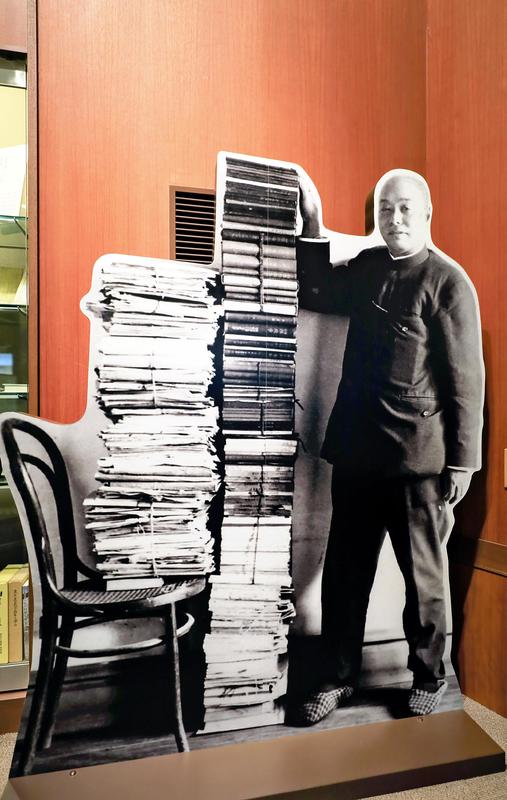
All of the sites on the map were designed or refurbished by Seiroku Honda (1866-1952), who is known as "the father of Japanese parks." The Honda Seiroku museum dedicated to his achievements is inside a building of the Kuki city government's Shobu branch office, near the home where Honda was born.
Honda graduated from the college of agriculture of Imperial University -- today's Faculty of Agriculture of the University of Tokyo -- with a first-class honors degree. After studying in Germany, he became the first Japanese to receive a doctorate in forestry.
While teaching at his alma mater, Honda traveled around the nation for such projects as improving water source forests and snowbreak forests, establishing new parks, designing and refurbishing existing parks, and urban planning.
Honda is said to have designed and improved hundreds of parks; the museum introduces 80 that he is confirmed to have worked on.
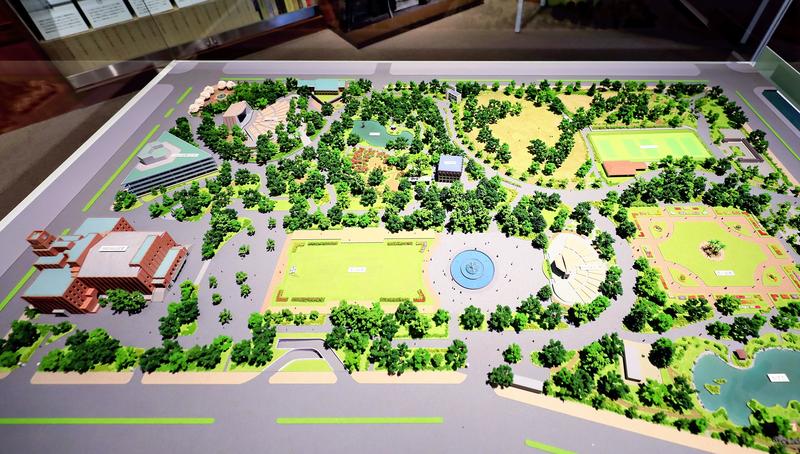
Honda's career as a park builder started with the construction of Hibiya Park. In 1901, the Tokyo city government asked Honda to design the park, which is now believed to be one of the oldest modern Western-style parks in Japan. The museum displays a one-400th-scale miniature model of the park.
Visiting Hibiya Park, you can see a famous huge ginkgo tree nicknamed "Kubikake icho." It was Honda who relocated the tree to the park, when it was about to be cut down to widen a road. Many other people said the tree was too huge to be transplanted, but Honda pushed his plan through saying, "Kubi wo kakeru."
Literally translating as "I bet my neck," the expression meant "You can fire me if this doesn't work."
Honda succeeded in getting the tree to take root again, and it is now popular among visitors as a symbol of the park.
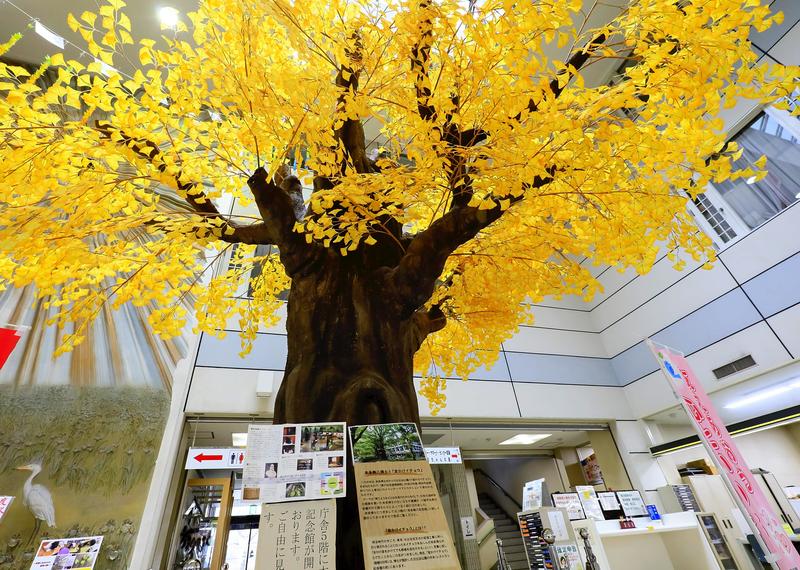
The museum highlights this episode, displaying a replica of the gingko tree in the lobby of the branch office building housing the museum. The replica is so large, visitors have to look up to see the whole of it. The trunk and branches are accurately reproduced with bright yellow leaves.
Honda saw parks as places for people to maintain their health, and for the development of local economies and cultural exchanges. He built and maintained parks based on his philosophy of "natural renewal," meaning forests can maintain themselves with just the power of nature, even if people do not try to maintain them.
"It's surprising that 100 years ago, he already had an idea that would be accepted today," said Hajime Shibasaki, 86, head of an association that commemorates the achievements of Honda.
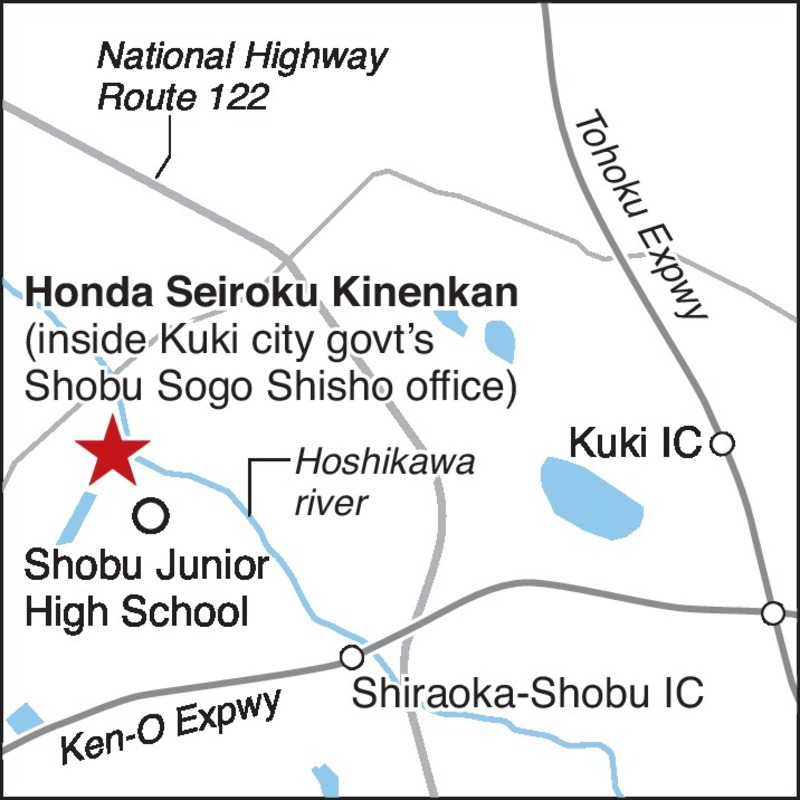
-- Seiroku Honda memorial museum
The Kuki city government opened the museum in 2013 on the fifth floor of its Shobu branch office building, which was formerly used as the Shobu Town Hall. It exhibits Honda's belongings and records of his philosophy of life, as well as video clips. From 9:30 a.m. to 3:30 p.m. on Sundays, Wednesdays and Fridays, tours are provided by members of the association to commemorate Honda's achievements.
Address: 38 Shobucho-niibori, Kuki, Saitama Prefecture
Open: 9 a.m. to 5 p.m. Closed on Saturdays, public holidays and in the year-end and New Year period.
Admission: Free
Inquiries: (0480) 85-1111
Read more from The Japan News at https://japannews.yomiuri.co.jp/