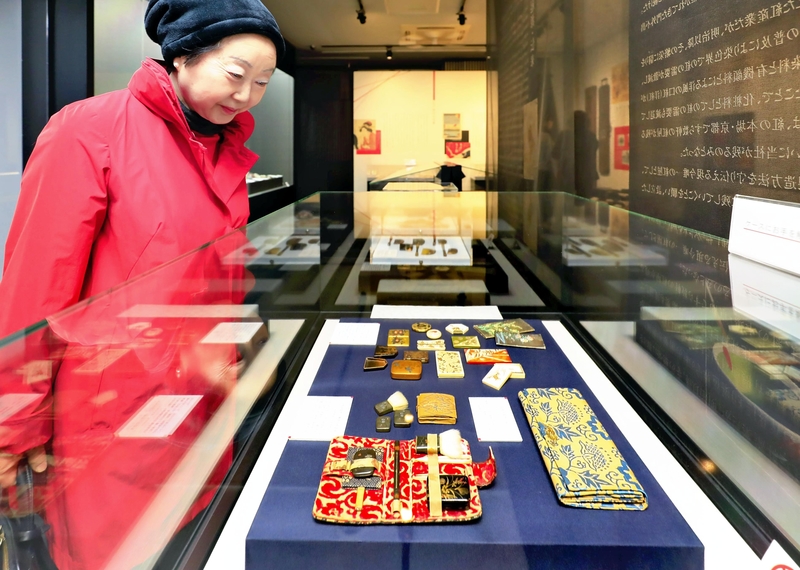
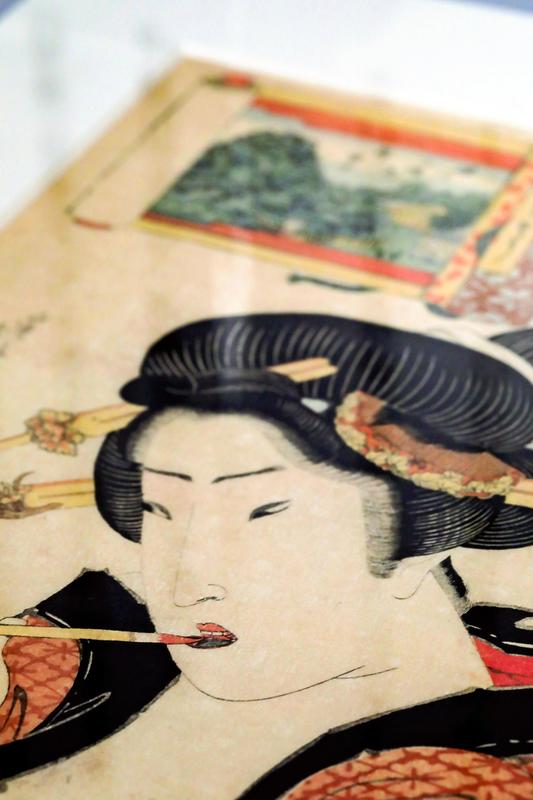
Women have colored their lips in fascinating ways over time -- and the Edo period (1603-1867) was no different. This was when women were drawn to beni: lip colors made from benibana or safflower.
Isehan-Honten began as a beni shop in 1825 in the Nihonbashi Kobunacho district in Tokyo. The number of beni shops peaked during the Edo period, whereas their decline in the Meiji era (1868-1912) and subsequent years coincided with new materials such as synthetic dyes being developed for use in lipsticks.
By the "Showa 30s" (1955-1964), Isehan-Honten was the only beni shop to have survived since the Edo period. To this day, it continues to use traditional methods that have been handed down by word of mouth. Two artisans make beni from safflower grown in Yamagata Prefecture.
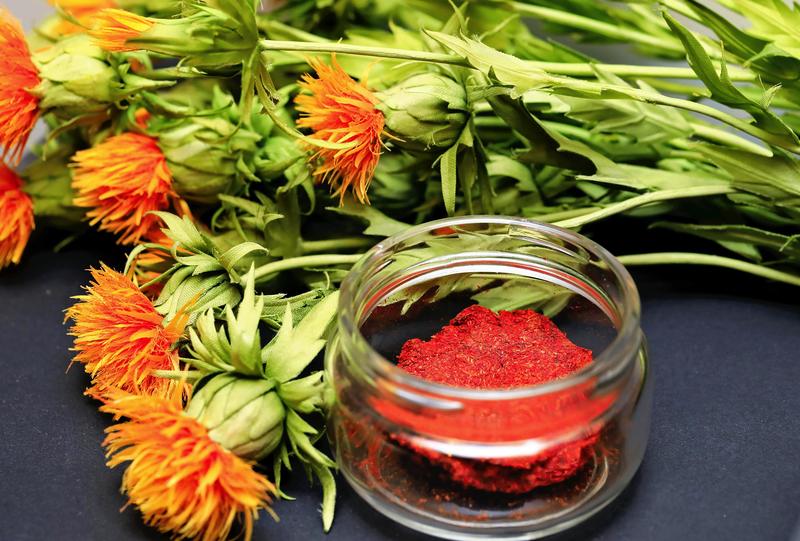
The Isehan-Honten Museum of Beni, located in Tokyo's Minami-Aoyama area, introduces the history of beni, the process of producing it and Edo period makeup culture.
Although beni is known as a bright red color, the safflower petals from which it is made are 99 percent yellow. The fine-quality red color, called komachi-beni, is made from the remaining 1 percent.
Beni are high-end products created through dozens of processes. When the final color is allowed to dry naturally, it has an iridescent green sheen. But when wet, it turns bright red again.
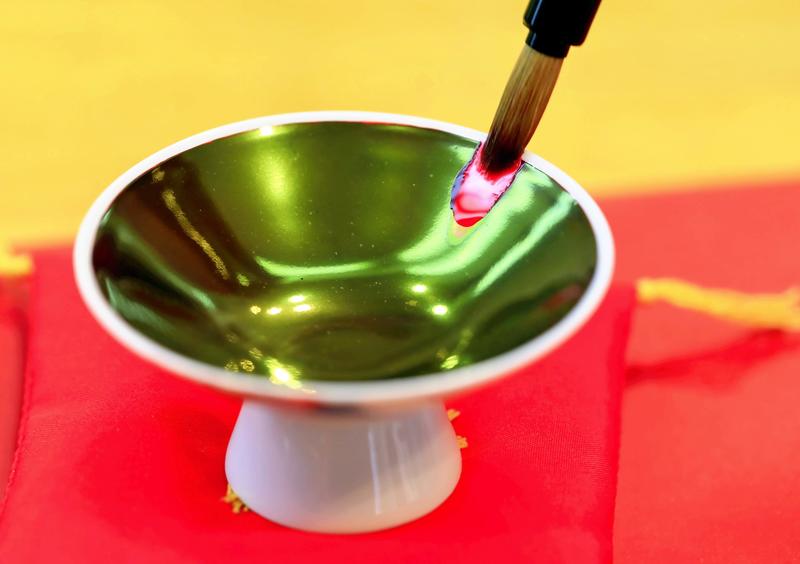
Komachi-beni was literally worth its weight in gold in the Edo period, when it could be traded for the metal. A cosmetic treatment called sasabeni became popular among affluent people between 1804 and 1830. Women applied it little by little until their bottom lips turned iridescent green.
There was a saying, "Hitotsuke sanju mon" (it costs 700 yen-800 yen for each application).
Average people could not afford this cosmetic; instead, they emulated the sasabeni treatment by applying several base coats of sumi ink and then beni on top to make their lips a dark bluish red.
Makeup kits used in the late Edo period are also displayed at the museum. One such item is the beni-choko, a round container, like a small dish, in which beni was sold.
Another item is the ita-beni -- portable rouge cases decorated in a variety of ways, such as with makie gold lacquer or inlay work. These makeup cases suggest Edo women selected their favorite designs and enjoyed applying beni. It made me think that a woman's desire to look good is unchanged, giving us a sense of affinity through time.
"As the last beni shop, we hope to hand down beni culture to future generations," said museum spokesperson Emiko Abe.
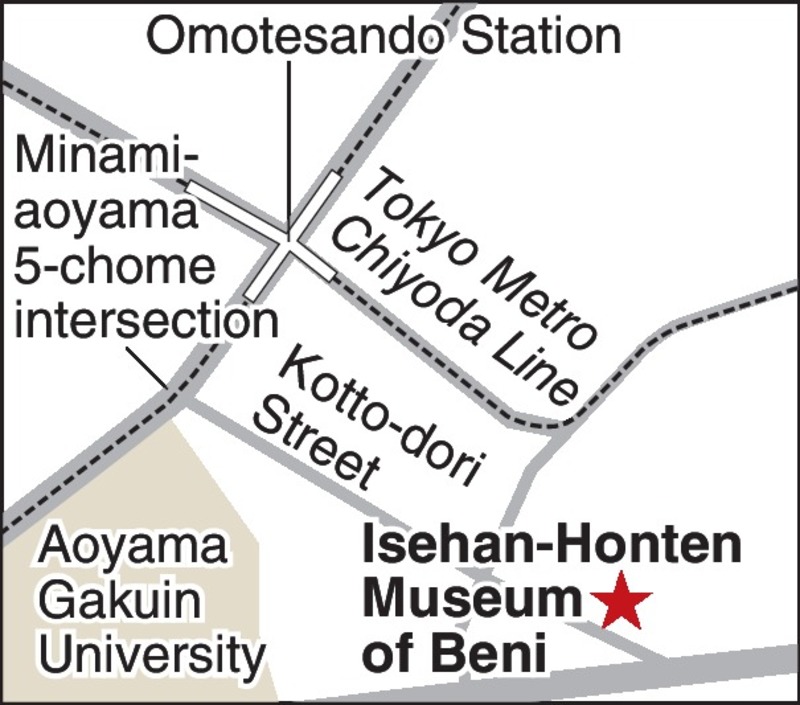
-- Isehan-Honten Museum of Beni
Visitors can try komachi-beni at a salon at the museum. The product is deeply interesting in that its colors vary, encompassing pink or orange. The color also depends on the person wearing it, changing according to their lips. "Beni adjusts to meet the color of the wearer's face," Abe said. Visitors can buy komachi-beni products at the salon.
Address: 1st floor, K's Minami Aoyama Building,
6-6-20 Minamiaoyama, Minato Ward, Tokyo
Open: 10 a.m. to 6 p.m. Closed on Mondays
Admission: Free
Inquiries: (03) 5467-3735
Read more from The Japan News at https://japannews.yomiuri.co.jp/


.jpg?w=600)