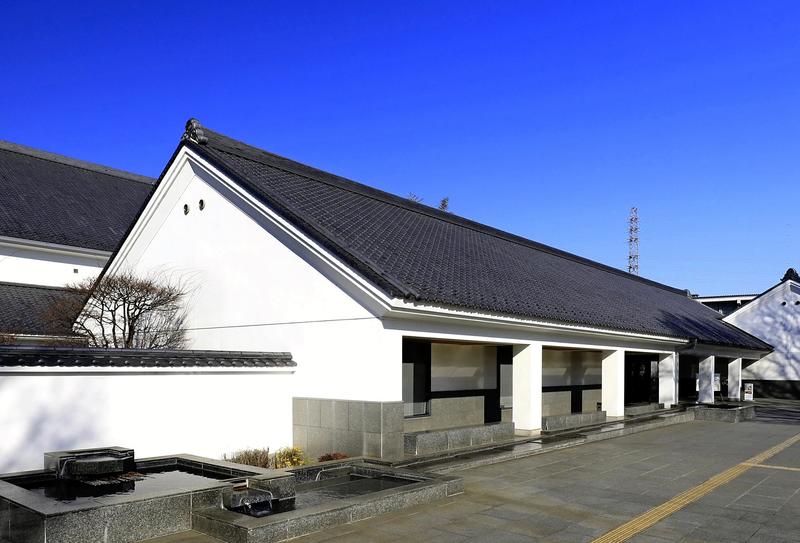
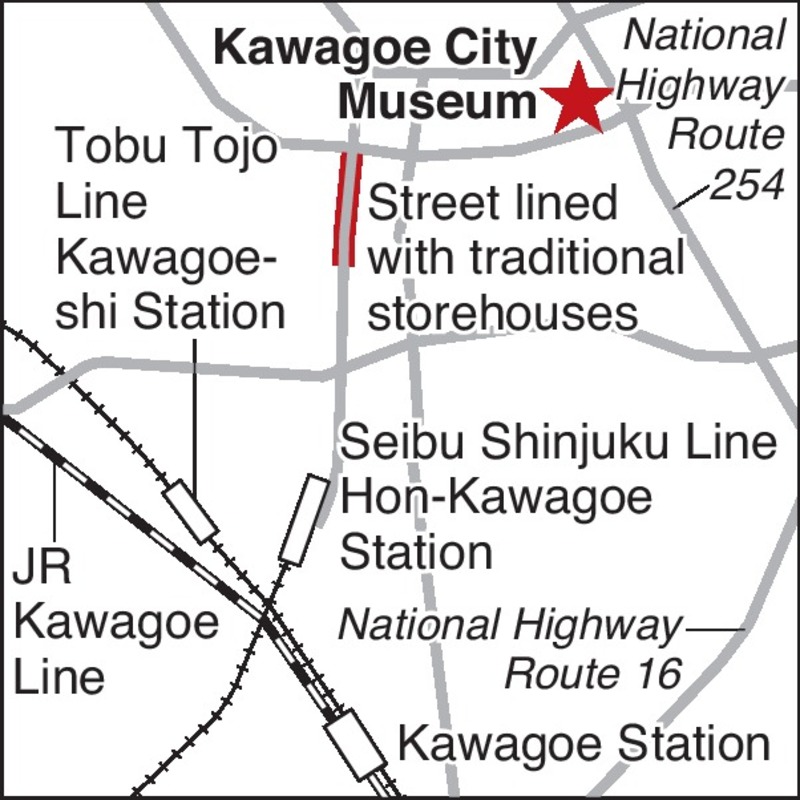
Looking like a white-walled storehouse itself, the Kawagoe City Museum stands about 800 meters east of a street lined with the traditional storehouses symbolic of Koedo (Little Edo) Kawagoe. The museum opened in 1990 and features exhibitions related to the Edo period (1603-1867), a time when Kawagoe developed by leaps and bounds as a castle town.
Linked with Edo (present-day Tokyo) by an about 120-kilometer waterway that led to the Arakawa river via the Shingashigawa river flowing east of Kawagoe Castle, Kawagoe sustained the economy of Edo as its main artery of distribution.
The Kawagoe domain developed a waterway transportation system in earnest from the mid-17th century onward and built a river port in the castle town for loading and unloading passengers and cargo. The river's flow was made to meander to ensure enough depth so that vessels over 15 meters long could use it.
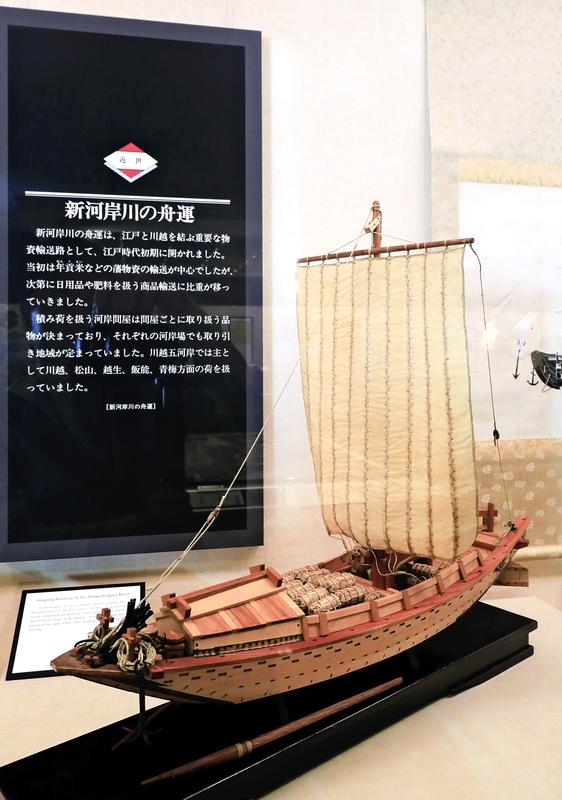
Boats used for transportation included the takasebune type, which had a flat bottom so it would not touch the riverbed. A model of this kind of boat is exhibited at the museum, with lots of rice bales aboard.
One appeal of waterway transportation was the large capacity that boats could carry. One boat could transport 200 straw bags, each containing 60 kilograms of rice, compared to just two straw bags of rice loaded on a horse. In due course, river ports were built downstream in succession to constantly allow for the passage of about 100 boats by the end of the Edo period.
Daily necessities such as agricultural crops, soy sauce and timber were transported from Kawagoe to Edo, while raw materials for kimono fabrics and indigo dyeing were carried the other way. There are records showing that a wealthy merchant in Kawagoe procured hot spring water from Atami and fresh fish hauled in waters off Edo by an express boat.
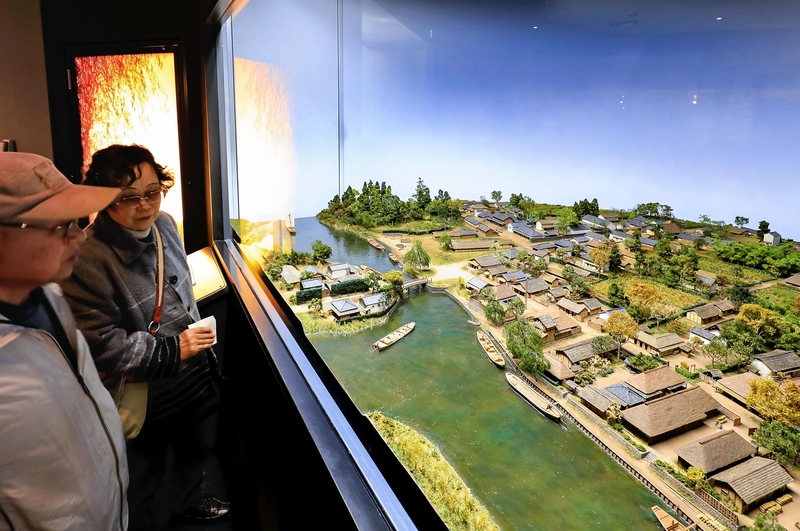
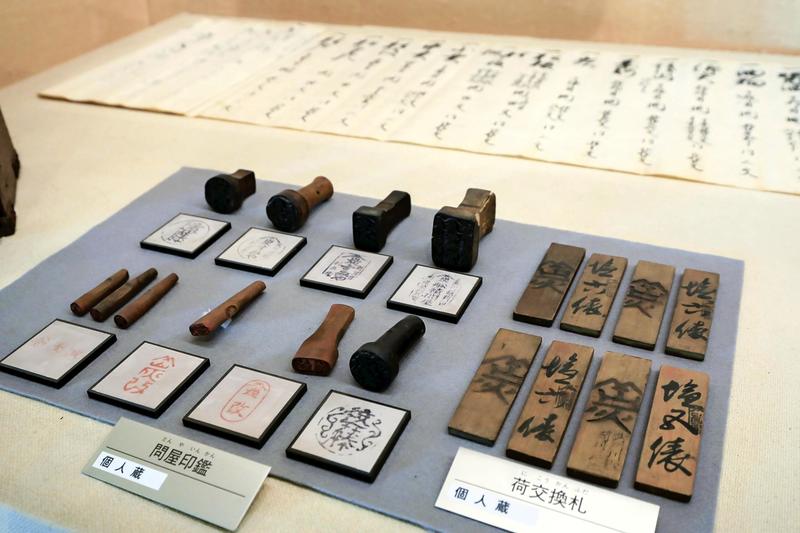
One eye-catching object is a diorama that re-creates a river port in Kawagoe. Shipping agents' houses stand side by side on an old map of the river port exhibited in the museum, and shipping tags and fare tables illustrate the bustle of Kawagoe during the Edo period.
"The history of waterway transportation that linked Kawagoe with Edo is very impressive," said Yasuhiko Shimizu, 76, who visited the museum from Ouramachi, Gunma Prefecture.
Water transportation declined after the Tojo Railway (presently the Tobu Tojo Line) started services in 1914. Kawagoe -- a commercial city that had prospered for so long as the distribution transit point linking nearby towns with Edo -- also lost its momentum.
There was a period during which Kawagoe became less prosperous, but since its valuable historical and cultural assets have been highlighted, the city has been enjoying an unprecedented tourist boom, with 6.6 million visitors per year nowadays.
"If visitors stroll around Kawagoe after learning about its history at the museum, they can discover the more profound charms of this city," said museum curator Ichiro Miyahara, 48.
-- Kawagoe City Museum
Exhibits at the museum include articles of incorporation for the No. 85 National Bank (present-day Saitama Resona Bank) established in 1878 by a wealthy merchant and others in Kawagoe, inkan seals, sales reports and other items illustrating the prosperity of Koedo.
Address: 2-30-1 Kuruwamachi, Kawagoe, Saitama Prefecture
Open: From 9 a.m. to 5 p.m. Closed on Mondays, the fourth Friday of every month and during the year-end and New Year holiday period
Admission: 200 yen (100 yen for high school students and those attending institutions of higher education), free for elementary and junior high school students.
Inquiries: (049) 222-5399 (in Japanese)
Read more from The Japan News at https://japannews.yomiuri.co.jp/