Towns and regions around the country are using the power of the stars to help vitalize their communities.
Last year, Tottori Prefecture began calling itself a hoshitori (literally "star-taking") prefecture, because people can see beautiful starry skies there thanks to the clean air and limited number of buildings that are lit up at night. Okinawa Prefecture's Ishigaki Island and others have held hoshizora (starry sky) summits.
I recently visited the TeNQ Space Museum, located next to Tokyo Dome in Bunkyo Ward, Tokyo, to feel the beauty of starry skies and the fun of outer space again.
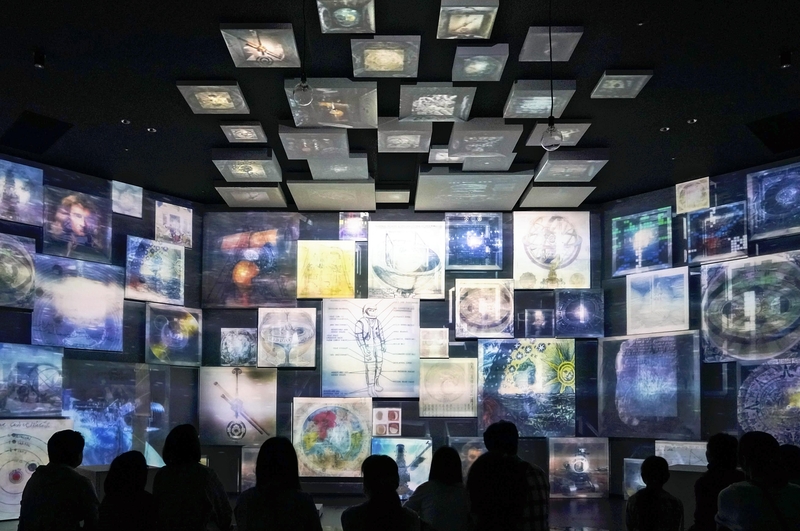
Visitors first encounter the Starting Room, where projection-mapped images and computer graphics are displayed on a 20-meter-by-4.5-meter wall. The theme of the attraction is "people's contemplation of space," represented by such images as an ancient stone slab, terrestrial globes and drawings of spacesuits. The images look like the real thing, and visitors feel like they're in a theme park rather than a museum.
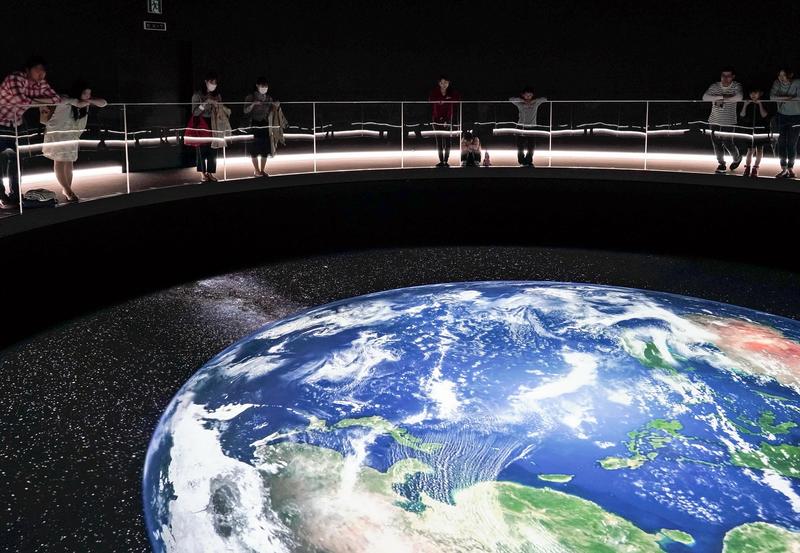
Next is the Theater Sora, where visitors watch a round screen below their feet, 11 meters in diameter. The lights are turned off, and people feel like they're watching the Earth, the sun and the galaxy from outer space.
Audiences feel so much like they're floating in outer space, they spontaneously grab the handrail. When I was there, people exclaimed in joy.
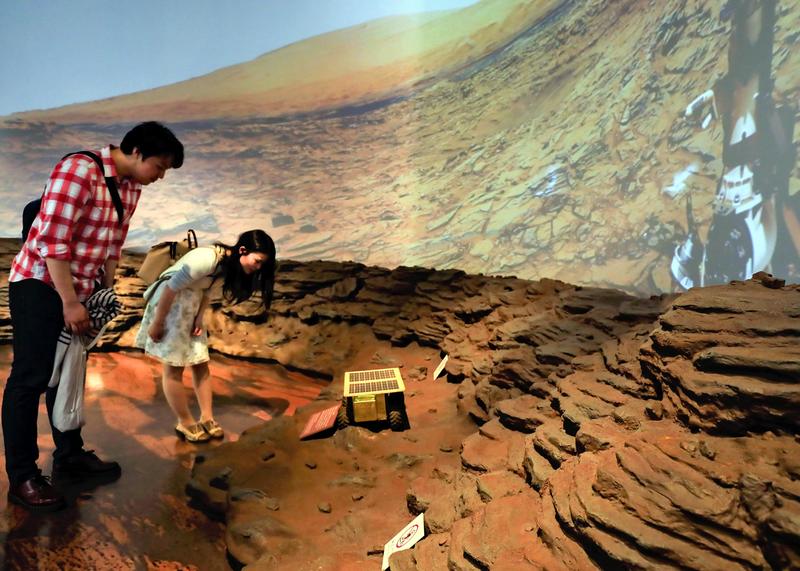
After these attractions with their cutting-edge technology, people view panel exhibits. They were prepared by the University Museum of the University of Tokyo, a partner of the TeNQ Space Museum, and describe such things as the solar system and past Mars exploration vehicles.
The panel exhibitions reflect the latest research. When I visited the museum for this article in April, there were images on display from the Mars Odyssey probe taken just two weeks before.
The craggy surface of Mars looked bleak, like that of the moon. I wondered if humans would be able to live there someday.
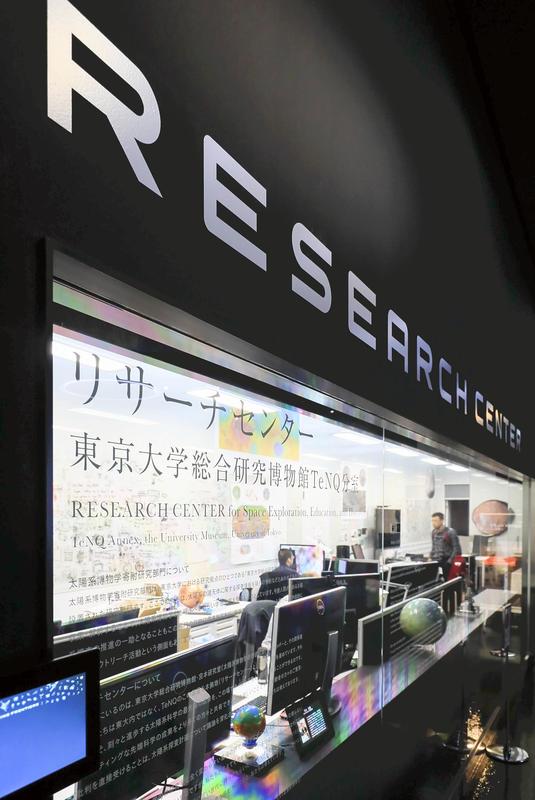
There are a lot of exhibits, including games and artwork, centered around outer space, as well information about space.
"It was really beautiful, and I want to go to outer space someday. I'm also interested in space aliens," said an 8-year-old third-grade elementary school girl who visited the museum with her family from Adachi Ward, Tokyo.
Children who nurture their dreams at the museum may become pioneers in outer space research someday.
-- TeNQ Space Museum
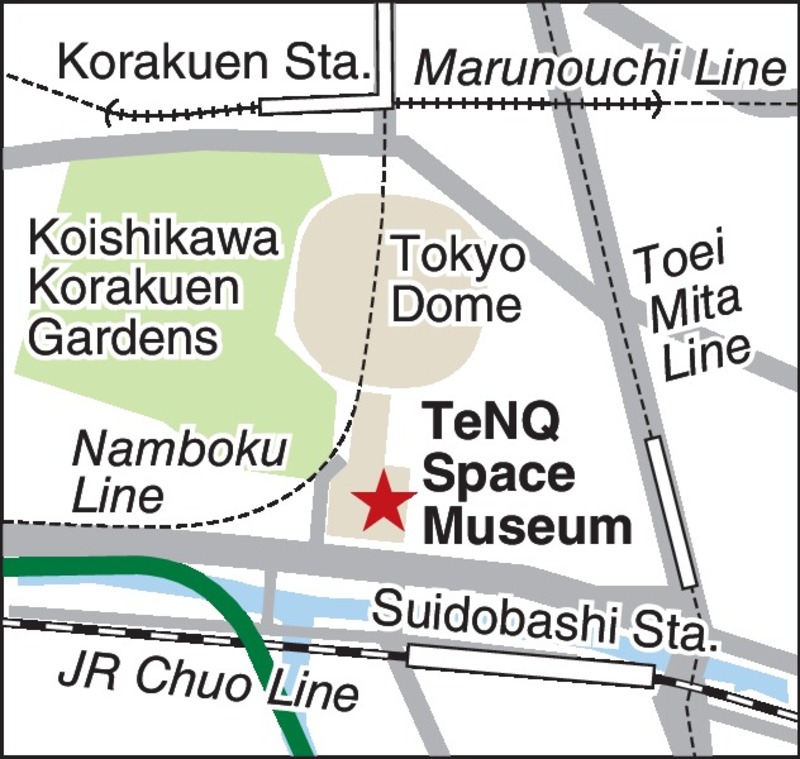
Opened in 2014. The name TeNQ is partly based on "thank you" in English; it also refers to "ten," or sky, in Japanese and the English word "quest." It is located about three minutes on foot from JR Suidobashi Station.
Address: 1-3-61 Koraku, Bunkyo Ward, Tokyo
Open: 11 a.m. to 9 p.m. on weekdays, from 10 a.m. on weekends and national holidays. Open year-round with some closures for scheduled equipment maintenance.
Admission: 1,800 yen for adults, 1,500 yen for university, high school and vocational school students, 1,200 yen for children from 4 years old through junior high school students, and for seniors 65 years old and older.
Information: (03) 3814-0109
Read more from The Japan News at https://japannews.yomiuri.co.jp/