The purpose of an observatory can be found in the name itself: observing space. Likewise, the Japan Aerospace Exploration Agency's purpose is also clear: traveling to the cosmos.
"We create a universe," said Shota Takahashi, 31, of the public relations office of the High Energy Accelerator Research Organization, known by the Japanese abbreviation KEK.
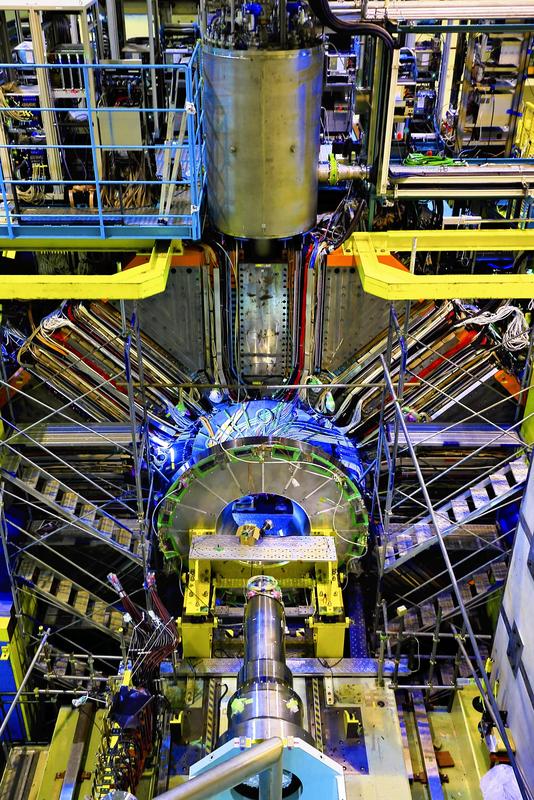
On a site that could hold 33 Tokyo Domes sits the SuperKEKB accelerator with a circumference of 3 kilometers. Inside, electrons charged with negative electricity and positrons with positive electricity are accelerated to near the speed of light (about 300,000 kilometers per second), followed by the collision of the particles of these two electrons. This creates a scenario close to the aftermath of the Big Bang, which triggered the creation of the universe.
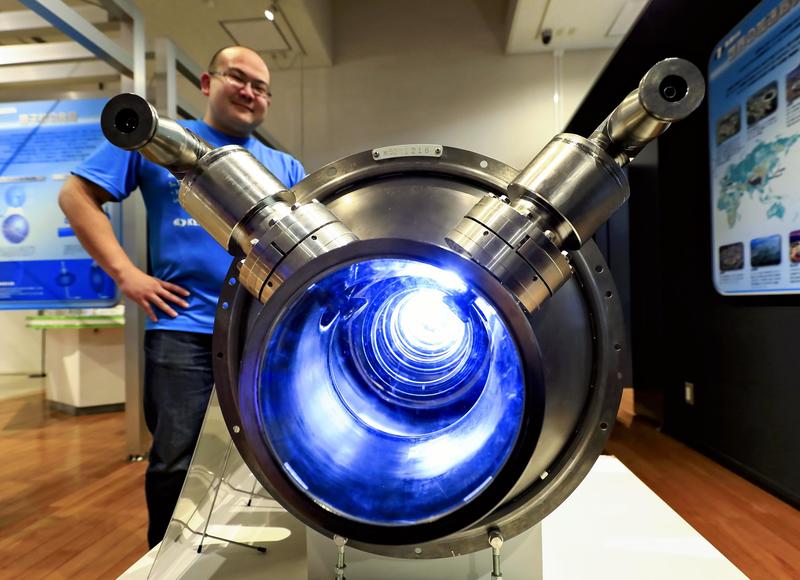
A pipe with an inner diameter of about 10 centimeters used in the accelerator is displayed near the entry to the KEK Communication Plaza. KEK observes elementary particles and antiparticles to be generated with the use of this pipe to explore what the universe was like when it was created.
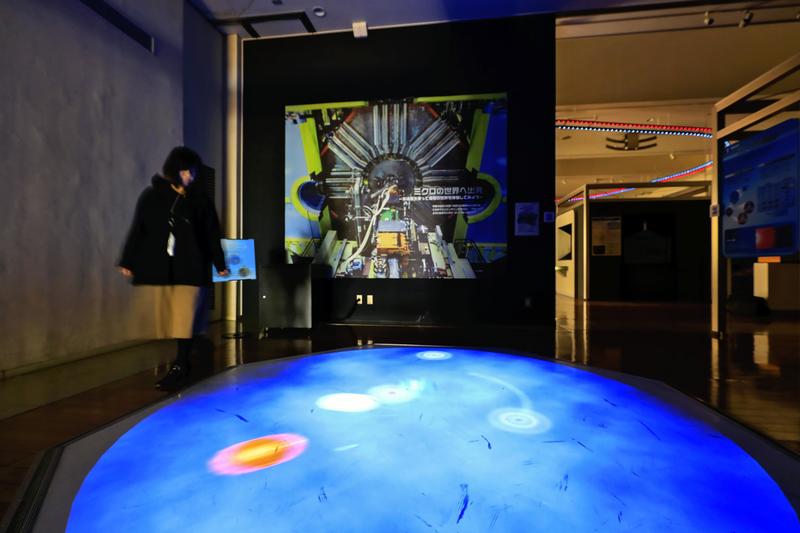
On the nearby floor in the plaza is a monitor with a diameter of 3 meters. Called the "Wonder Quark," it allows visitors the opportunity to experience being inside a proton that creates matter. If you step on this monitor, three balls with red, blue and green colors emerge. If you kick one of the balls to hit another, the color changes. The ball represents a quark, and the changing color simulates a "sea quark" in which quarks drift within a proton.
The "spark chamber" lets visitors view elementary particles that shower from the sky as cosmic rays, with electrodes installed in a water tank-like case filled with helium gas. Blue-purple lights run through the case occasionally as "muons" discharging light as they react to the gas and electrodes.
An international research team involving Nagoya University used this particle, which passes through matter, to discover unknown space in a pyramid in Egypt. They announced their findings in November last year.
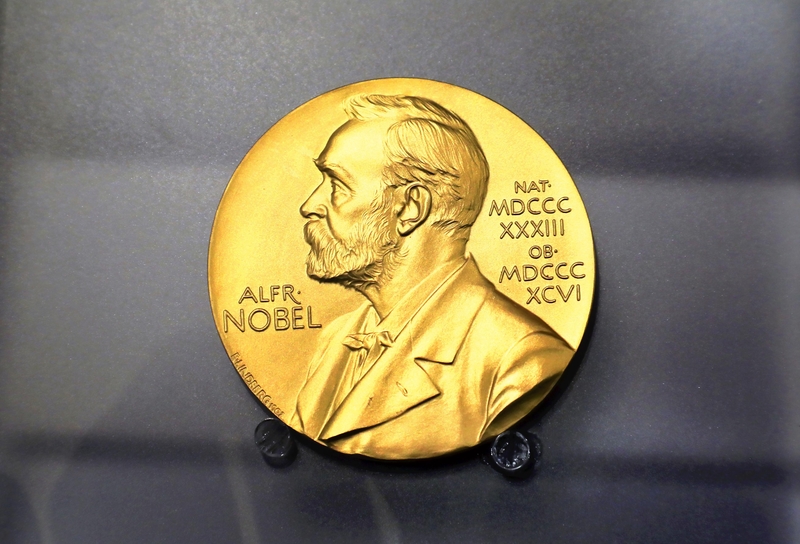
The replica of a medal for the Nobel Prize in Physics is on display in the communication plaza as well. Makoto Kobayashi was awarded the prize in 2008 and donated the replica because his theory was proven right as a result of observations conducted by KEK in 2001.
The exhibits are easy to understand, meaning visitors include many children. Among them may be a future laureate.
KEK Communication Plaza
Installed in September 2005 as an exhibition facility to attract interest in research activities of the High Energy Accelerator Research Organization (KEK) and science in general. Moved to the current site in April 2010 with entirely refurbished exhibits. Tours of the facility are available for groups of 10 or more but reservations are required.
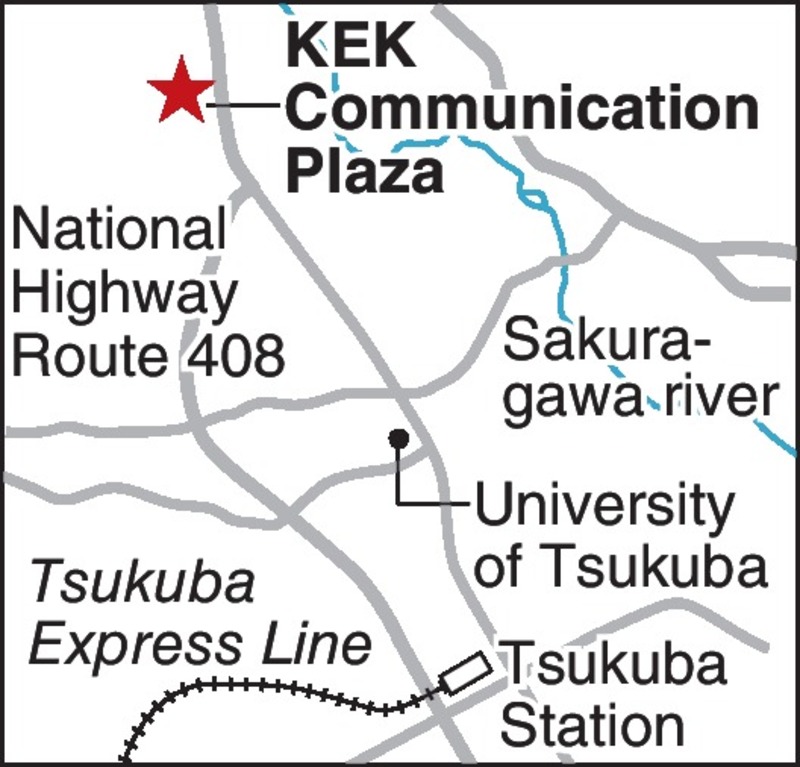
Address: 1-1 Oho Tsukuba, Ibaraki Prefecture
Open: From 9:30 a.m. to 4:30 p.m. Except year-end and New Year holidays and summer season.
Admission: Free
Inquiries: (029) 879-6048
Read more from The Japan News at https://japannews.yomiuri.co.jp/




.png?w=600)