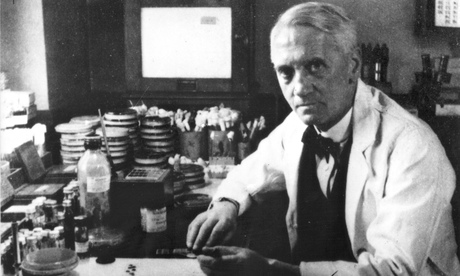
Seventy years ago Sir Alexander Fleming, the discoverer of penicillin, in his Nobel prize acceptance speech warned that inappropriate use of antibiotics would give rise to resistance (“Time for world to act on antibiotic resistance”, leader, Comment). Fleming’s prediction has come to pass and antibiotic resistance is now threatening modern medicine.
Routine procedures including heart bypass surgery, hip and knee replacements, cancer treatments, childbirth, trauma surgery and intensive care treatments all depend on functioning antibiotics. Some patients such as those with cystic fibrosis have to be on regular antibiotic administration – for these patients and many others antibiotic-resistant infections can kill.
Your editorial cites the lack of financial incentives for the pharmaceutical industry to invest in antibiotic research. In other areas of medical need such as cancer treatment there is a thriving charity sector developing new drugs. There is a similar need for an equally thriving charity sector to discover new antibiotics.
Charities do not have to make a financial return or provide dividends to their shareholders. They can also undertake research which yields no intellectual property. For example, there has been little research on combining antibiotics to overcome antibiotic resistance and yet this would be an area worth exploring. One could envisage a global network of charities as sister charities to our charity, all working collectively together to tackle the problem. This could include joint research programmes, joint research funding and joint clinical trials. We believe this approach could shorten drug development times, be cheaper than conventional pharmaceutical drug development and get drugs to the areas and countries of greatest need.
Professor Colin Garner
Chief executive
Antibiotic Research UK
You are correct in stressing the vital importance of combatting antibiotic resistance. As (mis)use is a major driver, one of the approaches must be control of prescribing. The UK is modest in its use compared to other countries such as China and India ( and even some European states). Co-ordinated international action is needed, involving major international forums such as the UN and G8.
Prof Richard Wise
Former chair of the specialist advisory committee on antimicrobial resistance (Department of Health)
Hereford
Your suggestion that the development of novel antibiotics might outpace bacterial evolution is fallacious: it takes many years to discover, develop, test and bring to market any new drug and perhaps a billion dollars. Bacteria can go through many generations in a day, each one capable of either producing a novel mutation under the selective pressure of a novel antibiotic, selecting for an already resistant organism or acquiring a resistance gene from another microorganism.
To kill a wide range of microorganisms before the development of antibiotics, hospitals (and households) relied on powerful chemical disinfectants such as phenol, iodine and hypochlorite (chlorine). Many of these are hazardous if not used with care and somewhat malodorous but they work. In order to check the pace of bacterial evolution, it is necessary to reduce contact between antibiotics and all micro-organisms to an absolute minimum which means effective and constant cleaning with such chemicals.
Dr Peter B Baker
Prestwood
Bucks
We need to examine how healthcare can most effectively be re-configured to reduce the risk of hospital acquired infections. Treating some acute patients at home rather than hospital, thereby avoiding exposure to resistant organisms, must be part of the answer.
Dr Rory McCrea
Director
Amie Healthcare
Upshire, Essex