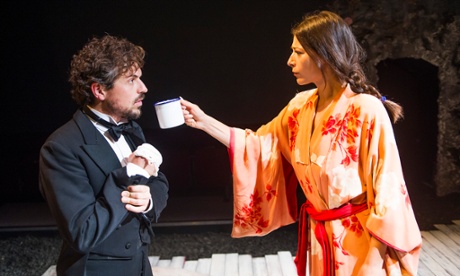
Lured by the prospect of “a Hitchockian psychological thriller”, I found myself disappointed on all three counts by Ashley G Holloway’s play. More half-cock than Hitchcock, the play is based on questionable psychology and depends on manufactured excitement. Its theme is the need to confront the past, but I suspect Holloway himself could learn a thing or two from theatrical precedent.
The situation initially looks promising. John and Jane Lesere are an English couple living in rural France in 1921. John is a potential viticulturist while Jane devotes herself to reading and writing poetry. Their peaceful seclusion is shattered by the arrival of an insinuating stranger, George. Like John, he is a survivor of the battle of the Somme and gradually he sets about demolishing the couple’s rustic idyll. Pinching Jane’s secret notebook, he uses her poems to raise questions about her fidelity. At a diabolical dinner party, he then forces the couple to face up to their buried past and, in particular, John’s wartime guilt.
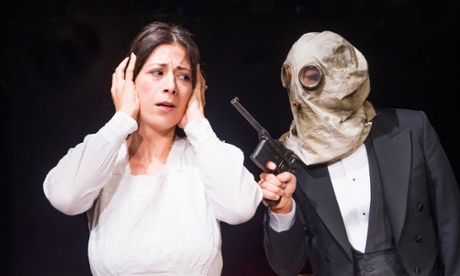
The outsider who exposes a family’s hidden lies is a standard dramatic figure from Ibsen to JB Priestley and the shadow of the latter’s An Inspector Calls looms heavily over this play. There are, however, two crucial differences: Priestley’s Inspector Goole is a perfectly plausible cop who stimulates the Birling family into self-condemnation. In this case Mr Holloway’s George enters looking like a dress-suited Machiavel whose very presence would arouse suspicion. When it comes to the crucial revelations, he also uses a loaded gun to get John and Jane to expose their secrets. I was happy to believe in George when he deployed Jane’s poetry, with its reference to “my soft prison”, as a means of sowing marital doubt but once he brandishes firearms he becomes a stock villain.
Many good plays are built around skeletons tumbling out of the cupboard. They work best, however, when the lock is not forced.
Like the play itself, Donnacadh O’Briain’s production tends to signal everything in advance: every time John sets foot outside the domestic interior he relapses into violent shudders as if to advertise his wartime trauma.
But, even if everything is spelled out in capital letters, there are three perfectly decent performances. Leon Williams looks gauntly haunted as John, Cassandra Tomaz as Jane has an air of refined sensuousness and Richard Atwill as the manipulative stranger is the classic example of the man you wouldn’t want to come to dinner. It would be a better play, however, if George seemed more like an innocuous visitor and less like a sinister embodiment of closeted guilt.
- At Jermyn Street until 1 August. Box office: 020-7287 2875.