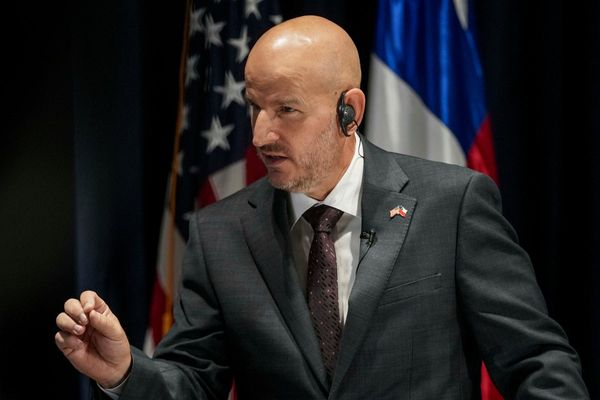
The United States’ envoy to Yemen, Tim Lenderking kicked off a new tour of the Arab region to push forward the peace process in the wart-torn country.
A State Department statement said: “His efforts remain focused on bringing immediate relief to the people of Yemen and advancing an inclusive, UN-led peace process.”
The envoy kicked off his tour in Jordan. He will then travel to the United Arab Emirates, Saudi Arabia and Oman to meet with the Yemeni government, Yemeni civil society representatives, regional senior government and UN officials, and other international partners.
He “will continue to advocate for a durable solution to the fuel crisis, including an end to restrictions on fuel imports and to Houthi price manipulation and stockpiling,” said the State Department.
“During his meetings with international partners, Lenderking will address the consequences of the continued Houthi offensive in Marib, which is exacerbating the humanitarian crisis, killing civilians, and defying the international consensus on the urgent need for a peaceful resolution to the conflict.”
Yemenis are skeptical that American and UN efforts will lead the Iran-backed Houthi militias to stop the war. Experts on Yemen believe that the international community must adopt a firmer policy in pushing the Houthi to accept peace.
Lenderking’s tour comes just days after one concluded by new UN envoy to Yemen, Hans Grundberg.
Grundberg had visited the interim Yemeni capital, Aden, where he met Prime Minister Maeen Abdulmalik and other officials.
A statement from his office said he stressed the importance of the full implementation of the Riyadh Agreement to support stability and functional state institutions. He discussed the deteriorating economic situation and the challenges of delivery of basic services.
“The humanitarian and economic impact of the war becomes more difficult to reverse with every passing day. The war has turned daily life into a struggle in Yemen,” he remarked.
“There is an urgent need to change course and work toward an inclusive political settlement that comprehensively ends the conflict and allows Yemen to recover and develop,” he added.
Grundberg also emphasized his commitment to inclusivity as a necessity for the sustainability of peace.
“Yemen has a rich history of political and social diversity. A durable solution is one that reflects the interests of diverse and broad segments of Yemeni society,” he noted.