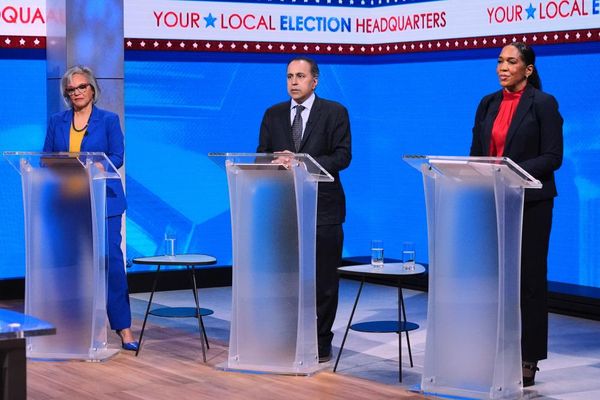

Six thousand dollars can buy a minute of air time, but a talk show episode can cost $240,000. In Lebanon, media outlets are charging parliamentary candidates exorbitant prices for coverage.
Whether beamed into living rooms on television screens or heard over the radio, legislative hopefuls are keen to get their messages out to their constituents before the May 6 election.
"Election season has prompted Lebanese media outlets to offer packages that can reach up to $1.5 million per electoral list," says Roula Mikhael, who heads Maharat, a civil society group monitoring Lebanon's upcoming vote.
The price lists are only recited verbally, to avoid being traced, but Maharat received a detailed breakdown from some campaigners, according to Agence France Presse.
"A month and a half ago, a minute on a morning television program could cost you $1,000. But the prices go up steadily as the elections get closer," says Mikhael.
Now, a minute of air time on some privately owned television channels will rack up a $6,000 bill. Radio stations charge $3,000 for a 15-minute interview. And channels perceived as independent can charge more than those with clear political affiliations.
In a first, Lebanon's new electoral law has set a spending limit on campaigns and established an electoral commission to monitor media appearances.
Paying for coverage is not illegal, according to the law, but channels are required by the commission to identify sponsored media appearances and specify who paid for them.
Its chief, former judge Nadim Abdulmalak, told AFP the amounts cited by Maharat were higher than those reported to the commission.
But he did admit outlets were violating other parts of the legislation.
"Media organizations are not abiding by the law. They are not identifying paid advertisements or saying who placed the ad," says Abdulmalak.
"They are also, more generally, not fulfilling the requirement of presenting a weekly report to the commission of what ads they broadcast," he says.
The commission has struggled since its delayed inception to properly flag any violations.
Its only member to have come from outside the political elite resigned on April 20, blaming a shortage of resources that left the body "unable to monitor media, campaign ads, or spending."
At its headquarters, 25 employees are silently scrutinizing a mix of media.
One unfurls a newspaper and squints her eyes at the text. Another is glued to a laptop screen, jotting down how long candidates appear on air.
"As monitors, we've noticed that media outlets host some guests more than others based on their political affiliation," says commission member Manal Ezzedine, 34.
"There are some candidates that you've never heard of or seen, because they don't have media coverage."
A total of 597 candidates are running for parliamentary office, including many newcomers, who say they struggle to get coverage because it's too expensive.
"Who can pay $20,000 these days for half an hour on air, besides the traditional parties that we've known for years?" says Laury Haytayan, a candidate running in Beirut on the Kulluna Watani list.
"Elections can't be for the wealthy only," she says.
Maharat's Mikhael said the prices asked by Lebanese media outlets risked turning the elections into a race among the rich.
"Everyone knows Lebanese media has been going through a very serious financial crisis," she says.
"Today, we're returning to a situation where people with money are the only ones able to actually come to power in Lebanon, where the rich alone are allowed to have media appearances."
Raed Ataya, who is running in southern Lebanon on a list bringing together communists and local figures, announced his candidacy through a free live-streaming option online.
He and fellow candidates were primarily funded by donations and could not afford the "ridiculous" press price lists.
"When we announced our list, we did so on Facebook Live, without a single media outlet present," Ataya says.