Pressing ahead with the government's plan to withdraw from the International Whaling Commission would spell the end for Japan's research whaling in the Antarctic Ocean but open the door to commercial operations in Japan's exclusive economic zone and waters near the nation.
Withdrawing from the IWC, an international body that oversees the conservation of whales and management of whaling, is expected to trigger a backlash from anti-whaling nations.
Quitting the IWC would render Japan unable to conduct research whaling in the Antarctic Ocean based on the International Convention for the Regulation of Whaling because it will lose the exemption from the Antarctic Treaty, which bans taking animals and plants there.
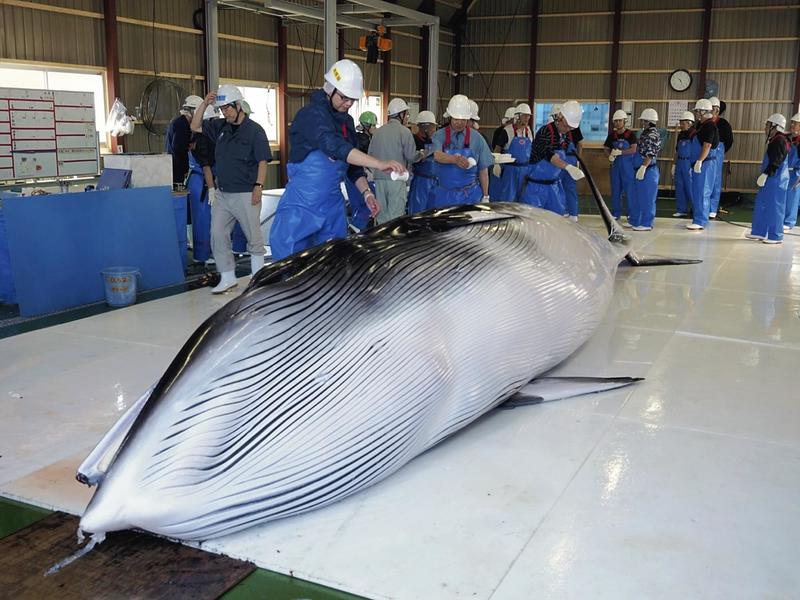
Commercial whaling currently conducted in waters near Japan avoids 13 types of whale, including minke, which the IWC has banned from being caught. After leaving the IWC, Japan would be able to catch minke and other whale species in waters near the nation and inside its EEZ, so the government plans to resume commercial whaling of species whose stocks have sufficiently recovered.
Antarctic operations face chop
In a nutshell, Japan has given up whaling in the Antarctic Ocean and instead chosen to resume commercial whaling in its waters -- a long-cherished goal.
While the Antarctic Ocean is a rich fishing ground, the decision to concentrate on whaling in nearby waters reflected the perception that commercial whaling would not resume, even if discussions continued at the increasingly dysfunctional IWC.
One path to conducting commercial whaling in the Antarctic Ocean would be to establish a new international body similar to the IWC and get member nations of the Antarctic Treaty to unanimously adopt such a proposal. However, gaining the understanding of anti-whaling nations would likely be very difficult.
Furthermore, commercial whaling in the Antarctic Ocean was a business rife with difficulties.
"Research whaling can use subsidies, but there are no subsidies for commercial whaling," Tokai University Associate Prof. Ayako Okubo, an expert on whaling policies, said in an interview with The Yomiuri Shimbun in September, when the IWC was holding a general meeting. "If whalers spend a huge sum of money to travel all the way to Antarctica to go whaling, they need to catch a lot and sell it off, but demand for whale meat is declining."
Yoshifumi Kai, head of the Japan Small-Type Whaling Association and a senior official of a fisheries cooperative association in the town of Taiji, Wakayama Prefecture, welcomed the government's plan.
"We've been longing for the resumption of commercial whaling. Although there are concerns this might have a negative impact on the preservation of some species, the government should take control and decide details such as how many whales can be caught," Kai said.
Despite this, some Taiji locals are worried the government's plan might spark trouble. "If Japan leaves the IWC, anti-whaling activities might be stepped up," one resident said.
Read more from The Japan News at https://japannews.yomiuri.co.jp/