Naomi Osaka knows how to make an entrance. At the Australian Open, the four-time Grand Slam champion, 28, arrived in a mesmerising jellyfish-inspired ensemble (elegant wide-brimmed hat, long white veil), designed by Beyoncé’s regular couturier, Robert Wun.
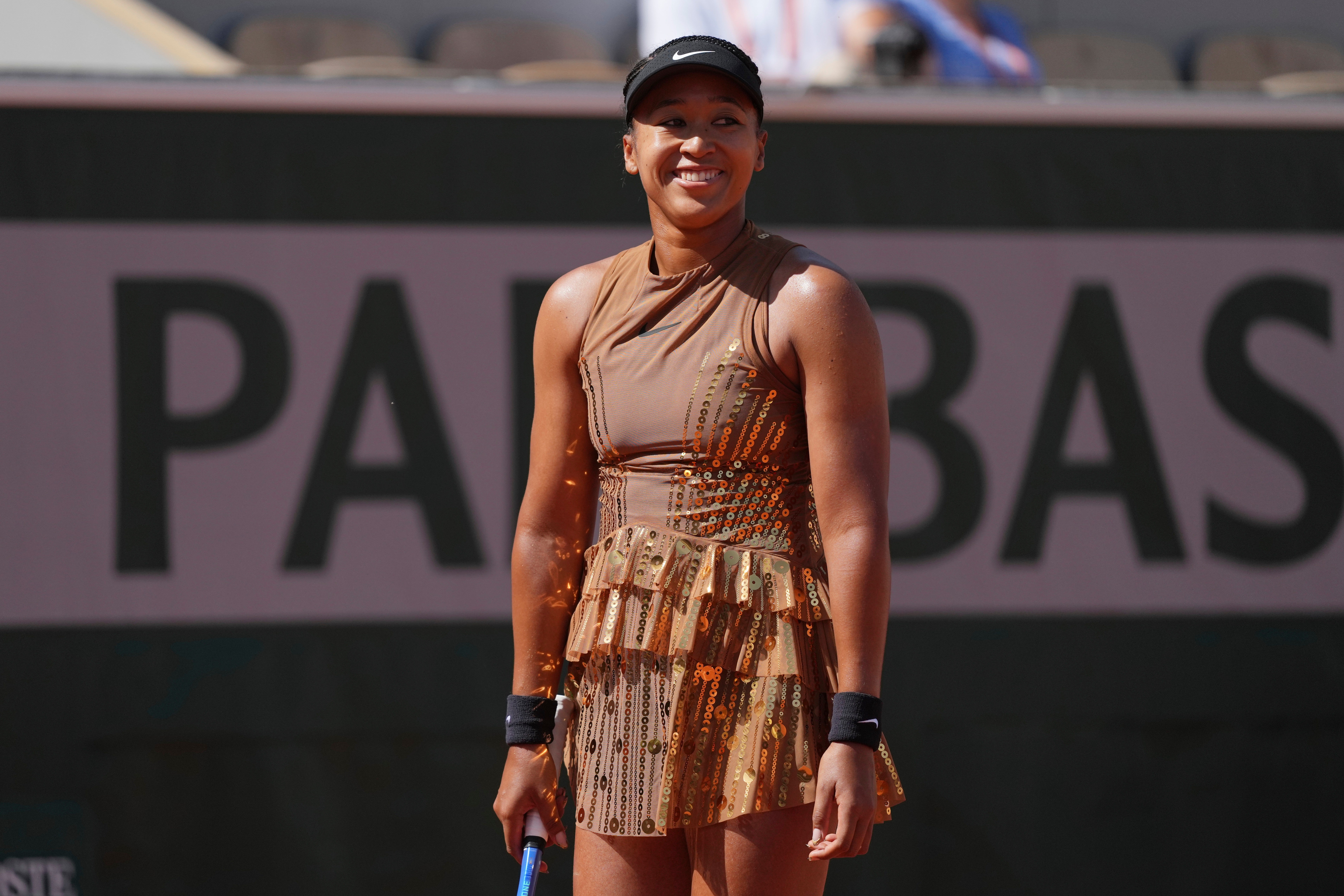
For this week’s French Open, it was impossible to predict how she’d surpass herself; then she stepped out in a black corset and cascading pleated skirt by Kevin Germanier (beloved by Lady Gaga and Björk), which she promptly shed to reveal a glittering copper tennis dress.
“I actually got a little worried because when the sun hits the dress, it reflects a lot, so I was a little scared the umpire was going to kick me off the court,” Osaka said of the sparkling “Eiffel Tower at night” ensemble.
“I’ve got two backup, normal dresses – thankfully I didn’t have to wear them,” she added. “Sometimes people say athletes are in show business… For me, Grand Slam walk-ons are the only time that I possibly feel like I’m an entertainer,” the tennis pro explained.
Osaka’s opponent, Germany’s Laura Siegemund (whom she beat 6-3 7-6 (7-3) to reach the second round), it’s fair to say, was fuming. “I couldn’t care less,” she told TNT Sports. “I come here to play tennis, not put on a fashion show.” Nevertheless, Siegemund then went on to claim that Osaka’s big outfit reveal had broken time-keeping rules: “Once again, bigger names are treated differently,” she hit out.
So, perhaps, she did care – just a little bit.
Throughout her tennis career, Osaka has been treated differently – rarely for the better. After winning her first-ever Slam against American great Serena Williams at just 20 years old, she broke down in tears of dismay instead of joy. The umpire, Carlos Ramos, had accused Williams of receiving on-court coaching and docked her game, leading Williams to call him a “thief” and later accuse him of sexism.
As Osaka collected her trophy, boos rang around Arthur Ashe Stadium while she wept. “Not only was a game taken from me but a defining, triumphant moment was taken from another player,” Williams later wrote in an essay for Harper’s Bazaar. “My heart broke.”
The incident was all the more gut-wrenching as Williams is Osaka’s icon. This can be seen again in her fashion choices, as she follows in the footsteps of the former World No 1 to serve draw-dropping looks on the court that unapologetically allow her to express herself, when the backwards governance and antiquated confines of the sport, perhaps, won’t. Notably, Osaka faced intense racial abuse after supporting Black Lives Matter in 2020.
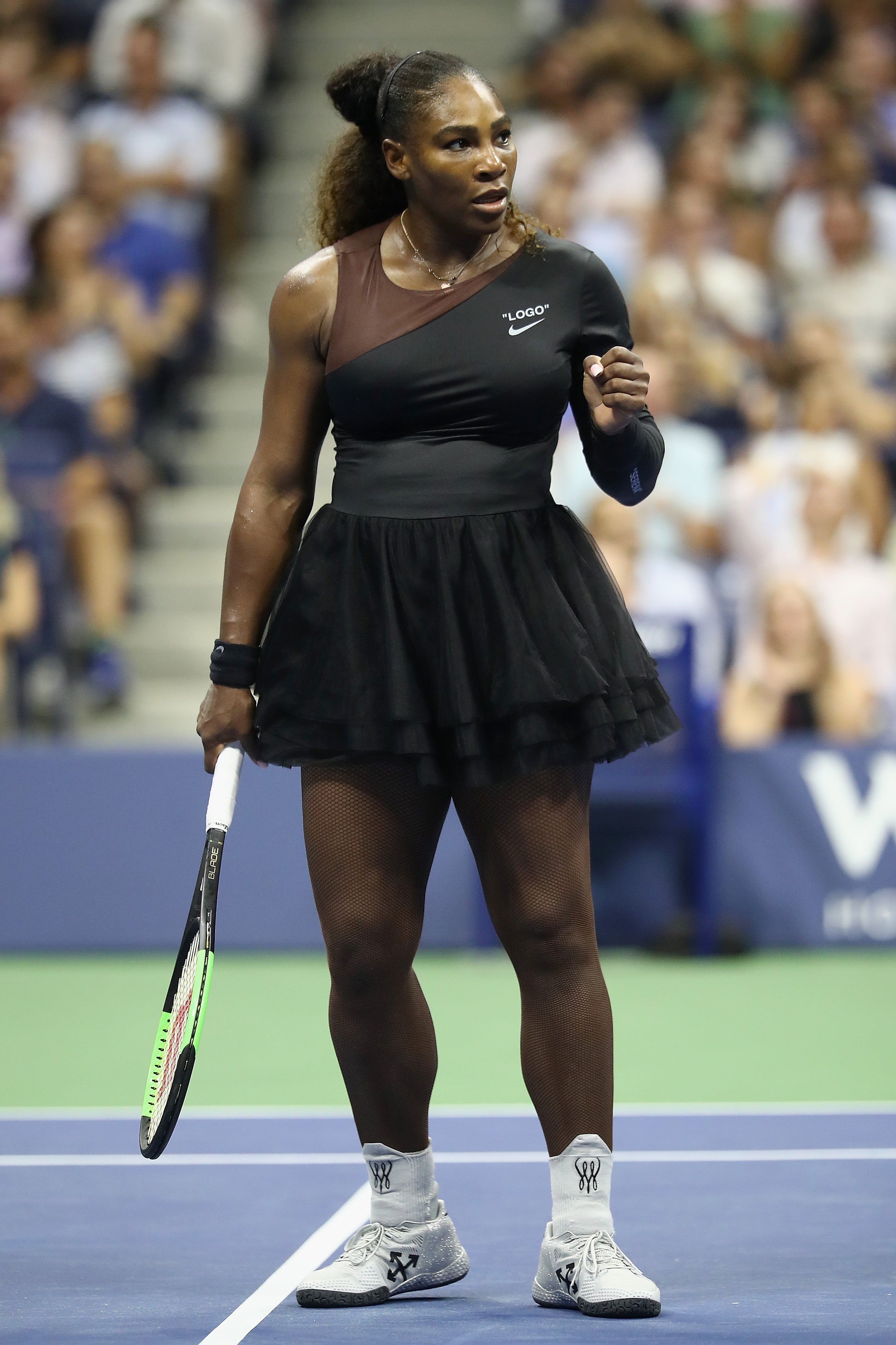
Williams has frequently challenged traditional tennis dress codes with pioneering ensembles; her 2018 French Open catsuit, which she said made her feel “like a superhero”, was banned for no other reason than that the French Tennis Federation felt it didn’t “respect the game and the place”. Nevertheless, months later she stepped out at the US Open in a black one-shoulder tennis dress complete with a tutu. "It's easy to play in, kind of aerodynamic,” she said.
The star’s wardrobe has sparked debates around the policing of women’s bodies in sport and the functionality of athletic wear. Many noted at the time that the clothing controversy felt like another reason to slate a Black player in an overwhelmingly white, historically exclusionary, elite sport. A tutu somehow became perceived as a threat to tennis’ status quo.
Notably, few have been up in arms over Aryna Sabalenka wearing £76,000 worth of diamonds and garnets with a sheer Nike super suit at Roland Garros. “I love it,” the Belarusian defended Osaka’s latest ensemble. “She feels confident. That’s the beauty of the fashion world. There’s a space for everything. I love that she’s bringing it on [to] the court.”
Sabalenka shared that she too hoped to one day “come up with something cool” for an Open entrance like Osaka’s.
Elite sportswomen, of course, don’t want to be known or judged for their outfits alone, but – when the coverage of and prime time slots for women’s tennis at tournaments like the French Open still drastically lag behind the men’s game – it also can’t hurt to turn a few heads and garner extra attention using a bit of tulle and some sequins, right?
“I tend to win more when I’m having fun,” Osaka previously told Vogue of her relationship with sport and fashion. So far, so true – and the tennis season is just getting started.