"First, let's be honest. When you think of Klong Toey what do you imagine? Remember that image and look at yourself in a mirror. In there is a reflection of your own prejudices," writes textile designer Kamonart Ongwandee on the walls of Conne(x)tKlongtoey -- a powerful and poignant art project whose exhibition runs now to Sunday in Charoen Krung's O.P. Place.
For many Thais, Klong Toey remains a paradigm of urban blight. "Slum", "drug-infested", "full of crime" -- these words have bombarded the mindset of the community's youth since the day they were born. With limited opportunities and crushing disparity, in addition to believing that outsiders see them as futureless misfits, Klong Toey's children tend to feel hopeless, inferior and less human -- believing that they'll never escape the cycle of poverty and struggle.
The Conne(x)t Klongtoey project, though, hopes to inspire change. A collaboration born out of the caring heart of teacher Sininard Kamakot in the Chumchon Mooban Pattana School and multimedia design company Eyedropper Fill, the project's goal is to create more opportunities for the community's children to dream bigger, break the cycle of poverty and show to the outsiders that they do have potential to succeed.
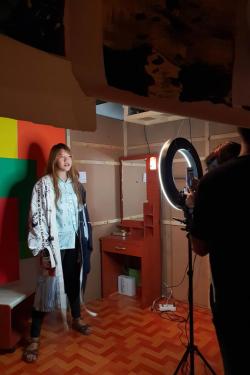
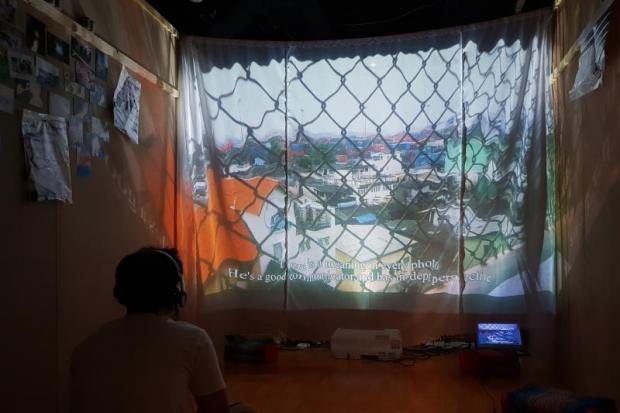
Visitors don a robe, designed by children from the fashion workshop, with phrases like "I have a dream — I can do it" and "Freedom".
"We work in film and design," said Wattanapume Laisuwanachai, creative director of Eyedropper Fill. "Sininard graduated from film school as well and we've worked together before. We suddenly found out that she became a teacher in Klong Toey."
Seeing that her students struggled academically yet excelled at art-related activities, Sininard wanted to show them that their activities could further be utilised in real life and even be turned into a profession.
"The children in Klong Toey have limited choices," said Sininard. "They see this repeated lifestyle where people graduate [grade nine] and then either work at 7-Eleven, work on the docks or drive a motorbike taxi to earn income. These are the choices they have."
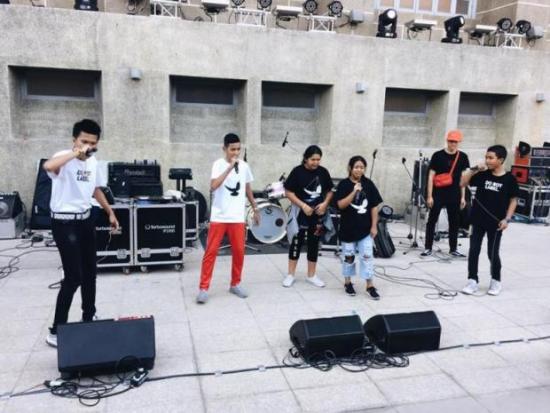
Setting up the project together, they made a list of art-related professions for the students to pick and choose from, resulting in four main workshops the children can attend after class with an industry professional: rap music production, photography, fashion design, and tattoo design. The exhibition, which showcases the students' product, is the final end-goal in order to show the outside world their potential and talent.
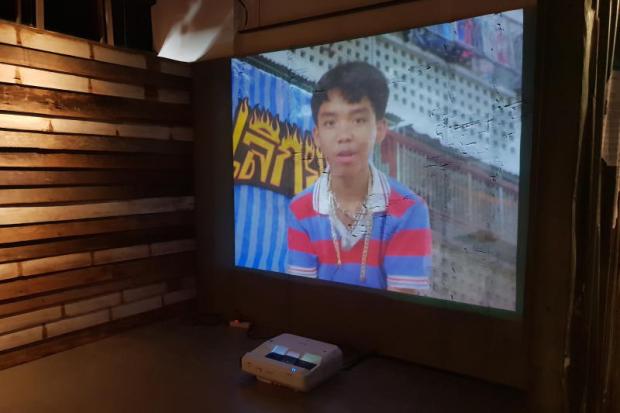
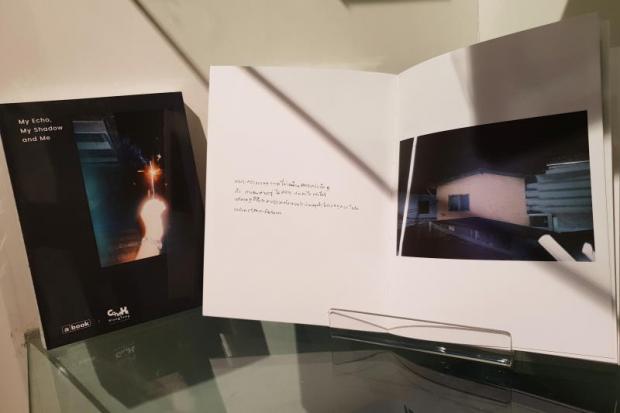
Inside the exhibition space at O.P. Place is a replica of Klong Toey's squatter settlements made from corrugated steel sheets and old wooden planks. One room projects a series of rap songs written and produced by those from the rap music workshop. One room lets visitors wear a piece of clothing that the fashion students designed. One room projects a series of photographs and diary entries by the photography students. And each and every piece of work lends insight to the lives and struggles of the children of the community.
The rappers would rap about school tensions, drug use and unrequited love. The fashion designers would have motifs such as a white dove, representing their hopes of flying away and escaping the slums. And the photographers, who took snapshots of their daily lives, reveal to the world how they truly think and live.
Conne(x)t Klongtoey even made a CD album, a photo book (partnered with A Book Publishings) and T-shirts and pollution masks from the kids' respective artworks with 10% of the earnings going to the children's artist fee and a large percentage going to the Yuvabadhana Foundation, which funds Teach for Thailand.
"This art project had the function of expanding the voice of these kids," said Wattanapume. "At the same time that they expanded their voice to other people, they also listened to their own voice. It's like a speaker, and at the same time it's a mirror. They get to see the things that they say through the works and it makes them think a lot. As time passed until the end of the project, [some of the kids] wrote a reflection and they truly changed. They had more confidence and realised other people didn't judge them like what they thought before."
However, not everything went as planned. Going into the project with an idealistic mindset, Eyedropper Fill didn't take into account the full context in which they were working. The tattoo class, for example, failed due to certain misunderstandings. The children thought that they would be getting tattoos and not actually learning about creating tattoos. And of the 80 students that started out in the four workshops, only 10 remained until the final exhibition.
"There are a lot of factors with these kids," said Wattanapume. "For example, a kid was doing really well, then his friends pulled him away to go play snooker or go race on the streets, so they're gone… Some kids have certain conditions at home and with friends that will falter their success… There's a kid named Boss. Normally he's the most responsible kid in the photography group. He's always early or on time to classes. At one point he disappeared and was nowhere to be found. We found out later that he was abused by his family and he ran away to be with his mom. It took us three-to-four days before we got news from his mom. But the fact that he's there now closes the door to his education. He probably won't be studying anymore.
"Boss's case really impacted us because he was the only kid who was so studious and talented. If you look at his photographs, they're conceptual photos. He's an artist, the way he views the world. But when this happened, we knew that we can't just change the education system. At first we thought we'd bring the workshop in to fix the educational system and to find an alternative. But the problems are linked to the context of their community as well."
Still, the company hopes to continue with Conne(x)t Klongtoey to become a long-term project through the Teach for Thailand organisation that Teacher Sininard is a part of.
"In the end, kids should know that there are other careers available in order to bring up their inspiration," said Wattanapume. "This is the core concept of the project that we want to pass on to Teach for Thailand, which is based all around Thailand."