If you learn only one Swedish word, make it fika (fee-ka). Confusingly, it’s both a noun and a verb. Strictly speaking it means a coffee break. But you get a better idea of what it’s all about - and why it’s so important in Swedish culture - by thinking of it as a verb. Loosely translated, it means spending time over a coffee and a pastry - preferably a sweet bun - chatting and generally hanging out with a friend. It can happen any time; possibly several times a day. It’s so important it’s even built into some employee contracts. No surprises to learn that Swedes have one of the world’s highest per capita coffee consumptions.
Flickorna Lundgrens, Kullahalvön peninsula, Skåne
Started by the seven Lundgren sisters, in 1938, in an old fishing village near Arild, this café and bakery is still owned by the family. The 18th-century teahouse was a favourite of King Gustav VI Adolf when he stayed at his nearby summerhouse, Sofiero. Today it’s expanded into a pretty ‘greenhouse’ and lovely gardens where you can take your fika - with a handmade vanilla heart (the King’s favourite) - under the chestnut trees.
Olof Viktors, Glemminge, Österlenvägen, Skåne
This café and bakery takes a bit of finding - in the countryside between Ystad and Simrishamn, near Glemminge - but is well worth it; it was voted Sweden’s best café in 2013. Their bread is baked in the old fashioned way in a wood-fired stone oven. Like all the baked goods, everything is done by hand and with no additives. Try the lemon meringue pie or award-winning rhubarb dream cake.
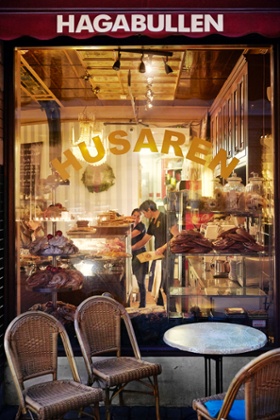
Cafe Husaren, Haga Nygata 28, Gothenburg
Here is where you will find, possibly, the biggest cinnamon buns in Sweden. Think of a dinner plate and you’re about there. Set in a gorgeous 19th-century listed building - decorative glass ceiling, chandeliers, polished wood panelling- that was formerly a bank and a hat shop, this is a classic fika café.
Da Matteo, Vallgatan 5, Gothenburg
Named after the owner, Matts Johansson, who is passionate about craftsmanship and, with his team, both roasts his own coffees and bakes his own bread and pastries. Sourdough bread a speciality. The style of the cafe is rough and unpolished - lots of concrete, wood, brick and stainless steel - as opposed to manufactured and uniform. There’s a courtyard, too, for al fresco fika.
Ekstedts Bakery & Cafe, Alingsås, West Sweden
Dating back to 1886 this traditional bakery is considered one of the best by the White Guide which rates Sweden’s best restaurants and cafes for its selection of delicious freshly baked bread, biscuits, gateaux and pastries. What’s more it’s even home to its own coffee roastery – the Alingsås Kafferosteri – producing small batches of organic and Fair Trade certified beans.
Nygrens Cafe, Alingsås, West Sweden
Housed in a former 18th century coaching house, Nygrens Cafe is decorated with crystal chandeliers, tiled walls and velvet sofas making it a cosy yet sophisticated place to enjoy a traditional fika. In warmer summer months sit in the pretty cobbled courtyard. Head there for its popular Sunday ‘fika’ buffet consisting of homemade bread, butter, cheese, marmalade, fruit, biscuits, tea and coffee.
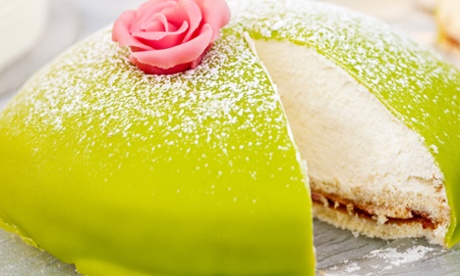
If you’re inspired to fika at home try making the classic Swedish Princess Torte - as recently featured on the Great British Bake off or these classic cinnamon buns for an authentic Swedish experience.
Cinnamon bun recipe:
Makes 24 Buns
400ml milk
110g butter
2 x 7g sachets of dried yeast
110g caster sugar
750g plain flour
1/2 teaspoon salt
2 tsp ground cardamom
4 tablespoons of pearl sugar
1 egg, beaten
For the filling:
220g soft butter
180g sugar
4 tablespoons of cinnamon
Melt butter in large pan on low heat and add milk. When lukewarm, remove from heat and add yeast, whisking until fully absorbed.
In another bowl, mix together dry ingredients, make a well in middle and pour in milk mixture and form a dough. When the dough is no longer sticky (sprinkle with flour if it is), knead together on floured surface for six minutes before placing in a large bowl and covering with cling film. Leave in a warm place to rise to double the size; about 45 minutes.
Make the filling by beating all ingredients until a smooth paste.
When the dough has risen, punch it down and divide in two. Roll one half into a rectangle about 3mm thick and spread with half the filling. Fold the top third of the dough down, and the bottom third of the dough upwards. Give it a quick roll out to seal the dough together.
Cut into strips 2cm wide, then cut each strip in half lengthways, leaving an uncut portion, 1-2 cm wide, at the top, so that it looks like a pair of trousers. Hold the top portion and stretch the two legs gently before twisting each one in opposite directions. Then pull them back on themselves to make a simple knot. Place each knot on a baking sheet lined with parchment and brush with the beaten egg. Sprinkle the buns with pearl sugar. Bake in a preheated oven (190C or 170C for fan) for 15-20 minutes. Repeat with the second half of the dough.
Makes 24 Buns
400ml milk
110g butter
2 x 7g sachets of dried yeast
110g caster sugar
750g plain flour
1/2 teaspoon salt
2 tsp ground cardamom
4 tablespoons of pearl sugar
1 egg, beaten
For the filling:
220g soft butter
180g sugar
4 tablespoons of cinnamon
Melt butter in large pan on low heat and add milk. When lukewarm, remove from heat and add yeast, whisking until fully absorbed. In another bowl, mix together dry ingredients, make a well in middle and pour in milk mixture and form a dough. When the dough is no longer sticky (sprinkle with flour if it is), knead together on floured surface for six minutes before placing in a large bowl and covering with cling film. Leave in a warm place to rise to double the size; about 45 minutes.
Make the filling by beating all ingredients until a smooth paste.
When the dough has risen, punch it down and divide in two. Roll one half into a rectangle about 3mm thick and spread with half the filling. Fold the top third of the dough down, and the bottom third of the dough upwards. Give it a quick roll out to seal the dough together. Cut into strips 2cm wide, then cut each strip in half lengthways, leaving an uncut portion, 1-2 cm wide, at the top, so that it looks like a pair of trousers. Hold the top portion and stretch the two legs gently before twisting each one in opposite directions. Then pull them back on themselves to make a simple knot. Place each knot on a baking sheet lined with parchment and brush with the beaten egg. Sprinkle the buns with pearl sugar. Bake in a preheated oven (190C or 170C for fan) for 15-20 minutes. Repeat with the second half of the dough.