

If you ever find yourself getting bored of the same old chord voicings that you’ve been using since day one, you’re not alone.
As guitar players we often learn, and stick to, chord rules that involve chords being played in their 'standard' form. This usually means the root note of the chord is the lowest note that we hear.
However, if you play all the same notes, but re-stack the order of the chords, we can unlock a series of alternate chords known as inversions. In this lesson we’re going to learn 4 essential chord inversions that you can use in your playing right away.
C/E
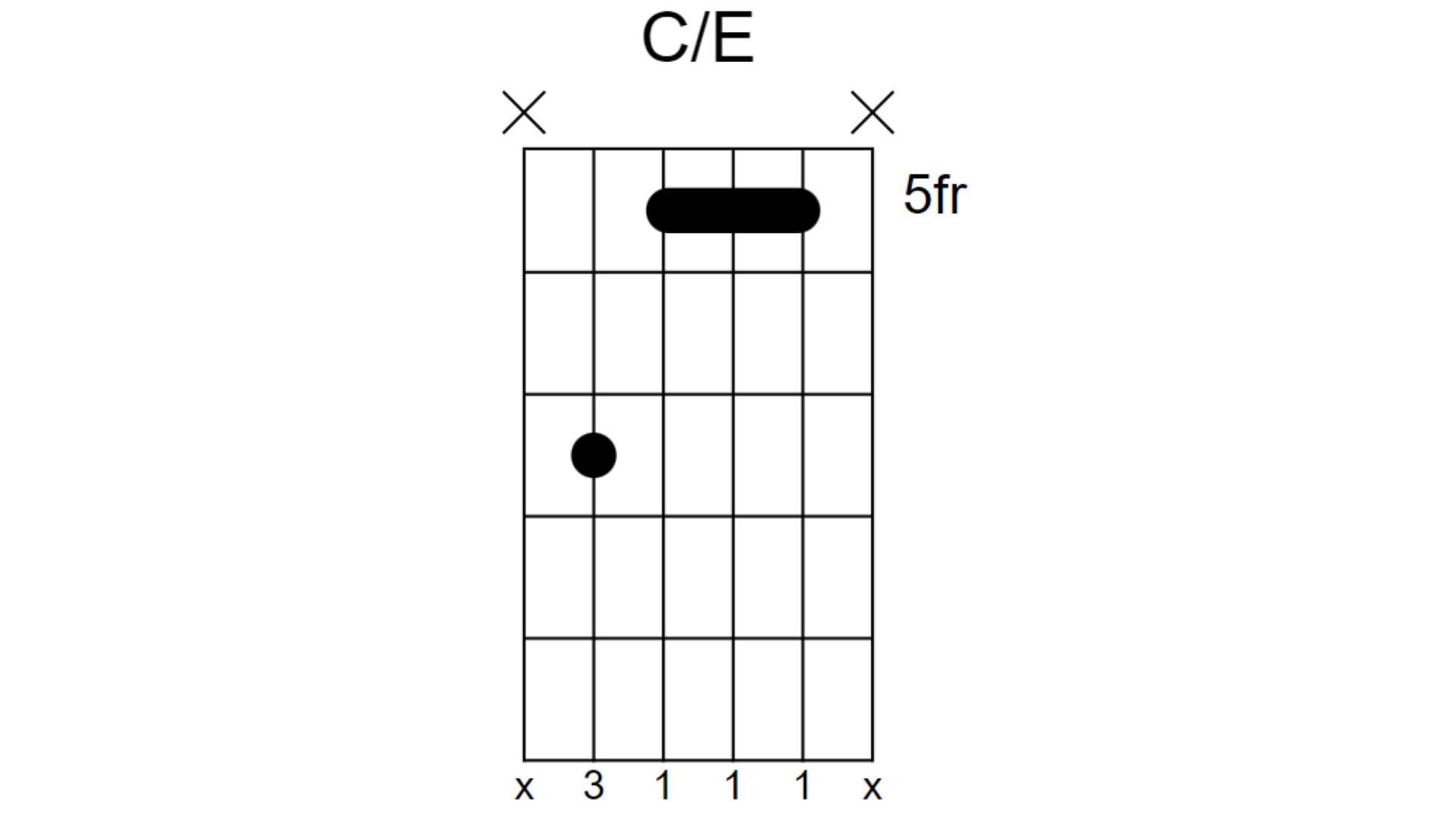
This transposable chord shape is the first inversion of a major chord rooted on the A string. In this instance, the C root that you’d play in your regular C major chord is switched out with the E note which is the 5th interval, giving us a C/E chord.
The root note is now on the G string.
This variation on a major barre chord also allows you to use extra fingers to add melody lines and extension notes in the Hendrix style.
Dmin/F
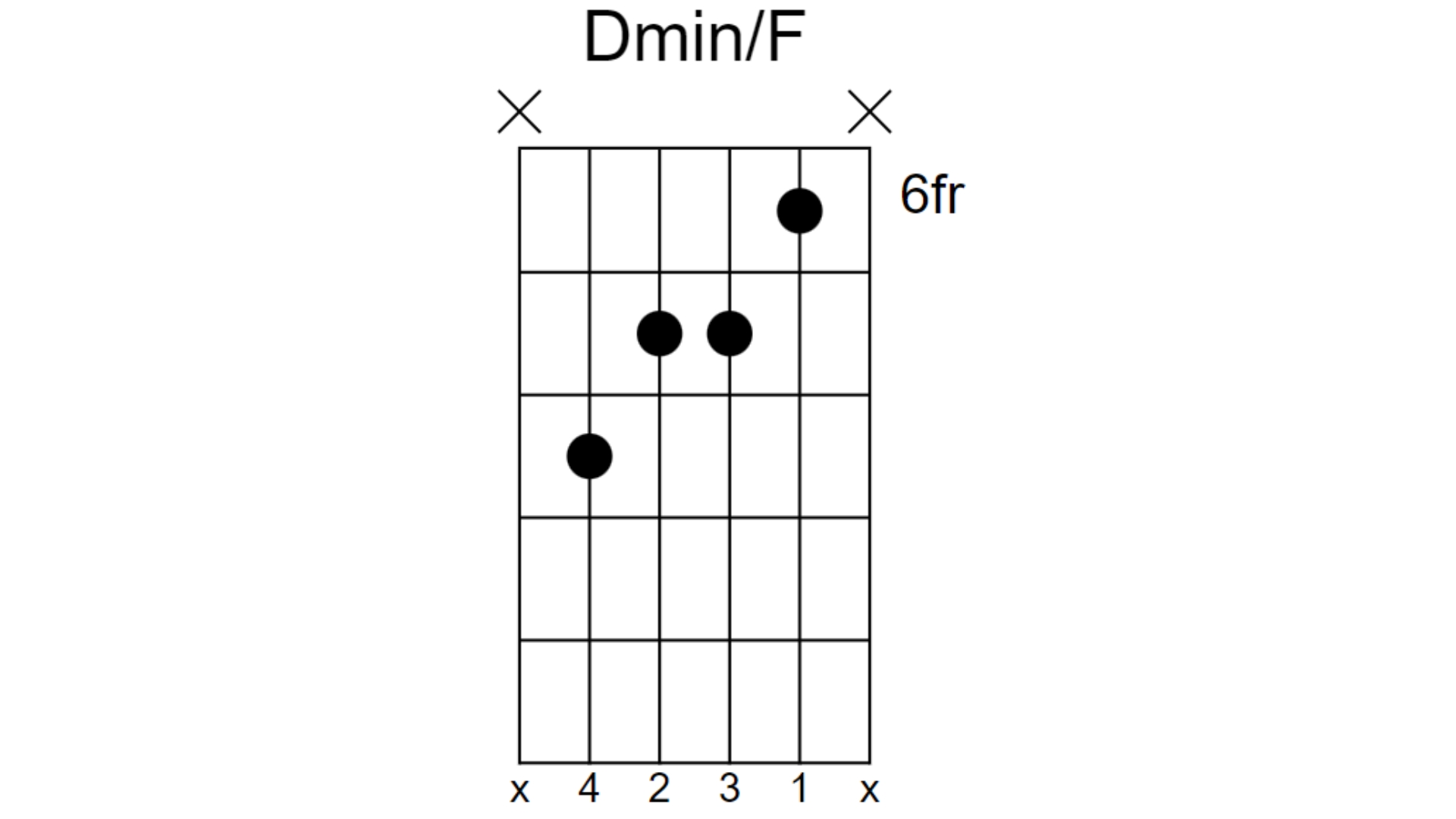
This inversion follows the same theory principle as the first, but this time we’re using a minor chord rooted on the A string but playing the minor 3rd in the bass, an F note in the case of this chord.
For this chord, the root is once again on the G.
C/G
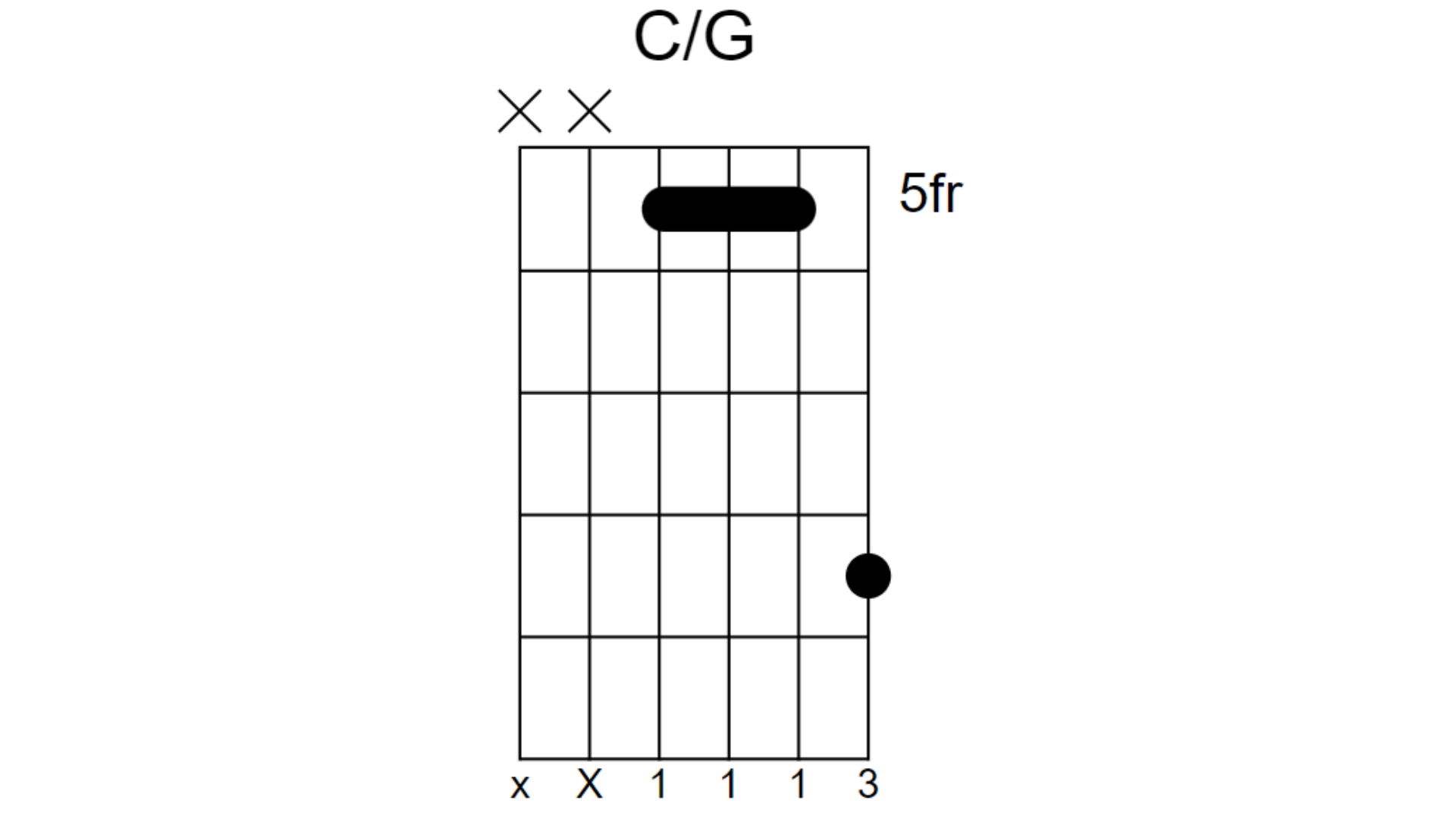
This major chord inversion has the 5th in the bass and is quite easy to play. You will need to barre across the D, G and B strings while extending a finger up 3 frets on the E string to the root. The root is also present on the G.
A fun trick with this chord is to play the note 2 frets higher on the D string by reaching over with your third finger. This turns the major chord to it’s relative minor. In the case of this chord, it becomes an Amin.
E/G#
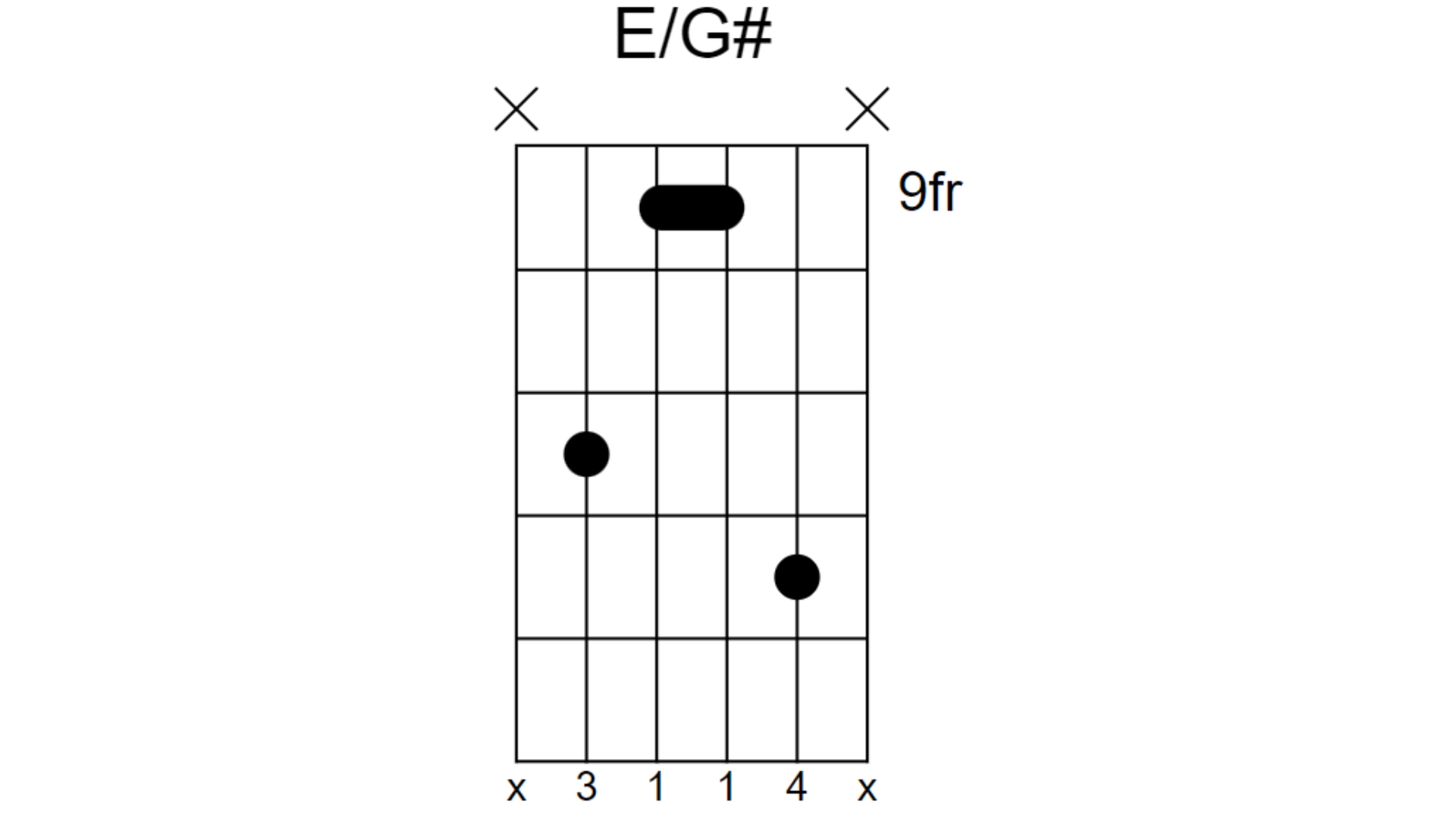
This inversion roots the major 3rd in the bass but comes from the G form of the CAGED system. In this position, playing the full chord would give you an E Major (If the root was on the Low E). In this inversion, the root is on the G.
This inversion sits inside of the major pentatonic scale shape 5 (The same shape as minor pentatonic shape 1) which makes it useful for jamming. You can play this inversion and add some licks.