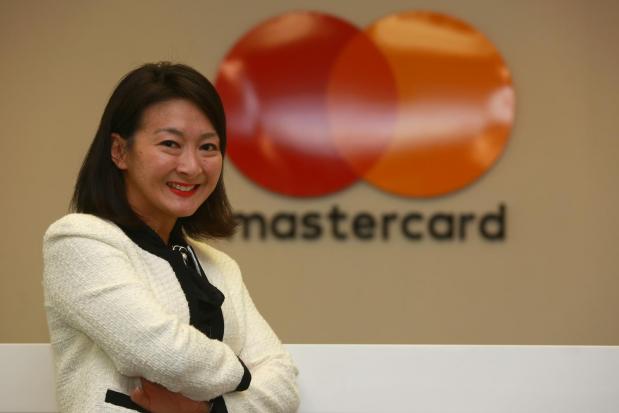
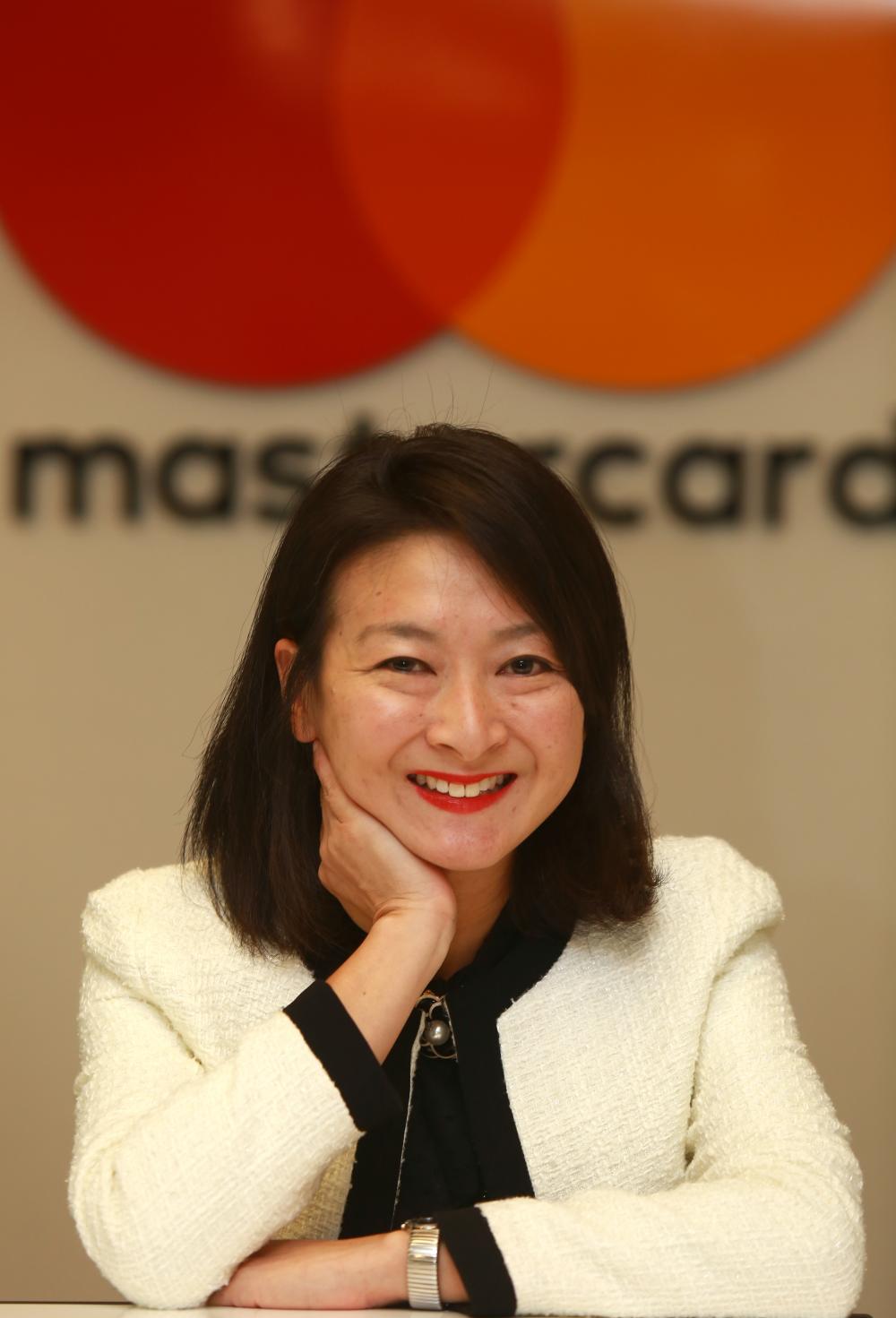
An extremely exuberant executive appears before me in a cream-coloured tweed jacket and neon-pink pants. She is petite but her upbeat and outspoken manner commands the spotlight instantly. A gleaming smile and frequent laughter mark a down-to-earth personality.
Recently appointed as the country manager of Mastercard for Thailand and Myanmar, Aileen Chew is the perfect representation of a powerful, confident and unwavering modern woman of the 21st century.
A Singaporean, born and bred, Ms Chew grew up in a family of accountants, so it was almost a foregone decision that she would pursue a university degree in the same field. She did, but she never become one. Being in an office staring at spreadsheets on a screen and pushing papers, she reasoned, wasn't something she would enjoy doing.
Instead, after receiving a bachelor's degree in accountancy from Nanyang Technological University in 2000, she joined Singapore Press Holdings (SPH) in sales and marketing.
"I wanted to make sure that I could spend time meeting and talking with people," she tells Asia Focus. "I wanted to go out and interact with people, so I got a job that was customer-facing."
But her accountancy training did not go to waste. In fact, she says, it allowed her to get a good grasp of the business world and build a strong foundation in finance early in life.
"There are no regrets around it. There's a lot of what I do today which is embedded in that foundation and it helps me make good decisions," she says.
Ms Chew feels she was lucky to have a family that was very supportive of her decision, who wanted her to do things that she felt she was going to be good at and enjoy.
As a mother of three, she remembers how she was brought up and tries to emulate her parents when interacting with her own children. "I cannot predict what types of jobs they should have in the future because there are jobs that exist today that didn't exist in my lifetime," she says. "As a parent, there's not much guidance you can give when it comes to career perspective."
She does, however, encourage them to focus on the sweet spot -- do something that makes them very happy while making a little bit of money. This creates a virtuous cycle of being happy and fulfilled, she says.
When she joined SPH, best known as the publisher of the Straits Times, it was still focused mainly on print media, an industry Ms Chew now describes as a "dinosaur company". Back then she was not interested in a career in technology, and her focal point was people -- to excel in the ability to deal with people, understand their ideas and help them drive their businesses.
"I'm not a digital native. I did not grow up with iPhones, Google or YouTube. The world I grew up in was very much brick-and-mortar, pen and paper. I didn't deliberately choose technology; I chose to think how I can change the lives of the people."
PROFESSIONAL MISSION
After three years with SPH, Ms Chew moved to Singtel in the consumer marketing field, which helped broaden her reach and knowledge about the consumer market. While she was with Southeast Asia's biggest telecoms business, she started to question herself about what she stands for and the purpose of her professional life.
"Midway through my career, I realised that I wanted to affect positive change," she says. "I wanted to do something that when I look back, our lives will be forever changed by it in a good way."
This led her to become more inclined toward technology, as she sees it as the perfect tool to deliver meaningful consumer services and experiences.
"Technology is the way to move forward to introduce a positive change to people's lives. It is inevitable and a lot of what we see today is due to technology. It's one of the things that when I wake up in the morning, I feel really excited about and driven by," she says.
She later moved to Singtel's product development department, which was during an exciting time for the industry as it was making the transition from 2G to 3G and from dial-up internet to broadband.
"If you want to affect real change, you have to move upstream and start looking at the products and solutions, not just try to sell the products," she says.
"What I have in myself is the drive to make positive change for the world around me. That's how I became a Singaporean girl who was studying accountancy but then decided that I wanted to do something else, but not just anything else, something that people would benefit from."
One brainchild of hers was Singtel Dash, which was the first all-in-one mobile payment system in Singapore for public transit, taxis, shops and other transactions. "I led the product development from scratch and it is still being used today. It's my pride and joy," she says, smiling.
In her view, the concept of modern digital payments didn't really existed until about seven years ago when the first phones with biometric authentication were launched. "Prior to that was what I called dinosaur-age digital payments. Biometrics is the single most important invention in our lifetime when it comes to payments. It changes everything."
Her journey with Singtel was an important transition from being a novice tech user, to what she calls a "digital payments enthusiast". It has also taught her one very significant lesson that has helped guide her current position today at Mastercard.
Ms Chew recalls that when Singtel first launched its 3G network, the only handsets that supported the technology were from Sony Ericsson and Motorola. This was also before the era of social media, so people didn't know much about what the benefits of having a 3G network would be.
"I learned that there is more to life than just launching a device or having a faster solution," she explains. "What's more important is how do people get on board and get the benefit of the technology we are trying to provide."
At Mastercard, Ms Chew says the focus now is on how to utilise technology as a tool to help change the lives of people and to influence positive changes.
She acknowledges that the success of platforms such as Alipay, WeChat Pay and Rabbit LINE Pay has been a lesson for the multinational payment giants like Mastercard and Visa. But she relishes the challenge of being able to deliver new tech-enabled payment services that will empower people across all social and economic levels.
ALWAYS LEANING IN
While it may not be easy for females to thrive as senior executives in business settings in the patriarchal Asian society, Ms Chew has figured out how to use her strengths.
"Asian girls are perceived in a certain way -- quiet demeanour, soft-spoken and polite. Even among some female senior executives, there's always a sense of how do we behave to be taken seriously. For me, sometimes I felt needed to ask for permission," she admits.
It was only recently that she came to believe that being female is in fact a great asset in the modern world marked by volatility, uncertainty, complexity and ambiguity (Vuca).
A recent serendipitous encounter with her life-long career idol, Claire Chiang, the Singaporean entrepreneur who co-founded the hospitality group Banyan Tree, was her epiphany.
"I bumped into her and fell on my knees like a little girl! literally like I met Marilyn Monroe!" she says with exhilaration.
During a short 10-minute sit-down conversation with Ms Chiang, she says, she learned that in the Vuca world, women are better able to thrive as they are versatile, unwavering, complex and able to use their intuition.
"Women are natural at juggling motherhood and work. We do it seamlessly and it's become part of our daily life," she says. "We are unwavering and we need to be because a lot is going to change and we need to have our core principles -- what we stand for and how we make sure we do not always change our minds."
In addition, she says, women are very much in touch with their intuition and they are able to read between the lines-- something that men are not proficient at. "One of the things that I found important was holding on to the academic side of what I learned through job experience, but also allowing my intuition to guide me.
"Women don't have to ask for permission," she continues. "We shouldn't have to be apologetic. If we understand the innate traits we have as females that make us best placed to operate in the world, we should embrace it. Just be who you are and that's more than good enough," she recalls from Ms Chiang's guidance.
Ms Chew also encourages girls and women today to always lean in and never put their hands down.
"We take ourselves out of the race too soon. Women put themselves up for something and doubt themselves, questioning whether they are ready," she says. "We need to lean in a bit more. Lean in and never put our hands down because only the one who put their hands up will get picked.
"Men don't have this problem. Men put themselves up for promotion all the time even when they are not ready!"
Everywhere around the world, women are still asking for permission and we are trying to understand how to operate in this world, she explains, but the fact that they are not like men is actually not a bad thing, and women don't realise how powerful that can be.
"We, however, will fail and we have to be very okay with that. We just have to try and try again. I learned through failures, through listening very carefully and by trying many, many, many times until I become very good at what I'm doing."
STAYING INSPIRED
One of the things I found very much refreshing about Ms Chew's personal life is that she and her husband always plan one trip a year for just the two of them to a place they've both never been.
Naturally as we grow into our twenties or thirties, life is full of new and exciting things. Then you get to a point in your life that there are very few times when you find something that you've never done before and a lot of things become very mundane, she says.
"You lose touch with how amazing life can be," she says. "Sometimes just to be a really good human being, we still need to be in awe of the world. You still need to be reminded that the world is really big and there are many things out there beyond just yourself, your life, and what you eat every day.
"Being able to go out and be in awe of the world is a really good way for me to centre myself. And my husband feels the same way," she says, adding that he is also her source of absolute joy and support.
Her three boys, age 5, 10 and 12, are also her constant source of joy, but also angst.
"Joy, because there's a lot you get from having children, which in life you can't get from anywhere else -- the unconditional love. But children also stretch you in a way that you never thought. They teach you that you have to be very patient. I have to use both my head and my heart to manage them," she says.
The family is accustomed to moving, having lived in Hong Kong and Australia prior to coming to Thailand. A street-food junkie who's extremely particular about her dishes, Ms Chew feels extremely fortunate to be in Bangkok.
Some of her favourite dishes lean toward more authentic and local feels, rather than touristic. To give an example, she loves the beef hot pot (gao lao mor fai) at Heng Chun Zeng and Wattana Panich. "They keep it boiling non-stop, they never stop boiling it. It's so good."
Another dish that makes her and her family wake up and drive every Saturday morning from Sathon to Sukhumvit 71 is congee with pork and egg (jok moo sai kai) at Jok Moo Mae Suree.
After several minutes of intense conversation about Bangkok street food, we've all agreed to pursue a foodie trip around Bangkok later -- and our first stop is nowhere else but Ms Chew's legendary Saturday congee.