A leaky valve in the spacecraft's propulsion system likely caused the destruction of a SpaceX Crew Dragon astronaut capsule, which exploded during a test three months ago, a company official said Monday.
No astronauts were in the capsule, and the explosion did not injure anyone.
"Overall, it's something the components should not have done," Hans Koenigsmann, SpaceX vice president of build and flight reliability, said during a joint news conference Monday with NASA. "But at the same time, we learned a very valuable lesson ... that makes the Crew Dragon a safer vehicle."
SpaceX plans to use its Crew Dragon capsule to transport NASA astronauts to the International Space Station and back to Earth. The Hawthorne company, along with Boeing Co., have been awarded a combined total of $6.8 billion in NASA contracts to build crew capsules for the missions.
The explosion occurred April 20, while SpaceX was conducting a series of engine tests on the capsule.
Two separate, five-second test firings of the capsule's Draco thrusters _ which help the spacecraft maneuver in space _ were successful. The accident occurred about 100 milliseconds before the final test, which was supposed to involve firing the capsule's SuperDraco escape-system thrusters, Koenigsmann said during a news briefing in May.
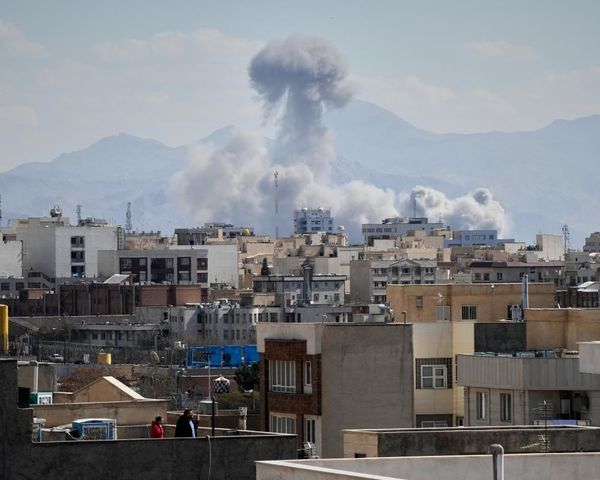
SpaceX initially described the situation as an "anomaly," but a leaked video of the test showed the capsule exploding. A photograph taken by a Florida Today visual journalist shortly after the April incident showed a plume of orange smoke rising above Cape Canaveral Air Force Station, where the test occurred. The capsule's destruction was later confirmed by Koenigsmann during the May news conference.
The Crew Dragon capsule that was destroyed in the explosion had been previously used in March on a test flight to the space station, with no people aboard. The capsule was launched atop a SpaceX Falcon 9 rocket, then successfully docked autonomously with the space station and stayed there for about five days before returning to Earth.
SpaceX had planned to use the same capsule for an in-flight abort test this summer, which would have tested its emergency escape system. But the company has other capsules in production that will be used for this and future tests.