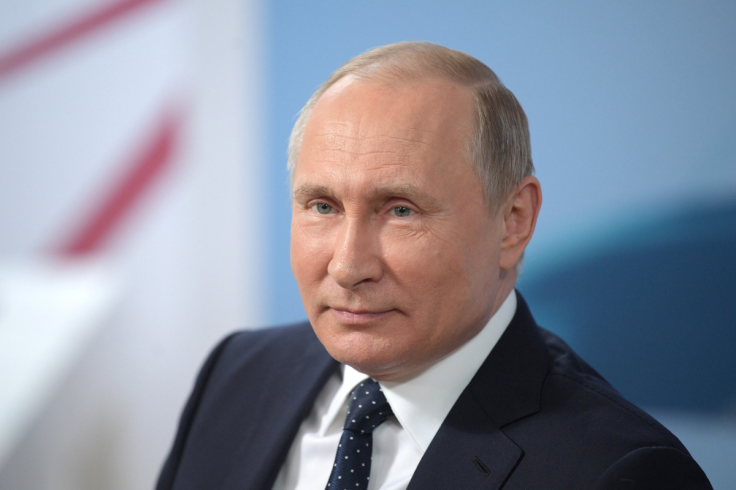
A leaked European intelligence brief says Vladimir Putin's war economy is pushing Russia towards an 'explosive' banking crisis, with more than 500,000 people declared bankrupt in 2025 and banks increasingly exposed to bad loans, it was reported on 6 July 2026.
The assessment, prepared for EU officials ahead of a new sanctions push, centres on Russia's lenders, household debt and the sheer strain of financing a war that refuses to get cheaper.
After War Lending Surge
The news came after months of signs that Russia's financial system has been under pressure, even if official language in Moscow has stayed calm and managerial. In February, the Kremlin-aligned Centre for Macroeconomic Analysis and Short-Term Forecasting said a banking crisis had been 'confirmed,' while Russian central bank data later showed a record May cash withdrawal of 381.2 billion rubles from the banking system.
The new intelligence note is blunter. It says the number of household bankruptcies rose by almost a third last year to around 500,000, while the share of corporate loans that may never be repaid climbed to 10 per cent. That is not a small wobble.
It is the sort of figure that makes bankers nervous and politicians defensive, which may be why the Kremlin has been leaning so heavily on subsidised credit, loan restructuring and state support to keep the whole thing from cracking open in public.
Put simply, the report argues that Russia's banks have been used as a kind of financial shock absorber for the war, and now they are absorbing too much. They were encouraged to loosen normal credit checks and keep lending to defence firms and homebuyers, a move that helped the wartime economy keep moving but left lenders carrying a thicker layer of risk.
Some major banks, the note says, have warned that as many as 15 per cent of their consumer loans are non-performing.
Banking Crisis As Debt Wounds Spread
This is not just a problem for balance sheets. Household bankruptcies on this scale point to ordinary Russians being squeezed, while business loan deterioration suggests the pain is spreading beyond consumers and into the firms that keep the system alive.
The result is a nasty little loop, more debt, more restructuring, more state intervention, and less room to pretend everything is fine.
Russian authorities have tried to cushion the war economy with debt relief for some recruits and their families, while also pressing lenders to keep credit flowing. Those steps may buy time, but they also create a slightly mad contradiction, the state wants banks to look sturdy while loading them with the exact exposures that make them wobble.
The leaked brief also warns that the current setup creates the 'illusion of a dynamic economy' while hiding what it calls an 'explosive situation' that could be triggered by an economic shock or a serious sanctions package against banks.
European diplomats, meanwhile, are reportedly weighing a 21st sanctions package that could target another 90 banks, taking the total number of blacklisted Russian lenders to 100. If that happens, more than half of Russia's internationally connected banks could be hit.
As The Sanctions Loom
That threat lands at an awkward moment for the Kremlin. In May, Russia's economic ministry cut its GDP growth forecast for 2026 from 1.3 per cent to 0.4 per cent and trimmed its 2027 projection from 2.8 per cent to 1.4 per cent, a tidy little admission that the wheels are not spinning quite as smoothly as advertised.
Some analysts think the picture is worse still and that Russia may already be in recession.
The banking strain is visible in the sector itself. The Moscow Times reported in May that the number of unprofitable banks had climbed from 34 in January to 60 by early March, the highest level since 2022.
Central bank data cited in that reporting showed that by the end of October 2025, 11.2 per cent of corporate loans and 6.1 per cent of retail loans were already classified as problematic.
When households start pulling money out of banks in record amounts, as they did in May, it is rarely because everyone suddenly feels serene about the future. Cash may feel safer when the headlines are this grim, even if the maths says otherwise.
The leaked assessment may be European, but its warning is aimed squarely at Moscow. Russia's war economy is being held together by credit, state backing and hope, and that is a brittle mix. One more hard shock, the report suggests, and the whole thing could turn properly ugly.