CHICAGO _ A federal jury on Wednesday convicted six reputed leaders of the violent Hobos street gang of racketeering conspiracy charges alleging the gang carried out a slew of killings, kidnappings, robberies and shootings over the course of a decade.
After a marathon 15-week trial that featured hundreds of witnesses and four days of closing arguments, the jury deliberated into a sixth day before finding all six defendants guilty of the main racketeering count that carries a sentence of up to life in prison, as well as nine other counts.
Among those convicted was Gregory "Bowlegs" Chester, the gang's reputed leader who testified in his own defense last month. The jury also convicted alleged gang lieutenants Paris Poe, Arnold Council, Gabriel Bush, Stanley Vaughn and William Ford.
As the verdicts were read in U.S. District Judge John Tharp's packed courtroom, Chester sat without expression, his elbow on the defense table and a hand resting on his right cheek. Behind him, Poe frowned and rolled his eyes, dressed in a gray suit and leather loafers with shackles on his ankles visible.
Later, when the judge praised the jury for its "extraordinary service," Poe appeared to smirk.
Tharp set sentencing for June 23.
The trial unfolded as skyrocketing gun violence in Chicago made embarrassing headlines across the country and even became an issue in the recent presidential election. Earlier this week, President-elect Donald Trump called for federal intervention if local authorities can't get a handle on a homicide rate that in 2016 reached levels not seen in two decades.
Prosecutors alleged the Hobos' ruthless use of violence fueled the gang's rise to the top of the city's drug trade. Among the casualties were two gang rivals who had just attended a funeral, a semi-pro basketball player who was slain in a case of mistaken identity, an innocent bystander from Los Angeles visiting relatives and an elderly woman killed in a car crash as police chased a fleeing Hobo member, according to the charges.
But the centerpiece of the case was the alleged murders of two informants who were cooperating with law enforcement against the gang. Jurors heard evidence that Poe and Council fatally shot Wilbert "Big Shorty" Moore outside a South Side barbershop in 2006 because they believed Moore had provided information to police that led to a raid on a Hobos residence.
In April 2013, Poe cut off an electronic monitoring device and ambushed informant Keith Daniels outside his Dolton apartment, according to prosecutors. Dressed in all black and wearing a mask, Poe shot Daniels more than a dozen times in front of his fiancee and two young children as payback for Daniels' cooperation with the FBI in a drug conspiracy case against Chester, the charges alleged.
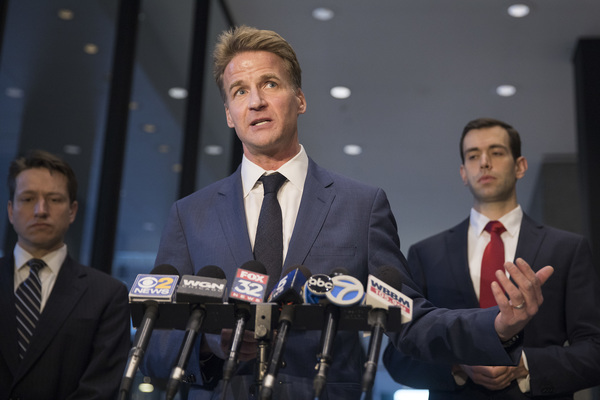
Speaking to reporters after the verdict, U.S. Attorney Zachary Fardon said the verdict sends a message to other would-be gang members that violence will be confronted and "somebody is here to punch back."
"The Hobos street gang was as bad as it gets," Fardon said in the lobby of the Dirksen U.S. Courthouse. "These men were ruthless in their pursuit of crime and violence. They sought to join forces to enrich themselves and empower themselves through fear and violence. ... They terrorized Chicago neighborhoods on the South Side for years."
Fardon also said the gang was a "reflection of the realities" that law enforcement and community leaders face in dealing with the spiraling violence, an endless cycle in which poverty and other socioeconomic factors force kids into gangs at a young age.
"As much as I wished the verdict means the end of the cycle ... it does not," he said.
In its verdict, which took nearly 20 minutes for the judge to read in the courtroom, the jury found that each of five murders was conducted by the six defendants in a "cold and calculated" and premeditated manner. The jury also found specifically that Moore and Daniels were killed to keep them from cooperating against the gang.
The jury found the six defendants guilty on every count except one lesser charge against Ford of using a gun in furtherance of a gang crime.
The verdict came after the jury indicated last week that it may have been deadlocked on at least one count. In a note to the judge after a fourth day of deliberations Thursday, the jury wrote that one person had refused to convict.
"There are some strong beliefs on both sides," the note said.
Tharp advised jurors to continue deliberating.
On the first day of deliberations, one juror had asked to be taken off the jury after he said he'd made up his mind and didn't want to continue. After questioning the juror further, though, Tharp said the man needed to remain on the panel.