Five things we've learnt from tonight's debate polls
Now the final figures are out, here are five things we’ve learnt from tonight’s polling.
1 - No one really “won”. If you take the view that Ed Miliband needed a decisive breakthrough, then you could argue that the evening was disappointment for Labour, and this is probably the thinking used to justify the (grotesquely biased) Sun and Telegraph front pages. (See 11.45pm.) But in fact the evening was also quite positive for Miliband because ...
2 - Miliband does seem to be rated as a credible prime minister. This should be worrying for the Conservatives, because they are betting heavily on voters being repulsed by the idea of Miliband in Number 10. They go on about him being useless so much that some of them even seem to believe it. But the public does not seem to feel the same way. Although Cameron is ahead on prime ministerial attributes (see 11.06pm), the overall figures suggest Miliband is respected and taken reasonably seriously.
3 - Nicola Sturgeon’s appeal goes way beyond Scotland. All four pollsters were polling in Britain, not Scotland, and Sturgeon even came top in one poll. There are English and Welsh voters who liked her but who won’t be able to vote for her. Where will those votes go? Quite a lot to Labour, our ICM poll suggests (see 10.28pm), although by no means all.
4 - Nigel Farage is outperforming his party. He was on 21% in our poll average, although Ukip is polling on 13%. (See 7.06pm.) He was the most polarising figure on the panel, with 80% of voters at the other end of the pole to him, but the debate suggests that the more exposure he can get, the more he will be able to mobilise the Ukip core vote.
5 - Nick Clegg, Natalie Bennett and Leanne Wood failed to make an impact. Clegg and Bennett’s debate figures were much the same as their party’s (see 7.06pm), suggesting they were not winning over any new supporters.
That’s all from me for tonight.
Here’s our splash on the debate.
I’ll be blogging again tomorrow with more debate reaction.
UPDATE: And here’s Rupert Murdoch’s verdict.
UK debate. Great performances by SNP Sturgeon and UKIP Farage, Cameron sort of ok, Milliband not, Clegg pathetic. May not count in May.
— Rupert Murdoch (@rupertmurdoch) April 2, 2015
Updated
Full results from our instant #leadersdebate survey tonight: https://t.co/U3WxCFY0Zg
— Joe Twyman (@JoeTwyman) April 2, 2015
Full Guardian/@ICMResearch tables for tonight's debate poll https://t.co/JKSifr1Cmg
— Tom Clark (@guardian_clark) April 2, 2015
Average of all four polls suggests Cameron and Miliband joint winners
Here are the figures showing the average of all four polls released after the debate.
They show that Cameron and Miliband were joint winners.
Cameron: 22%
Miliband: 22%
Farage: 21%
Sturgeon: 20%
Clegg: 9%
Bennett: 4%
Wood: 3%
Updated
The Telegraph and the Sun both have a rather peculiar slant on tonight’s debate.
Brought to you by Conservative HQ - Friday's Telegraph front page pic.twitter.com/BsIG0LUTes”
— oliver wright (@oliver_wright) April 2, 2015
Another headline written long before tonight's debate started pic.twitter.com/d2rVvlWCcL”
— oliver wright (@oliver_wright) April 2, 2015
Updated
Twitter tell me there were 1.5m tweets about the debate tonight, with an average of 8,657 tweets-per-minute.
According to Twitter, here are the most retweeted tweets.
Always reluctant to offer a political view, but Farage is a dick!
— Gary Lineker (@GaryLineker) April 2, 2015
Not sure “Tough on AIDS victims” is going to be a popular campaign slogan. #LeadersDebate
— Charlie Brooker (@charltonbrooker) April 2, 2015
Worst first date ever #leadersdebate pic.twitter.com/tdZiM20Kyg
— General Boles (@GeneralBoles) April 2, 2015
What the hell are ITV playing at? I'm the host of Would I Lie To You? Why am I not there? #leadersdebate
— Rob Brydon (@RobBrydon) April 2, 2015
Worst episode of Take Me Out. EVER. #leadersdebate pic.twitter.com/Rh4SmYj47a
— Prince Charles (@Charles_HRH) April 2, 2015
My colleague Ashley Cowburn sent this from the spin room:
Dafydd Wigley, the former Plaid Cymru leader, said Leanne “projected our values not just as a party but as a country.” He added that she scored strongly on immigration and put Nigel Farage “in his place” throughout the debate. “But without a doubt, Wood’s strongest point was on the NHS.”
Updated
One more nugget from our Guardian/ICM poll tonight – concerning the all-important swing voters.
In the poll as a whole, I’ve already written that Labour and Conservative loyalists overwhelmingly split on party lines, with 90%+ giving their own leader the edge. But among the (smallish) sample of respondents who either don’t know who they would vote for or else refused to say, of the five leaders of Great Britain-wide parties, it was Nigel Farage who came out ahead. 30% gave the debate to him, compared to 28% to Miliband and just 19% for Cameron in this group.
Cameron did better with the undeclared respondents, however, when it came to the forced two-way choice with Miliband. 51% of the group gave the edge to the prime minister, as against 49% for Miliband.
This is the full ICM research from tonight:
Updated
Demos Twitter analysis suggests Sturgeon won
Carl Miller, from the Centre for the Analysis of Social Media at Demos, has been analysing Twitter traffic about the debate. On the basis of Twitter sentiment, Nicola Sturgeon won, he says.
Nicola Sturgeon: 83% cheers, 17% boos
Leanne Wood: 66% cheers, 34% boos
Natalie Bennett: 64% cheers, 36% boos
Nick Clegg: 48% Cheers, 52% boos
Ed Miliband: 47% cheers, 53% boos
Nigel Farage: 40% Cheers, 60% boos
David Cameron: 32% Cheers, 68% boos
Our analysis of 420k tweets during the #leadersdebate. Sturgeon, personalities & NHS. #bbcqt http://t.co/4uUQ9Gbf3L pic.twitter.com/TWOx3Z7ZNY
— Jamie Bartlett (@JamieJBartlett) April 2, 2015
And this is what he says about the highlights.
Cameron’s worst moment was his opening statement (134 more boos than cheers in the minute), his best his closing statement (only 22 more boos than cheers in the minute).
Farage’s worst moment, and the worst of any in the debate, was talking about health tourism: he got 185 more boos than cheers over the minute.
The strongest moment of any was Nicola’s closing statement – the highlight of the night, with 89 more cheers than boos over that minute.
Updated
ICM also asked various questions about the characteristics of David Cameron and Ed Miliband to people who watched the debate.
On four counts, Ed Miliband was ahead: 45% think he “understands people like me” compared to just 28% for Cameron; 52% think “he would govern in the interests of the many” against just 30% for Cameron; 39% say Miliband has “changed his party for the better”, compared to 36% for Cameron; and only 40% suspect him of being “more spin than substance”, compared to 44% who suspect the same of Cameron.
The two men are tied on “having the courage to say what is right rather than what is popular”, with 39% each.
There are four counts where Cameron is ahead: he would be “more respected around the world” (54% to 22%); he is seen as more decisive, by 51% to 32%; he is more often judged as “good in a crisis”, by 48% to 24%; and he’s finally seen by more people as being more backed by his party, by 48% to 30%.
Updated
Severin Carrell sent this snap judgment on Nicola Sturgeon:
Nicola Sturgeon ended the debate with her reputation for sharpness, detail and focus enhanced. Of all the four smaller party leaders she came across as the most fluent; she was impeccable when it came to the scripted calls to arms for Scottish voters. It was interesting to watch Sturgeon twice reach out to Ed Miliband and Labour, offering policy deals on the NHS, and even using the phrase “I agree with Ed” on 50p top income tax rate.
But while she scored points on immigration and foreign graduate employment and bruised Cameron on the EU referendum proposal, she stumbled on accuracy with the NHS and student debt, and in her attempt to goad UK leaders into discussing her demand for a Scottish or Welsh veto on the referendum. Scottish NHS spending has lagged behind England’s and Scottish student debt has jumped 63% in a single year, despite free tuition.
Updated
Survation poll says Cameron and Miliband tied in first place, on 25% each
A Survation poll has come out now.
#LeadersDebate snap poll (Survation): Cameron - 25% Miliband - 25% Farage - 24% Sturgeon - 15% Clegg - 6% Bennett - 3% Wood - 2%
— Britain Elects (@britainelects) April 2, 2015
Tom Clark has filed more from our ICM poll.
ICM asked respondents – no matter who they thought had won overall – how they thought each leader had fared. Miliband again had the edge over Cameron on this score – by 63% to 35% voters said Labour’s leader had done well, rather than badly, whereas for Cameron the respective figures were 60% to 39%. Both men, however, were overtaken by Sturgeon on this count – 73% said she had fared well. Clegg was said to have fared well by 57%, Farage by 56%, Wood by 54% and Bennett by 49%.
On the forced choice between Cameron and Miliband, perceptions of the debate split overwhelmingly on party lines – 95% of Conservatives gave their own man the edge, as did 91% of Labour voters. This suggests few votes will have been shifted by the debate, and only 10% of respondents said that their minds were changed by what they saw, with Ukip faring best among this small subsample – the preference of 27% of those indicating that their mind could have been changed.
In a series of forced choices, between Cameron and Miliband only, 48% felt the Labour leader “had the better arguments”, against 42% for the prime minister. Cameron, however, was ahead on having “the more appealing personality” (by 45% to 40%) while the two men were tied on “handling their opponents” well – with 45% each.
Among respondents, who were asked to base their view only on what they’d seen tonight, Cameron remained ahead on the “best prime minister” question. But his 46% to 38% edge in the sample of viewers, which has been weighted to bring it into line with the adult population, is smaller than it has been in many past polls.
Heckler: I wouldn't vote for anyone I saw tonight
Victoria Prosser, a 33-year-old who works in health and social care, probably gave the most memorable performance of the debate when she heckled David Cameron as he tried to answer a question on prospects for young people.
“There are homeless people in the streets who’ve been in the services,” she shouted. “Sorry, but I have to speak out because I’m worried. At the end of the day there are more of us than there is of them.”
Prosser, a psychology graduate from Salford who volunteers with the homeless at the weekends, said she hadn’t intended to heckle the prime minister, but when Cameron started talking about looking after people who have served in the military, she couldn’t help herself. “I gave them nearly a full hour and I found that they were still lying about the issues,” she said.
“There is a truth out there. The truth is that the one percent of people who rule us are not working for our best interests, but the 99%, that’s the rest of us, if we start coming together in community projects and talking to each other properly we might be able to do better for ourselves than having to be led by people who lie, omit facts and spend our money on themselves.”
She admitted to voting for the Green party in 2010, but said she wasn’t sure who she would vote for in this election. “I couldn’t vote for anybody who I know is lying or omitting facts, which means that I couldn’t vote for any of the people I saw tonight.”
Prosser was escorted from the studio by seven security guards. “They didn’t say hardly anything. They just moved me,” she said. “When we got around to the back, I said ‘am I in trouble now?’ and they said ‘no, it’s alright’. It was all fine.”
Updated
Miliband says Farage's comment about migrants with HIV were 'disgusting'
And here is what Ed Miliband has been saying on Twitter about the debate.
I am passionate about our vision for action on zero-hours, tuition fees and the NHS. David Cameron had nothing to say tonight.
— Ed Miliband (@Ed_Miliband) April 2, 2015
David Cameron chose the format but he was the invisible man in this debate. He couldn't defend his record on the NHS and extreme cuts.
— Ed Miliband (@Ed_Miliband) April 2, 2015
The choice in this campaign is clear, between the Tories' failing plan & Labour's better plan. If you want change, you need to vote for it.
— Ed Miliband (@Ed_Miliband) April 2, 2015
I want to say, Nigel Farage's comment about the NHS and HIV was disgusting. He should be ashamed. The fact he isn't says so much.
— Ed Miliband (@Ed_Miliband) April 2, 2015
And here’s David Cameron’s post-debate Twitter offering.
Thank you to @ITV for the opportunity to put my case. The UK needs to stick to the plan and not be taken back to square one.
— David Cameron (@David_Cameron) April 2, 2015
Labour sources are claiming that the focus groups they have been running tonight show David Cameron underperformed.
Here’s what Nicola Sturgeon has been saying about the debate.
Thanks so much for all the good wishes before and since the #leadersdebate. I really enjoyed it. #GE15 #voteSNP
— Nicola Sturgeon (@NicolaSturgeon) April 2, 2015
Well done & thanks to our moderator for tonight @julieetchitv #leadersdebate
— Nicola Sturgeon (@NicolaSturgeon) April 2, 2015
And, lastly, very proud to stand next to my friend @LeanneWood tonight, who spoke so strongly for Wales #leadersdebate @Plaid_Cymru
— Nicola Sturgeon (@NicolaSturgeon) April 2, 2015
Clegg says Farage's comments about migrants with HIV were 'vile'
Nick Clegg has used Twitter to describe Nigel Farage’s comments about immigrants with HIV as “vile”.
And Farage's comments about foreign people with HIV were simply vile and desperate. Politics of the lowest form. #FairerSociety
— Nick Clegg (@nick_clegg) April 2, 2015
Average of three polls suggests Sturgeon won
If you take an average of all three polls out so far, Nicola Sturgeon has won.
Here are the figures.
Sturgeon: 22%
Cameron: 21%
Miliband: 20%
Farage: 20%
Clegg: 9%
Bennett: 4%
Wood: 3%
Polly Toynbee’s verdict:
A debate cunningly devised as a car crash by team Cameron turned out to be usefully revealing of them all. And not to Cameron’s advantage. With a battery against him, stripped of advantage, he looked unsettled by this level playing field. Was using the tragedy of his son’s short life a good defence of the NHS, or do people wince? Is attacking the Welsh on the NHS good politics? Faced with voices from Scotland and Wales, does he rule for them or just for his home countries?
Nick Clegg’s pose as honest broker was a grating reprise of last time - and it felt bust. Against bookies’ odds, Farage was the heavy loser, badly misjudging this forum as his poison on HIV and foreigners put him back in the BNP coffin: he may have lost respectable support.
Nicola Sturgeon was stellar, as ever: Leanne Wood good. Natalie Bennett was as amateurish as usual, but that won’t worry Greens. Again the gainer was Ed Miliband – firm, calm, confident on pay, cuts, the NHS and the EU. What irony that Tory attacks on his weakness rebound to his advantage at every outing: any sign of authority comes as a bonus.
Updated
Jonathan Freedland’s verdict:
Ed Miliband yearned for a TV debate that would be his audition for the role of prime minister. As it turned out, sharing the stage with six others, he struggled even to be leader of the opposition.
It’s not that he did badly. His answers were fluent and when he had the chance to square up directly against David Cameron he was forceful. He said the PM had promised to protect the NHS and had let voters down: “They believed you, they believed you,” he said.
No, Miliband’s problem was that he could only rarely get a clear shot. In his way, were others who wanted to slam the status quo – at least one of whom shone as she did so. It was SNP leader Nicola Sturgeon who demonstrated an easy command and authority and will have had plenty of non-Scottish Labourites nodding approvingly, even a tad enviously of those who can vote for Sturgeon’s party. Meanwhile, when Nigel Farage sank low with a rant against HIV-positive foreigners, it was Plaid Cymru’s Leanne Wood who won applause by telling him he should be ashamed of himself.
For his part, Cameron looked a little remote and would have suffered if viewers’ attention had not been divided into seven parts. But this was the new British politics: messy, complicated and a long way from the straight fight between two men that Miliband wanted.
Megan Carpentier, opinion editor of Guardian US, offers this verdict from America:
Today’s leader’s debate felt like a preview of what Americans could expect in 2016: some cross-talk and interrupting, a lone anti-war heckler who made it through the screening process, the inevitable calls to tax the rich or simply cut spending, immigrants who are/are not taking jobs and sucking up/not sucking up government services and lots of discussion about the cost of health care.
Nigel Farage is clearly a bad man who bears an uncanny resemblance to a frog; we’ll probably get one of those, too, for the Republican primary, and he’ll declare that the rise of the “other” means the Real Americans need his party’s protection. It was striking how granular the leaders got on some issues (like parking fees for patrons of NHS hospitals, a drum Farage beat but which Sturgeon took up as well); though there are often one-issue candidates who are interested in the nitty-gritty details here, usually even the long shots go into debates with the intention of appearing presidential (and above such tiny details).
It was also pretty heartening to see the sheer number of women leaders – there hasn’t been a US debate with more than one woman in my lifetime, let alone a debate with multiple women – and to see all three hold their own and not succumb to the urge to yell in which a few of their male counterparts indulged. I don’t find bickering particularly inspiring in a would-be leader, and it made me want to get an air horn to stop them (which, I suppose, is a particularly American urge).
Updated
Ed Miliband edged fractionally ahead of the crowded field of ITV’s seven-way leaders’ election debate, according to an instant Guardian/ICM poll.
The Labour leader was judged to have “won” the contest by 25%, just ahead of David Cameron who, on 24%, was in second place. Further behind was Ukip’s Nigel Farage on 19%, and the SNP’s Nicola Sturgeon on 17%, while Nick Clegg, the star of the leader debates five years ago, was this time in fifth, on just 9%. In sixth was Natalie Bennett of the Greens, on 3%, while Plaid Cymru’s Leanne Wood came in behind, on 2%. These figures exclude Don’t Knows.
When respondents were asked only about leaders of those parties who are fielding candidates across the whole of Great Britain, Miliband’s advantage was larger. On this basis, he was judged the winner by 33%, four points ahead of Cameron, on 29%, with Farage on 21%, Clegg on 10% and Bennett on 7%.
But ICM then asked voters to put all other candidates out of mind, and concentrate on the two leaders most likely to become prime minister, which produced a dead heat – 50% for Miliband, and 50% for Cameron.
ICM interviewed 4,115 adults aged 18+ online on 30 March – 2 April. All agreed to watch the ITV Leaders’ Debate, and to complete a second interview immediately after it finished which 1,372 did in the first few minutes. The data on both waves were weighted to the profile of all GB adults, including to recall of 2010 General Election voting. In essence, the post-wave data is ICM’s best guess on what a representative sample of the voting population would say had they all watched the programme.
Updated
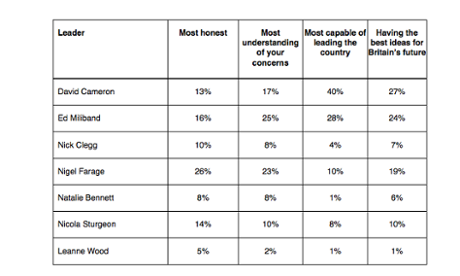
And this is the ComRes chart showing the results when people were asked which leader came across as ...
Frances Perraudin caught up with the heckler outside the debate:
Victoria Prosser, ladies and gents https://t.co/VpSHP8zkkW
— Frances Perraudin (@fperraudin) April 2, 2015
Updated
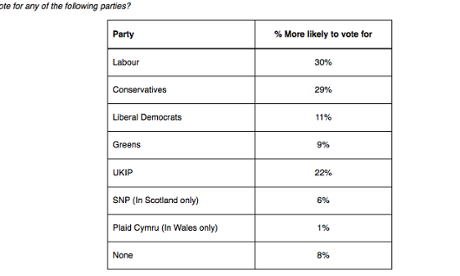
These are the figures from ComRes when they asked people if they were more likely to vote for a particular party as a result of the debate.
Google has been sharing with us the most googled questions through the debate. They were:
- Who is winning the leader’s debate?
- Who should I vote for?
- Who is Nigel Farage married to?
- What is a referendum?
- Where is Natalie Bennett from?
- Can I vote for the SNP?
- How do I register to vote?
- How tall is Nigel Farage?
- What is austerity?
- What does Plaid Cymru mean?
And the leaders in order of the popularity of their Google search:
- Leanne Wood
- Nicola Sturgeon
- Natalie Bennett
- Ed Miliband
- Nigel Farage
- Nick Clegg
- David Cameron
Updated
Here is some more from the ComRes poll for ITV.
Most capable of leading the UK #leadersdebate @ComResPolls: Cameron 40%, Miliband 28%, Farage 10%, Clegg 4%, Sturgeon 8%, Bennett & Wood 1%
— ITV News (@itvnews) April 2, 2015
Best ideas for Britain's future #leadersdebate @ComResPolls: Cameron 27%,Miliband 24%, Farage 19%, Sturgeon 10%,Clegg 7%,Bennett 6%, Wood 1%
— ITV News (@itvnews) April 2, 2015
Most honest leader?#leadesdebate #itvnews @ComResPolls: Farage 26%,Miliband 16%, Sturgeon 14%, Cameron 13%, Clegg 10%,Bennett 8% and Wood 5%
— ITV News (@itvnews) April 2, 2015
More likely to vote for as a result of debate @ITVNews #leadersdebate Lab 30% Con 29% UKIP 22% Lib Dem 11% Greens 9% SNP 6% Plaid Cymru 1%
— ComRes (@ComResPolls) April 2, 2015
YouGov poll says Sturgeon won
And here are the results from the YouGov poll.
While the ICM and ComRes polls were broadly similar, YouGov is quite different, giving Sturgeon a clear lead.
Debate Result: Sturgeon wins Cameron: 18% Miliband: 15% Clegg: 10% Farage: 20% Bennett: 5% Sturgeon: 28% Wood: 4% 1117 GB adults
— YouGov (@YouGov) April 2, 2015
ComRes poll shows Cameron, Miliband and Farage joint best
Here are the results from the ComRes poll.
Full @ITVNews snap verdict for #leadersdebate PERFORMED BEST 21% Cam 21% Mili 9% Clegg 21% Farage 5% Bennett 20% Sturgeon 2% Wood
— ComRes (@ComResPolls) April 2, 2015
ICM - Full results - Miliband wins by a whisker - Miliband 25%, Cameron 24%
And here are the full results.
Miliband wins by a whisker. Although, as I posted earlier (see 10.08pm), when respondents were asked to choose between Cameron and Miliband, it was a dead heat.
Miliband: 25%
Cameron: 24%
Farage: 19%
Sturgeon: 17%
Clegg: 9%
Bennett: 3%
Wood: 2%
Updated
ICM says dead heat - Cameron and Milband 50/50 on forced choice
These are the results of our ICM poll when people were asked to choose simply between Cameron and Milband as winners of the debate.
Cameron: 50%
Miliband: 50%
Updated
The Guardian is working with pollsters BritainThinks to track the mood of the nation through the general election campaign via focus groups in five key battlegrounds. There are 60 voters who all have apps via which they can give us live feedback on the election campaign. Some are watching the debate tonight and this is a round-up of what they were saying at the end of debate:
Fulltime verdict
What did ITV do with the heckler? There was a definite thud after her second interjection. Habeas heckler, ITV!
Other thoughts? Miliband didn’t get the memo about the camera. Cameron mostly appeared to have decided it was best for him to stay out of it as much possible, which it probably was. You get the feeling he wouldn’t fancy it on a wet Wednesday away to Sturgeon.
And you’ll already be trashed if you took a drink every time one of them said “the British people” or “the people at home”. I remember Victoria Beckham once saying that she and David didn’t recognise these people “the Beckhams” that they kept reading about - and that they certainly didn’t like the sound of them. I am beginning to feel this way about “the British people” and “the people at home”, who get mentioned by the party leaders every thirty seconds. They sound alien and infantilised. Are they supposed to be us?
Finally, after all my FEARS FOR FARAGE, I see he was leading in the ComRes poll at half time. Chalk up another victory to The Pundit You Can Safely Ignore. I must have missed something. I’ll admit I did leave the telly at one point to answer the door to a pizza delivery. But then, life has to go on, doesn’t it?
Future of Britain question and final statements – snap verdict
If you stripped out all the pre-scripted statements, and focused on the exchanges, you could create a rather lively 30-minute programme out of that. But, in the end, it was a struggle, with more than a dash of public service broadcasting at it most colourless. The net effect, I think, is that no one really made much of a breakthrough.
Farage got his chance to go head-to-head with Cameron, and he did so with gusto, although some polls suggest the Ukip moment has passed. Sturgeon acted like someone on a first date with the English, and, for left-leaning England at least, she will have made a very good impression indeed.
Cameron looked like a man playing for a draw, which is more or less what he got. Miliband had some very polished moments, which may encourage the revaluation of his image that was already under way since his Paxman encounter. Bennett was fine, but unremarkable, and Wood won’t have made a splash outside Wales.
Updated
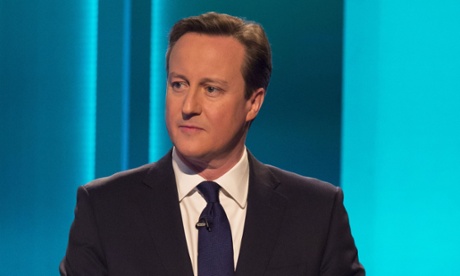
Cameron says he has been prime minister for five years. He has had one priority: turning the economy round. He wants to continue with that. And he wants a seven-day NHS. This is an amazing country. Stick with the plan, and the team, that is working.
And that is it.
Updated
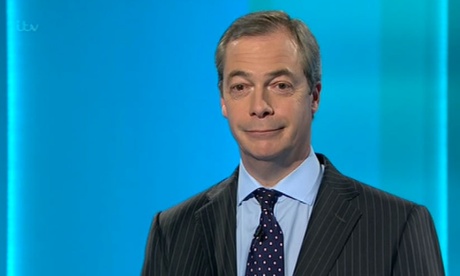
Farage says he warned they were all the same. What you have seen is the politically correct political class. Most of them have never had a real job in their lives. He says Ukip stands for plain-spoken patriotism.
Updated
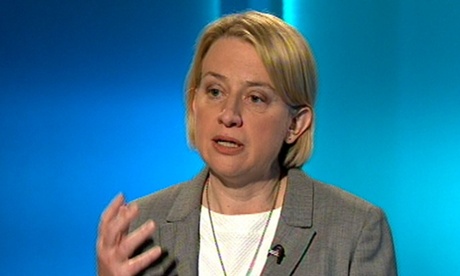
Bennett says people should vote for what they believe in. You do not have to vote for the lesser of two evils. Caroline Lucas has made a huge impact. We need more MPs like her. Wherever you are, if you are thinking of voting Green, do it.
Updated
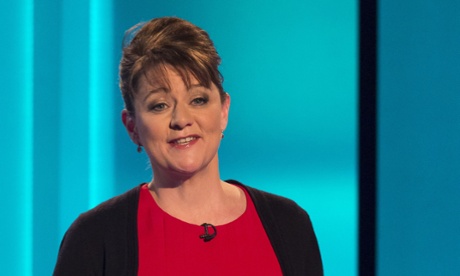
Wood says she hopes the debate does not fill you with despair. Austerity is a choice. But we can have a future where everyone has good public services. For a stronger Wales, give your vote to Plaid Cyrmu. For Wales to be strong, Plaid Cymru must be strong. And she finishes with thank you in Welsh.
Updated
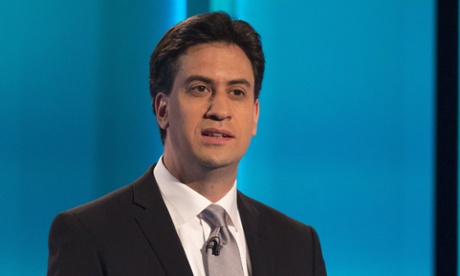
Miliband says there is a fundamental choice: do we carry on, or do we build an economy that works for everyone. We will make sure everyone plays by the rules. He believes that when working people succeed, Britain succeeds.
Updated
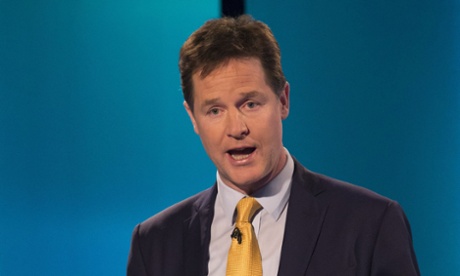
Clegg thanks people for sitting throught his marathon. When you vote, make sure you don’t vote for a lurch to the left or the right. We need a government that is stable and fair. We want a stronger economy and a fairer society.
Updated
Closing statements
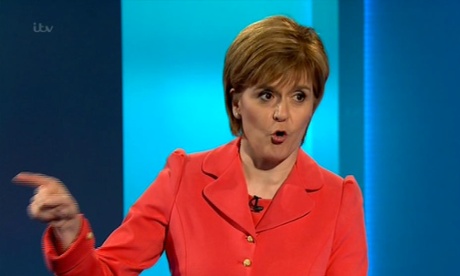
Sturgeon says the choice has been clear. You can vote for the same parties, and the same politics. Or you can vote for something better and more progressive. None of us can afford more austerity, or nuclear weapons. Ordinary people will pay the price. The SNP offers an alternative. It will be a voice for change in the rest of the UK, too.
Updated
Farage says the other leaders are not positive. He is positive about what Britain can do. It should be in alliance with the 2.2 billion people in the Commonwealth.
Clegg says we can only instil optimism if we release the young from the obligation of debt.
Next year we will spend £46bn on debt interest. If we do not pay that off, it is unfair on the next generation.
Miliband says what matters is the quality of jobs. People are on zero hours contracts. Cameron says he cannot live on a zero hours contract. Nor could he. But the difference is, he will do something about it.
Cameron says there are 70 Labour MPs employing people on zero hours contracts. Labour will not practice what they preach.
Miliband says Cameron is defending zero hours contracts. He thinks wealth will trickle down. We have tried that. It has failed.
Updated
This is the woman who heckled Cameron:
Cameron heckled by audience member that there are homeless people on the streets. "I have to speak out," she says. pic.twitter.com/maDwU1Phdg
— PoliticsHome (@politicshome) April 2, 2015
Updated
Etchingham reminds the leaders of part of the question. What will you do to make people feel more positive about the future?
Cameron says we should think of the positive things Britain does. He talks about the armed services.
A young woman in the audience stands up, and complains about money going on the army when homeless people are sleeping on the street.
Audience members are not supposed to intervene, and Etchingham tries to silence her.
Cameron says she is raising a serious point.
Miliband says Labour is the only party with a plan to help tenants in the private sector. It would stop letting agents charging rip-off fees.
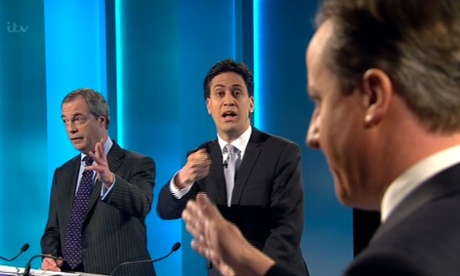
Farage turns to housing. This is about demand and supply. We need to build a home every seven minutes to provide enough homes for immigrants, he says.
We should change planning rules so more homes can be built on brownfield sites, he says.
Sturgeon says government should supply good quality homes for rent, as well as for purchase.
Wood says, in a hung parliament, Plaid will do all it can to end austerity and win parity with Scotland. Then there could be free tuition fees in Wales.
Sturgeon says this shows why we need to end the old boys’ system in Westminster. Clegg broke his promise on tuition fees. Tony Blair opposed them, and then introduced them. Then he said he would not put them up, but did exactly that. That is why SNP MPs are needed at Westminster.
Future of Britain question
A young person in the audience asked what the leaders would do for young people.
Cameron says free schools will make a difference.
Clegg says the government will cut the schools budget.
Cameron says he and Clegg sat in cabinet together and took decisions together. He defends them all. Clegg won’t.
Clegg says Cameron wanted to cut nursery education.
Miliband says both are blaming each other. And they are both right.
He says he did not have to leave university in debt. But young people should not have to do that.
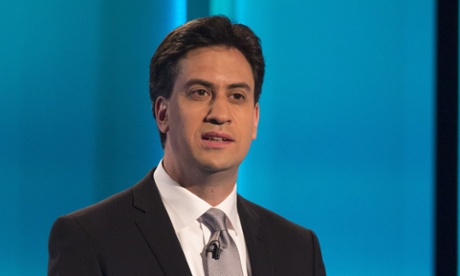
Miliband says Clegg described his tuition fees policy as the next best thing.
Clegg says he apologised, Miliband should apologise for crashing the economy.
Miliband says of course Labour made mistakes. But the Tories were saying there should be less regulation.
Updated
These are the most searched for questions on Google through the debate in order of popularity:
- What is austerity?
- What does austerity mean?
- Who is winning the leaders debate?
- What is the Barnett formula?
- Where is Natalie Bennett from?
- What is a PFI hospital?
- What is a bureaucrat?
- Who should I vote for?
- How tall is David Cameron?
- What is the deficit?
- What is the bedroom tax?
Immigration question – snap verdict
This round sounded a bit like a re-run of the Clegg/Farage Euro debates last year, and Farage was predictably triumphant - but perhaps overly so. Miliband came out with one of his best soundbites of the evening, when he picked up on Cameron saying that work paid, and said it did not.
Wood will have made the headlines in Wales with her statement that she agree with Farage about open borders, although she did not spell out very well the point she was making (which is that this system benefits Britons). And Cameron was rather disengaged. Labour are trying to run the line that he is #invisibleman.
Updated
Miliband says we import IT specialists. But apprenticeships in IT are falling. We should make firms that take foreigner workers take on apprentices too.
Clegg says the government has expanded apprenticeships.
Update
This comes from the independent fact-checkers FullFact.org:
Updated
Wood says she never thought she would agree with Farage on one thing. But he is right to say that we cannot control immigration if we are in the EU.
But we expect British people to be offered free movement from other EU countries.
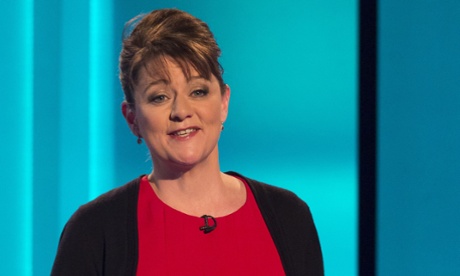
Farage says he is pleased Wood backs him. The system worked when all countries in the EU were roughly as rich as each other. But the problem started when poorer countries came in.
Updated
Sturgeon asks Cameron and Miliband to give a commitment that, if there is an in/out referendum, Scotland won’t be taken out of the EU if it does not vote for it.
Miliband says he does not want a referendum. There are better priorities for the UK, he says.
Farage says politicians are only debating this because of Ukip.
Clegg says Farage thinks every problem is caused by Europe. If we yank yourselves out of Europe, unemployment will go up.
Bennett says she supports a referendum. But the Greens would be campaigning for Britain to stay in.
Updated
Miliband says Cameron said earlier that work pays in this country. But it does not.
Addressing “Ed Miliband”, Cameron says the government has created jobs. With Labour, never mind zero hours, you would have zero jobs.
He says a vote for Ukip would lead to Miliband. There would be no referendum.
Miliband repeatedly says he wants to come back on that, but Etchingham won’t let him in.
Updated
Bennett says this is also a debate about human lives. Some 19,000 Britons cannot live in the UK with their relatives because of the rules applying to spousal earnings.
Farage says, while we are in the EU, we cannot control immigration.
From 1990 to 1998 net migration was around 40,000 a year. Since the second world war it was 30,000 a year net. Now it is 300,000 a year. Wages have been compressed as result. Ordinary people have paid a high price for something that benefits big corporations.
Clegg says Farage is married to a foreigner. So is he. Let’s control immigration.
How, asks Farage. “Be honest with people. We can’t”
Clegg says we can control access to benefits.
But people don’t come here for benefits, he says.
Most searched for party leaders on Google at half time:
- Nicola Sturgeon
- Natalie Bennett
- Leanne Wood
- Nigel Farage
- Ed Miliband
- Nick Clegg
- David Cameron
Updated
“There you go again,” said Ed. Just like Reagan.
"There you go again." Ed Miliband sounding like Ronald Reagan in 1980. http://t.co/WkmkgbYceZ #leadersdebate https://t.co/qlLQoEF2Nj
— Leaders' debate live (@GdnPolitics) April 2, 2015
Sturgeon says diversity is a great strength. She can see that looking at the audience.
The Tories abolished the post-study work visa. That is harming universities. It is also depriving us of the gain from students we have trained.
It is better to work together in Europe, he says.
Wood says Ukip have shown their true colours. Wales benefits from the EU. If there is to be a vote on pulling out, all four nations should have to approve that.
Immigration question
Cameron says he does not accept, as Farage argues, that you cannot do anything about immigration in the EU. He wants a renegotiation.
Farage says Angela Merkel has said free movement of people is up for negotiation.
Cameron says he does not accept that. Look at my track record, he says.
I have, says Farage.
Cameron says Farage is the back door to Miliband in Downing Street, and that would lead to open door immigration.
Miliband says Cameron lost 26-1 on Jean-Claude Juncker. He says Cameron stood on this stage and misled people in 2010. He said people should kick him out if he failed on immigration.
Updated
Halfway verdict
Farage will be aware that he’s having a bit of a shitter, if you’ll forgive the lapse into politicalese, so it’ll be interesting to see which of his most winsome lines he’ll start trying to pull out of the bag in the second half. If I were in his corner I’d have insisted he was given an emergency vitamin injection, even if they had to get some foreign nurse to administer it. He looks like he could use it.
Meanwhile, I can only hope that whoever is masterminding Miliband used the break to tell him that if he was going to look into the camera, he needs to look in the right one. That was all getting a bit Acorn Antiques.
But I’m enjoying the work of what we’d call Messrs Sturgeon and Wood if they were blokes. What is the feminine for Messrs? Anyone?
Updated
Quick roundup from Twitter:
On the eyes:
On Sturgeon:
On Farage’s HIV comments:
On Farage’s face:
On the ‘thanking for service’
NHS question – snap verdict
It’s becoming ever clearer that this format is a mess. Downing Street have got their way; this might not exactly be a bore-athon, but there are so many participants that it is hard for anyone really to break through. Miliband tried, though, by trying to berate Cameron as directly as he could. Mostly he was effective - and he needs to be; if Labour can’t win on the NHS, they are stuffed - although he was defensive on Mid-Staffs.
Again, Farage struck the most distinctive note, although it very hard to know how his HIV broadside will go down with viewers at large. I got the impression the audience were siding with him, but others tell me I heard that wrong, and they may be right. He certainly won’t be winning votes from a Guardian audience, but he may still be fishing in a fairly large pool. Again, it was interesting to see Sturgeon making a direct pitch to English voters - over the heads, perhaps, of the Labour leadership.
Updated
On Twitter people tell me they think the audience were applauding Wood, not Farage. (See 8.52pm.)
@AndrewSparrow I'm 99% sure that applause was for Wood, Andrew.
— roadto326 (@roadto326) April 2, 2015
Updated
Bennett says Miliband is right about social care. People need help. The Greens are calling for free social care for the over-65s.
Cameron says he wants a 7-day NHS, with GPs open often. In Manchester there is less pressure on hospitals because that is happening.
Miliband says Cameron promised 7-day GP services in his last manifesto, and failed to deliver it.
The Guardian’s chief political correspondent Nicholas Watt has the very difficult job of filing a story from this debate for our print deadline at 9pm. This is what you’ll read in the first editions of the Guardian tomorrow morning:
The fractured nature of Britain’s multi-party democracy was driven home in vivid terms last night when the leaders of seven parties from England, Scotland and Wales clashed on the central issues at the heart of the general election.
In a powerful demonstration of the decline of the two main parties, which commanded more than 90% of the vote in the wake of the second world war, the leaders of Ukip, SNP, Plaid Cymru and the Green party were given free rein to challenge David Cameron, Ed Miliband and Nick Clegg.
The prime minister, who was conscious of the need to improve on his hesitant performance with Jeremy Paxman in the first television event of the election a week ago, was quick to warn of the dangers posed by his opponents.
“The choice at this election is sticking with a plan that is working or going back to the debt, taxes, borrowing and spending that got us in this mess in the first place,” the prime minister said as he highlighted one of his central messages of the campaign. This is that the Tories offer competence in contrast to the chaos of the other parties. He added: “I say let’s not go back to square one. Britain can do so much better than that.”
The debate initially started slowly as the leaders made one minute opening speeches which saw them play to type as Nigel Farage cast himself as the outsider as the only opponent of Britain’s EU membership. But the pace quickened as the leaders were allowed to challenge each other as they answered the first question on the public finances.
The deputy prime minister, who needs to win back Liberal Democrat voters who were upset by the coalition, took the chance to challenge the prime minister over planned Tory spending cuts. “The Tories want to impose ideologically driven cuts on schools,” Clegg said as he mocked the party’s main campaign messages.
“When I hear the Conservatives talk about the choice between competence and chaos – just imagine David Cameron the chaos in people’s lives, the people who in the NHS who don’t know if their nursery or their college or their schools are going to close.”
Miliband, who was judged the eventual winner of last week’s interview with Paxman, challenged the prime minister after he said that Labour’s record in office showed it is not qualified for government. The Labour leader said: “Not for the first time David Cameron is going to want to talk about the past because he doesn’t want to talk about the future.”
Updated
Clegg says the NHS needs money and more focus on mental health.
Miliband says people should use their votes as a weapon to rescue the NHS.
What about Mid Staffs, asks Cameron.
Miliband addresses Cameron. You broke your bond of trust, he says. People believed you when you said you were a different kind of Conservative. But you let people down.
Miliband says people will conclude the NHS is going backwards.
Update
This comes from the independent fact-checkers FullFact.org:
Updated
Sturgeon says her message to Miliband is that the NHS is too precious to allow the private sector a role.
She says her message to people in England and Wales is that the SNP will work to keep the NHS out of private hands.
Clegg says the government has not introduced unbridled privatisation.
Miliband says the NHS is creaking at the seams because social care is underfunded. Labour has a plan to address this.
Cameron says Miliband said he wanted to weaponise the NHS. But it is not a weapon.
He says the coaliton inherited an NHS where patients were not properly cared for. At Mid Staff, only 60 miles away, patients had to drink from vases.
BritainThinks: halfway through
The Guardian is working with pollsters BritainThinks to track the mood of the nation through the general election campaign via focus groups in five key battlegrounds. There are 60 voters who all have apps via which they can give us live feedback on the election campaign. Some are watching the debate tonight and this is what they are saying halfway through the debate:
Updated
Farage says 60% of people diagnosed HIV positive in the UK are foreign nationals. The drugs cost up to £25,000 a year. The NHS should be there for British people.
Wood says this kind of scaremongering is dangerous.
Farage says it is a fact.
The audience applauses. They seem to be applauding Farage.
Updated
Bennett says we are racing towards the American system.
If we are to take pressure off the NHS, we need healthier society.
Clegg says it is simply not the case that we are moving towards privatisation.
Sturgeon says the government legislated to allow hospitals to spend 49% of their time on private work.
Clegg says the government was correcting the mistakes of Labour.
“I’m not defending them,” says Sturgeon.
Wood says the private sector has no role in the NHS.
Miliband says his two sons were born in a PFI hospital. There is a role for the private sector in health.
Turning to “David”, he says people will not take his promises seriously. He said he would have not top-down reorganisation, but introduced one.
Cameron says he wants to correct “Ed Miliband”. Presumably Miliband wants to rehire the bureaucrats.
Clegg says the simple question is, who will put an extra £8bn into the NHS. In Scotland they have reduced spending on the NHS.
“Rubbish”, says Sturgeon.
The NHS budget in office has increased £3bn since the SNP came into office.
She says we have learnt that there is nothing Farage won’t blame on foreigners.
The £8bn figure that Clegg quoted is for England only. Including Scotland, the figure is £9.5bn.
Updated
The opening statements are over, and the NHS section has now been opened up.
Farage says he wants to know what people think about health tourism.
Bennett says we should not blame immigrants.
Miliband says Cameron said he would protect the NHS. But last year 1m people waited more than four hours for A&E. And one hospital had to erect a tent.
Cameron says a strong NHS needs a strong economy.
When he said in 2010 he would increase NHS funding every year, Labour said that was irresponsible.
NHS question
Q: How will you keep free access to the NHS?
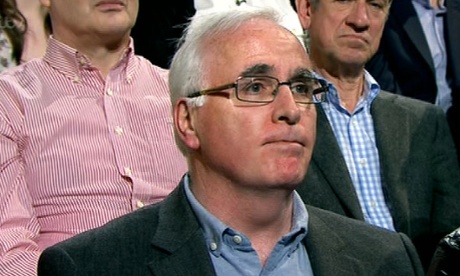
Farage said he had had many medical scapes. Ukip would get rid of hospital parking charges. Sturgeon said in Scotland that had happend already. Clegg said if you love the NHS, you should spend money on it.
Updated
Quarter-time verdict
Obvious question first: why the hell didn’t they force them all to participate in a Dynasty-style title sequence? Moving on from that missed opportunity, it’s all a bit of a mess, isn’t it? Poor Julie Etchingham. It’s not even clear who is doing the stupid choppy “let’s be clear” hand gesture at whom. The muddle of the format does rather play into that idea that they’re all the same.
Farage needs to settle down on the arm-waving, because he’s sweating like Nixon in 1960. Forgive the transatlantic reference, but you can’t escape the fact that Britain has even less debate history than the United States has history – just kidding, America! - so unfortunately we have to hark back to theirs all the time, and the comparisons could hardly be less flattering. Face it: our sole memorable occurrence from 2010 was basically two people saying “I agree with Nick”. It’s not exactly Reagan charming his way out of that question about his age, or Gerald Ford forgetting where the Commies were in 1976. No one is going to tell Nigel Farage that he is “no Jack Kennedy”.
Earlier this morning, the former Gordon Brown adviser Theo Bertram recalled the leaders’ preparations for the 2010 debates: “Everyone had an American. They were regarded reverentially as mystic sages who could divine the future of a debate.”
Everyone had an American. They were regarded reverentially as mystic sages who could divine the future of a debate.
— Theo Bertram (@theobertram) April 2, 2015
I’ve already given up working out who is arguing with who on this show. But I am enjoying imagining these New Worlders watching in the wings, sent back from the future to deliver us from our quaint present, at presumably vast expense. Farage’s needs to get on with the face powder the minute they go to the ad break.
Updated
Megan Carpentier, opinion editor of Guardian US, writes:
Ed Miliband’s comment “There you go again” was lifted from the (only) 1980 presidential debate between then-president Jimmy Carter and Ronald Reagan; Reagan used to to dismiss Carter’s thoughtful calls for a national health insurance program (which, in 2015, Americans still don’t have).
It’s a little funny to hear it out of a Labour party candidate’s mouth, in response to the Conservative prime minister’s insistence that he’s just dealing with the economic problems he inherited from the Labour party; of course, in America, President Barack Obama responded to the ongoing economic problems in America during the 2012 election by blaming it on the problems he inherited from his Republican predecessor.
Updated
Opening statements and economy question - Snap verdict
Opening statements and economy question - Snap verdict: The two leading nationalists are winning - Nigel Farage and Nicola Sturgeon. It was surprising quite how dull the format was for the first 14 minutes, but once it opened up, Farage was combative, and had the most distinct policy offers. He was also withering about debt. Sturgeon is calm and impressive, and is working hard to appeal to English, Labourish viewers. Miliband is doing well, but has not cut through. And Cameron is looking a tad beleaguered, principally because he is under the biggest obligation to defend a record.
Quotes from the opening statements
Natalie Bennett
You were told austerity and inequality, big banks and tuition fees were inevitable. They were not. You all deserve better. Let’s put principles and values first. The Green party is determined to deliver a fair economy.
[We’re against] fear of immigrants and demonising people on benefits ... Vote for change, vote Green.
Nigel Farage
There are six other party leaders. They may all look different but they are very much the same. All six support the EU and as a consequence all of them support open door immigration.
We believe this country should be a self-governing nation. We believe we are good enough to do that.
Nick Clegg
It’s pretty obvious no one is going to win this election outright, so you are going to choose who works with each other ... The country’s in a lot better shape than it was five years ago ... I’ve made mistakes and I’ve learned from them... [We have] the grit and the resilience to finish the job of balancing the books and doing so fairly.
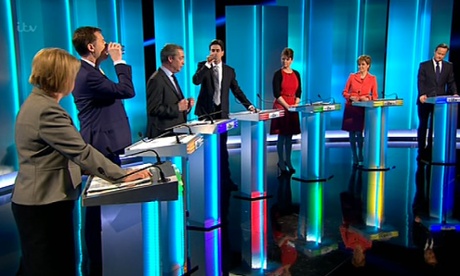
Nicola Sturgeon
This a chance to change the Westminster system so it serves you better. I know it’s not just people in Scotland who feel let down by Westminster politics. My message to the people of England, Wales and Scotland is one of friendship. I won’t pretend I don’t want independence. I do but as long as Scotland remains part of the Westminster system.
David Cameron
Five years ago this country was on the brink. But for the last five years we’ve been working with the British people through a long term economic plan and that plan is working.
The plan is working because last year we had the fastest growing economy You’re going to hear a lot of people claiming a lot of things but these are the same people ... who were wrong then and they’re wrong now. The choice is debt taxes borrowing and spending that got us in this mess in the first place.
Leanne Wood
I’m from the Rhondda and I understand all too well the difficulties faced by our communities in recent years. Plaid Cymru offers an alternative. Decent hope for our young people and thriving successful communities. We can win for Wales but we can only do that with your support.
Ed Miliband
Here’s what I think. Britain succeeds when working people succeed. But for five years wages haven’t kept up with bills, the NHS has been going backwards and young people fear they will have a worse life than their parents.
It doesn’t have to be this way. Britain can do so much better than it’s done over the last five years.
Updated
Sturgeon asks where the cut will come from.
Cameron says the government has cut £21bn from welfare already.
Sturgeon says 1m people on disability benefits will face cuts.
Farage says we should put the British people first. All the other parties support that, for reasons that are beyond him.
Miliband says cuts will have to come. But it can be done in a fair way.
Update
This comes from the independent fact-checkers FullFact.org:
Updated
Sturgeon says Labour voted for austerity.
Miliband says that is not what the vote on the charter for budget responsibility was about.
Sturgeon does not accept that.
Bennett says we’ve seen a choice between austerity heavy, and austerity lite. Many workers are not on a living wage. We do not have an economy with jobs that sustain a life.
Clegg goes back to his point about the Cameron planning involving too many cuts, and Labour wanting too much borrowing.
Cameron wants to cut because he wants to.
That is simply wrong, Cameron says.
Cameron says he is hearing more debt and more tax, more debt and more taxes, a lot more debt and a lot more taxes etc.
Wood says Ed’s party represents many areas of Wales. Does he accept that Labour has failed them. Parts of Wales are some of the poorest areas of the EU.
Miliband says he does not accept that. But he then turns to Cameron, and attacks the Tories’ record, on issues like the bedroom tax.
Wood says Wales needs more from the Barnett formula. It should get another £1.2bn.
Farage says Wood is right. Wales got a bad deal. But people in England are fed up with sending money over Hadrian’s Wall so the Scots don’t have prescription charges.
Sturgeon says the Scots have paid more in tax per head than the English for 30-odd years.
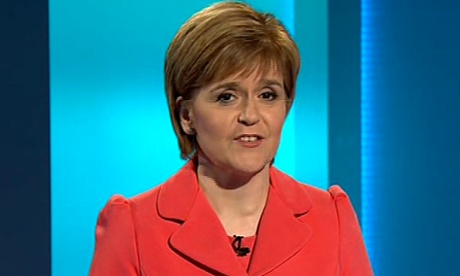
Cameron says Labour left a note saying, “Sorry, we’ve run out of money”. Under the government’s plans, the top 20% have paid more than the other 80%.
Farage intervenes on Cameron. He says the government has pushed the national debt up.
Cameron says borrowing has gone down every year.
There you go again, says Miliband (using a famous Ronald Reagan line). He says Cameron is talking about the past.
Farage asks how people can beleive Cameron’s promise.
Cameron says he will do it by cutting £1 from every £100 spent.
Update
“There you go again” – famously last used in a leader debate by Ronald Reagan.
Updated
Farage says half the panel are saying they have been prudent, and half are saying cuts have gone too far.
But national debt has doubled. At some point we have got to get real. We have a massive debt repayment problem. Let’s cut aid.
Clegg says making poor people abroad poorer is not the solution. He says Tory plans will not affect the rich.
Wood says the govenrment has been balancing the books on the back of the poor.
“The books aren’t balanced,” Farage says.
It is the first actual “hit” anyone has scored all evening.
Finally, the leaders have stopped making statements, and are debating with each other.
Miliband says Cameron has not acted on tax avoidance, or hedge funds. He says Cameron has not done this.
Cameron says Miliband is wrong. Just this week, the government has introduced a diverted profits tax. But Labour wants to put up your taxes.
Clegg talks about “Mr Cuts and Mr Borrow”.
Sturgeon says it is odd to hear Clegg and Cameron, who have been in government, now arguing. She says she backs “Ed” on raising the top rate of tax. The country can’t afford more cuts.
Updated
Verdicts on opening statements
The Guardian is working with pollsters BritainThinks to track the mood of the nation through the general election campaign via focus groups in five key battlegrounds. There are 60 voters who all have apps via which they can give us live feedback on the election campaign. Some are watching the debate tonight and these are their initial verdicts on their opening statements:
Updated
Bennett says we have been looking at this the wrong way. A children’s centre may have closed. That was an essential service. Now it has gone, and the worker is on benefits. Everyone is poorer. The rich should pay their share.
Sturgeon says economic policy should be about improving people’s lives. She does not agree with the policies of the Conservatives, Labour and the Lib Dems. The SNP want modest spending rises.
Farage says the questioner is right. How can anyone believe these people?
The coalition was put together to get rid of the deficit. But it has not. We could stop giving money to Brussels, and end vanity projects like HS2. And we should end the Barnett formula.
Miliband says he would end the deficit in a balanced, fair way. Labour would reverse the tax cuts for millionaires. It would have common-sense cuts. And it would boost the economy, to raise living standards.
Updated
Economy question
Q: How do the party leaders think they will be able to eliminate the deficit without raising taxes or making vast cuts to services?
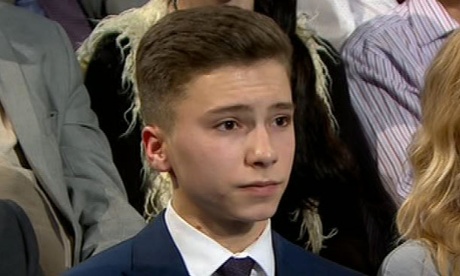
Clegg says it is about balance. Labour wants to borrow too much, £70bn. And George Osborne wants big cuts. He would put money into public services. The Lib Dems would cut less than the Tories, and borrow less than Labour.
Cameron says his plan is working. He has got 2 million people into work. His plan involves balance. He will save £1 out of very £100 the government spends. The alternative is to put up taxes. He does not want to do that. If he did that, he would not help working people, he would hurt them.
Wood says Plaid would cut the deficit from £90bn to £30bn by 2020. We have had all these cuts, so much pain for so little gain. It is time for an end to austerity.
Updated
Ed Miliband says for five years the economy has not been working for ordinary people. He will rescue the NHS, and build a future for all young people. He will cut tuition fees to £6,000, and cut the deficit. Some people will say this is as good as it gets. He says it can get so much better.
Leanne Wood says she is speaking to the people of Wales. Plaid offers hope to the young people. It can work for them, but it needs their support. Please support Plaid Cymru, to make it Wales’ voice in Westminster.
Updated
David Cameron says the government came to power. It has had a plan. It is working. The economy is growing. The others said the plan would not work, that unemployment would go up. Let’s not go back to square one. Britain can do much better than that.
Nicola Sturgeon says the SNP wants to change the way Westminster works. It is not just the Scots who want Westminster to work better. She won’t pretend she doesn’t want independence. But, while Scotland is in the UK, the SNP will try to make Westminster work better. The SNP does not want nuclear weapons. The SNP will fight for Scotland, but also for progressive politics for the UK.
Nick Clegg says he won’t pretend things are perfect. And he won’t pretend he has not made mistakes. He has. But the Lib Dems will offer “grit and resilience” to carry on with the job. He will always act fairly. And always serve all parts of the country.
Nigel Farage says all six other leaders support membership of the EU, and open door immigration that comes with that.
He is from Ukip. They think open door immigration has depressed wages, and made it harder to get to see a GP. Ukip wants to take back controls of borders.
Opening statements
Natalie Bennett says we were told that austerity and bankers bonuses were inevitable. They were not. Let’s put principles and values first. The Greens want a fair society, that does not make the poor pay for the fault of the bankers.
Other parties trade on fear. The Greens start with hope. Vote for change.
Updated
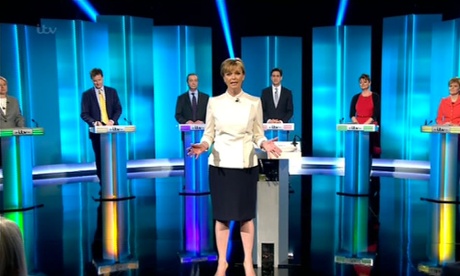
Julia Etchingham is introducing the seven leaders. It’s “David Cameron for the Conservatives”, not prime minister.
Updated
The camera has shown all seven leaders. David Cameron seemed to be looking into the distance, doing the statesman pose.
Leaders' debate
The ITV show is starting.
#leadersdebate proceeded by advert for headlice shampoo on STV. Interesting intro for our top politicians
— Tom Gordon (@HTScotPol) April 2, 2015
I’m glad I’m not trying to blog from the press room.
Debate starts in 150 seconds...but still no tv in the press room. pic.twitter.com/LRbYRnq6BW
— May2015 (@May2015NS) April 2, 2015
At UK Polling Report Anthony Wells, the YouGov pollster, has made a similar argument to Daniel Finkesltein’s (see 7.38pm): the debate might not change much at all, he says.
Remember winning the debate isn’t necessarily a good guide to any impact in voting intention. The 2010 debates produced a big short term effect on the polls, even it deflated by the election itself. I certainly wouldn’t assume that debates will always have a similarly noticable impact, perhaps 2010 was the exception. Even if someone does win in the post-debate verdict polls, don’t assume it will necessarily make any difference in voting intention – wait for the next regular voting intention polls to see if it’s really changed views (a wait that will sadly be extended by the Easter bank holidays, which I expect means this weekend will be light on polls). Certainly don’t put too much weight on shifts in the votes of people within the samples of viewers in the debate polls… remember they are made up only of viewers, so will magnify any effect. Most voters won’t be watching.
Updated
And this, from Ipsos MORI’s Ben Page, is revealing.
Fewer people than ever say party leaders influence their vote. Good for Miliband #massdebate #ge2015 pic.twitter.com/DPBQ8XYBTF
— Ben Page, Ipsos MORI (@benatipsosmori) April 2, 2015
Here are two interesting Twitter observations from journalists.
Just one prediction: Salford will echo to the chomp chomp chomp of Bennett, Wood, Sturgeon eating Ed Miliband's dinner on food banks and pay
— Matthew Holehouse (@mattholehouse) April 2, 2015
Remember leaders are narrow casting 2night. Farage only interested in the 20% who might vote 4 him, Plaid only interested in Welsh votes etc
— James Forsyth (@JGForsyth) April 2, 2015
Theresa May is in Salford spinning for the Tories too.
Teresa May in the #leadersdebate spin room. pic.twitter.com/rNFMXT3bND
— Adrian Masters (@adrianmasters84) April 2, 2015
Just to keep things in perspective.
Nothing that will be said tonight in UK #leadersdebate will match importance of Iran nuclear deal or horror in Northern Kenya. Perspective.
— Patrick Wintour (@patrickwintour) April 2, 2015
The Economist says David Cameron has the most to lose.
But all the same this format will be unlikely to favour the prime minister. For a start, the format is sure to be unwieldy. Large election debates have bored voters before: in Germany round-table talks between several party leaders had to be scrapped in the 1980s after they became farcically dull affairs. Mr Clegg, who saw an initial boost in popularity ratings after his 2010 turn opposite Mr Cameron and Mr Brown, has already expressed concern that he will not be able to be heard over the “cacophony” of other voices tonight. (That may be the least of Mr Clegg’s problems, as his party drops down in the polls.)
More pressingly, by insisting on letting nearly all the other party leaders into the debate, Mr Cameron has, perhaps unwittingly, given a boost to several smaller parties. The appearance of Leanne Wood, the head of Plaid Cymru, may help her party to hold on to its three Welsh seats. Natalie Bennett, the leader of the Greens, may be able to swipe a few more Labour and Lib Dem votes if she performs well, and does not have another “mind blank”, as she did in a radio interview a few weeks ago.
But the biggest winners are almost certain to be Nigel Farage, the leader of UKIP, and Nicola Sturgeon, the first minister for Scotland. Both are skilled speakers who also have the advantage of seeming like plucky upstarts. Mr Miliband may be the prime minister’s main opposition. But Mr Farage and Ms Sturgeon still have the ability, through their charisma, to cause greater harm.
The Conservatives have both George Osborne and William Hague on duty in the spin room in Salford.
Labour has Yvette Cooper and Douglas Alexander, who just tweeted this.
Just arriving at Salford's Media City ready to watch the #leadersdebate. Just half an hour to go now. pic.twitter.com/kqNh1iIdgI
— Douglas Alexander (@Douglas4Paisley) April 2, 2015
Updated
On Sky Kay Burley has just been asking Yvette Cooper about Ed Miliband’s new shoes and his tie. He arrived at the studios wearing a grey tie, his “lucky” tie, according to Sky’s Adam Boulton. Cooper said she did not know anything about it.
I do hope Boulton and Burley don’t get reported to the Fawcett Society. Or us, for that matter. (See 5.50pm.)
In the Times today (paywall) Daniel Finkelstein says we should not be lulled into thinking that tonight’s debate will make a big difference to the election result. People will “wildly overestimate” its impact, he says. In reality, it may make little or no difference to what happens on polling day, he argues.
How can you tell who will have won tonight’s television debate? I have bad news: the answer will probably be no one. And even if someone does win, it may be hard to tell exactly who.
Surveys of American presidential debates generally discover no effect. The famous victory of Kennedy over Nixon? A myth. Kennedy was slightly further ahead on the day of the debate than he was on election day.
What about last time then, and the Clegg bounce? Comparing the polls before the debate and the result shows very little difference. Yet in between there clearly was a big change.
In their book Explaining Cameron’s Coalition, Sir Robert Worcester and his colleagues at Ipsos Mori argue convincingly that what happened was that people leaning towards the Liberal Democrats suddenly said that they were much more likely to vote. Then, on election day, they didn’t.
(Finkelstein is probably right, but if I only blogged about events that were going to have a measurable, concrete impact on the election result, there would be so little to do I would soon be out of a job.)
Angus Robertson tells me there will be lots of "Game of Thrones-style side-plots" in tonight's #leadersdebate.
— Jamie Ross (@JamieRoss7) April 2, 2015
I presume this does not mean incest, torture and murder!
Michael Gove has coined a new term for multi-party government.
Michael Gove says only alternative to Tory majority is “Frankenstein government” with multiple other parties #scary #leadersdebate
— Rob Merrick (@Rob_Merrick) April 2, 2015
As Patrick Wintour, Nicholas Watt and Severin Carrell report today, Downing Street is hoping tonight’s debate will illuminate the “chaos” a (leftwing) multi-party government could bring.
Marina Hyde will be popping up through the liveblog tonight with her analysis. This is her pre-match report:
Five frightened rabbits and a pair of pseudo big-hitters with delusions of dominance. But if you don’t like Masterchef on BBC1, why not tune into The Unpleasantness on ITV? Yes, it’s the BIG debate night – and the party leaders have spent the day getting in the zone. I know you’ll all be keen to get inside their process, so be advised that their preparations today were as follows:
Nicola Sturgeon: six hours of virtual combat training with Alex Salmond in a debate dojo, like Neo and Morpheus in The Matrix.
Nigel Farage: drank the blood of an immigrant who doesn’t work in financial services.
David Cameron: fried some really high quality halloumi on one of his many stainless steel range cookers. Bold, simple flavours relax him.
Ed Miliband: listened 87 times to Lose Yourself, which Eminem penned about another vocal contest. Tonight will now be his rap battle.
Leanne Wood: high intensity SEO work to bump all the “Who is Leanne Wood?” headlines off the first page of Google.
Natalie Bennet: recreation of the back-to-nature training montage in Rocky 4. “Brain-fade”-inducing Nick Ferrari’s face on the punchbag.
Nick Clegg: watched old reels of the 2010 debates, insisted that it was the contest that got small, then shot his scriptwriter.
Updated
David Cameron has arrived.
PM David Cameron arrives at the @itvnews #LeadersDebate with his wife Samantha Cameron (some gallery chatter): pic.twitter.com/wd1qpjdtlM
— Vincent McAviney (@VinnyITV) April 2, 2015
Nick Clegg has arrived.
Nick Clegg has arrived. Nice yellow tie. #LeadersDebate https://t.co/tIfrFKqCG2
— Mikey Smith (@mikeysmith) April 2, 2015
Who will win? What the data says
Tonight we will get polling figures showing who voters thought won.
But who should we expect to win? Here are five benchmarks you could use.
1. Voter expectations
Yesterday YouGov released some figures based on a poll that asked people who they expect to win. David Cameron was the clear favourite.
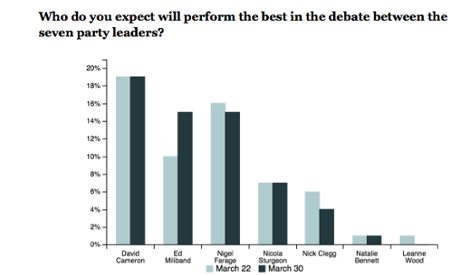
YouGov Q: Who do you expect to win tonight's debate: Cameron 29% Miliband 18% Clegg 3% Farage 19% Bennett 1% Sturgeon 9% Wood 0% DK 21%
— Sam Coates Times (@SamCoatesTimes) April 2, 2015
2. Party polls
Sometimes the figures for who won a debate are similar for the figures for how people plan to vote (as they were in the third leaders’ debate in 2010). On that basis, there won’t be much in it between Cameron and Ed Miliband. Here are today’s YouGov GB polling figures.
Conservatives: 36%
Labour: 34%
Ukip: 13%
Lib Dems: 8%
Greens: 4%
The SNP do not normally feature in the results of GB polls, but they are so far ahead in Scotland that in some recent polls they have hit around 5% on a GB basis, even though they are only standing in Scotland.
3. Leader perception
According to the YouGov tracker figures, when people are asked who would make the best prime minister, Cameron is well ahead of Miliband, and even further ahead of Nick Clegg.
Cameron: 39%
Miliband: 21%
Clegg: 7%
4. Leader approval
And Cameron is much further ahead of Miliband when people are asked if they think a particular leader is doing well or badly. These are the latest net figures (those who say X is doing well, minus those who says X is doing badly) from the YouGov tracker.
Cameron: -2
Miliband: -29
Clegg: -40
Farage: +35 (although that figure is from October, and not comparable with the Cameron/Miliband/Clegg figures, which are from March.
Nicola Sturgeon is not included in these figures. But YouGov did ask GB respondents recently whether she was a better party leader than Cameron, Miliband or Clegg. Surprisingly, in the light of what our focus groups told Deborah Mattinson (see 6.16pm), she was behind Cameron and Miliband, but ahead of Clegg.
Best leader?
Cameron: 42% Sturgeon: 21%
Miliband: 29% Sturgeon: 26%
Sturgeon: 33% Clegg: 26%
5. Bookies’ odds
According to the odds from Ladbrokes yesterday, Nigel Farage should win.
Nigel Farage (Ukip) 7/4
Ed Milliband (Labour) 11/4
David Cameron (Conservatives) 7/2
Nicola Sturgeon (SNP) 6/1
Nick Clegg (Liberal Democrats) 10/1
Natalie Bennett (Green) 16/1
Leanne Wood (Plaid Cymru) 20/1
Personally, I would go with YouGov (point 1), not Ladbrokes.
Updated
Megan Carpentier, opinion editor of Guardian US, gives this analysis of the UK TV debates:
The perception that a seven-way leaders debate will be “a disjointed, incoherent cacophony, simultaneously turning off the voters and belittling the politicians” could easily be informed by the American experience, in which our television networks line up anyone who is interested in running for the highest office in the land (or, if Republican, getting a Fox News contributor contract) and can prove that they could get at least a few hundred votes.
So, at least in that aspect, a debate between actual party leaders is more than what we Americans can expect starting in August. During the 2012 campaign, for instance, there were 20 debates between the various Republican candidates (the first of which was in May 2011), and as many as nine candidates shared the stage with others clamouring to get in; during the 2008 campaign, there were 25 live Democratic debates and eight candidates participated in seven of them. The Republicans have decided to limit themselves to nine debates for the 2016 elections; the Democrats might not have any if no one besides Hillary Clinton runs.
Our primary debates are almost always most notable for the gaffes and errors than the serious business of governing: from Rick Perry’s “Oops” moment in 2012 to Barack Obama’s “You’re likeable enough, Hillary” moment in 2008, the mistakes are almost always more interesting than the by-the-numbers recitations of the candidates’ canned talking points and their attempts to avoid too many specifics that could hurt them in a general election. The final debates between the party nominees are usually more serious-seeming (John McCain’s “dick fingers” in 2008 when talking about women’s health notwithstanding) and usually one-on-one; the last three-way presidential debate was in 1992, when Ross Perot joined Bill Clinton and then-president George HW Bush on stage.
In other words, as disjoined and cacophonous as this might seem to British readers, it’ll probably be more intelligent than what an increasing minority of Americans watch.
Updated
My colleague Frances Perraudin is at the debate in Salford.
She says there are plenty of photographers.
Snappers eagerly awaiting the arrival of all seven party leaders #ITVDebate pic.twitter.com/wgpMDlnx25
— Frances Perraudin (@fperraudin) April 2, 2015
But only one protester.
Steve Spy is protesting against police corruption. "Politicians are puppets", he says. "The bankers are in charge." pic.twitter.com/zNFwTSrzHo
— Frances Perraudin (@fperraudin) April 2, 2015
Updated
Nicola Sturgeon, the SNP leader, has retweeted this picture of herself backstage at the ITV studios with Leanne Wood, the Plaid Cymru leader.
The SNP and Plaid are sister parties, and the two leaders are friends.
.@NicolaSturgeon & @LeanneWood greet each other backstage at the ITV studio #voteSNP #GE15 #LeadersDebate pic.twitter.com/wbuzoZPTZG
— Ria Robertson (@RiaDRobertson) April 2, 2015
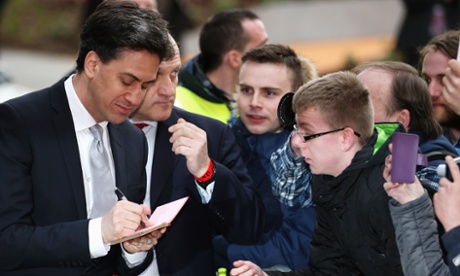
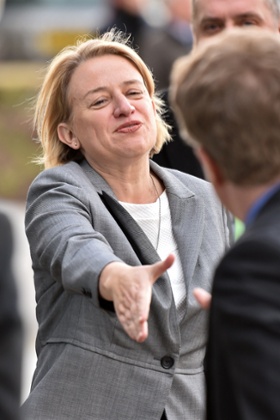
Leaders are arriving for the debate.
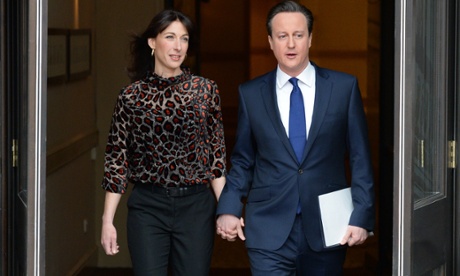
Updated
Speaking order
As Rowena Mason explained earlier, there will be opening statements, four questions, and then closing statements. (See 5.44pm.)
Here is the order in which the leaders are speaking.
My colleague Tara Conlan has written a mini profile of Julia Etchingham, who is chairing tonight’s debate.
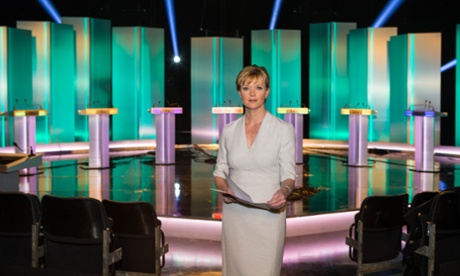
Julie Etchingham was the first woman to co-anchor an election night programme five years ago.
She is renowned for her extensive research and her big-hitting interviewees have included Condoleeza Rice, Hillary Clinton and the past four prime ministers.
Calm and organised, the Cambridge graduate from Leicester is a Roman Catholic with two sons who stays away from the limelight.
She cut her teeth on local BBC radio before moving on to present children’s show Newsround and work for BBC Breakfast News but moved to Sky News in 2002. Six years later she was poached by ITV to co-host the relaunched News at Ten with Sir Trevor McDonald.
Since then Etchingham , 45, has also co-hosted ITV’s coverage of Prince William’s wedding and the Queen’s diamond jubilee celebrations.
A down-to-earth daughter of teachers, she once said: “I don’t give a monkey’s how wrinkled my face gets, but I would be worried if I thought I wasn’t doing my job properly.”
Despite suffering from insomnia, her unflappable exterior has only been shaken once. In 2007 she did not realise her microphone was on and joked during Sky News’ coverage of David Cameron making a speech that the Tories’ immigration policy was “extermination”.
There are obviously no hard feelings as Cameron later had a model of a Dalek model delivered to her house and recorded a clip for her fortieth birthday.
Media Guardian profiled her three years ago. You can read more while you wait for the debate.
Updated
Deborah Mattinson, the pollster overseeing the Battleground Britain project for the Guardian looking at what floating voters think, has written an article about what focus groups reveal about how the leaders are perceived.
Judging by her piece, it might be wise to put some money on Nicola Sturgeon winning tonight.
By a long way, the most positive leader image was that of Nicola Sturgeon – among Scottish voters and even those English voters who knew who she was: strong, intelligent, and honest.
The more wary among our swing voters chose words such as “cunning” and “skillful”, but overall there was considerable appreciation of the plucky upstart. Building on this position of strength is Sturgeon’s task for Thursday, perhaps the hardest task of all.
The Conservative Zac Goldsmith predicted Britain is heading exactly towards another multi-party coalition in the next few weeks, adding there is no reason why coalition cannot be a good thing. He is one of the first Conservative MPs to admit an overall majority may be beyond David Cameron’s reach.
Speaking at the RSA in London setting out his vision of a new democracy, Goldsmith said a multi-party coalition was “exactly what we are heading for in the next few weeks”. He said he hoped the Liberal Democrats would be better at coalition next time saying he had been disappointed with what the Liberal Democrats did in 2010.
I thought there were things that the Liberal Democrats could bring. I thought they would be good on environmental issues. I thought I would be able to rely on them. I though they would be good on reform. I have been massively disappointed on all the key issues. I have stood outside the lobby at times saying ‘do you know what you are voting for?’
I have been a de-facto, uninvited trespassing whip saying ‘you are about to vote for something I guarantee you did not say you would vote for before the election’, with minimal effect.
He said the principle of coalition is not something he had been viscerally opposed to, adding he hoped the Lib Dems had learnt their lesson and that they might behave differently in a coalition going forward.
Updated
Here is the set for the leaders’ debate at the ITV studios in Salford.

Updated
Ed Miliband has been buying shoes in Manchester ahead of tonight’s debate, the Manchester Evening News reports. Rather, he sent an aide to buy two pairs for him, for £65 each.
Updated
Rowena has also written profiles of all seven leaders which you can read here.
A guide to what will happen tonight
Here’s a guide to what will happen tonight from my colleague Rowena Mason. (It was posted on our earlier live blog, so apologies to people who have read it already.)
And perhaps the most important thing (for foolberry) – it starts at 8pm.
Who is taking part?
After months of wrangling, the broadcasters finally agreed seven leaders would be allowed to take part, allowing David Cameron to dodge a head-to-head with Ed Miliband. They will appear on screen from left to right as follows: Natalie Bennett of the Greens, Nick Clegg of the Lib Dems, Nigel Farage of Ukip, Ed Miliband of Labour, Leanne Wood of Plaid Cymru, Nicola Sturgeon of the SNP and David Cameron of the Conservatives.
What is the format of their exchanges?
Each leader will stand behind a podium, while they are moderated by ITV’s Julie Etchingham. They will each make an opening and closing statement, as well as being allowed to discuss on four topics. The speaking order follows a pre-determined grid based on how the standing position lots were drawn. Bennett will be the first speaker in the debate and Cameron the last. There will be around 17 to 18 minutes on each topic, with questions submitted in advance by the studio audience and ITV viewers.
Who selected the questions and what will they be asked?
ITV says this was the work of an “experienced editorial panel” and they will not be seen by the leaders in advance. The topics will surely cover the economy, the NHS, immigration as well as another area – perhaps the future of politics.
Who is in the audience?
The audience of around 200 people was chosen by polling company ICM. Its makeup has been decided on ratio, rather than the current polls: 40 undecided voters, 35 Tory, 35 Labour, 28 Lib Dems, 21 Ukip, 14 SNP, 14 Green, and 7 Plaid Cymru supporters.
Do they get a breather?
There will be one break for leaders during the two-hour live broadcast, allowing for one commercial break. After the debate, ITV will present its news live from the spin room.
Who is going to win?
The bookies say Farage, but YouGov has done a poll suggesting more people back Cameron as the winner. There will be several snap polls after the event, including one from the Guardian/ICM.
How do viewers get involved?
We will be liveblogging the event, bringing you news from the spin room and analysing the aftermath. The Twitter hashtag is #leadersdebate. On itv.com/news, viewers will be able to “rate the debate” as they watch it, using a special interactive dial embedded on the website.
Updated
We don’t know if there has been any kicking or screaming in Manchester, but the event that many people assumed would never happen is finally getting underway and, as the news bulletins have been reporting, David Cameron has been dragged into a head-to-head with Ed Cameron.
Or rather, thanks to some deft foot-dragging by Downing Street, where debates were never popular because many Tories think they cost Cameron his majority in 2010, it’s more of a head-to-head-head-to-head-to-head-to-head-to-head - because, of course, seven leaders are actually taking part. As the Guardian reports today, some of Cameron’s aides believe the result will be a “democratic bore-athon”, which could be so dull as to avoid damaging Cameron’s election chances, or a vivid demonstration of the “chaos” that would ensure if Labour, the SNP and other parties tried to form a multi-party coalition.
There are other election debates, or debate-style events, but this is the only one involving Cameron arguing his case directly with Miliband. It should be the most important of the campaign.
And we’ll know who “wins”. The Guardian will be publishing the results of an ICM poll soon after it finishes. And reportedly there will be another four snap polls too.
Confirmation of tonight's snap polls: YouGov/Times ICM/Gdn ComRes/ITV Surv'n/Mirror MORI You heard it here first! https://t.co/dU15A0uIPy
— NumbrCrunchrPolitics (@NCPoliticsUK) April 2, 2015
I will be covering the build-up to the debate, the event itself, and the poll results as they come in, as well as flagging up the best comment and analysis. Colleagues like Marina Hyde will also be contributing to the blog too, and we will be posting instant FactCheck videos about the claims made by the leaders, as well as reaction from floating voters taking part in our Battleground Britain project.
If you want to follow me on Twitter, I’m on @AndrewSparrow
Updated