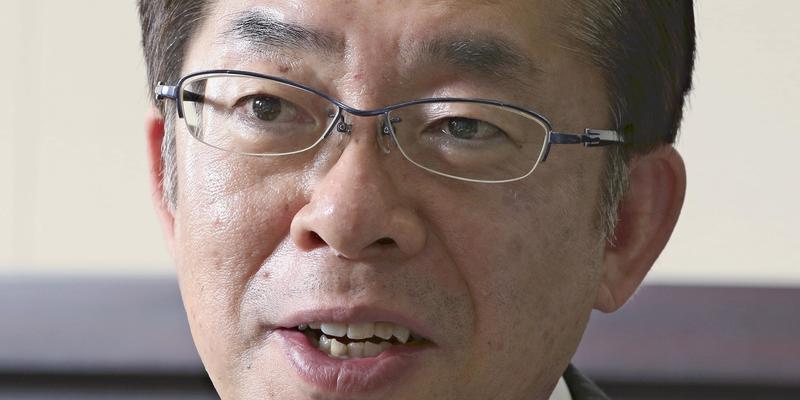
The domestic market for kampo medicines -- a traditional medical system that utilizes the reactions of the human body for therapeutic interventions -- has been expanding. Tsumura & Co. has embarked on strengthening its business operations in China as a prospective market. For this installment of Leaders, a column featuring corporate management and senior executives, President and Representative Director Terukazu Kato explains his business strategy and philosophy to The Yomiuri Shimbun.
The domestic market for kampo medicines has been steadily growing. Recent shipment volumes of medical prescription kampo products have shown an about three-fold increase since 1999.
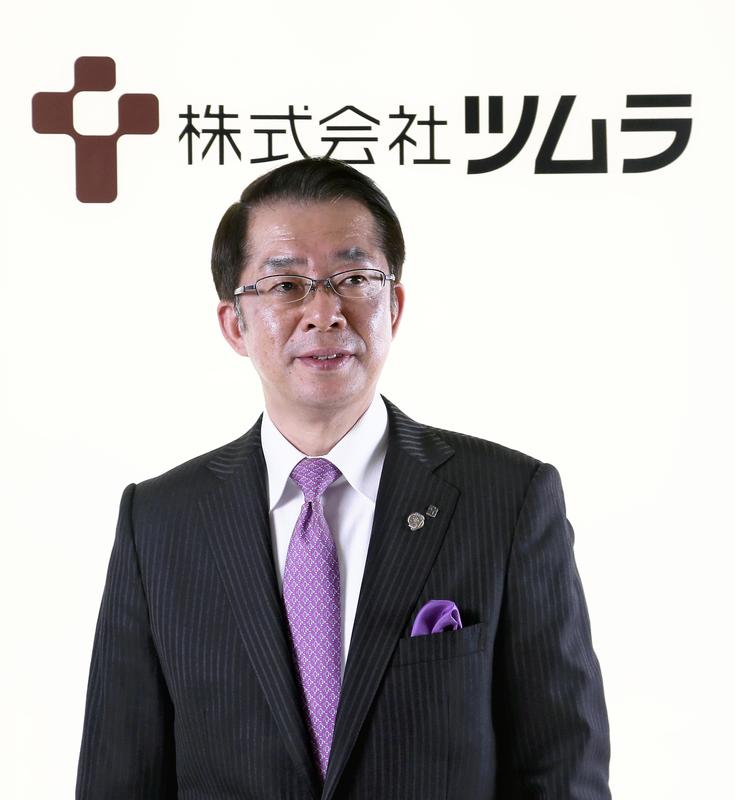
We will see the elderly population peak in 2042. The proportion of kampo medicines prescribed to senior patients is higher than in any other age bracket. Kampo has gained attention for its effect on alleviating appetite loss in people who suffer the side effects of anticancer drugs. It is expected that solid growth in demand for kampo medicines will continue.
Traditional medicine -- introduced to Japan from China in the fifth to sixth centuries -- has evolved into a distinctive form in Japan called kampo medicine.
However, kampo has traveled a bumpy road to gain a footing in society.
In China, Western medicine and traditional medicine coexist, and the medical licenses are different from each other. The same is true in South Korea.
In Japan, however, as Western medicine was introduced during the Meiji era (1868-1912), a movement to drive out kampo took place. Although physicians specializing in kampo medicine submitted a petition to continue their practice, the Imperial Diet rejected the request in 1895. Western medicine was recognized as the sole medical practice in the country.
It was 1976 when kampo formulations were authorized for prescriptions and became officially recognized drugs, with prices decided by the government's National Health Insurance (NHI) drug price list. Ever since then, it has contributed to the growth of the market as various clinical data has been gathered, followed by further understanding of kampo medicines' effects.
In a survey of physicians, approximately 90 percent of respondents said they had prescribed kampo medicines. Accumulating clinical data requires us to constantly manufacture kampo formulations of consistent quality. I am proud that the company has contributed to this process, which demands high pharmaceutical skills.
Pursuing innovation in tradition
Global mergers and acquisitions have taken place one after another in the pharmaceutical industry. These moves highlight the fact that strengthening management is required in order to finance the enormous cost of developing new medicines.
The idea of developing new medicines does not fit with kampo, because they are originally based on traditional prescriptions. It is essential for us, nonetheless, to analyze and discover the action mechanisms of crude drugs and kampo medicines by utilizing state-of-the-art technology.
For example, a kampo medicine known as yokukansan has been prescribed for children with anxiety-related symptoms. It has been recognized that the medicine is effective in improving behavioral and psychological symptoms of dementia, such as delusions, hallucinations, anxiety, insomnia and other disorders.
NHI drug prices decided by the government have continued to fall. On the other hand, the cost of the crude drugs for kampo medicines continues to rise. How to control manufacturing costs has become the most challenging issue for us.
In order to deal with the issue, it is also important to reduce the cost associated with the manufacturing process. In our factories, we have introduced cutting-edge robotics to automate the process. We are also planning to use artificial intelligence to reduce the workload of sorting out crude drugs, which has been handled manually until now.
No business model for kampo exists either at home and abroad. We need to create our own innovations.
Sales in China to expand
[In September 2017, Tsumura marked its business entry into China by making a capital and business alliance with Ping An Insurance Company of China, one of the four major insurance companies in the country.]
We import 80 percent of our crude drugs -- raw materials for kampo medicines -- from China. Maintaining a stable supply line from China is essential to running our business.
The question was how to secure a constant supply of high-quality crude drugs. One of the answers was to have direct transactions with local production entities. In 1978, after bilateral diplomatic relations became normalized, the then-chairman negotiated directly with the Chinese government and established a system in which local farmers cultivate crude drugs for us. Since then, we have secured a means of direct procurement of the crude drugs grown by contracted farmers, without purchasing from the market.
The purpose of the partnership with Ping An Insurance Company, however, is not to export kampo products to China. We aim to manufacture and sell traditional Chinese medicines by using Tsumura's technology and know-how in manufacturing high-quality products. The Ping An Insurance Company is known for its IT services and 230 million users have registered on its online health consultation service. As health awareness is rising in China, sales should increase not only for pharmaceutical products but also for health food and materials for medicinal dishes based on traditional Chinese medicine.
In China, artificial intelligence has been incorporated into medical diagnoses. Many of the users are high income earners, and we expect demand for Tsumura's products to increase. We envision that our sales in China will expand and catch up with our sales in Japan in 10 years.
[Tsumura also hopes to contribute to the Chinese government's policy for promoting health and alleviating poverty.]
The Chinese population is aging and the number of patients suffering from symptoms of high blood pressure and excessive fat in the blood has increased. While securing profits, we also want to help promote health among the Chinese in order to show our gratitude for the people who have been supplying crude drugs for kampo medicines.
Many areas suitable for cultivating these crude drugs in China are poverty-stricken remote regions or inhabited by ethnic minorities. I visit these areas several times a year to talk with the farmers. I have seen changes in those areas as the incomes of farmers increased -- beautiful houses are being built in a sleepy village and gradual local development is in the making. Witnessing these changes has also motivated me to further focus on our business in China.
Firms need fine combination, too
Looking back on my career, I strongly believe that every single experience since joining this company is an asset. Although I initially expected to work in the sales department, I was assigned to the accounting section. I was disappointed, but it became an opportunity to learn how to manage the business.
In the 1990s, after the collapse of the bubble economy, I was transferred to a department in charge of reorganizing unprofitable businesses. Up to that point, the company had embraced the concept of a "total wellness business" -- expanding into cosmetic products and investing in artworks. The business diversification ended in failure and the company faced a management crisis.
Being posted to a position to liquidate the unprofitable subsidiaries, I worked on cutting executive compensation and reducing the number of workers of the subsidiaries. I was able to manage such a job in my 30s because I believed our patients would have to pay the price if our business continued to go wrong.
After that, I became the president of a new firm in the United States for wholesaling items including toiletry products. Establishing the new business from the ground up -- arranging warehouses and offices, recruiting staff and managing finances, among many other things -- became a crucial experience for me as a corporate manager.
[Kato sees many commonalities between an ideal organization and kampo medicines.]
In my view, [the principle of] the careful combination of crude drugs for kampo can be applied to running an organization smoothly. One kampo medicine, called daikenchuto, is a product consisting of four crude drugs: ginseng, zanthoxylum fruit, processed ginger and saccharum granorum. It is prescribed when a patient has abdominal cold feeling and pain. These crude drugs can be effective as daikenchuto only when they are carefully mixed together.
The skill of each employee is, of course, important. On top of that, working together as a team enhances each individual's ability. This is why we aim to be The "People" Company, as advocated in our medium-term management plan.
-- Terukazu Kato / President & Representative Director of Tsumura & Co.
Born in Aichi Prefecture in 1963, Kato graduated from the Faculty of Commerce at Chuo University in 1986 before joining the company. He became president of Tsumura USA Inc. in August 2001. After serving in such positions as head of the public relations department, commissioner, director and executive officer, he took up his current position in June 2012. On his days off, he enjoys core training and playing tennis.
-- Key Numbers
129 products
The company, founded in 1893, manufactures and sells 129 prescription kampo products in Japan and enjoys a share of 84 percent in sales for the products. The company name was changed to its current one from Tsumura Juntendo Co., Ltd. in 1988. In 2008, Tsumura sold its household products business, which included bath additives Bathclin. According to consolidated financial statements of the fiscal year ended March 2018, its net sales were 117.8 billion yen. The consolidated number of employees was 3,504 as of September 2018.
Read more from The Japan News at https://japannews.yomiuri.co.jp/