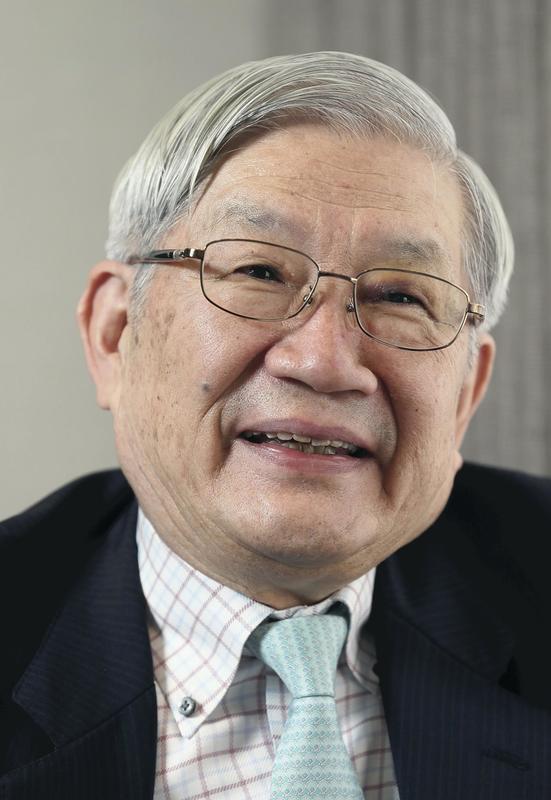
Japan and the global community have been beset by crises, such as the novel coronavirus pandemic and friction among major world powers. What qualities should Japan's leader have now? For the first installment of a series of articles presenting the views of intellectuals, Yomiuri Shimbun Senior Writer Kiyohisa Yoshida interviewed University of Hyogo Chancellor Makoto Iokibe. The following is excerpted from the interview.
The 30 years since the end of the Cold War have been a period when Japan struggled with three forms of intense suffering.
The first was that its economy long remained in the doldrums after the bubble burst. The second was that the Japanese archipelago entered a period of seismic activity, with the nation hit by major earthquakes including the Great Hanshin Earthquake and the Great East Japan Earthquake. [And third], "weather disasters," such as typhoons and torrential downpours, have occurred frequently every year.
Amid such developments, the COVID-19 pandemic occurred.
Japan's leader needs to build systems that can respond appropriately and swiftly to major natural disasters and the novel coronavirus as issues that pose threats to "human security."
Large-scale natural disasters and the spread of infectious diseases will occur repeatedly in the future, too. In times of emergency, it should be made possible to restrict, to a certain extent, individuals' rights, from the viewpoint of "public welfare," or for the survival of the population as a whole. Shouldn't we redevelop laws, institutions and systems related to crisis control in that direction?
It would be best not to resort to restricting individuals' rights if it can be avoidable. But one quality required for a leader facing a crisis is the ability to make tough decisions for the benefit of society as a whole.
Also important is the power of the leader to deliver words that would win over the feelings of many people.
As the coronavirus pandemic drags on, most people suffer from a vague anxiety as they wonder, "Where on earth are we heading?" Without the people's cooperation, however, we won't be able to weather the COVID-19 crisis.
In response to the spread of the coronavirus in March, German Chancellor Angela Merkel, in a TV address, urged Germans to act in solidarity, saying "There has been no such challenge to our country since German reunification -- no, since World War II." Taiwan's President Tsai Ing-wen and New Zealand's Prime Minister Jacinda Ardern also delivered similar messages to their people.
"It has been hard now, but let's go over that mountain together." It is indispensable for a leader in a time of crisis to have the ability to lead the way into the future, giving the people hope with a bright and forward-looking message.
--Flexibility sometimes essential
While the global community has been preoccupied by the novel coronavirus, the rivalry between the United States and China is escalating.
It calls to mind the scenario that led to World War I, about 100 years ago.
Looking back on history, major wars tended to break out when there was a shift in the balance of power among the major powers. In Europe at that time, the power of Britain had weakened, while the newly emerging Germany was extending its power rapidly. Countries in Europe claimed their national interests by asserting, "This one isn't up for negotiation," thereby escalating their conflict. As a consequence, a world war nobody wanted came about.
In the international community today, U.S. supremacy has weakened, while China has gained power. At the same time, there is an underlying pattern in which countries are confronting each other, each espousing a "my country first" approach.
With the passage of 75 years since the end of World War II, an atmosphere of concern over the idea of war has decreased in Japan. But below the surface, the trend of events tending toward a major war has grown. Political leaders of this country should be aware that Japan is on the front line of a crisis.
Japan and European countries, each holding some power to persuade other countries, are able to take a more balanced view of the world. To avoid a "new Cold War between the United States and China" from leading to the collapse of world order, Japan and European countries have to hang tough. Both Japan and European countries also need to tenaciously call for international cooperation, which is crucial for fighting the novel coronavirus, persuading both the United States and China.
The leader of Japan today is required to have a broad view of things, including a wide, international perspective on history. While saying what needs to be said even to U.S. President Donald Trump and Chinese President Xi Jinping, he would cooperate when cooperation is necessary. Not simply wielding the "banner of justice" in calling for freedom and democracy, a leader should understand different cultures flexibly, sometimes even to a degree deemed unprincipled, and should get along well with various countries. Such determined diplomacy is important.
Prime Minister Shinzo Abe has enhanced Japan's presence on the diplomatic front. The international responsibility to be shouldered by his successor is heavy. It would be advisable, for starters, that he should gather experts on foreign affairs and trade negotiations as a brain trust and have them form strategic teams.
Read more from The Japan News at https://japannews.yomiuri.co.jp/