Thanks for joining us for coverage LEAD 2015. The event posed some important questions for advertising, in particular the role of industry regulation and the role of data and creativity. You can carry on the debate on Twitter via the #LEAD2015 hashtag. See you next year!
Updated
Andy sums up the main points of the morning’s proceedings, and with that LEAD 2015 has reached it’s close. The delegates move to the exit, ready for lunch and the opportunity to chew over the key issues that have been raised for advertising through today’s discussion.
Updated
Andy Duncan, president of the Advertising Association is on stage to give the final address
“All the topics we’ve covered today head to one simple question: is the way we’ve been overseeing the advertising world still the right way?”
“The fundamental point is about keeping up with consumers. Societies trust in us is going down. The old model doesn’t hold up. We can put our head in the sand and hold the line we always had. The big issue is abut stepping up and taking more responsibility. We have to do it, it’ll be done for us”
“There is a wider responsibility. We have to collectively find a way to work out how to deal with some of the issues, and this requires some judgement”
“The danger of us all is that trust in the whole industry gets chipped away. We have to work this out ourselves”
“Do we want to be reactive or proactive? That’s the big decision. I for one would like to maintain control of our industry”
On measurement: “In digital we don’t seem to be where we’d like to be”
“We need something third-party verified, a system that works for the industry”
“How do we stop worrying about measuring attitudes instead of numbers. We should move the debate to capturing engagement”
“How do we create new ways of brand love?”
“How do we stop worrying about measuring attitudes instead of numbers. We should move the debate to capturing engagement”
Updated
On talent and capabilities: “Technology is just a thing. Ideas are really important”
“Getting great people in is a huge challenge. If you can’t get great people, you won’t do great things. When I started all the great creatives went into advertising, We need to find new ways to engage”
“We need to take a step-change approach to training and development. We need to lift our game. We need to stop chopping down trees and think about sharpening the axe”
On the challenges facing marketing: “One of the first is integration. If we don’t integrate we’ll fragment our brands. Our consumers are more connected than we are”
“We can be seduced into thinking we’re doing a great job but need to do more. We’re the app startup capital of the world. But we have a long way to go. We need to inspire the next generation, we’re missing out. Advertising needs to be more involved, to offer more to get people into the industry. We have to stop thinking that the digital economy is all Facebook or Google. It’s about all of us”
Keith Weed, chief marketing and communications officer for Unilever is now on stage
After the excitement of the political vote, Keith returns the focus to the importance of advertising and what an important time this is for advertising.
And the winner is....
Chris Bryant MP, Labour. The delegates have spoken and Chris Bryant has won the popular vote!
Each MP has been asked for a final, vote winning slogan...
Maria Miller: “Securing Britain’s future”
Tom Brake: “Building a stronger economy and a fairer society”
Chris Bryant: “One nation”
Each MP having their say, with cigarette packaging being the burning issue of the day. Delegate Rose questions the panel on EU, a pertinent one for the international ad industry.
Chris Bryant is “prepostorously pro-EU, and proud of the EU”, Maria Miller avoids a straight answer but is”hoping for a better deal for the UK”. Tom Brake of the Liberal Democrats is also pro-EU.
The LEAD 2015 delegates are being treated to a genuine political debate here, cross-questioning, point-scoring and all. Questions being thrown to the floor now...
The pitches
Each panelist has 90 seconds to impress the audience with their thoughts on the advertising industry.
Maria Miller MP: “This country was facing bankruptcy. Your industry is part of the economic powerhouse of this country. You need a government committed to making a secure economy. You need a government all about securing the future. Vote Conservative”
Tom Brake MP: “Liberal Democrats helped create 2m jobs and 2m apprenticeships. We have our focus on education through pupil premium, and that will provide advertising with the skilled staff needed in your industry. We support self-regulation for advertising”
Chris Bryant MP: “You have to take the whole country with you. Things like the bedroom tax and millions using fodbanks is a shame for the country, and shows that we’re not using our talent. You need us to stay in the European Union, adversing relies on international business”
Some fast and furious cross-questions ensuing now...
Updated
We’re back!
The stage is set for the political debate, with Nick Ferrari of LBC playing the Dimbleby role if things get a bit heated.
Updated
And some nice words on Twitter for Sir Peter Bazalgette, from Arif Durrani: “Stirring stuff from ever eloquent Peter Bazalgette, urges marketers to take their place in creative industry more seriously #LEAD2015”
Praise for Stella from Paul Frampton, CEO of Havas on Twitter: “Great speech by @stellacreasy pushing for more diversity. She says board level change is often non execs and not decision makers. #LEAD2015”
Whose vote is it anyway?
Join us after the break. The next panel will see MPs from each main political party make their pitch to the advertising community, and will feature Rt Hon Maria Miller MP, of the Conservatives, Chris Bryant MP of Labour, and Rt Hon Tom Brake MP of the Liberal Democrats.
Coffee time!
Right, that’s done for the first half, and the delegates are off for a coffee and chat, to check out the content on their AdPads and discuss some of the key issues we encountered. Back shortly!
Question from Martin from Propeller on smoking advertising: I feel my children are more influenced by creative content than packaging. If advertising takes a share of regulation, should creative content face the same?
Sir Peter: It’s a trade off with artistic freedom. In contemporary fiction, there’s a strong argument for being more responsible with context”
Stella Creasy: “Benson and Hedges sales went up 46%, when they introduced new packaging. If you think packaging doesn’t make a difference, you’re selling your colleagues short”
A question from the floor on increasing diversity in the creative industries.
Sir Peter Bazalgette: “Quotas are part of an armoury of things we need to do. The creative case for diversity is to ask people to extend programmes to attract everyone.”
Stella Creasy: “We need to change our expectations and slow progress, and recognise that diversity is so important to us. We’re just at the start of the process, maybe quotas aren’t the answer but the discussion has to be had”
Updated
Cilla Snowball: “All our speakers are asking for is something beyond legal, decent, honest and truthful. It could be honesty, better use of data, becoming less isolated and recognising our part of the creative industries”
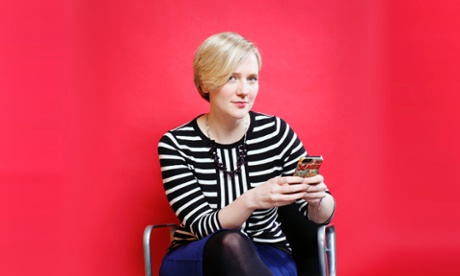
Stella Creasy MP has arrived, and has started with Star Wars: “There is a big challenge facing society. I spent my Christmas making a Lego Death Star. I realised that for them, a toy that involved following instructions didn’t cut it anymore. Its a about a generation who have a presumption about interactivity”
“How we get information to people is at the heart of what you’re doing. Making sure that information is useful and accessible. 100m hours of video is created, intermediaries are needed to make sure content remains trusted and trustworthy”
Sir Peter Bazalgette of the Arts Council: “Advertising is part of the creative industries. We need the creative industries to help government to develop policy, to help with regulation”
Stella Creasy is running a bit late, so we’ve got Patrick Barwise and Sir Peter Bazalgette on stage at the moment to discuss how representatives from culture and politics view advertising
Next panel - How others see us
This section will see the view from politics, academia and the arts on advertising’s value exchange, led by Cilla Snowball CBE, chairman of the Advertising Association
Updated
From Maisie McCabe on Twitter - ‘Andrew Higginson was brilliant. Who needs slides when you’re that entertaining and insightful. #LEAD2015”
Updated
Well received talks from all three of the guests, who are now facing some questions from the audience. Some thoughts from Twitter to come...
On ethics: “The best way to go is to trust your customers, don’t condescend to them. Follow customers. If you don’t reflect the norms, you’ll do a poor job and lose consumers”
On supermarkets: “If you believe the marketing, each supermarket is cheaper than all the others. They aren’t talking to customers, they’re talking to each other”
Andrew getting some good laughs with his thoughts on supermarket one-upmanship and the price of wine here...
On the internet: “Innovating for customers is the only way to win. The internet delivers transparency to customers and business. The internet is becoming the wholesaler. It rewards degree of difficulty”
“It rewards creativity. It has lowered market thresholds and grown international markets”
Andrew Higginson, chairman of Morrisons, is up next
On the board perspective: “In retail, the recession has been a very visible struggle. Do we drive shareholder value? That became a mythical thing that was chosen instead of chasing customers. In my view that’s a dishonest decision. What keeps businesses honest is their customers”
“Competition is the best regulator. Customers vote with their feet. Customers can always go elsewhere. They’ll go to brands that listen to them”
On creativity: “Great creativity is key to our relationship with consumers. We should at minimum be well designed and well crafted.
“It would be easy to reduce advertising to a neatly delivered messaging matrix, but we’d lose the consumer. Much like reducing Hollywood or the BBC to public messaging”
“Advertising should bring new stimulus to the area it inhabits. It can bring joy and flair, not just be a necessary evil...If we don’t aim high consumer love will drain, talent will drain, and we’ll end up in a race to the bottom”
Sarah Tate of creative agency Mother is now on stage
On the industry: “I’m going to do something unexpected of an advertiser: tell the truth”
“We see consumers finding content in areas without advertising. Ad-free content providers won more Golden Globes than standard networks. The industry is getting more complicated”
“It’s all changed. There’s a danger of overlooking the value of creativity. There’s an enormous excitement in big data. There’s a risk that we become so excited by access that we overlook ideas behind the new access we have”
On privacy: “Google takes it’s responsibility to privacy very seriously. Consumers can control all the information in their accounts through ad preferences”
“There is a real need for education and a discussion about this. There is no privacy without security. Bad ads can ruin people’s experience and trust in advertising. More than 350m bad ads were removed by Google in 2013”
“Data fuels creativity and innovation. We must make sure that anonymised data is freely available to be used”
Updated
On programmatic advertising: “Programmatic eliminates a lot of wasted time for advertising, and is better for the consumer too. It improves consumer experience by providing ads to a more engaged audience. 75% of consumers favour customised messages”
On data driven marketing: “Content consumption is now portable, personal and pervasive. These data signals mean that a two-way dynamic exists between consumer and advertsier, with marketers able to act on real time information and adapt to consumer needs”
Eileen Naughton, MD of Google UK is now on stage
Eileen: “Google has very strong views on data and technology. We’re focussed on consumers, it’s at the core of our principles”
“We want to help advertisers discover their target market more effectively”
On the advertising business: “We can’t relax back into the arms of the market and government and let them decide. Our path is difficult. We must have a voice independent of it’s members, that holds an independent view. We need a concerted effort to promote best practice”
“We must be a part of society, not apart from it. We need an industry that is ethical, pragmatic, demanding and purposeful”
On ethical standards: “Ethical actions are not the enemy of pragmatic business decisions. 81% believe that a business can do good while turning a profit”
Richard Eyre on consumer power: “Word of mouth is more powerful than any paid for advertising”
Updated
Richard Eyre: “1 in 6 people feel bombarded by advertising. I agree, its time to seek out a new deal for advertising, with a responsible, ethical underpinning. It won’t be easy”
Updated
Richard Eyre CBE is on stage
Richard Eyre, chairman of the Internet Advertising Bureau: “Advertising is not trusted at the very moment it needs to be. Trust is in diminishing supply”
Updated
Coming up now is Richard Eyre, something of a rock-star in the world of advertising.
Tim Lefroy: “The key issue is responsibility, which we’ll be addressing today”
Tim Lefroy: “81% of MP’s agree that advertising is an important driver of the economy, yet only 34% believe that advertising is in touch with it’s responsibilities”
Updated
Tim Lefroy: “We start with a question: should advertisers be sitting comfortably? Not entirely”
Tim Lefroy: “Prepare to be provoked, stimulated, and to hear things that you may disagree with”
We’re off...
First up is Tim Lefroy, chief executive of the Advertising Association to set the scene for the proceedings
Filling up...
As the hall at Kings Place begins to fill up, delegates are swapping stories and highlights from LEAD events of previous years. This is much like Glastonbury for marketers.
Gearing up
The delegates and speakers are arriving, and the stage is being set. The event is set to kick-off at 8.45am, grab a coffee and join us then
Good morning, and welcome to the LEAD 2015 liveblog
This year’s event looks to delve into the debate surrounding the value exchange between advertising and the wider world. We’ll be bringing you live updates from the conference as it unfolds.
The line-up includes Stella Creasy MP, as well as chair of the UK Arts Council Sir Peter Bazalgette, and many more. Stay tuned for all the insights and occurrences from the event.