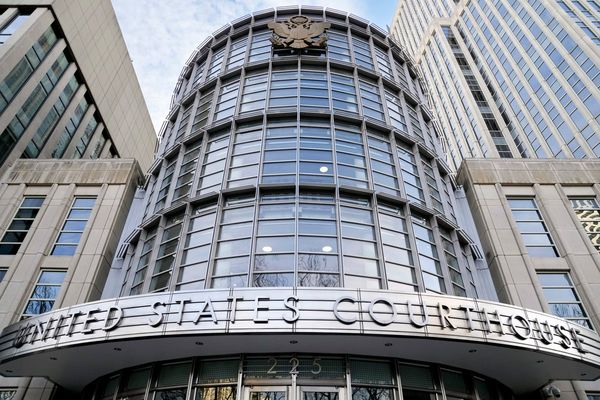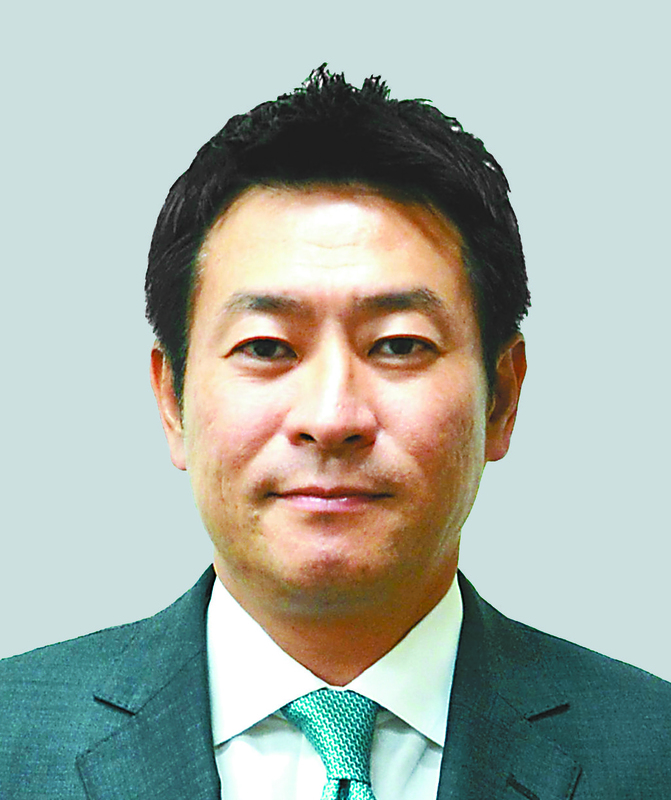
The special investigation squad of the Tokyo District Public Prosecutors Office arrested Liberal Democratic Party lawmaker Tsukasa Akimoto on Wednesday on suspicion of taking bribes from a Chinese company that was seeking to open an integrated resort (IR) with a casino in Japan.
The prosecutors suspect House of Representatives member Akimoto, 48, elected from Tokyo Constituency No. 15, illicitly received 3 million yen (27,430 dollars) in cash from the Chinese company side in September 2017, plus about 700,000 yen (6,400 dollars) in other forms at a later date, both when he was serving as state minister in charge of integrated resorts at the Cabinet Office.
It is the first arrest of a serving Diet member in about 10 years, since then lower house lawmaker Tomohiro Ishikawa was arrested on alleged violation of the Political Funds Control Law in January 2010. He was later convicted of the charge.
The squad also on Wednesday arrested a former executive of a Japanese unit of the Chinese company "500.com" who is known as Tei Ki, 37, as well as Japanese advisers to the Chinese company Masahiko Konno, 48, and Katsunori Nakazato, 47, on suspicion of providing bribes.
The scandal involving 500.com over alleged violation of the Foreign Exchange and Foreign Trade Law has now developed into a bribery scandal involving IR issues.
Earlier on Wednesday, in a telephone interview with The Yomiuri Shimbun before his arrest, Akimoto denied anew having received bribes. "I have never received any money secretly, and I have never done any wrongdoing," he said.
Also before his arrest on that day, the lawmaker denied any involvement in wrongdoing in a Twitter post.
According to sources, some on the side from which bribes allegedly came have admitted to providing bribes, but the prosecutors have not revealed whether the four suspects admitted to the charges.
According to prosecutors, Akimoto is suspected of having received 3 million yen in cash from Tei and the two others in Tokyo in late September 2017, knowing the cash was intended to get favorable treatment of the company's IR business from Akimoto, who was then dealing with the government's IR project while concurrently serving as state minister of the Cabinet Office and also as the land, infrastructure, transport and tourism state minister.
In mid-February 2018, Akimoto visited the village of Rusutsu, Hokkaido, with his family. The town was a candidate location for 500.com to start its IR business. Akimoto met and dined with top leaders of the village. The company is believed to have paid about 700,000 yen for airfare and lodging. The prosecutors allege that such payment constitutes a bribe.
The Chinese company is an online game company headquartered in Shenzhen. The company set up a Japanese subsidiary in July 2017 in Tokyo. The following month, 500.com organized a symposium on IR in Naha. Akimoto, immediately before becoming the state minister, attended the symposium, and made a keynote speech on the prospects for IR and other related matters.
It is believed that Akimoto got acquainted with Tei, Konno and Nakazato as well as the chief executive officer of 500.com in the wake of the symposium. Akimoto visited the head office of 500.com with fellow lawmakers in December the same year.
Tei and Konno are suspected to have violated the Foreign Exchange and Foreign Trade Law by having brought millions of yen into Japan from overseas without declaring the money to customs even though the amount exceeded 1 million yen, the ceiling that can be imported at one time without a declaration under the law.
Prosecutors suspect some of the allegedly smuggled money may have been used to bribe Akimoto.
On Dec. 7 and 8, the special squad searched locations including the homes of Akimoto's two former secretaries in connection with the suspected Foreign Exchange and Foreign Trade Law violation. The squad questioned Akimoto on a voluntary basis and searched his Diet office and other locations on Dec. 19.
Akimoto was first elected to the Diet in the 2004 House of Councillors election. He lost his seat in the 2010 upper house election, but returned to the Diet in the 2012 lower house election, and is serving third term in the lower house.
Read more from The Japan News at https://japannews.yomiuri.co.jp/