
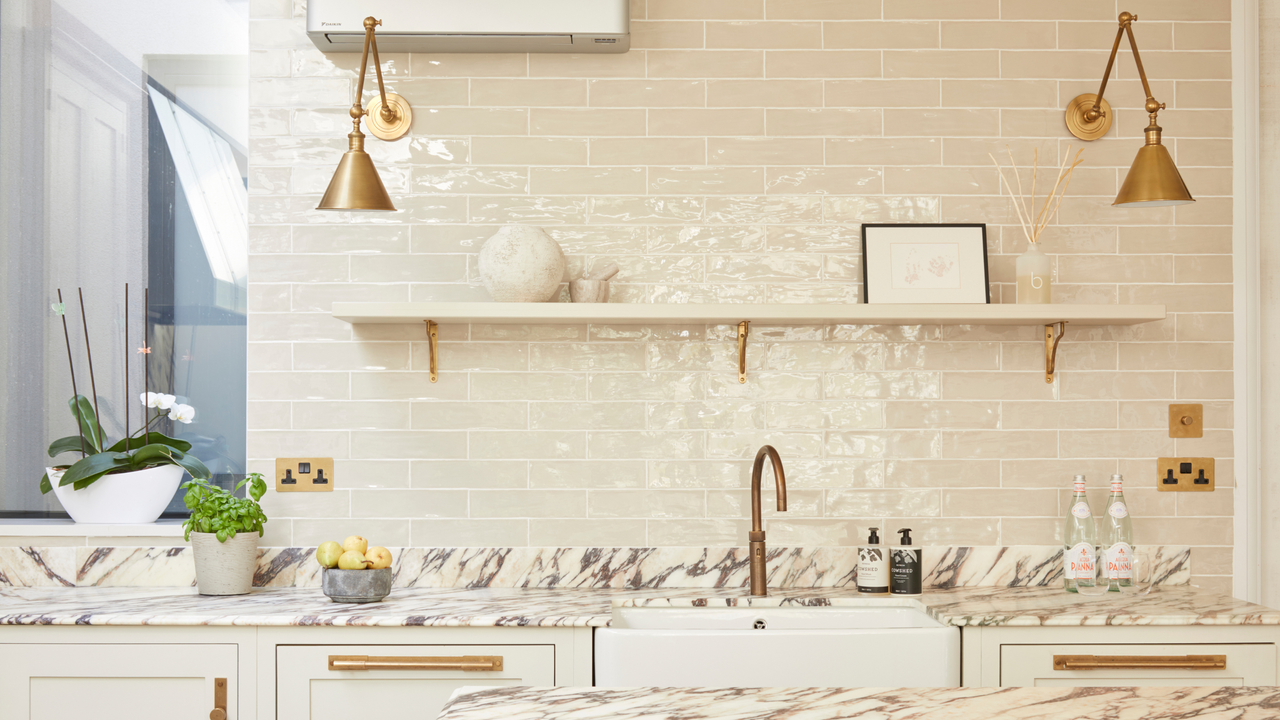
Long gone are the days when your backsplash is just about practicality. Instead, this particular kitchen area has evolved to be not only functional but expressive too; a place to feature and combine our materials that complement the kitchen and celebrate design.
Layering materials, textures, and finishes is a trend all across the home, and it seems we all yearn for details and features that feel unique. The kitchen backsplash is the perfect place to inject a bit of this idea, too, through different combinations.
From pairing boldly-veined marbles with hand-painted, storytelling tiles to the contrast of brushed metal with wooden paneling, mixing materials offers depth and interest, and gives you a focal point that will be seen and appreciated day in, day out.
However, there are ways that 'layered' backsplashes work. These 5 styles offer lessons in what to do if you want to combine materials successfully.
1. Zellige Square Tiles With Statement Marble
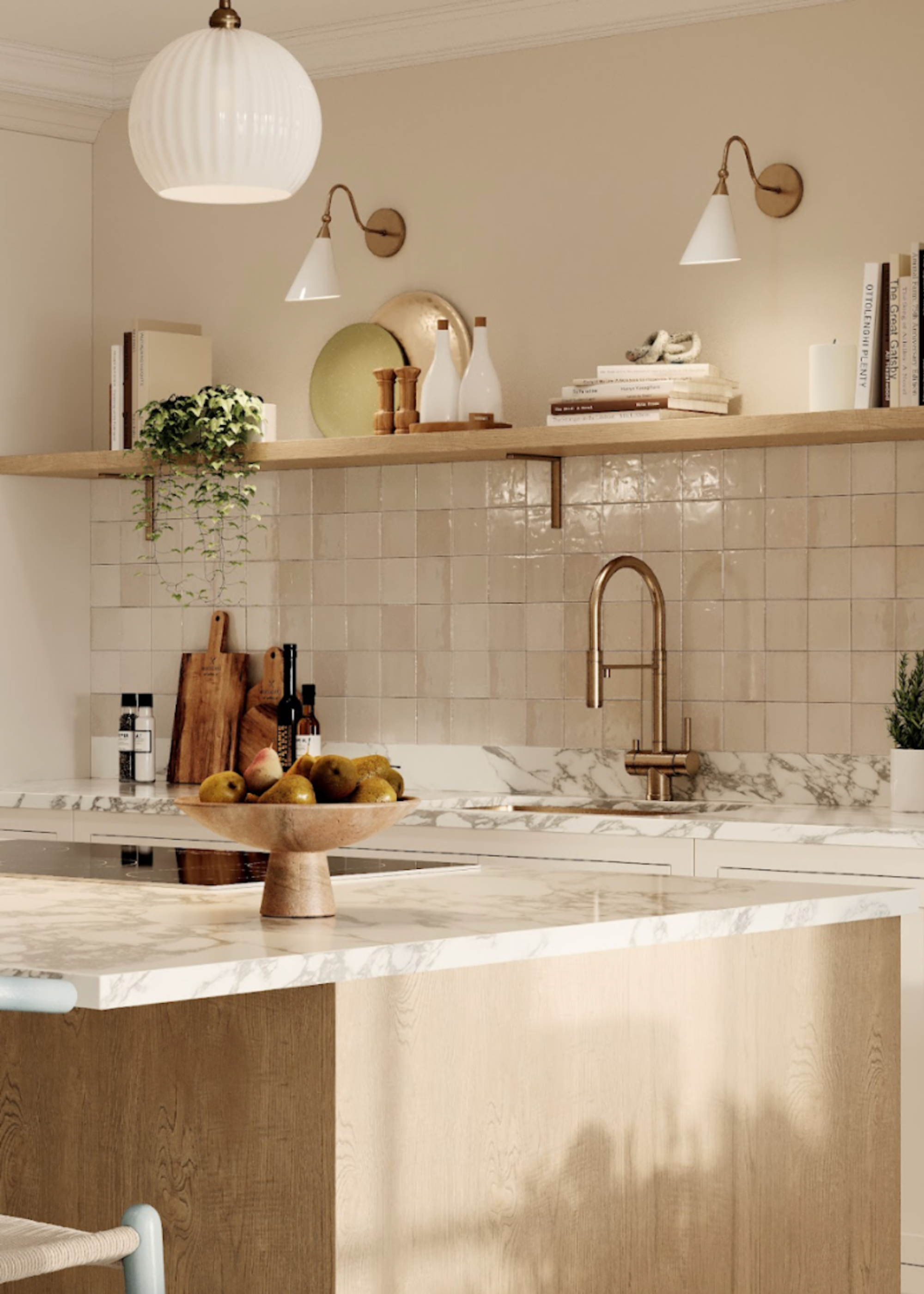
Let’s begin with this light and neutral kitchen by Topology Interiors, where creative director Athina Bluff explains that this trend is a great way to bring luxury to your kitchen on a budget. "It means clients can invest in smaller amounts of premium materials (like marble) without the cost of a full slab backsplash," she explains.
It allows you to control how you bring in bold, dominant materials, like strongly-veined marbles, so they don't take over your space. "By having this statement stone as the worktop only, it feels like less of a risk and commitment," Athina says. "If going for a strongly-veined marble worktop, pare back your backsplash to something simple so it doesn't fight for attention. Think square Zellige white tiles, or simple white vertically stacked rectangular tiles."
It's cost-effective, too, as a single continuous quartz or porcelain slab that extends upward from the kitchen countertop as the backsplash can sometimes double the price of your materials. “Switching this up and using tiles, or even stainless steel, or glass is becoming increasingly popular," Athina suggests.
So, how do we make sure this material combination works? “Ensure undertones between the worktop and backsplash are aligned," Athina says. "If going for a simple stone worktop with minimal veining, use the backsplash as an opportunity to inject a bit of color and personality.”
From a styling perspective, I'm also appreciating the use of wood in this kitchen — from serving boards to the salt and pepper grinders and the open shelving too, everything nicely tied together to make one cohesive scheme.
Add an extra layer of texture with a wooden serving board lent against the backsplash
2. Tile and Timber
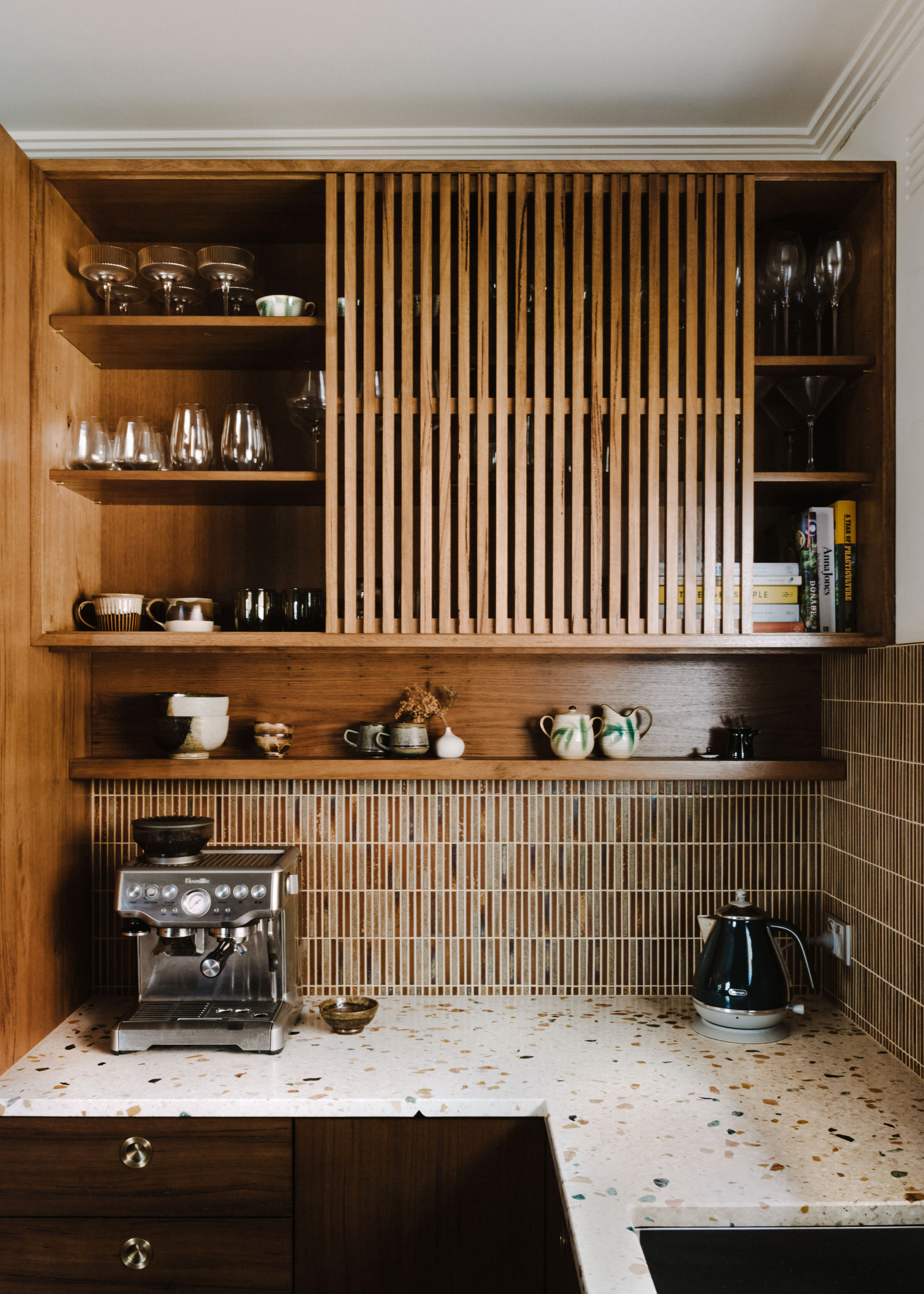
There’s something undeniably warm and comforting about a combination of tonal and textural surfaces put side-by-side, as in this Japanese modernist-inspired kitchen. "When designing our kitchen, I drew inspiration from a recent visit to Japan," says Lucy Spartalis, homeowner, designer, and photographer of the space. "I was so taken with the use of mottled, textured materials in all of the traditional buildings; organic stonework, earthy tiles with irregular glazes, timber finishes that celebrated the unique grain. I loved how harmoniously these materials were layered together without ever clashing or competing with each other."
Lucy explains how she wanted her new kitchen to feel lived-in, like it had already developed years of patina over time. After weeks of visiting every tile and stone showroom in Melbourne, and collaborating with Sawdust Timber Furniture to create the custom wood kitchen cabinets and shelving from Mountain Ash timber (the same kind of trees visible through the kitchen window), she says: "The whole look came together just as I hoped it would."
3. Statement vs Understated
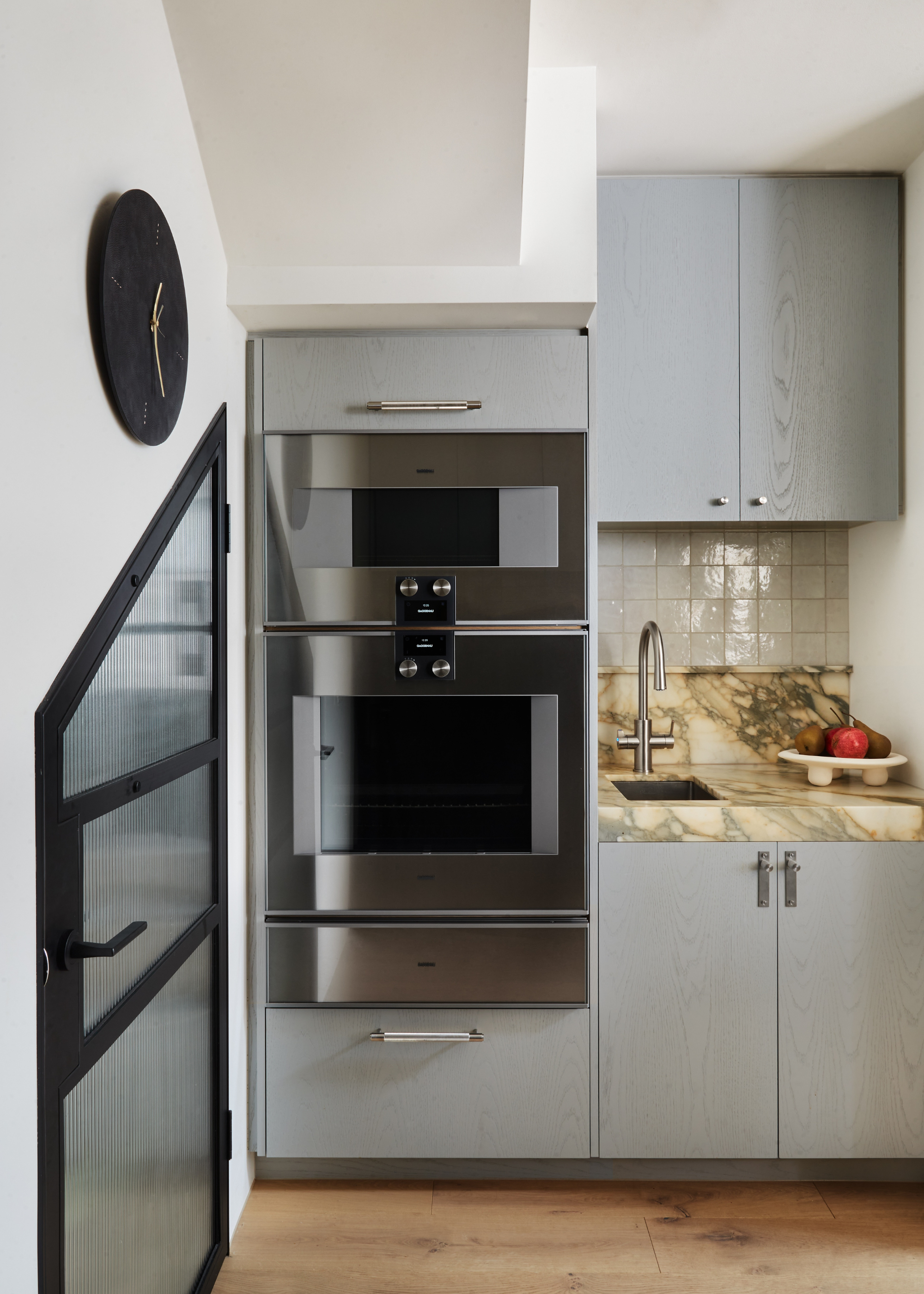
So, while we may be talking about mixing different materials for the backsplash, it’s important to consider the whole picture too. The most successful schemes are those where kitchen colors, surfaces, hardware, lighting, and cabinetry all work in harmony.
"Mixed material backsplashes are a great way to add visual interest to a kitchen, making it feel layered and textural without relying on a bold pop of color," explains Massimo Buster Minale, founder and creative director of Buster + Punch. "But being space-dependent, it's important to consider how this can be incorporated during the design process. Breaking up visual surfaces can make a flat kitchen feel more bespoke with a considered look, as opposed to something off the shelf. For example, mixing quartz or marble with porcelain tiles can elevate the overall design, alongside hardware and lighting to tie it all together."
Any combination you personally put together will instantly emanate a more luxurious and unique look, which in turn enhances the entire space.
4. Create a Focal Point
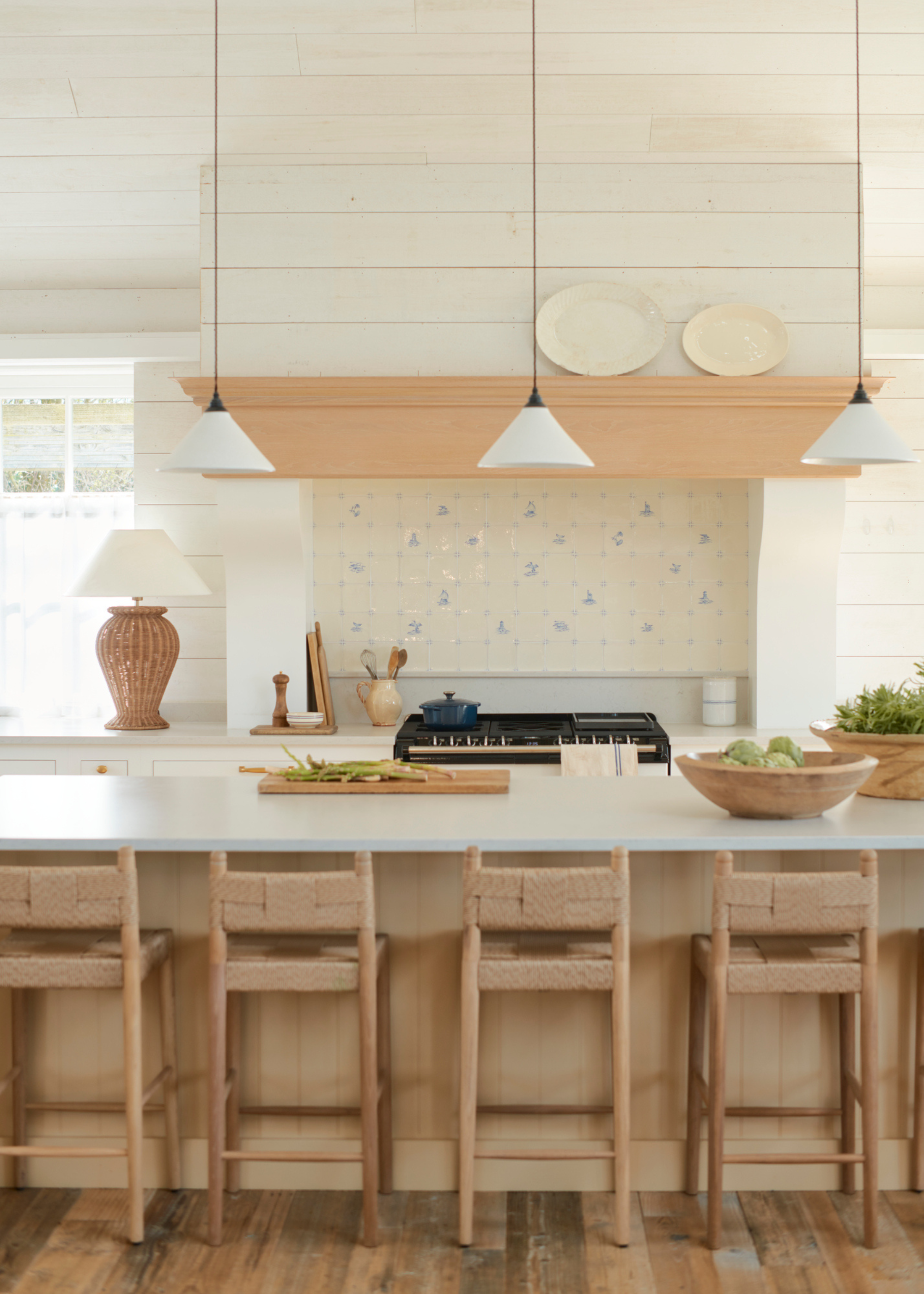
Mixed material backsplashes also offer an opportunity to introduce one area of difference into a scheme, and especially a focal point, like over the range in this kitchen.
The Delft tiles bring character, charm, and nod to history, becoming a point of interest in this Neptune kitchen, rather than just a simple practical surface. Surrounding natural materials help the space feel grounded and calm, idyllic for the farmhouse-style setting.
"A backsplash is a chance for a small bold statement in your kitchen without feeling too overwhelming," says George Miller, kitchen design services co-ordinator at Neptune. "Customers are looking for stylish practicality in these high-performance areas; they need to look beautiful but also be able to withstand the realities of a busy kitchen."
Introduce cafe curtains to soften the harder materials used about the kitchen
5. Introduce Paneling to the Mix
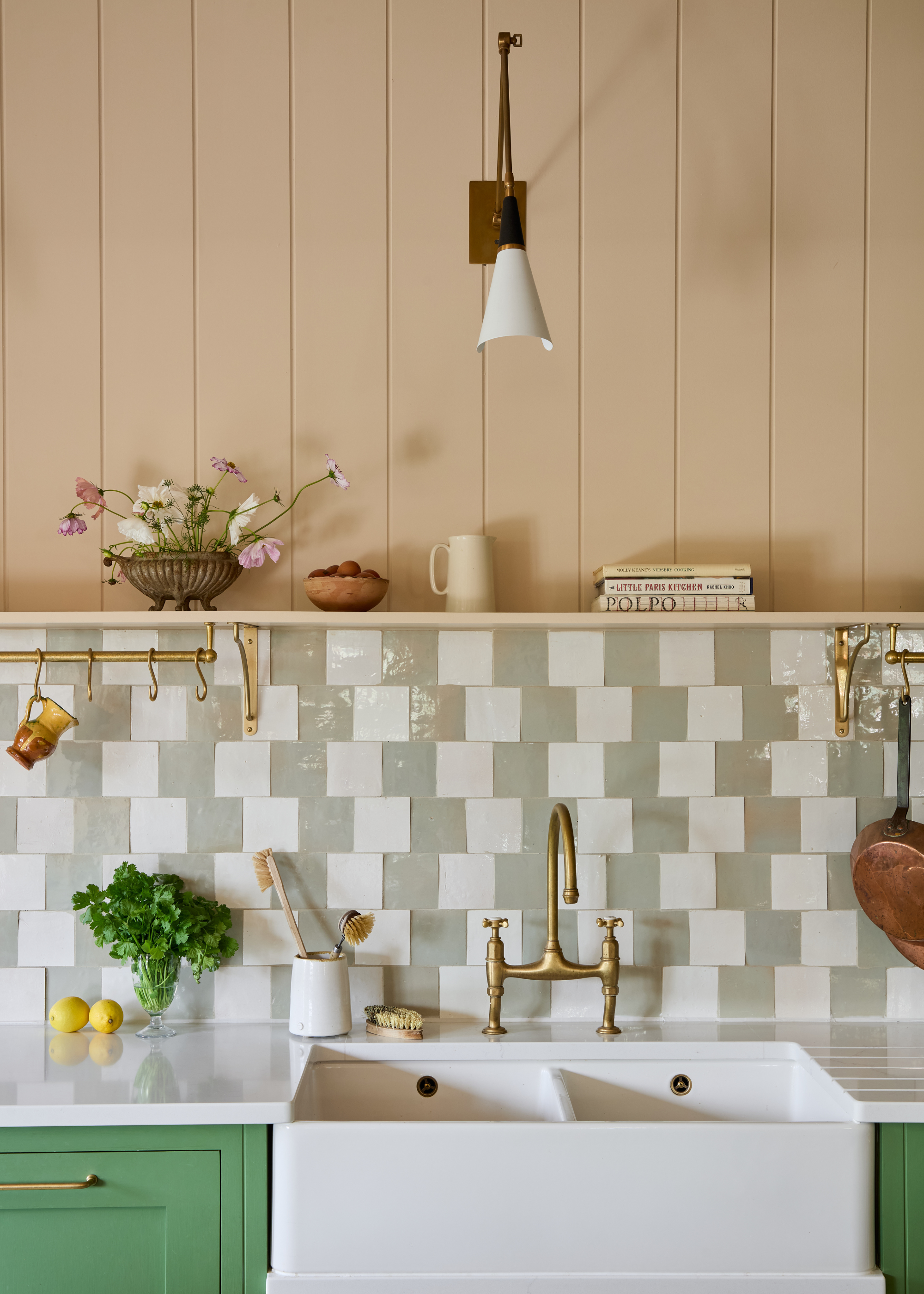
This kitchen by Vaughan Design & Developments is a playful tile layout with Zellige tiles, and then added v-board wall paneling above this, breaking up the meeting point with an open shelf. This meeting point softens the whole look with delicate, homely styling, and the warm brass hanging rails connecting both surfaces. "The difference between the two in color and texture creates visual interest and warmth," says Holly Vaughan, co-founder and director of Vaughan Design & Development.
She says that they love to use mixed materials on a splashback wall area in our projects. "It adds another dynamic to what is otherwise a very practical area. Often, the worktop is chosen due to its practical nature for the space, and if the cabinetry can’t have bespoke modifications, then a great way to introduce this is on the wall above."
Have fun styling the kitchen essentials in this particular area...
These mixed material backsplashes are about far more than just how they look, and pairing two materials you like to work with as your backdrop. In actuality, they reflect a broader sense of material appreciation as well as personalizing the space and making it your own. The lived-in look is the comfort we long for, and practicality and decor need to work hand in hand.
Whether through the contrast of stone against tile, or the warmth of timber alongside glazed ceramics, the pairings bring everything we need to tie a scheme together, and an open shelf between materials certainly seems to connect the two surfaces pretty seamlessly — they blend them, making the resulting kitchen look totally intentional and natural.
Whatever you opt for, balance is key when it comes to this kitchen trend. Don't allow your materials to compete; instead, they can contrast, but they must complement each other. Don't overcomplicate things, just let the texture and tone do the talking, and consider how fussy these applications might look in smaller spaces, too.
For more kitchen inspiration, why not sign up to the Livingetc newsletter?