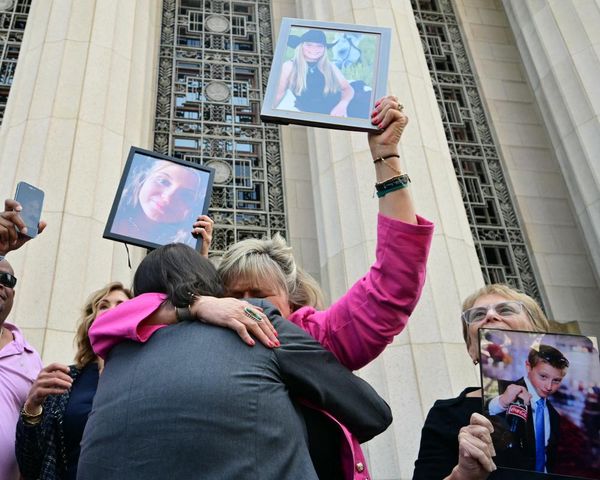
The harrowing journey for the Bowraville multiple murder case is not over yet. Following his unsuccessful trip to the New South Wales court of criminal appeal, the NSW attorney general Mark Speakman has flagged an intention to take his application for a retrial to the high court.
Good for him.
The court of criminal appeal delivered an unhappy judgment earlier this month. The application to retry a suspect, given the identity of “XX”, was rejected by a well-credentialed court, which indulged in a tight statutory construction to arrive at the answer, NO RETRIAL.
By now Indigenous Australians would be used to this version of criminal justice, but 27 years after the disappearances of Colleen Walker, 16, Evelyn Greenup, 4, and Clinton “Speedy” Duroux, 16, the families from Bowraville are still waiting. The frustration may be gathered from the painstaking path the case has taken through a glacial judicial process.
Let’s start in April 1991 which was a busy month for the police and Mr XX. He was charged with Clinton’s Speedy Duroux’s murder after the teenager’s remains were found in bushland about eight kilometres from Bowraville. That same month clothing worn by Colleen Walker was recovered from the Nambucca River near Macksville, but charges have never been laid for her murder. One week later, the skeletal remains of Evelyn Greenup were also found in bushland about four kilometres from Bowraville and in October 1991 XX was charged with her murder.
In 1993 the DPP sought to prosecute XX in a single trial for the murders of both Clinton and Evelyn. However, Justice Jeremy Badgery-Parker decided to separate the trials which, according to the law at the time, meant that the “similar fact” evidence demonstrating the similarities between the two deaths became inadmissible.
The trial for Clinton’s death was conducted without reference to the other deaths and in 1994 XX was acquitted of his murder. The DPP then withdrew the charge in relation to the murder of Evelyn.
In 1994 a coronial inquest into Colleen Walker’s death was reopened and with no new evidence being submitted, the inquest was closed with an open finding that she had been murdered.
However, 10 years later a coroner did find there was sufficient “tendency and coincidence” evidence to sustain a conviction of a “known person” for the murder of Evelyn Greenup.
At this point there were two acquittals, several inquests and no charges relating to the murder of Colleen Walker. The coroner had said that the circumstances surrounding these three deaths bore strikingly similar characteristics and that the coincidence and tendency evidence suggested that XX had been involved in Colleen’s disappearance.
This was particularly important, because nine years earlier the NSW Evidence Act had been amended changing the test for “similar fact evidence” and introducing “tendency and coincidence evidence”. Much of the evidence that was inadmissible at Clinton’s trial might now be admitted in other trials.
In May 2005 the DPP indicted XX for Evelyn’s murder and while the rules of evidence were looser there were “double jeopardy” problems bringing in evidence from the earlier trial for Clinton’s murder. XX was acquitted in relation to Evelyn’s death in March 2006.
The families of the murder victims and their lawyers were pressing the government for changes to the rule on double jeopardy – the idea that once tried and acquitted on a charge the accused cannot be tried again for the same offence.
In December 2006 parliament passed the Crimes (Appeal and Review) Amendment (Double Jeopardy) Act which relevantly allowed for a retrial for offences engaging life sentences where there is “fresh” and “compelling” evidence against a previous acquitted suspect.
Legal historian, the late Evan Whitton, claimed that double jeopardy is the product of “the false notion that being tried twice is the same as being punished twice”. Blackstone in his Commentaries entrenched the confusion and it found a solid resting spot in the common law for hundreds of years.

What is apparent is that the common law rules invented to protect an accused against the power of the state also can have the effect of hiding substantial portions of the truth from jurors. It’s a justice system predicated on keeping important elements of a case out of court.
Following the amendments the NSW police applied for retrials but the then DPP, Nicholas Cowdery, did not think the evidence was fresh and compelling.
Other senior barristers had other views and leading law firm Allens got involved in making applications to attorneys general John Hatzistergos and then Greg Smith in 2010 and 2011 respectively. Both were rejected.
Subsequently, a report in November 2014 from the NSW Legislative Council’s standing committee on law and justice found that there were problems with the double jeopardy amendments as they relate to the Bowraville killings.
The act defined “fresh” evidence as evidence that had not been “adduced” in the proceedings in which the accused person had been acquitted. What did “adduce” mean? Did it mean evidence that was available to be admitted at trial, or evidence that actually had been admitted or brought forward at a trial.
In its submissions to the attorneys general Allens argued that “fresh” evidence was evidence that had not been admitted at trial and that the tendency and coincidence evidence available for the unsuccessful prosecutions was tendered but had not been admitted.
The report from the standing committee on law and justice said that the relevant section needs to be reviewed and to that end the then attorney general, Gabrielle Upton, in June 2015 appointed former supreme court judge James Wood to review the law.
In the meantime, Greens MLC David Shoebridge introduced a bill in response to the law and justice committee report to amend the legislation and to clarify the meaning of adduce to “extend an exception to the rule against double jeopardy in relation to an acquitted person where previously inadmissible evidence becomes admissible”.
The amendment was defeated with opposition from the Coalition and Labor. One of the principal objections to its passage was that it might be best to test the waters first in the court of criminal appeal.
However, by May 2016, public pressure had intensified and Upton announced said she would ask the court of criminal appeal for a retrial in accordance with the Crimes (Appeal and Review) Act as it stood on the double jeopardy exceptions.
The application that XX should be retried for the murder of the three dead children has been pursued by Mark Speakman who replaced Upton.
Detective Inspector Gary Jubelin, who has worked on the case for over 20 years, believes that racism and disrespect had affected the way the authorities had dealt with the families.
Over more than a quarter-of-a-century since these deaths there has been a vortex of multiple trials, inquests, grindingly slow legislative changes, plus reports and submissions to successive attorneys. On its goes.
The application before the CCA was for a retrial of XX for the murders of Clinton Speedy Duroux and Evelyn Greenup, for which he had previously been acquitted, and for the murder of Colleen Walker, for which he had never been tried.
The attorney general contended that the most significant element of fresh evidence was that relating to the murder of Colleen Walker, most of which had not been put to the juries at the previous trials. He contended that this evidence showed connecting similarities in the circumstances of each of the three murders and it was evidence that went to “tendency and coincidence” which could now be admitted as a result of changes to the Evidence Act in 1995.
There were other instances that the AG submitted as “fresh” evidence, including XX’s harassment of Colleen Walker, and “informer” evidence. There was evidence the suspect had pulled down the clothing of women, including the mother of Colleen and Kelly Jarrett, the girlfriend of Clinton.
Chief Justice Tom Bathurst, the chief judge at common law Clifford Hoeben and Justice Lucy McCallum delivered a joint judgement, a lot of which seemed to involve dancing on the head of a pin.
There were interesting outlines of previous double jeopardy cases in other jurisdictions, some involving dreadful miscarriages of justice and consideration of the differences between “fresh” and “new”, the word with a somewhat different meaning in comparable UK legislation.
However, the court adopted what it said was “the historically accepted meaning of ‘fresh evidence’,” and that the extrinsic material “provides no support for the construction of the word ‘adduced’ contended for by the applicant, but rather supports the more limited construction contended for by the respondent, which we also prefer”.
The court thought that all the evidence relating to the murder of Colleen Walker was available to be tendered at the time of the trial for the murder of Evelyn Greenup and that even though it was not “brought forward” it was consequently not “fresh”.
“In the present case , there is no indication that the legislature intended the curtailment of the right to be protected against double jeopardy to extend to circumstances where evidence that was previously admissible becomes inadmissible.”
The attorney general submitted that the Crimes (Appeal and Review) Act sought to “strike a balance between the right of individuals not to be tried twice for the same offence and the public interest in ensuring that serious offenders are brought to justice”.
He also contended that the narrow construction would produce a miscarriage of justice in potentially allowing a guilty party to go free.
There was a vehement rejection of that submission with the court insisting that its interpretation of the law does not “bring the justice system into disrepute”.
Reasonable minds may differ on that.
There’s one other troubling aspect about that case – that the attorney general had not put a submission for a separate order that XX be retried for the murder of Clinton Speedy Duroux alone, even if no order was made for the retrial of the murder of Evelyn Greenup.
This was only put on the sixth and final day of the hearing, so it was held that it was not open to the AG to change the case he had made at that late hour.
Now that the court of criminal appeal has spoken, Shoebridge again has proposed much the same amendment as he previously put forward which would overcome the narrow interpretation given to the double jeopardy exceptions by the court.
The government has announced it proposes to seek special leave adding that Shoebridge’s second attempt at change “should await the resolution of the application before the High Court”. That was the same position that was adopted in 2015.
The relatives and friends of Colleen Walker, Evelyn Greenup and Clinton Speedy Duroux may have got used to waiting and may just hang on for the lawyers to try one more spin of the bottle.
Richard Ackland is a Guardian Australia columnist