President Donald Trump’s aggressive foreign policies could result in American athletes being booed, jeered and made to feel unwelcome at upcoming international sporting competitions, lawmakers have warned.
Trump began the new year with a military operation in Venezuela to capture its authoritarian president, Nicolas Maduro, and has since demanded that the U.S. be given control of Greenland, threatening European allies with higher tariffs if they refused to support his imperial ambitions.
Trump later backed down after talks at the World Economic Forum in Davos, Switzerland, last week.
The president has previously called on Canada to become the 51st state and threatened actions against other South American countries like Cuba and Colombia.
Those taking part in the 2026 Winter Olympic Games, which begin in Milano Cortino, Italy, at the end of next week, could be the first to bear the brunt of anti-American sentiment.
“It’s going to be really tough for the athletes because unfortunately what the president has done has created so many divisions with long term allies of ours,” Washington Democratic Rep. Pramila Jayapal told The Hill.
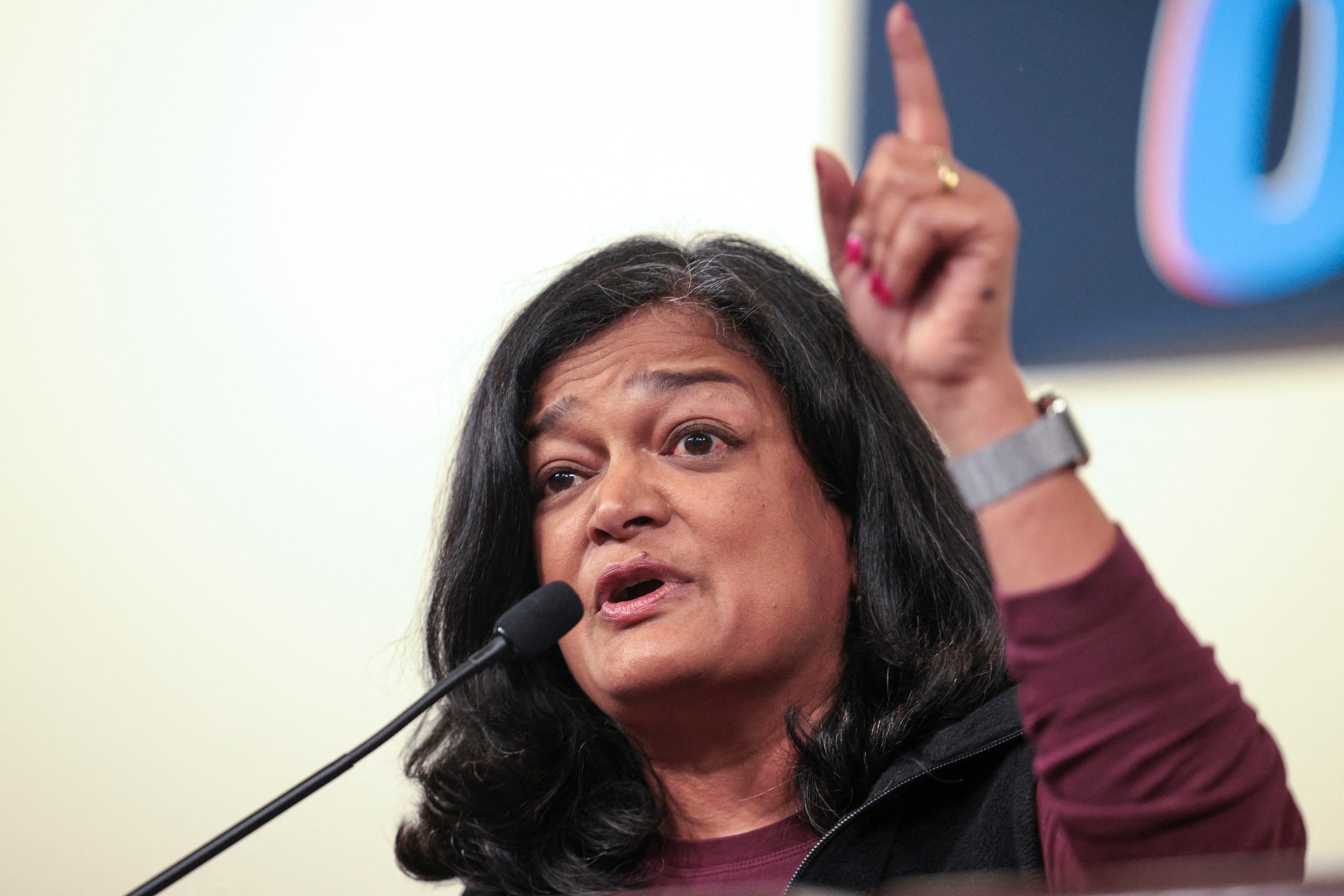
“He’s talking about taking over other countries and the people of those countries are legitimately upset.”
Colorado Democratic Rep. Jason Crow also expressed concern, saying of Trump: “He is essentially treating our foreign and economic policies as an organized crime boss and is rapidly destroying our reputation around the world.”
New York Democratic Rep. Dan Goldman said U.S. competitors should not be held accountable for the president’s conduct: “I hope other countries realize what Donald Trump [does] should not be blamed on American citizens and athletes, most of whom are very apolitical.
“Nobody asks an American gold medal winner what party you are from, and hopefully that spirit can carry through.”
Tennessee Republican Rep. Tim Burchett was more bullish, commenting: “They want to play those games, let ’em. Whenever they get in trouble, who are they going to call? The United States of America.”
Kristian Coates Ulrichsen, a fellow at Rice University’s Baker Institute of Public Policy, said of the upcoming Winter Olympics: “Especially with this year’s games being in Europe, there is a strong possibility U.S. athletes will face booing at the very least.
“Anyone who says sports and politics don’t mix, that’s never been true. And we’ve always seen the Olympics be a proxy for wider issues.”
One of the most celebrated examples of that phenomenon took place at the 1936 Olympics in Berlin, where Black American track and field star Jesse Owens won four gold medals.
More recent instances of geopolitics casting a long shadow over the Olympics include the 2004 Games in Athens, when controversy raged over the Iraq War and American participants were subjected to regular jeers, and the 2022 Winter Olympics in Beijing, when China’s alleged human rights abuses were dragged into the spotlight.
Whatever happens on the slopes of northern Italy will have ramifications for this summer’s upcoming FIFA World Cup, which is being co-hosted by the U.S., Canada, and Mexico, with the former hosting 78 of the tournament’s 104 matches.
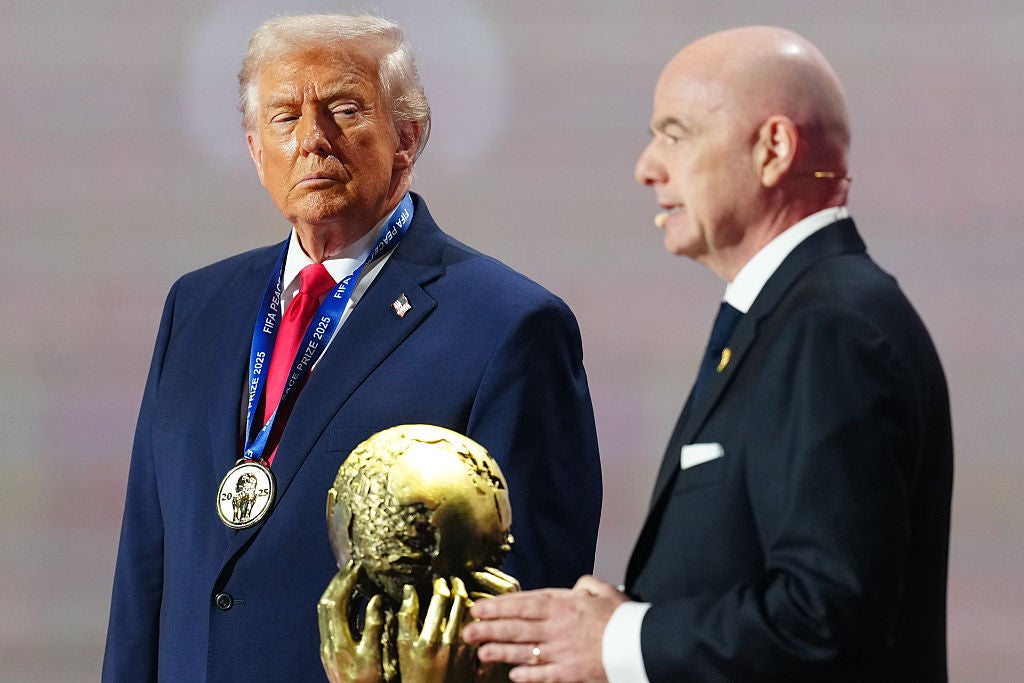
FIFA President Gianni Infantino has already made his allegiances to Trump clear by giving him a controversial “Peace Prize” in December, but the matter may be more complicated for the participating nations.
German Football Association official Oke Gottlich said over the weekend it could be time for European countries to consider withdrawing in opposition to Trump.
“I really wonder when the time will be to think and talk about this [a boycott] concretely,” Gottlich, told the Hamburger Morgenpost newspaper. “For me, that time has definitely come.”
Danish politician Mogens Jensen has meanwhile told Deutsche Welle that his country is not currently calling for a World Cup boycott over the Greenland tensions but could do so if Trump breaks his word on a military invasion, which he promised at Davos would not come to pass.
“I will be honest and say, yes, if that should happen, then a boycott discussion is very, very relevant,” Jensen said of the World Cup. “It’s likely to happen if it develops into a real conflict. I sincerely hope that it will not come to this.”
The White House has rubbished the suggestion that anti-Trump feeling could make life more difficult, saying in a statement: “There is nothing political or controversial about American athletes competing on the world stage on behalf of the strongest and greatest nation on earth.
“President Trump stands fully behind these patriotic athletes, who represent some of the best talent in our country.”
Venezuela’s acting leader says she has ‘had enough’ of US orders in shot at Trump
World Cup war games: How the U.S. is clamping down on security as FIFA comes to town
Clinton and Obama call on Americans to ‘stand up’ to ICE, Trump makes plea – latest
Myanmar uses 'ghost ships' to import aviation fuel for deadly air attacks, Amnesty says
Alex Pretti supporters raise $1 million for family of man killed by federal agents
Trump coy on defending Kristi Noem and federal agents after Alex Pretti shooting