
Gambling winnings are expected to be taxed more next year — at least federally. Thanks to the 2025 GOP/Trump tax and spending bill, a portion of winnings from activities like lotteries, slot machines, and sports betting face a potential double taxation.
That's because prior IRS gambling rules allowed you to deduct all gambling losses up to the amount of winnings. Starting in 2026, losses are limited to 90% of winnings.
But just weeks before the new gambling tax provision becomes effective, President Donald Trump reportedly said he would "think about" repealing income taxes on gambling winnings entirely.
Here's more of what to know.
Trump gambling tax: Is it coming to an end?
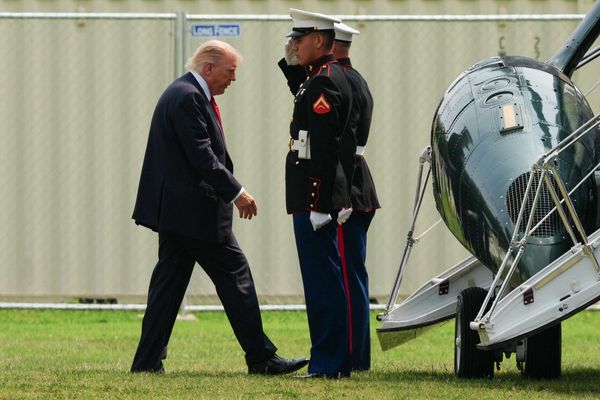
When reporters asked President Trump in early December if he would consider eliminating federal taxes on gambling winnings, he remarked, "No tax on gambling winnings, I don't know. I'm gonna have to think about that."
This suggestion stands in stark contrast to the effects of the major legislative Republican tax bill enacted in July. Starting January 1, 2026, the new GOP law will impose a tax cap, limiting gambling loss deductions to 90% of winnings (down from 100%) — a provision that may hike the tax bill for many gamblers.
For example, if you pay $100 for state scratch-offs and win $100, you could owe the government $10 on your "winnings" in 2026.
Gaming industry leaders and stakeholders, including the American Gaming Association, have referred to this new tax scenario as "phantom income." This term is used because the new cap forces gamblers to pay taxes on losses — a rule the AGA argues is "uniquely penalizing" gambling compared to other businesses.
And the new gambling tax provision is expected to generate a significant amount of phantom income.
According to the Joint Committee on Taxation, taxing Americans on 10% of their gambling losses could generate over $1.1 billion over the next decade.
While most of those earnings are expected to come from high-wealth, professional gamblers, any taxpayer who itemizes their gambling losses could be subject to paying more tax due to the new IRS gambling rule in 2026.
IRS audit triggers and gambling taxes
In recent years, the IRS has ramped up its investigative work on gambling winnings.
Under the Biden administration, the agency began enforcement efforts with taxpayers whose income was $100,000 or more, vowing to take a closer look at sports betting and online gambling in particular.
Since then, overall IRS audits have decreased under the Trump administration, particularly for high-income taxpayers. Yet the IRS still views nearly all recreational and professional gambling as taxable income.
As such, here are some types of gambling income that could be subject to an IRS audit:
- Lotteries and raffles, including state lotteries, scratch-off cards, charity drawings, etc.
- Sports betting (either online sports bets or in-person betting, and even office pools like the NFL playoffs or the Super Bowl).
- Online gambling, including casinos, poker, and fantasy sports bets.
- Horse races, dog races, and other racing activities.
- Sweepstakes, contests, and game shows.
Whether a casual gambler or a professional, all gambling winnings are always subject to federal income taxes. Losses are deductible on Schedule A of Form 1040, up to 90% of the amount of gambling winnings for tax year 2026 (100% for tax year 2025). To claim the deduction, you must keep detailed tax records of your wagers (e.g., tickets, receipts, forms, etc.).
Tip: Also check with your state and/or local jurisdictions for how more localized taxes apply. Gambling is not legal in all states.
'Big beautiful bill' gambling tax changes backlash
As Kiplinger has reported, the new gambling winning tax provision in the new Trump tax law has faced considerable backlash from industry giants and government officials.
Jason Robbins, CEO of DraftKings (popular sports betting platform), remarked in an interview with CNBC, "If you can't deduct all your losses, you know, how does that make sense that you pay income tax on something that's not actually income."
Rep. Jason Smith (R-MO), Chairman of the House Ways and Means Committee and advocate of the new 2025 Trump tax law, called the provision a "mistake" and added that he was committed to working on a fix.
In the meantime, there have been proposals to repeal the new gambling tax law. For instance, the Fair Accounting for Income Realized from Betting Earnings Taxation (FAIR BET), proposed by Rep. Dina Titus (D-Nev), would revert the 90% gambling winnings loss deduction to 100% of gambling winnings.
Titus has been a lead critic against the new gambling winnings provision, citing negative economic impacts on Nevada and other "gaming-dependent" states.
Still other bipartisan bills have been introduced in Congress to repeal or modify the gambling tax provision, though all have stalled in committees and have not yet received votes in either the Senate or the House. Ongoing pressure from lawmakers and, now, the President, may help bolster a bipartisan deal or amendment in the new year.
Stay tuned for updates.