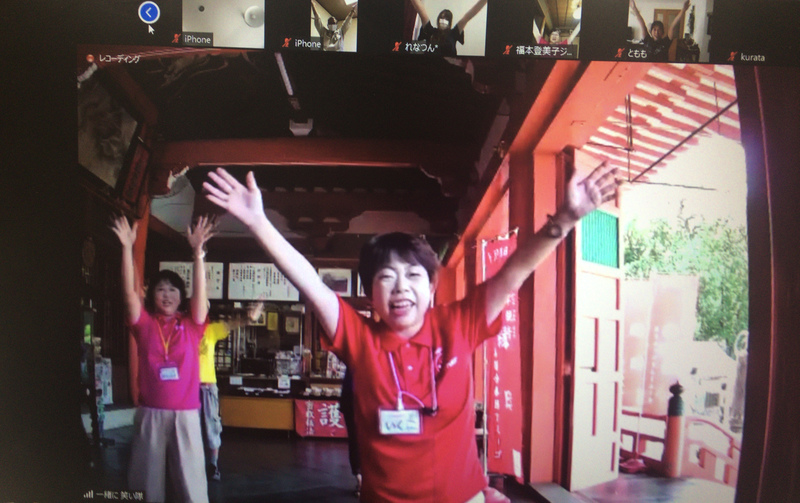
People have been wary about infection amid the novel coronavirus pandemic, but there is one contagious thing that people are willing to spread -- laughter.
At Enichizan Kannonji temple, better known as Tsukannon, in Tsu, a laughter yoga session is held as part of a local monthly event. It was initially launched about a year ago to revitalize the area around the temple, which is home to one of the three major Kannon statues in Japan. As the virus spread, however, this "laughter offering" activity has gone online, becoming increasingly significant in its ability to connect people and boost their mental health.
"Ho ho ho. Ha ha ha," called out Ikuko Sugimoto, the 53-year-old head of the group that organizes the sessions, clapping her hands and bursting into laughter over the Zoom teleconferencing app. "Let's focus on your breathing and laugh away the virus."
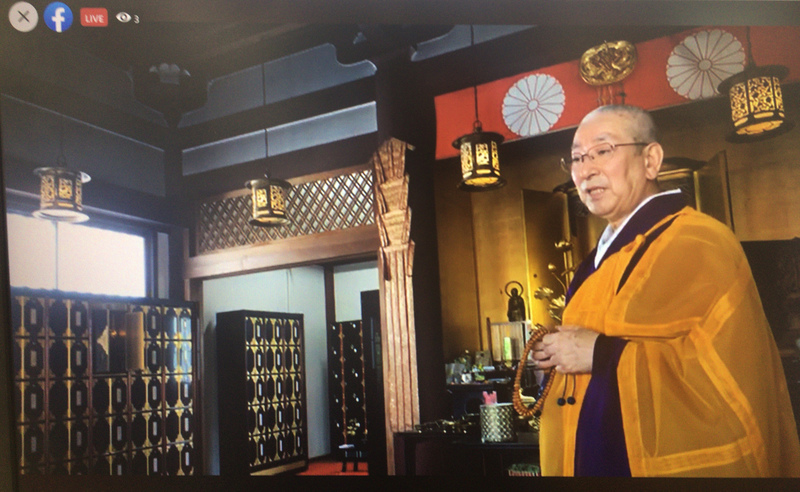
Ahead of the yoga session, the temple livestreamed sutra chanting on Facebook. After 25 minutes of chanting, priest Mitsuyu Iwatsuru spoke about living amid uncertainty and facing things beyond our control.
"As long as we're alive, we can get through difficulties," Iwatsuru said.
The yoga session began by offering prayers to the Kannon statue, both in person and virtually. It also included relaxation time with music performances including one by a shakuhachi flute player.
Laughter is the best medicine, it's often said, and studies have found that smiling lifts people's mood and strengthens their immune systems, helping them to lower their stress levels. It's also free and brings no side effects.
Laughter yoga involves rhythmic clapping, laughing exercises with breathing for relaxation, and stretches. Learning to laugh helps develop personal resilience, Sugimoto said.
"At first, I was embarrassed to laugh, but when I saw others' laughter, I became cheerful and laughed naturally," said Rena Ohashi, 25, who participated in the event from Nagoya. "It's good that I can also boost my immunity simply by laughing."
Participant Tamaki Sakurai is a laughter yoga instructor herself. Sakurai has also offered online classes every day since early April.
"Connecting to Kannon feels refreshing. Online sessions make it possible to have this experience even from remote areas," said Sakurai, a resident of Mitaka, Tokyo. "It's also great to meet people we can't easily get together with and share time with them."
Read more from The Japan News at https://japannews.yomiuri.co.jp/