LOS ANGELES _ Zenon and Marta Mayorga called their four adult children to the family home in Glassell Park the night of Sept. 18. Everyone settled in the living room, turned on the TV and prepared to see their dream house burn down.
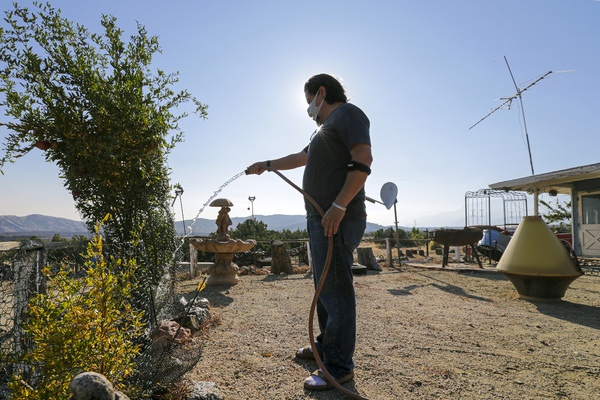
Newscasts aired live shots of the wreckage wrought by the massive Bobcat fire. Authorities had mandated evacuations the day before in Juniper Hills, an Antelope Valley community where the Mayorgas own a four-bedroom abode on 1.5 acres of juniper trees and hiking trails that they call el rancho _ the ranch.
A neighbor had texted Zenon that their nook of Juniper Hills was no more. So the Mayorgas comforted themselves with chamomile-passionflower tea and memories of their desert paradise.
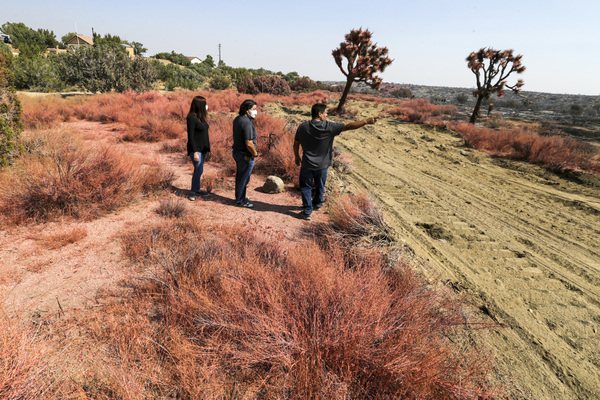
They remembered how Zenon bought it in 2009 because the stark vistas and high altitude had reminded the Mexican immigrant of his native Zacatecas. How he had to convince his family _ and especially Marta, a city girl from Guadalajara _ that a beat-up structure with holes in the roof, missing windows and snakes everywhere was a sound investment.
And how all the parties, sleepovers and bonding that kith and kin experienced almost every weekend over the past decade had proved him right.
"When you're younger, you're like, 'Ugh, we're going all the way up there?'" said April Mayorga-Aguirre, a 30-year-old marriage and family therapist. "But now, even in our full-blown careers, we try to go up there as much as possible."
April and her family stayed up for the 11 o'clock news and saw the homes of their Juniper Hills friends in flames. There were tears, prayers. That night's magnitude 4.5 earthquake brought even more nerves.
The family rushed up to their property the following morning. Helicopters and planes zoomed above; ashes and embers swirled all around. The Mayorgas gunned through unpaved roads and steeled themselves for the worst.
El rancho was unscathed.
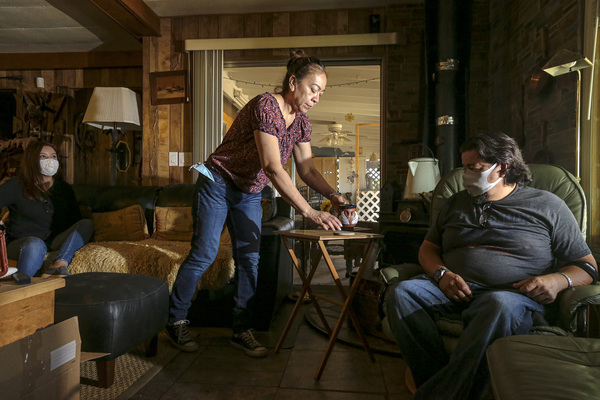
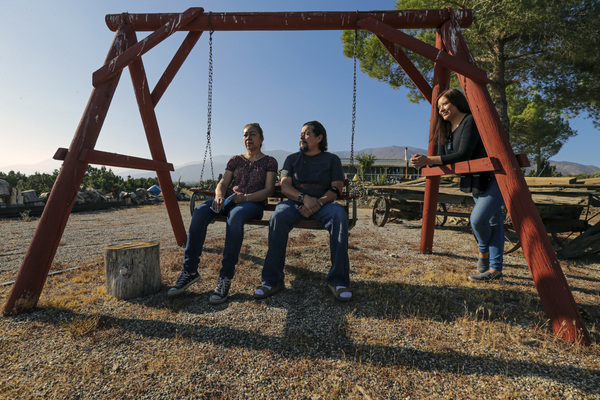
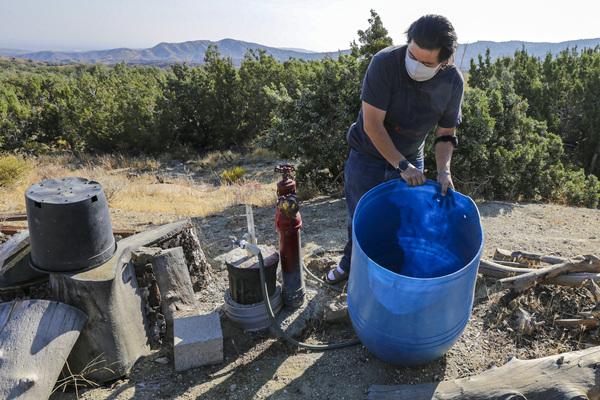
Zenon, Marta, and April met me there last Saturday, on what was supposed to be April's wedding date in Palm Springs until 2020 said otherwise. Their house is desert rat lite: big screened porch in the front, massive water and propane tanks next to the outhouse in the back, random tchotshkes _ but not too many _ strewn about. Marta busied herself in the kitchen as Zenon settled in his chair, the one that offers him sight lines all the way to China Lake on a clear day.
Which wasn't today.
"This year has taught us to live in the moment with gratitude," said April. "We hope to spend the holidays here, but who knows?"
"Because tomorrow, what you may have is gone," Zenon added. "We have our family. We're safe. The rest, God will decide if we deserve it."
Pardon my Southern California ignorance, but I never expected to find middle-class Mexicans in the rural high desert. The Mexicans I know, when they want to buy land to raise horses or host rodeos like in the old country, buy in Norco or Mira Loma.
Not in the heart of "Bonanza" country.
But a growing number of Latinos are moving to the back country of the Antelope Valley, drawn by the rugged terrain and individualistic ethos that American society long cast as the Old West spirit and reserved mostly for Anglos.
"It's just like Mexico up here," 57-year-old Zenon said, gesturing outside, comfortable in his socks and Birkenstocks. "If you want to have chickens and goats, you can. It's that liberty."
Then, he paraphrased a line from a Roy Rogers ballad, in equal parts English and Spanish. "Here, esta abierto (It's open). Alla, esta muy amontonado (It's too crowded in L.A.). I don't want to fence myself in."