Midway through 2026, music streaming has reached unprecedented levels globally and across the U.S., a key finding from Luminate’s Midyear Report, published Wednesday. The industry analytics company’s insights reveal a dynamic shift in consumer behavior across music, film, and TV.
In the U.S. music scene, R&B/hip-hop remains the leading genre, yet its long-held supremacy is being challenged by a burgeoning diversification of styles. Latin and country music, championed by stars such as Bad Bunny and Ella Langley, are experiencing significant growth. Even AI-generated tracks are carving out a niche in popularity. Meanwhile, Netflix firmly holds its position as the dominant platform for original content streaming in the U.S. Luminate’s report provides crucial data on these evolving listenership and viewing behaviors.
Music streaming continues to climb
Music streams continued to grow globally and stateside. Global on-demand audio streams reached 2.8 trillion in the first half of 2026 — up from 2.5 trillion during the same period last year, and 2.29 trillion in 2024.
And in the U.S., on-demand audio song streams grew to 732.7 billion. That's up from 696.6 billion in 2025 and 665.8 billion in 2024.
R&B and hip-hop still rules, but competition nears
R&B/hip-hop remains the most popular streaming genre in the U.S., capturing nearly one in four on-demand audio streams, yet its dominance is challenged. Analysis of the Billboard 200 shows the genre comprised 30% of U.S. album-equivalent consumption in H1 2026, a decline from 41% in 2023.
Jaime Marconette, Luminate’s vice president of music insights and industry relations, noted this shift: "R&B/Hip-Hop remains a massive commercial force, but its historic dominance is leveling off as the streaming landscape diversifies. The genre was an early adopter of streaming, commanding nearly 30% of U.S. audio consumption by 2022, but the post-pandemic era has seen accelerated … growth from genres like Country and Latin."
He added that while R&B/hip-hop's "standalone audio volume has dipped 1.7% so far in 2026 compared to last year," this indicates "not a collapse in popularity, but rather a shift toward a more balanced, multi-genre ecosystem where R&B/Hip-Hop’s profound creative influence is also seen in other styles."
Despite these shifts, concerns over R&B/hip-hop's overall streaming supremacy may be premature. The genre amassed nearly 180.3 billion streams in the U.S. during H1 2026, significantly outpacing rock (137.2 billion), pop (87.8 billion), country (63.8 billion), and Latin (63 billion).
Latin and country are drawing more listeners
Latin music is experiencing an unprecedented surge in popularity across the United States, with new data revealing its growing dominance in the streaming landscape. According to Luminate, nearly one in ten streams in the U.S. during the first half of 2026 were in Spanish, accounting for 9.4% of total consumption.
This rise coincides with a new low for English-language music, which, while still comprising the overwhelming majority at 87.1%, indicates a significant shift towards a more diverse listening market. The genre's expanding reach is further underscored by industry insights. "Casual U.S. listenership of Latin music has hit an all-time high, with 54% — or more than one in two music listeners — now reporting that they engage with the genre," stated Marconette. "Latin music’s cultural footprint is rapidly widening far beyond its traditional core base into the broader American mainstream."
Globally, Latin music streams also reached a new peak, recording 363.2 billion streams in the first half of 2026, an increase from 335.3 billion in the previous year.
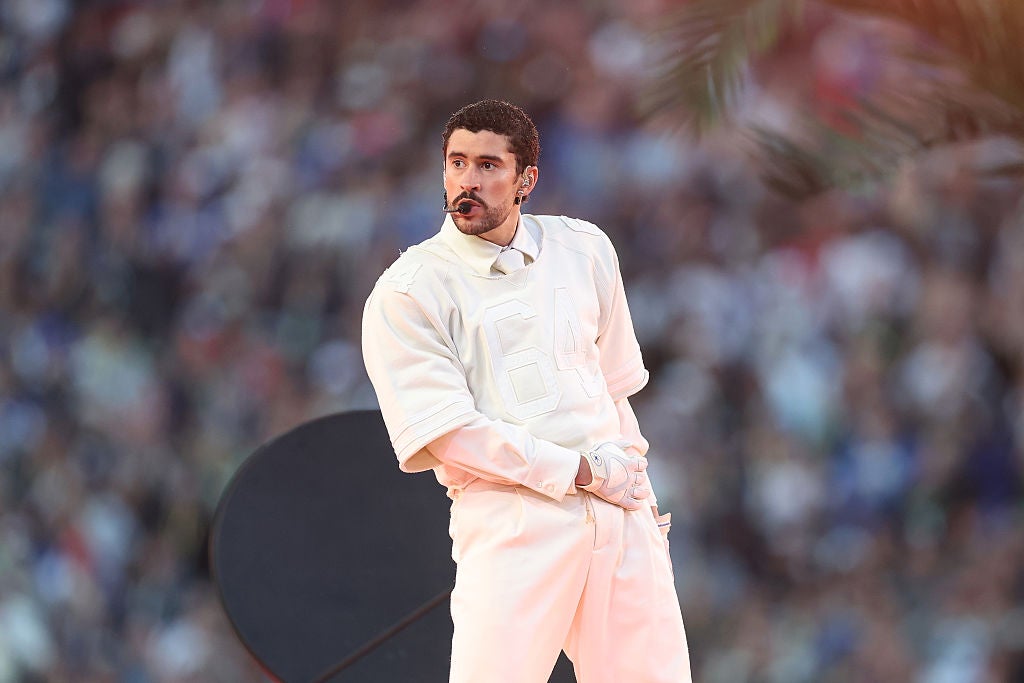
The growth of both Latin and country music is particularly evident in album consumption. The top albums of the year so far include Morgan Wallen’s I’m the Problem with 2.035 million album equivalent units, Ella Langley’s Dandelion at 1.638 million, and Bad Bunny’s Debí Tirar Más Fotos with 1.543 million. Notably, both Wallen’s and Bad Bunny’s albums were released early last year. Marconette also pointed to Langley as a prime example of country music's expanding audience, noting she is at the forefront of a growing demographic of "younger, streaming-forward" fans.
A small number of AI-generated tracks are spiking
And more may very well be on the way. Chill77, Unjaps and Mikeeysmind’s “Papaoutai (Afro Soul)” had 210.7 million streams in all countries except the U.S. in the first half of 2026. In the U.S., it accounted for 17.6 million streams.
That’s followed by The Second Voice’s “Let Me Be,” which earned 75.6 million streams in all countries expect the U.S.; stateside, it earned 10.1 million streams.
The most-streamed AI-generated song in the U.S. is country act Breaking Rust’s “Livin’ on Borrowed Time,” which accounted for 19 million streams. In all countries except the U.S., it earned 13.4 million streams.
Previously, Breaking Rust had a song called “Walk My Walk” hit No. 1 on Billboard’s country digital song sales chart in November 2025. The vocal phrasing, melodic shape and stylistic DNA came from the Grammy-nominated country artist Blanco Brown, an artist who has worked with Britney Spears, Childish Gambino and Rihanna.
Breaking Rust is an example of the kind of generative AI that has begun upending the music industry, often using models trained on real artists’ voices and styles without their knowledge.
“A small number of breakout tracks at the head of the curve can drive temporary conversational and streaming spikes,” says Marconette. “At this stage, generative tools are actively transforming creative and production workflows, but individual AI-generated tracks have yet to make a profound, long-term impact on consumption behavior.”
Netflix dominates in original film and TV streaming
In the U.S., Netflix accounted for 57% of all original content viewing time, followed by Prime Video (11%), Hulu and Paramount (7% each), Peacock and Apple (5% each), HBO Max (4%) and Disney+ (2%), with 13.6 billion hours streamed in total. Original TV series are most popular, accounting for 11.5 billion hours of that total. Original movies make up the difference, accounting for 2.8 billion hours.
The most streamed original films of 2026 in the U.S., so far, are all courtesy of Netflix: “The Crash” with 39.6 million estimated views, “The Rip” with 39.5 million and “Apex” with 37.3 million.
When it comes to original series in the U.S., there's a bit more competition. HBO Max's “The Pitt” leads with 19.4 billion streams, followed by two Netflix titles: “The Lincoln Lawyer” with 16.9 billion and “Bridgerton” with 14 billion.
Overwhelmingly, however, people in the U.S. are streaming library content (older, preexisting and licensed shows and movies) over original programming. Original TV accounted for 11.5 billion hours streamed in the first half of 2026, and original film raked in 2.1 billion. But library TV totaled 42.2 billion hours, and library film had 10.8 billion, according to Luminate.
Luminate estimates there are nearly 19,000 library titles available on major streaming services compared to just 7,000 originals.