Latin American governments have enthusiastically welcomed President Barack Obama’s announcement of sweeping immigration reforms, though some activists and commentators have stressed its limitations.
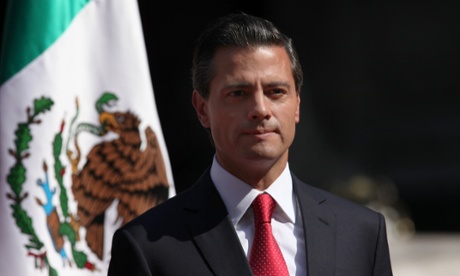
Mexico’s president, Enrique Peña Nieto, described the reforms on Friday as the “most important measures taken in several decades”, adding that the actions would allow families to stay together.
“I want to publicly recognize the president of the United States for yesterday’s announcement,” said Peña Nieto. “These measures bring relief to principally Mexican immigrants.”
“This is an act of justice which recognizes the great contribution of millions of Mexicans to the development of our neighbor.”
Honduran President Juan Orlando Hernández tweeted his thanks to Obama “in the name of millions of Hondurans and Central Americans”.
En nombre de millones de centroamericanos y hondureños le agradecemos al Presidente Obama su acción a favor de los migrantes .
— Juan Orlando H. (@JuanOrlandoH) November 21, 2014
His Guatemalan counterpart, President Otto Pérez Molina, told reporters, “We are thankful for, and support, the decisions taken by President Obama.”
El Salvador’s foreign minister, Hugo Martínez, released a statement expressing satisfaction at “the news that will give many of our compatriots temporary relief”.
Central Americans are among those who have most to gain from the executive order which focuses on undocumented migrants who have lived in the US for five years and have US-born children.
Mexico’s foreign ministry released a statement noting that “it has the potential to benefit a significant number of Mexicans in that country, and improve their opportunities and dignity”.
But activists working with migrants in the region were more circumspect, emphasising that the change in policy does not address the more recent wave of migrants seeking family reunification and fleeing rampant crime as well as desperate poverty in several countries – most notably Honduras and El Salvador.
The director of the children’s rights group Casa Alianza in the northern Honduran city of San Pedro Sula described the move as “good but not sufficient”. Carlos Flores stressed that “it doesn’t help the many many people who have gone in recent years, or who want to go now.”
Newspapers across Latin America paid ample but not overwhelming attention to Obama’s announcement, with many limiting their coverage to news stories printed in their international sections.
Honduran national daily La Prensa published a detailed question-and-answer article on what the reform does and does not imply.
Writing in the Colombian newspaper El Tiempo, political scientist Sandra Borda wrote that the announcement was above all a reflection of Democrats’ efforts to shore up support among Latino voters ahead of the 2016 presidential election.
In its leading editorial on Friday, the Guatemalan daily Prensa Libre described the executive order “as a step forward”. But the paper went on to stress “there is still a lot to explain, and this will happen in the imminent launch of the Republican battle against a president who should probably have acted before.”
There was little qualification in the jubilation expressed by a number of participants at the Latin American Grammys, which kicked off just after Obama’s address.
“What a way to start the night,” Mexican comedian and host Eugenio Derbez said. “What’s more, I have an uncle who crossed the border inside a piano.”