
OSLO (Reuters) - Last year was the fourth warmest on record, extending a scorching streak driven by a build-up of man-made greenhouse gases, the European Union's Copernicus Climate Change Service said on Monday.
Average world surface air temperatures were 14.7 Celsius (58.5 Fahrenheit) in 2018, just 0.2C off the highest, it said in the first global assessment based on full-year data. This year will also likely be hot, its scientists said.
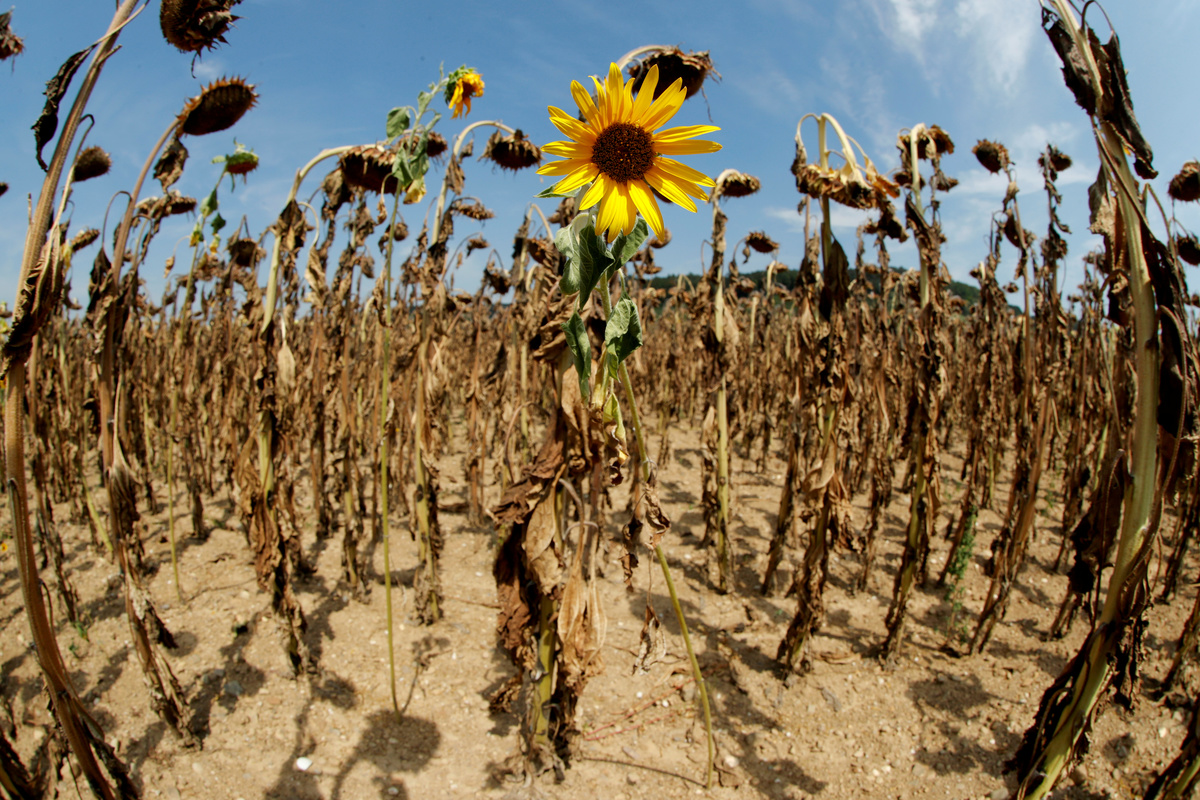
"Dramatic climatic events like the warm and dry summer in large parts of Europe or the increasing temperature around the Arctic regions are alarming signs to all of us," said Jean-Noël Thépaut, head of Copernicus.
Among other extremes in 2018, California and Greece suffered severe wildfires, Kerala in India had the worst flooding since the 1920s and heatwaves struck from Australia to North Africa.
Around Antarctica, the extent of sea ice is at a record low at the start of 2019, according to the U.S. National Snow and Ice Data Center.

Copernicus chief scientist Freja Vamborg said 2019 would also likely be hot. "We now have a nascent El Nino - it depends partly on what happens ... will it continue or die out?" she told Reuters.
PARIS ACCORD
The last four years have seen the highest average temperatures since records began in the 19th century - 2016 was the hottest, boosted by an El Nino event that warmed the surface of the Pacific Ocean, ahead of 2017 and then 2015.
The Copernicus report said that concentrations of heat-trapping carbon dioxide in the atmosphere rose to a new record of 406.7 parts per million (ppm) in 2018 from 404.1 in 2017, stoked largely by human burning of fossil fuels.
And the average global temperature in the past five years was 1.1C (2.0F) above pre-industrial times, it said.
According to a U.N. climate report last year, temperatures will rise 1.5C above pre-industrial times by mid-century on current trends - bringing the prospect of even more extreme weather.
That U.N. report said governments would have to make unprecedented cuts in greenhouse gases to keep temperatures below the 1.5C rise, which is the toughest goal set in the 2015 Paris Agreement.
Almost 200 nations agreed a "rule book" to govern the Paris accord in talks in Poland last month, even though critics said it was insufficient to prevent dangerous climate change.
The Paris accord seeks to end the fossil fuel era this century by shifting to cleaner energies such as wind and solar power. U.S. President Donald Trump plans to pull out and instead promote the U.S. fossil fuel industry.
The Copernicus report confirms projections by the U.N.’s World Meteorological Organization (WMO) in November that 2018 would be fourth warmest.
The WMO will issue its own estimate for 2018 temperatures in coming weeks, also comprising data compiled by U.S., British and Japanese agencies.
(Editing by Andrew Heavens)