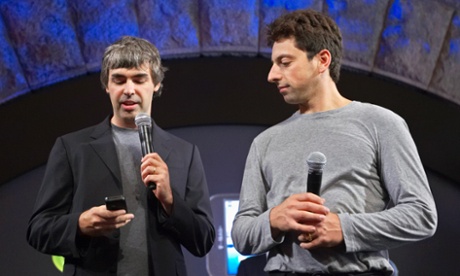
Google’s chief executive Larry Page has admitted that the company has outgrown its mission statement to “organise the world’s information and make it universally accessible and useful” from the launch of the company in 1998, but has said he doesn’t yet know how to redefine it.
Page insists that the company is still focused on the altruistic principles that it was founded on in 1998 with the original mission statement, when he and co-founder Sergey Brin were aiming big with “societal goals” to “organise the world’s information and make it universally accessible and useful”.
Questioned as to whether Google needs to alter its mission statement, which was twinned with the company mantra “don’t be evil, for the next stage of company growth in an interview with the Financial Times, Page responded: “We’re in a bit of uncharted territory. We’re trying to figure it out. How do we use all these resources … and have a much more positive impact on the world?”
Google has unprecedented resources brought about by its search and web advertising dominance, which has seen countries become uneasy in the face of a company that wields so much influence over a universal resource such as the internet.
It has faced anti-monopoly probes by the European commission and most recently pressure from Europe over the “right to be forgotten” forced to remove search listings to information deemed to be outdated and not in the public interest which saw Britons request over 60,000 links be deleted by October.
‘Once we say we’re going to do it, people believe we can do it’
Page said he aims to use the resources at his disposal to go far beyond today’s technology and market, creating spurs into tomorrow’s technology spaces from artificial intelligence and robotics to health, disease and biotechnology lead by Brin and his “moonshot” Google X labs, from which Google’s self-driving cars, smartglasses and nano technology pill sprouted.
“We do benefit from the fact that once we say we’re going to do it, people believe we can do it, because we have the resources,” said Page. “Google helps in that way: there aren’t many funding mechanisms like that.”
While some aspects of Google’s moonshot research have seemed logical extensions of the company’s existing interests – artificial intelligence fits perfectly with advanced search – some have drawn concerns that the company is overstepping its bounds.
Research areas in biotechnology, health and medicine, for instance, have been traditionally funded by public money with universities and other research centres, at least in their infancy, rather than private companies.
Page’s attitude is “well, somebody’s got to do it” and Google’s resources allow it to do more than most.
This article previously stated that “don’t be evil” was part of Google’s mission statement, and has been corrected.
• The ‘father of Android’ leaves Google for new technology hardware startups
• Google launches Fit app to take on Apple’s Heath and Samsung’s S Health
• Google is developing a cancer and heart attack-detecting pill