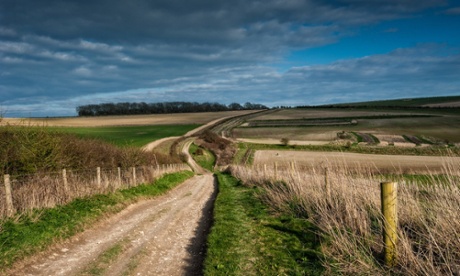
The dark cloud is slowly drifting west, and the emerging afternoon sun warms the chalky footpath that leads up onto the Down. The air is still but all around the varied trills and whistles of skylarks rain down like the chimes of bells from the sky.
A skylark starts to sing and climbs into the air beside me as I walk up the track. It rises above me, climbing higher and higher until it becomes a dark spot against the blue sky. Through binoculars I can see the bird’s wings fluttering, its tail splayed open, and its beak shuddering with the effort of throwing its tuneful song into the sky. It flies in a slow circle over my head.
Skylarks were so abundant here 200 years ago that thousands were collected for the dining tables of London and Paris. They were mostly caught at night during the winter, when they weighed more; the fowlers used torches and a lark mirror – a spinning wooden arm inlaid with glass pieces to reflect the light and stun the birds, making it easier to catch them in a net. A fowler’s nightly haul could amount to a couple of hundred birds. The practice continued until the 1930s, when a law was passed to end it. In spite of these ancient attacks on their numbers, the largest declines of skylarks have happened in the past 40 years. The British Trust for Ornithology has recorded a national decline of 63% since 1966, mostly as a result of intensive crop growing and grazing.
On this part of the Downs, the spring sowing of cereals and the provision of skylark plots – small gaps where the seed drill is momentarily turned off – help the birds nest and find insects and spiders between the plants. These farming practices have had a beneficial effect, with singing males here increasing from 300 in 2008 to nearly 500 today.
Corn buntings are benefiting too. I’ve already counted several large groups of these increasingly rare farmland birds, when I again hear their pretty, stuttering songs, often compared to the jangling of keys.