LOS ANGELES _ Los Angeles police released a security video of the chase that lead up to the fatal police shooting of a black 18-year-old in South L.A. over the weekend, one of two shootings by officers that sparked protests across the city.
The video shows a young man in a blue sweatshirt, who police say is Carnell Snell Jr., running through a strip mall and behind parked vehicles holding what appears to be a gun in his left hand.
The young man then crouches and appears to tuck the handgun into his sweatpants before running away from the camera. Moments later, a police officer is seen running in Snell's direction.
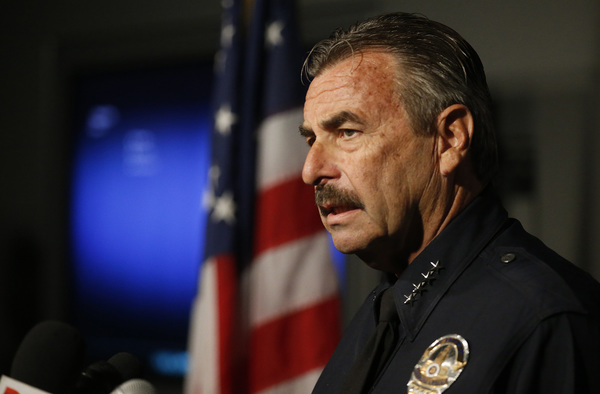
Police Chief Charlie Beck told the Los Angeles Times that he and Mayor Eric Garcetti spoke at length about the issue and decided to release the video to correct what the chief described as competing accounts about Saturday's shooting.
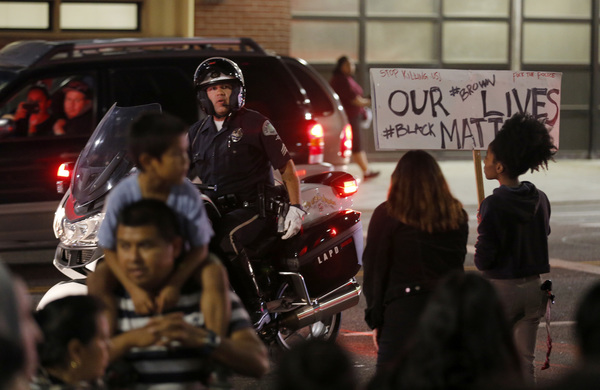
"My huge concern is that the dueling narratives further divide the community," Beck said.
The tape was taken from a nearby business, and Beck said the recording shows Snell running with a gun in his hand. Many residents have questioned the police account, including whether Snell had a gun.
The LAPD is the latest law enforcement agency to release footage linked to a controversial police shooting in the wake of large-scale protests. Last week, officials in San Diego County originally said they would not immediately release video of a fatal shooting by El Cajon police, but they reversed course after days of protests. Police in Charlotte, N.C., released footage of a fatal shooting there after days of unrest garnered national attention.
Local activists said Beck's decision shows the department can release footage quickly without impacting an investigation and undercuts the agency's routine refusal to release video in connection with controversial uses of force. Beck, along with other law enforcement leaders, has said he generally opposes releasing body camera footage, expressing concerns about violating privacy and possibly interfering with investigations.
"Now it just knocks out the rationale that police officials, LAPD officials, have for not releasing video," said Earl Ofari Hutchinson, a civil rights advocate and president of the Los Angeles Urban Policy Roundtable.
A debate about the LAPD's policy on releasing videos connected to shootings by officers could begin this month. Police Commission President Matthew Johnson said early Tuesday that he will recommend a process for the civilian panel to evaluate the department's stance on the release of footage.
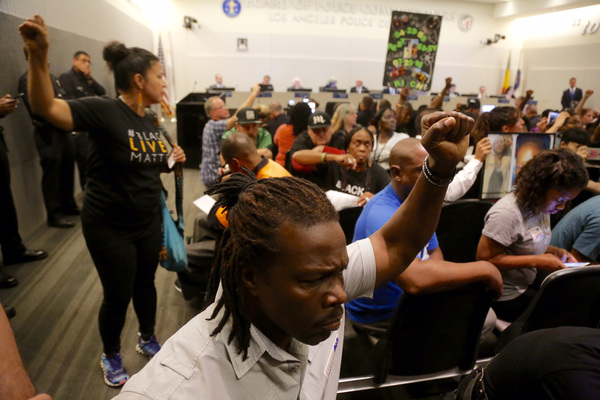
Despite the department's hope that the footage might stymie outrage in the community, a vocal group of protesters descended on the Police Commission's weekly meeting, chanting "fire Charlie Beck."
Melina Abdullah, an organizer with the Black Lives Matter movement in Los Angeles, accused the department of trying to "assassinate" Snell's character after his death and said the recording didn't answer all questions about the shooting. The video does not show the moment when officers opened fire, and leaves unanswered the critical question of whether or not Snell turned toward police while armed.
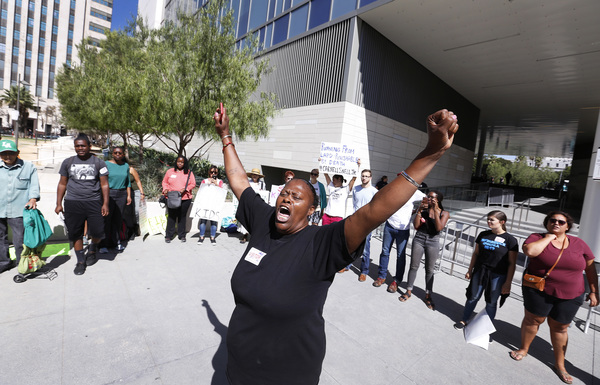
"I don't care if he had a gun," she said, drawing applause. "Because life matters."
Abdullah went on to call for the LAPD to release videos from other police shootings.
"If they can release that video, they can release every damn video," she said.
The shooting of Snell became the latest local touchstone in the national debate about policing and how officers use force, particularly against African-Americans.
Beck told reporters Monday that officers were working near 108th Street and Western Avenue about 1 p.m. when they spotted a light blue Nissan that had paper plates. The plates didn't match the year of the car, Beck said, causing officers to think it may have been stolen.
As the officers watched the vehicle, Snell, sitting in the back seat, looked toward them, then ducked "as if to hide from them," Beck said.
He said officers started to follow the car, which slowed down. As officers activated their lights and sirens, he said, the car slowed more and Snell got out, "holding his waistband as if he was supporting something."
Thinking Snell was holding a gun, the officers chased him, Beck said. At some point during the 200- to 300-yard pursuit, the chief said, the officers saw Snell pull out a gun and hold it in his left hand.
They chased him to a driveway on 107th Street, where Snell turned toward them, Beck said, the gun still in his hand. Police opened fire.
Snell died at the scene.
Beck said a .40-caliber handgun was found "no more than 5 feet away" from Snell's body. The gun was fully loaded, Beck said, indicating it wasn't fired.
The officers did not have body cameras, the chief said, but a video from a nearby business "clearly shows" Snell running with the gun in his hand.
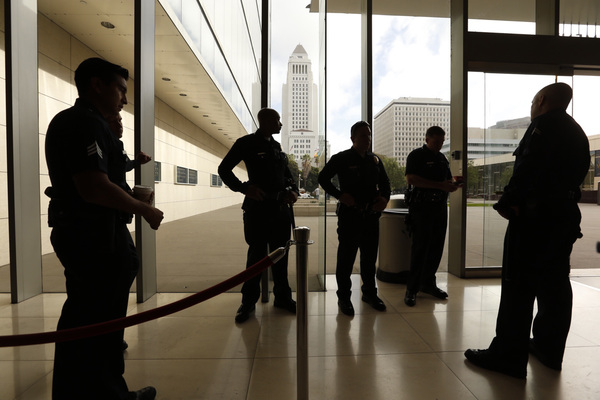
Beck acknowledged the anger surrounding the weekend's shootings and said he believed some of the reaction has been compounded by other police killings around the country.
"We have all seen police-involved shootings that defy justification in other municipalities. I have seen them where I am at a loss to understand why," he said. "I think that affects what happens on the streets of Los Angeles."
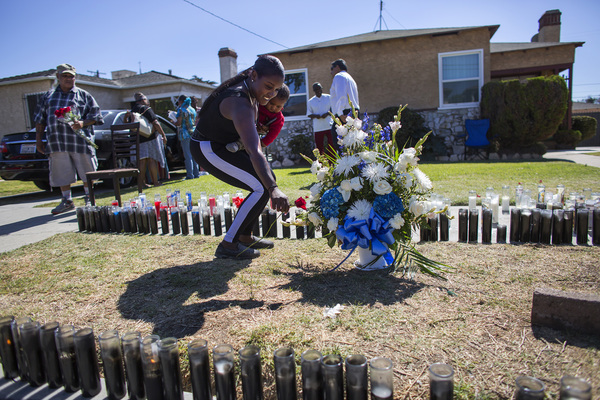
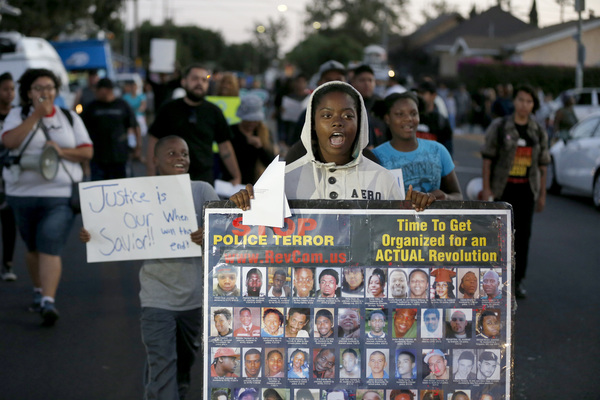
After Snell's death, scores of people gathered near where he was shot. Some shouted profanities at officers. One man complained about police helicopters and sirens keeping him up at night. Others said they were tired of being repeatedly stopped by officers _ "they don't do that in Beverly Hills," one man said.
Graffiti covered buildings near the intersection. "Rest well Carnell," one message read. "LAPD" was written next to his name, the letters crossed out with an X.
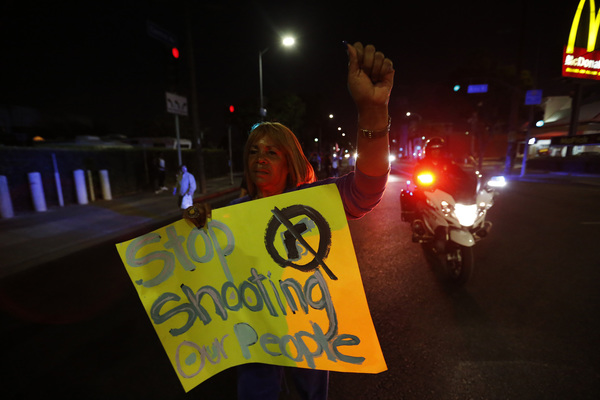
On Sunday, during a second night of protests, news spread of another deadly police shooting in South L.A. Coroner's officials have not yet identified the person killed, described by police as a man between the ages of 18 and 22.
About 5 p.m., gang enforcement officers were investigating a report of a man with a gun near 48th Street and Ascot Avenue. The officers spotted someone matching his description and began to approach the person, Beck said.
The man then turned and pointed a handgun at the officers, the chief said, prompting police to open fire. Paramedics took the man to a hospital, where he died.
The gun, Beck said, turned out to be a replica weapon, with its orange tip covered by black paint or pen.
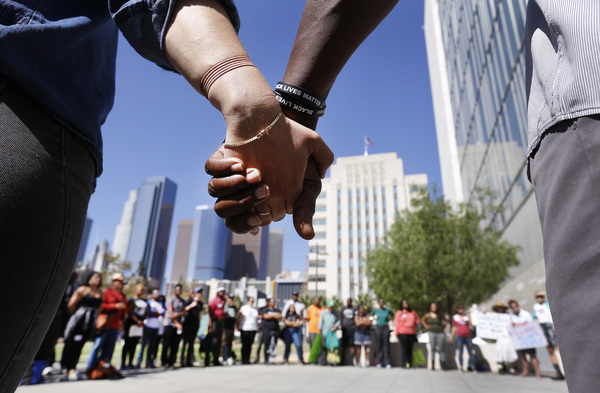
A woman who said she witnessed the shooting from a house across the street told reporters that police did not issue commands before opening fire and that a second volley was fired while the man was on the ground.
Beck said the officers were wearing body cameras and that the video "clearly refutes" reports that the man was shot while on the ground. Beck said he had not made a decision on whether to release that footage.
Hutchinson said he doubted the release of videos in police shootings would do much to heal what he described as an incredibly deep divide between police and black communities nationwide.
"It wouldn't make any difference almost if it was Mother Teresa and St. Paul that had the video in front of them with holy water and a cross," he said. "People are not going to believe it. It really reflects something bigger, and the bigger is, you can have truth out there, but people have been so conditioned to believe police routinely lie, routinely cover up, wash themselves in the blue code of silence, that it's tough to convince people, even when you have an accurate picture of what happened."