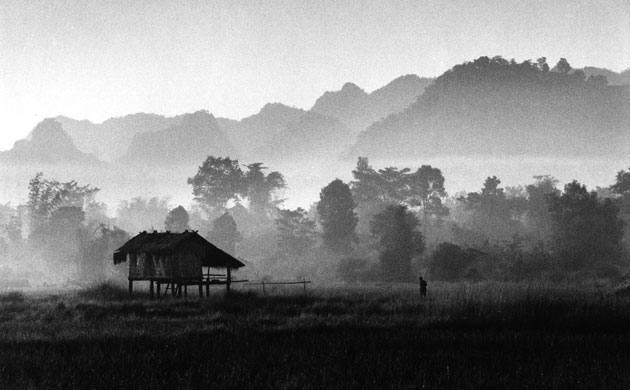
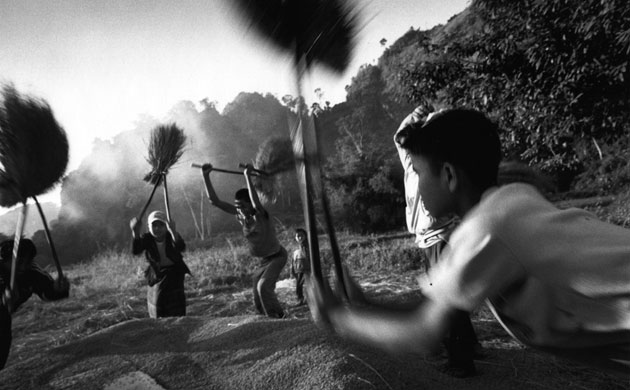
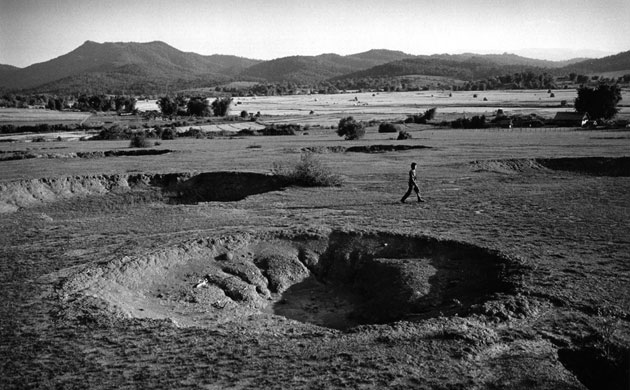
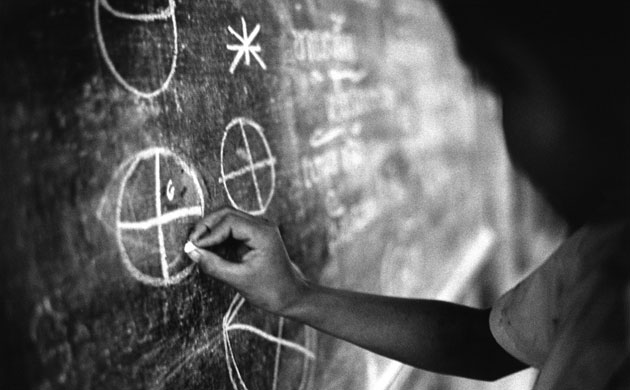
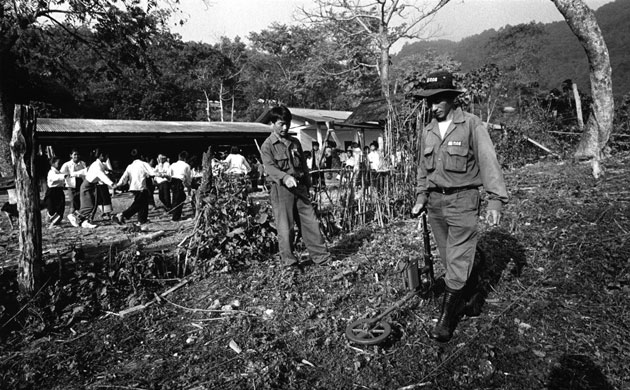
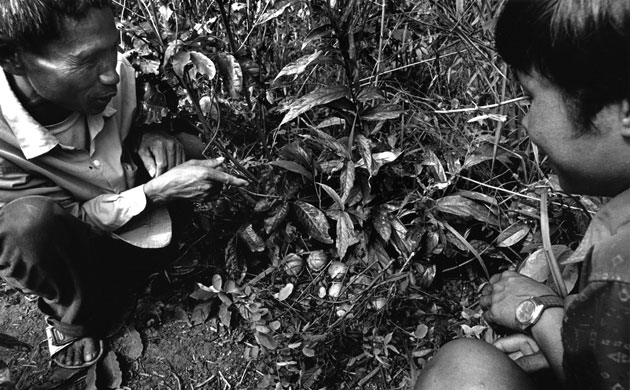
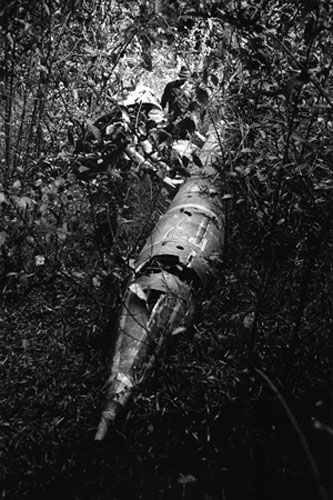
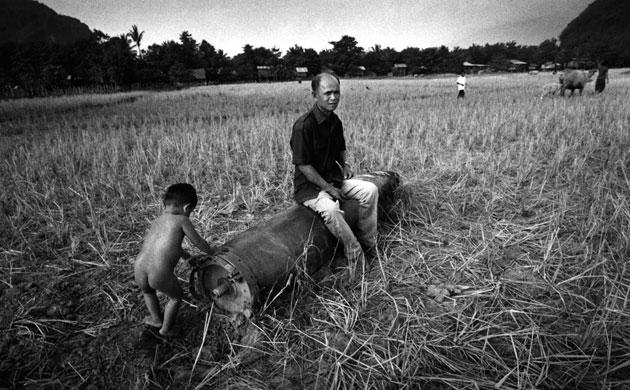
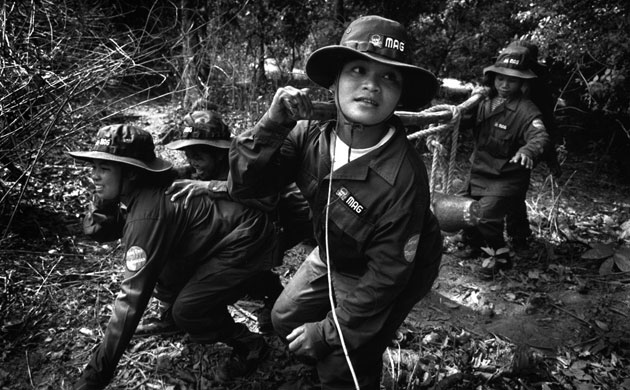
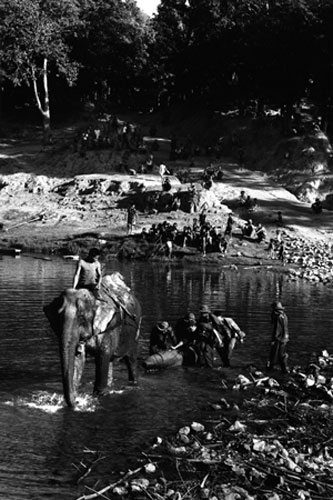
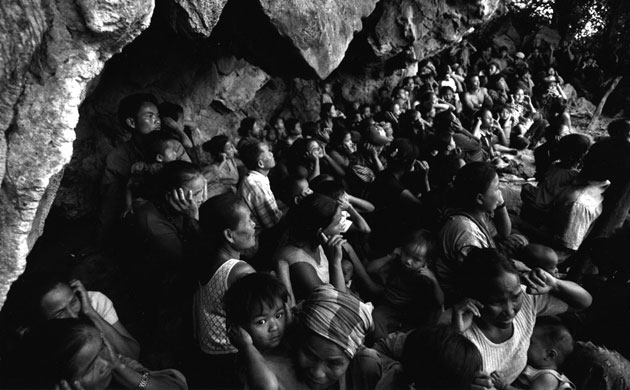
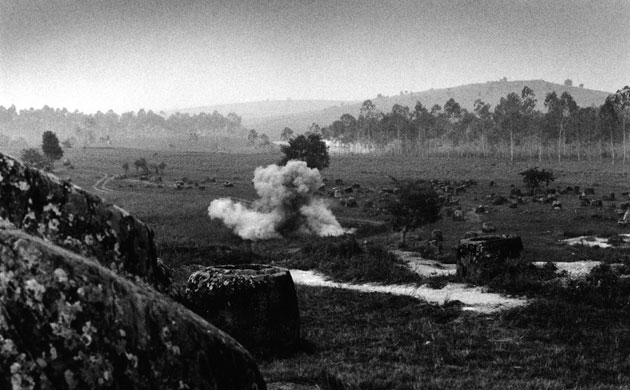
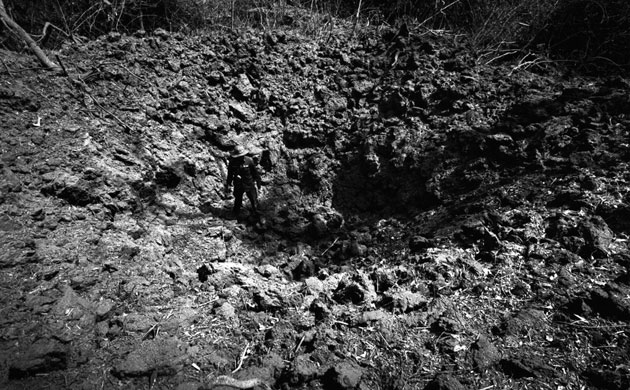
A misty morning in Khammouane provincePhotograph: Sean Sutton/MAGBeating out the rice grains in Xieng Khouang province. Everyone helps during the harvest. Most people in Laos are subsistence farmers. If the harvest fails, they go hungryPhotograph: Sean Sutton/MAGThree million tons of ordnance was dropped on Laos over a nine-year period. Craters such as these in Xieng Khouang province scar the landscape in many areasPhotograph: Sean Sutton/MAG
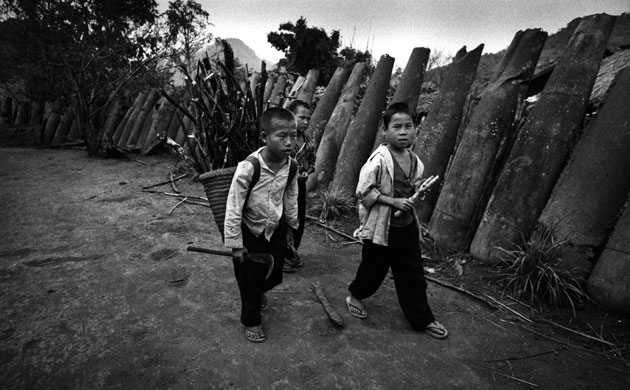
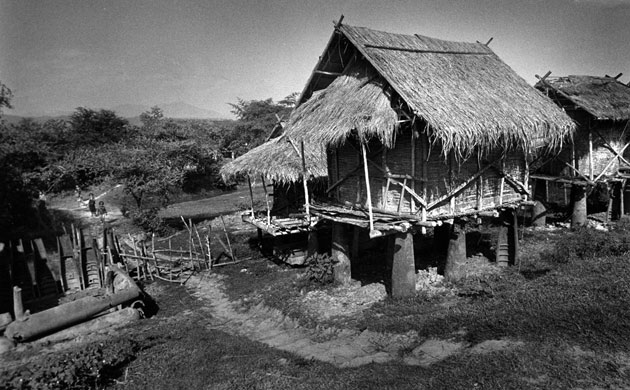
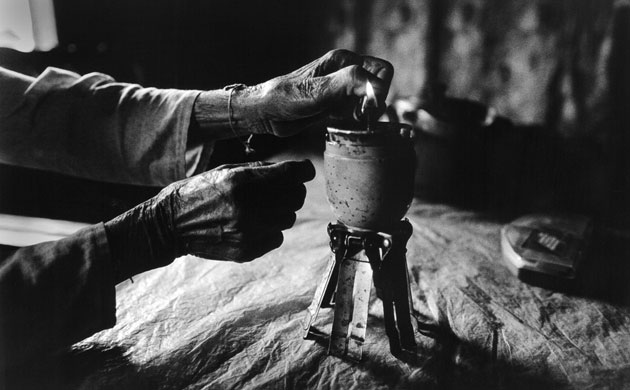
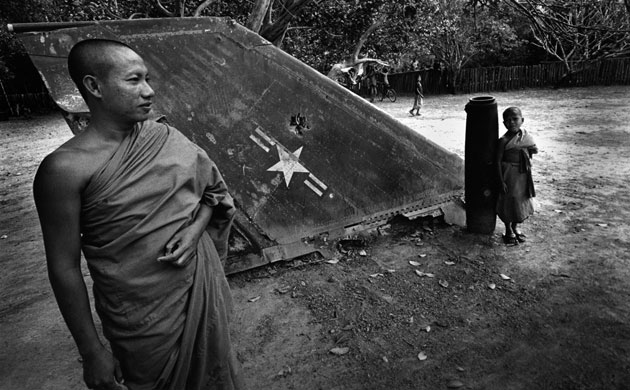
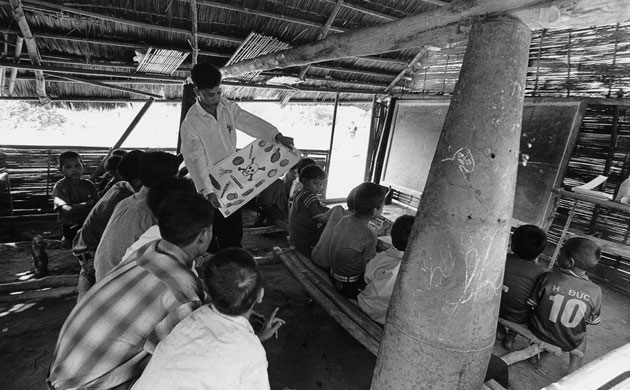
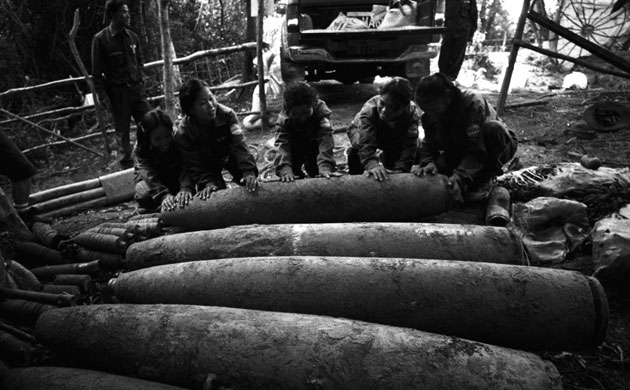
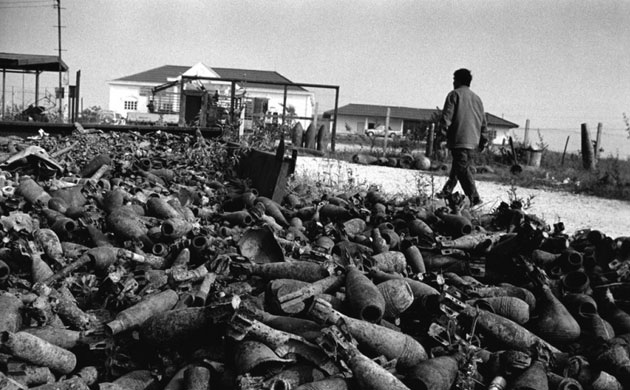
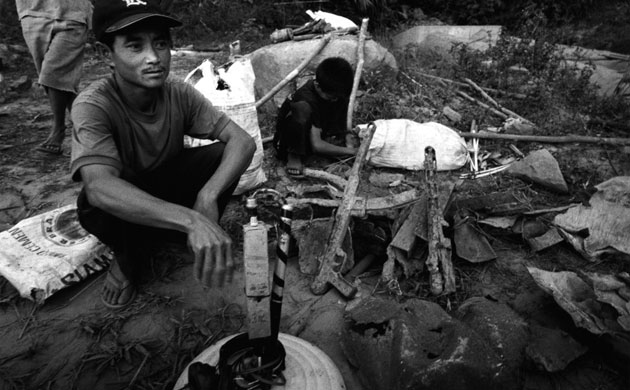
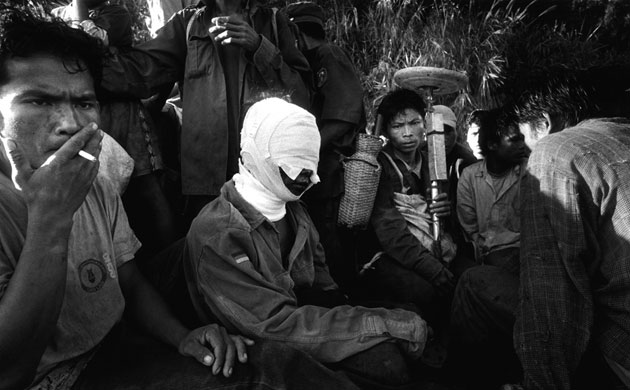
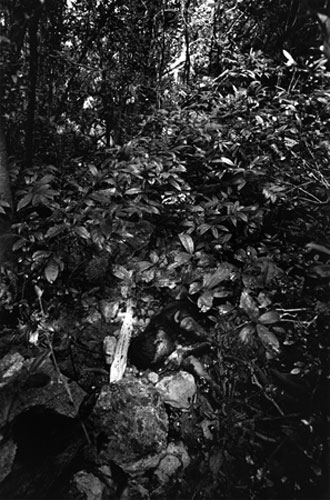
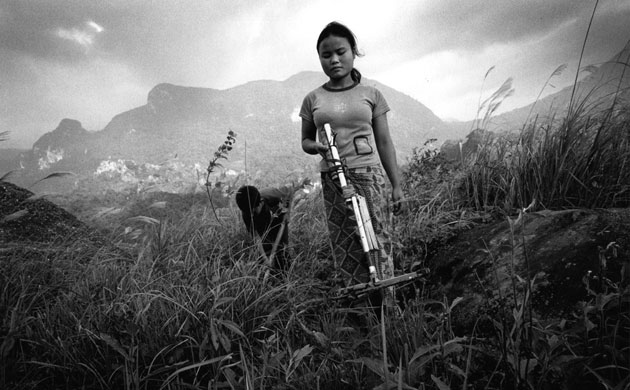
Boys walk past a fence built out of cluster bomb units in Xieng Khouang provincePhotograph: Sean Sutton/MAGFences and stilts made from cluster bomb units in Xieng Khouang provincePhotograph: Sean Sutton/MAGAn oil lamp made from a BLU3b cluster bomblet that was defused by a villager in Xieng Khouang provincePhotograph: Sean Sutton/MAGBoats fashioned from US fighter-bomber drop tanksPhotograph: Sean Sutton/MAGPart of an aircraft wing in a temple in Phanop village. 'We keep it here to remind the children of what happened,' the monk said. 'This belongs to the village and if one day we badly need money we might sell it for the scrap value'Photograph: Sean Sutton/MAGChildren of Boun Doup school, in Saravane province, are warned of the dangers of unexploded ordinance in a classroom supported by cluster bomb casings. MAG is clearing ordnance from the ground nearby so that a larger school can be builtPhotograph: Sean Sutton/MAGChildren draw deadly bomblets from cluster bombs that still litter their playgrounds 30 years after the war endedPhotograph: Sean Sutton/MAGClearing land for a school garden so that children can grow food for their families. The MAG team cleared the area around the school and found 14 unexploded bombsPhotograph: Sean Sutton/MAGA villager in Nong Boua shows unexploded bomblets to MAG community liaison staff. A report with a map and GPS coordinates will be given to one of the technical teamsPhotograph: Sean Sutton/MAGMAG staff inspect a SAM2 surface-to-air missile. Two villagers died here a month previously. They were trying to cut off pieces of the missile to sell, and it is believed some of the highly toxic fuel leaked when they cut a hosePhotograph: Sean Sutton/MAGA 900kg (2,000lb) bomb in Phanop village, Khammouane provincePhotograph: Sean Sutton/MAGA 225kg (500lb) bomb is moved to a pick-up truck by the MAG team in Khammouane provincePhotograph: Sean Sutton/MAGVillagers watch as a bomb is dragged across a riverPhotograph: Sean Sutton/MAGA 225kg (500lb) bomb is rolled into a UXO (unexploded ordnance) store in Khammouane province. It is one of nine large bombs found by villagers that will be destroyed in a controlled demolitionPhotograph: Sean Sutton/MAGAfter a number of deadly accidents, the smelters plant in Posavan, Xieng Khouang province, became more cautious about processing UXO. This is one of many piles of bombs outside the plant. Most of the items are unfused and without explosives but many, including a number of white phosphorus rounds, are very dangerous. The plant's owners have asked MAG to check the areaPhotograph: Sean Sutton/MAGVillagers hold their ears for an expected explosion in Khammouane provincePhotograph: Sean Sutton/MAGAnti-aircraft rounds and mortar bombs are destroyed in a controlled demolition in Xieng Khouang provincePhotograph: Sean Sutton/MAGThe spot where a bomb was destroyedPhotograph: Sean Sutton/MAGScrap collectors wait by the roadside for buyers, in Khammouane provincePhotograph: Sean Sutton/MAGTalay, from Najat village, waits for the scrap dealer's truck to take him home. In the past year there have been seven deaths from his village alone. Collecting scrap is a dangerous occupationPhotograph: Sean Sutton/MAGThe body of 17-year-old Ten, who was blown up along with two friends when they tried to take a fuse off a bombPhotograph: Sean Sutton/MAGChai, 18, and her 12 year-old brother Song look for scrap metal in Khammouane province. They go to the mountains for up to a week at a time, living on rice they bring with them and bamboo shoots and roots they find in the forest. They spend the day searching and digging and bring their finds to the roadside. 'We can make money for our family doing this and there is no other way for us to make money,' says ChaiPhotograph: Sean Sutton/MAG
Sign up to read this article
Read news from 100’s of titles, curated specifically for you.