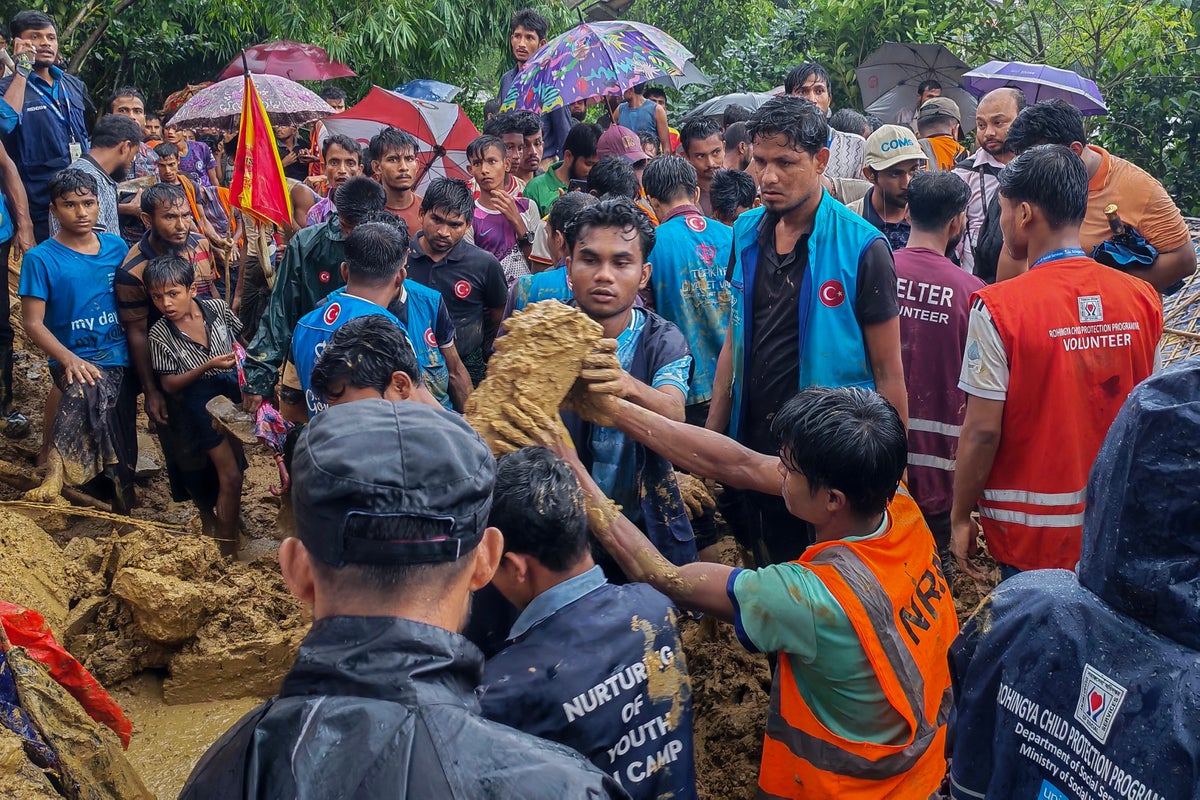
At least eight Rohingya refugees living in makeshift camps in Cox's Bazar were killed by landslides as heavy monsoon rains battered Bangladesh and neighbouring India.
Rescuers recovered seven bodies and local residents found the other after several hills collapsed and buried makeshift houses between Sunday and Monday, Dollar Tripura, a fire service and civil defence official in Cox’s Bazar, said.
Rescuers also found two children with injuries.
Mr Tripura said the landslides hit at least four locations, burying shelters under mud and debris while residents were asleep.
Monsoons are deadly for over a million refugees living in Cox’s Bazar where hundreds of thousands of makeshift homes are built on deforested hills, which are vulnerable to landslides and flash floods.
Bangladesh is home to the largest refugee population of the Rohingya, a mostly Muslim minority ethnically cleansed from their homeland in Myanmar’s Rakhine state.

Authorities said they were relocating the refugees from at-risk hill areas, adding that almost 1,000 people had already been moved.
The weather office in the capital Dhaka forecast more rain in the coming days.
According to the UN, at least 36 Rohingya were killed and 86 injured when landslides similarly hit refugee camps between 2021 and 2026.
In neighbouring India, monsoon rains battered large areas on Tuesday, triggering flash floods and landslides in the Himalayan states and flooding roads and forcing schools to close in Mumbai.
In the western state of Maharashtra, at least 13 people have died in rain-related incidents over the past few days as monsoon weather has intensified. In Pune district, landslides triggered by heavy rain forced officials to temporarily close sections of the Mumbai-Pune Expressway, disrupting traffic between the two cities.
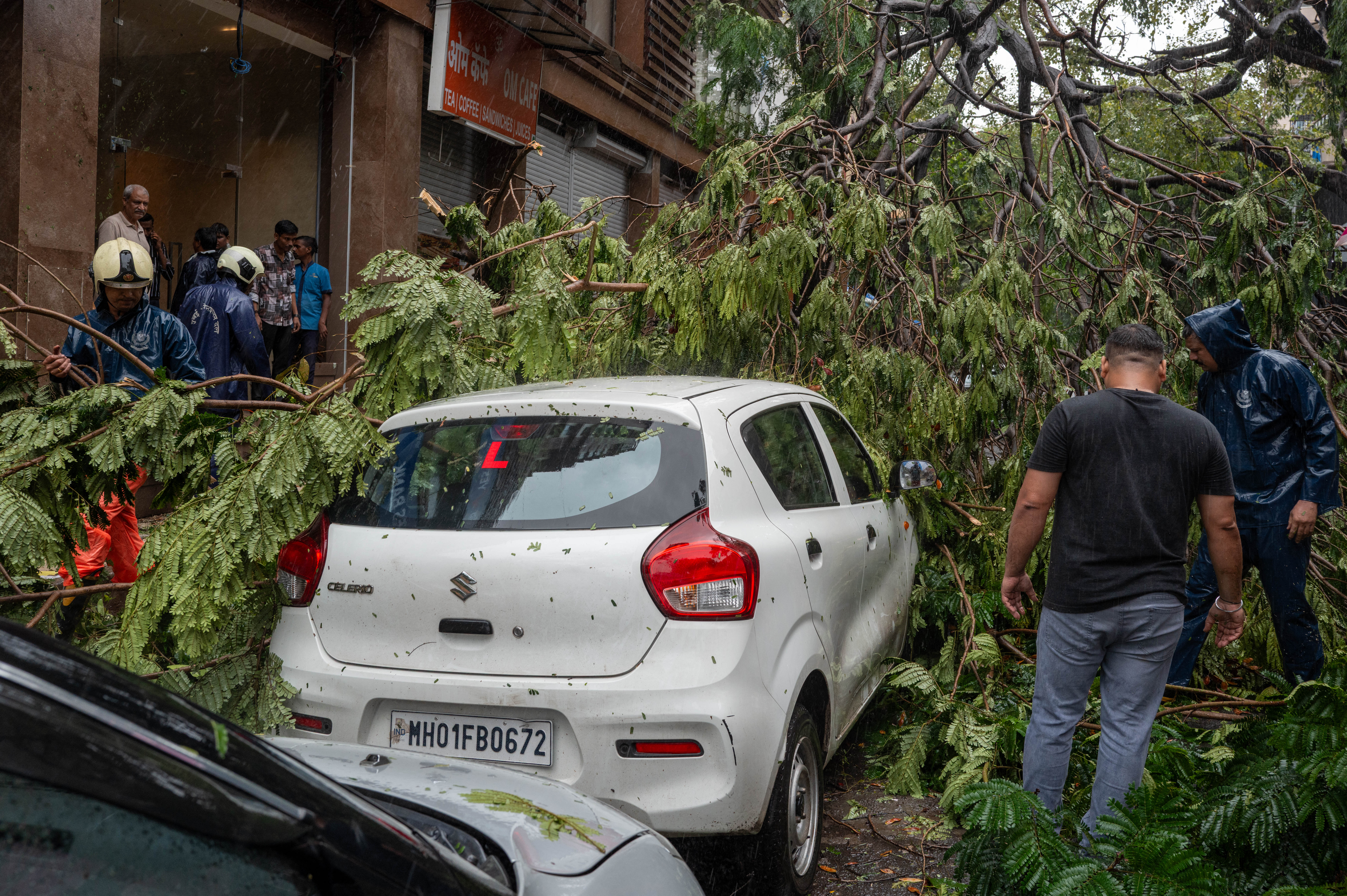
The India Meteorological Department forecast more heavy rainfall across Maharashtra in the coming days and warned of continued flooding in low-lying areas.
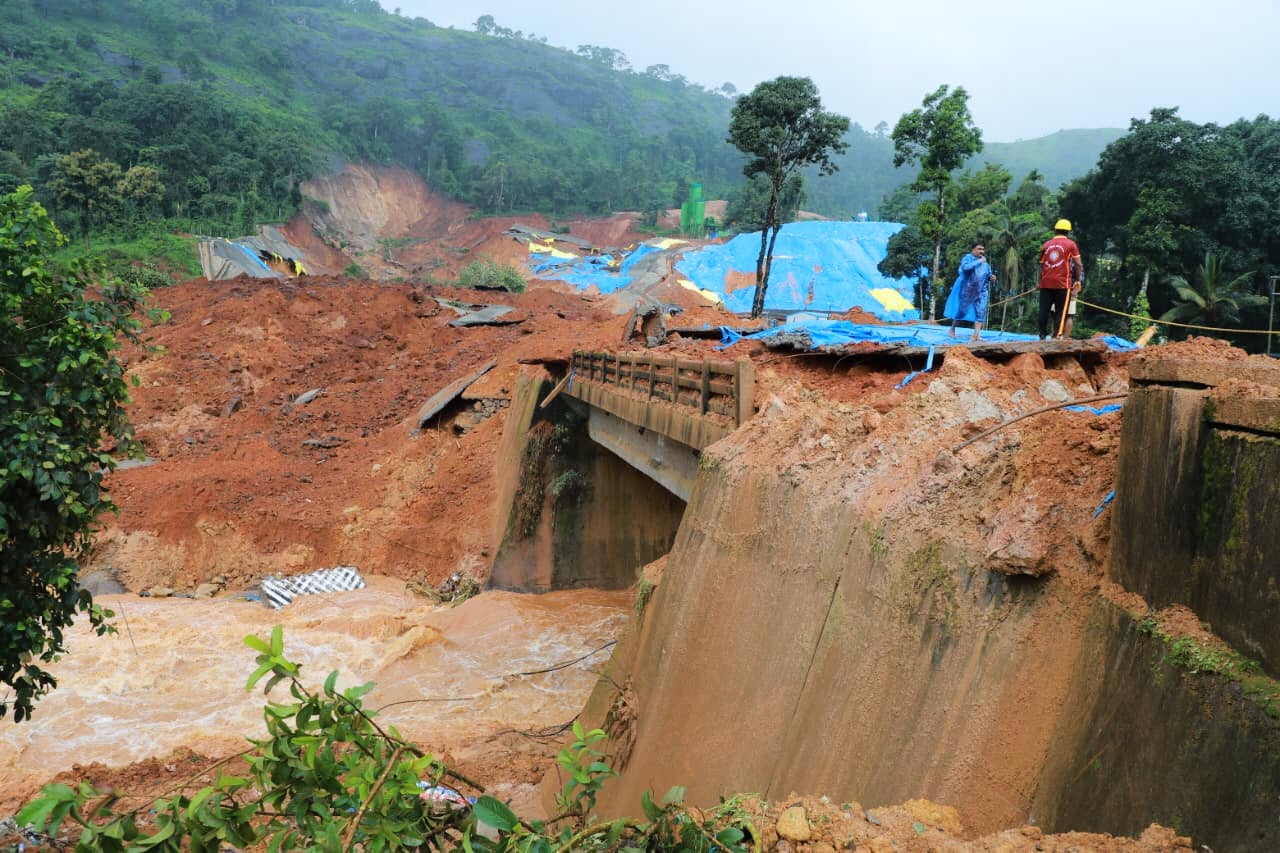
In Kerala’s Wayanad, three people were killed and five went missing after a massive heap of excavated mud swamped the entry of an under-construction tunnel on Tuesday. Dramatic CCTV footage showed the landslide sweeping away a fuel tanker near a bridge.
Rescue operations were hampered by incessant rain and unstable ground.
In the northern Himalayan regions of Jammu and Kashmir and Himachal Pradesh, heavy rain triggered flash floods and landslides that damaged roads, disrupted public transport, and cut off several villages. Emergency crews were deployed to evacuate stranded residents.
In eastern Arunachal Pradesh, more than 94,200 people across 333 villages were affected by a fresh bout of heavy rainfall, which triggered flash floods and landslides.
The southwest monsoon, which runs from June through September, is critical for agriculture and for replenishing water supplies in India but it also causes flooding and landslides every year, especially in the Himalayan region and densely populated cities with inadequate drainage.
Additional reporting by agencies