Get all your news in one place.
100’s of premium titles.
One app.
Start reading
The Guardian - UK
The Guardian - UK
World

Landmine clearance in Sri Lanka

landmines: landmines  demining
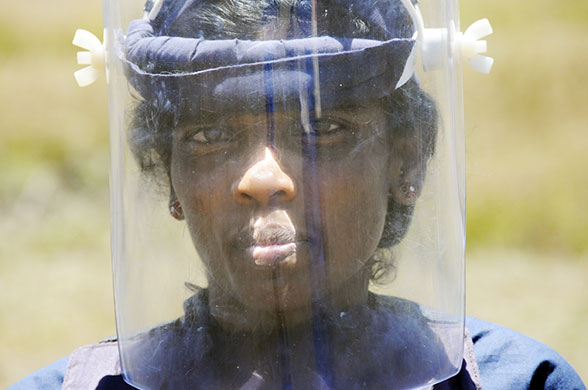
30-year-old Jalini is off to work in the paddy fields in Vanni, the rice-bowl region of northern Sri Lanka. But she isn’t harvesting rice; she’s on the hunt for landmines, deadly legacies of the violent 26-year-long conflict between the Sri Lankan government and the LTTE (Liberation Tigers of Tamil Eelam or Tamil Tigers)
Photograph: Russell Watkins/UKaid/DFID
landmines: landmines sri lanka
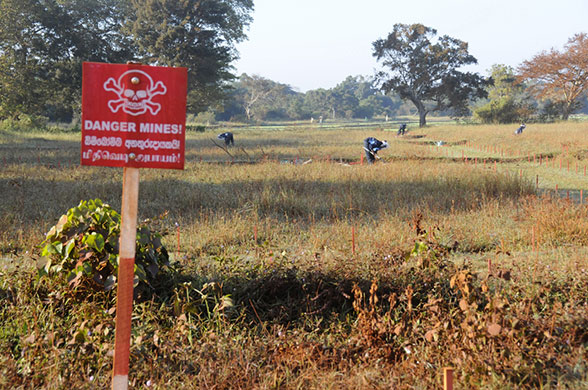
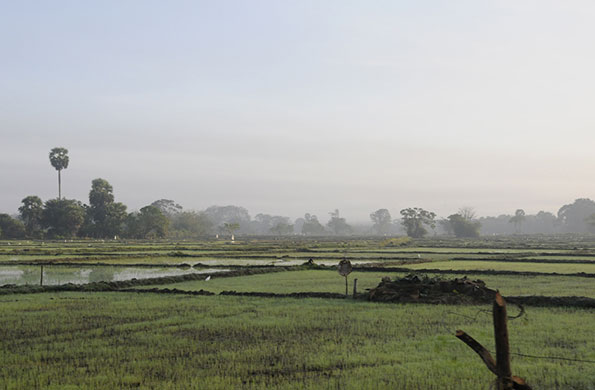
This used to be a productive paddy field. But until the numerous hidden landmines are identified and removed, the community in Thunnukai can’t work it. Jalini and her fellow de-miners have already found a dozen mines in this field alone, and they think there are more. Across the north of Sri Lanka, an unknown number of landmines litter the once productive landscape, threatening lives and livelihoods.
Photograph: Russell Watkins/UKaid/DFID
landmines: landmines sri lanka
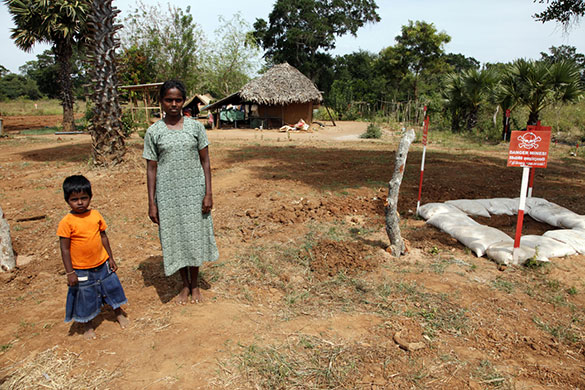
During the conflict, local people like Bidya and her family had to move into camps and lived in very harsh conditions. De-mining and making land safe for people to return to is now a priority. The area around Bidya’s home is heavily mined, literally surrounding her home. HALO's de-miners are working hard to clear the mines so that she and her disabled husband can grow food again.
Photograph: Russell Watkins/UKaid/DFID
landmines: clearing landmines sri lanka
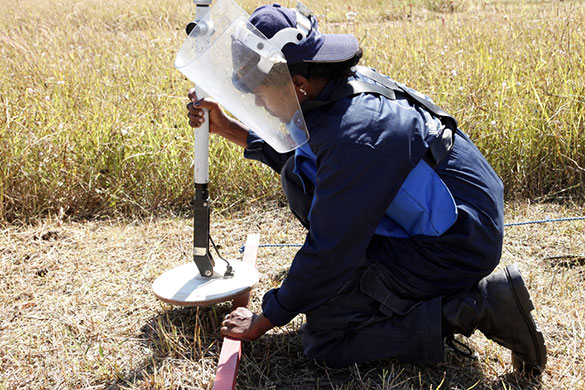
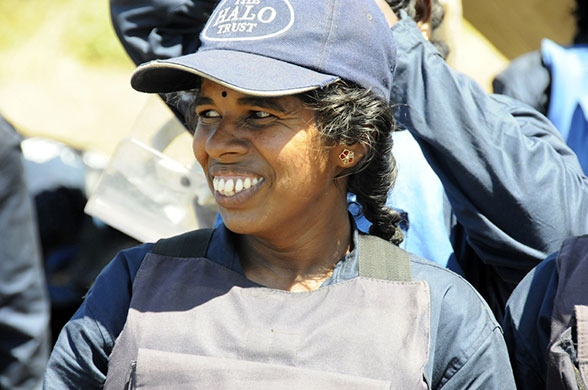
Like Jalini, Saila Jan (a 29 year-old mother of two) is one of a growing number of women in Sri Lanka that have been recruited and trained by the UK de-mining charity HALO trust. Working alongside men, and having equal status, dozens of women like her are slowly helping clear mines from hundreds of acres of prime rice-producing land
Photograph: Russell Watkins/UKaid/DFID
landmines: clearing landmines  sri lanka
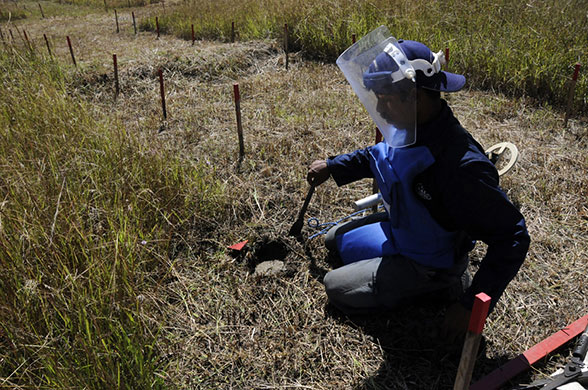
De-mining by hand is slow, painstaking work. Scanning a square metre at a time with a metal detector, every beep over a certain strength means a slow, careful dig into the parched solid earth, and a fingertip search. Here, a deadly mine is found and exposed
Photograph: Russell Watkins/UKaid/DFID
landmines: clearing landmines
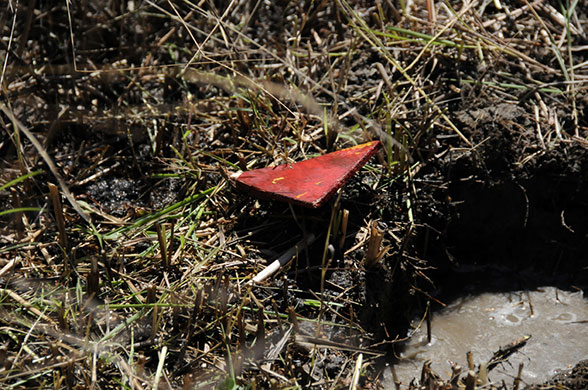
The position of the mine is marked with a red triangle to await destruction. Since the end of the fighting last year, HALO – supported by UKaid from the Department for International Development – has been able to step up its de-mining work to meet this huge humanitarian challenge
Photograph: Russell Watkins/UKaid/DFID
landmines: clearing landmines
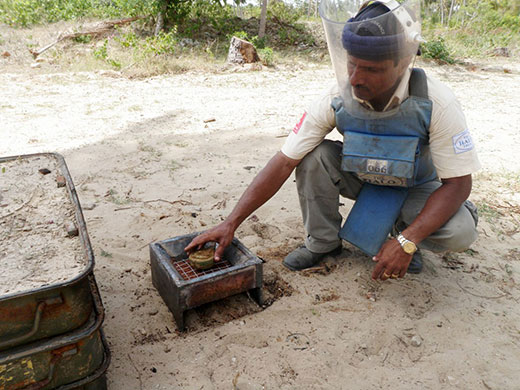
This type of anti-personnel landmine can be destroyed by burning it - an improvised method, as de-mining agencies are not allowed to use explosives in Sri Lanka. Here, Paskar, one of Halo’s local supervisors, carefully prepares one. He's worked for HALO for 8 years and says he's very happy that local people are employed wherever possible. They know the landscape and often have important information about the possible location of mines.
Photograph: Russell Watkins/UKaid/DFID
landmines: clearing landmines
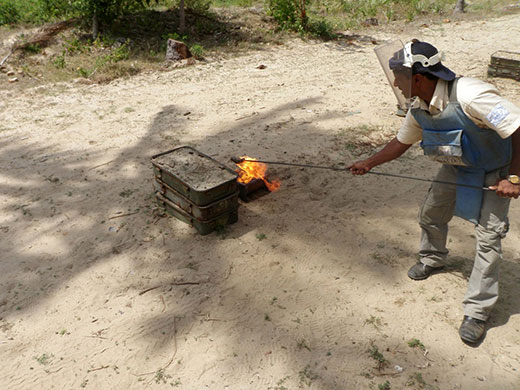
Paskar, a Sri Lankan de-mining technician, ignites an anti-personnel land mine in a High Order Burning Box (HOBB), a device which is used to safely destroy mines without using explosives or detonators. With a £500,000 grant from UKaid, and working with the Sri Lankan authorities, HALO has already made safe more than 16,000 mines in the first two months of 2010 alone.
Photograph: Russell Watkins/UKaid/DFID
landmines: clearing landmines
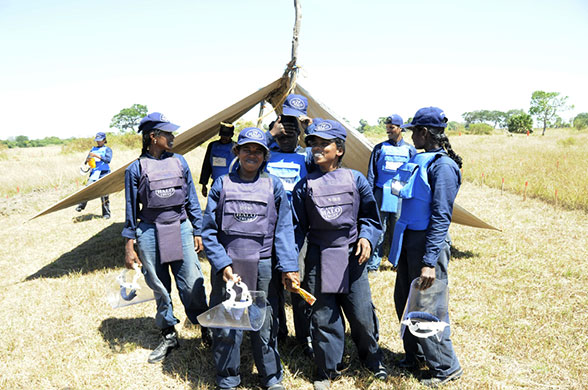
During the conflict, many Tamil men were conscripted to fight against the Sri Lankan Army. Large numbers – including Saila’s husband - were killed or severely injured and many families are now dependent on women. Saila and the other women in her team earn the equivalent of £130 a month each
Photograph: Russell Watkins/UKaid/DFID
landmines: clearing landmines
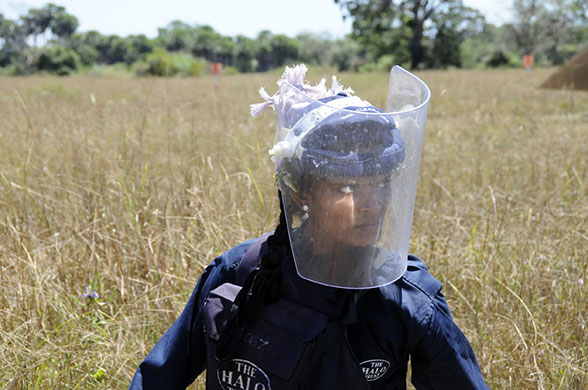
Sudarsana, aged 20, has been working for HALO since December last year. She had to leave her home because of the fighting in July 2008, and was forced to move many times before finally being evacuated by the Red Cross the final weeks of the conflict in April 2009.
Photograph: Russell Watkins/UKaid/DFID/PR
landmines: clearing landmines
Metre by metre, more than 800 square kilometres of Sri Lanka’s fertile north is being reclaimed. More than 300,000 people were displaced during 2008-2009 alone, and there are still many challenges ahead. But slowly they are returning to their communities, growing and harvesting crops and re-starting their lives after years of conflict
Photograph: Russell Watkins/UKaid/DFID
landmines: clearing landmines
The work that Saila and her colleagues do is invaluable: "This job is important as it means I am able to earn some money and I’m happy that I’m helping to make the land safer for people. The work is hard, but I don’t mind as I’m helping my family. I don’t get scared. I just want my children to be able to go to school and live in peace."
Photograph: Russell Watkin/UKaid/DFID
Sign up to read this article
Read news from 100’s of titles, curated specifically for you.
Already a member? Sign in here
Related Stories
Top stories on inkl right now
One subscription that gives you access to news from hundreds of sites
Already a member? Sign in here
Our Picks
Fourteen days free
Download the app
One app. One membership.
100+ trusted global sources.