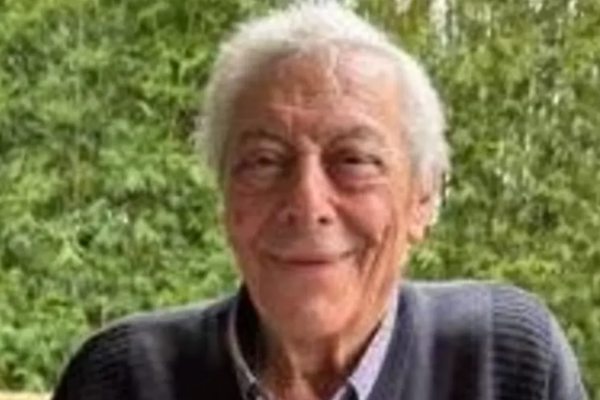
Lawyers for Ashley Dyball and another Australian allegedly involved with Kurdish fighters plan to mount a landmark defence that Syrian territory controlled by the group should be recognised as an autonomous state.
If successful the case would potentially open the door for Australians to fight alongside some Kurdish militia — but some analysts are sceptical.
Dyball, 23, left Australia in May along with another Queenslander, Reece Harding, to fight with the Kurdish People’s Protection Units (YPG) against Islamic State in Syria.
Harding, also 23, was killed by a landmine in July but Dyball continued fighting and was apprehended last week while on a break in Germany. He was deported to Australia where he was greeted by cheering friends and family on Monday morning.
Dyball was briefly detained by federal police but later released.
Should he be charged with foreign incursion offences, his solicitor, Jessie Smith, said Dyball would argue that the YPG effectively governs territory across northern Syria and meets the legal definition of a government.
Fighting with a militia group overseas is illegal in Australia but the law makes an exception if the group constitutes a state or government, defined as an “authority exercising effective governmental control”.
Smith, from the law firm Stary Norton Halphen, is making the argument in defence of Jamie Williams, a 28-year-old Melbourne man who was charged in July with foreign incursion offences for trying to leave the country to join the YPG.
The Democratic Union party, the political party that formed the YPG, last year declared three Kurdish cantons in northern Syria to be a de facto autonomous region named Rojava, or western Kurdistan.
Election processes have started in the three cantons — Jazira, Kobani and Afrin — and locals have taken over the administration of education, health, security, justice as well as trade and business organisations, according to the Middle East Institute.
But the same report notes that Syrian intelligence and security officials continue to operate in the region with the consent of Kurdish authorities.
Rodger Shanahan, an associate professor at the Australian National University, said the Syrian government also continued to pay the salaries of public servants in the region and had been “careful to maintain the mechanics of governance as far as possible”.
“If you want any kind of recognised birth, death, marriage certificate, educational qualification, travel document etc then you have to get it from the Syrian government,” he said. “It would be hard to argue that the YPG has anything other than temporary military control over certain sections of sovereign Syrian territory.”
The argument is also unlikely to find favour with the Australian government, which would face great pressure from Turkey to amend any loophole that recognises Kurdish sovereignty in Syria.
Peter Dutton, the immigration minister, told 2UE radio on Monday that “regardless of how well-intentioned somebody might be … we just don’t want anybody in that region”.
“We have to recognise that this is a theatre of war and people going off to roleplay in whatever side that they might see fit is just not acceptable under Australian law,” he said.
Williams is next due in court on 17 December.