MINNEAPOLIS — The voice of a Minnesotan who knew as much as anyone about the state's ecology and spent a lifetime researching it and telling its story will echo again later next month.
John Tester died last November, two days shy of his 90th birthday. Most of those years filtered through the lens of the state's outdoors. As a boy in a hunting family in Gibbon, Minn. As a wildlife scientist on the front edge, for example, of wildlife radio telemetry still used to this day. As a University of Minnesota professor trying to teach what was known about the state's environment and how the pieces connect. To many, he was its embodiment.
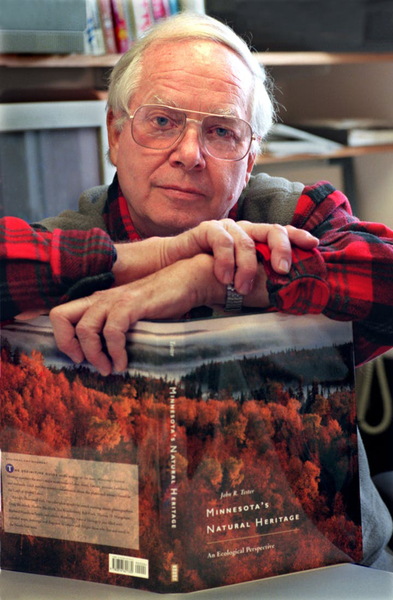
Tester's definitive 300-page guide of sorts, "Minnesota's Natural Heritage," was his attempt in 1995 to deliver it in one place, and remains a widely used textbook.
Said Tester at the time to the Star Tribune:
"I was frustrated because there was no reference to go to when you wanted to know something about the state in general. You had to have a stack of books: a bird book, a mammal book, a reptile and amphibian book. There was nothing on plants and not much on lakes and rivers."
On its 25th anniversary, a new edition of the book comes out Dec. 29 from University of Minnesota Press.
Tester began work on the second edition in 2015, pulling together three main collaborators and editors who held him as colleague, mentor and friend.
Susan Galatowitsch runs the Department of Fisheries, Wildlife, and Conservation Biology at the university; Rebecca Montgomery is a researcher and professor in the Department of Forest Resources; and John Moriarty is senior manager of wildlife for Three Rivers Parks District.
Galatowitsch said Tester knew, as he did with his original, what he wanted in the update. He'd bring along newspaper clippings when they met every other month or so. The clips were attached to parts of the book. Tester thought they could have value. There were deep conservations, she said, about the voice of the book and keeping it accessible to readers — mindful of the hyper-politicized climate it would arrive in but also focused on the gains and losses behind the natural resources of today.
"He was sharp and opinionated all the way to the end of his life," Galatowitsch said.
In an interview, edited below for length and clarity, Galatowitsch, Montgomery and Moriarty talked about their connections to Tester and why a fresh "Natural Heritage" was due.
"We didn't need building from the ground up," Galatowitsch said, "but instead to expand on good bones."