The lakes of the Democratic Republic of Congo (DRC) play a big part in people’s lives – socially, politically and economically. But lake fishing communities find themselves at the intersection of geography, war and authority, as rebel groups and conservation managers also claim spaces and resources.
By some estimates there are over 70 armed groups in the country, led by warlords, traditional tribal elders, village heads and politically motivated resistance fighters.
Lake Edward is also a conservation area and park managers try to limit the illegal fishing there. This creates conflict too. People who live around the lake and depend on it for livelihoods have to deal with both rebel groups and park management.
In today’s episode of Pasha, Esther Marijnen, assistant professor in sociology of development and change at Wageningen University, takes us through her research on the topic. It’s important to get a historical perspective, she says, to understand why the conflict persists.
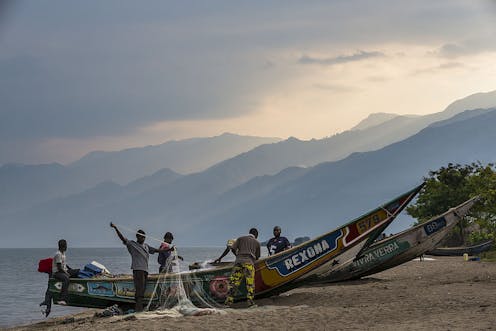
Photo “The fishing village of Kavanyongi on the northern shores of Lake Edward” by Brent Stirton/Getty Images for WWF-Canon. Found on Getty Images.
Music “Happy African Village” by John Bartmann, found on FreeMusicArchive.org licensed under CC0 1.
“African Moon” by John Bartmann, found on FreeMusicArchive.org licensed under CC0 1.

This article was originally published on The Conversation. Read the original article.