Lake Titicaca, once considered Andean deity, faces pollution threat
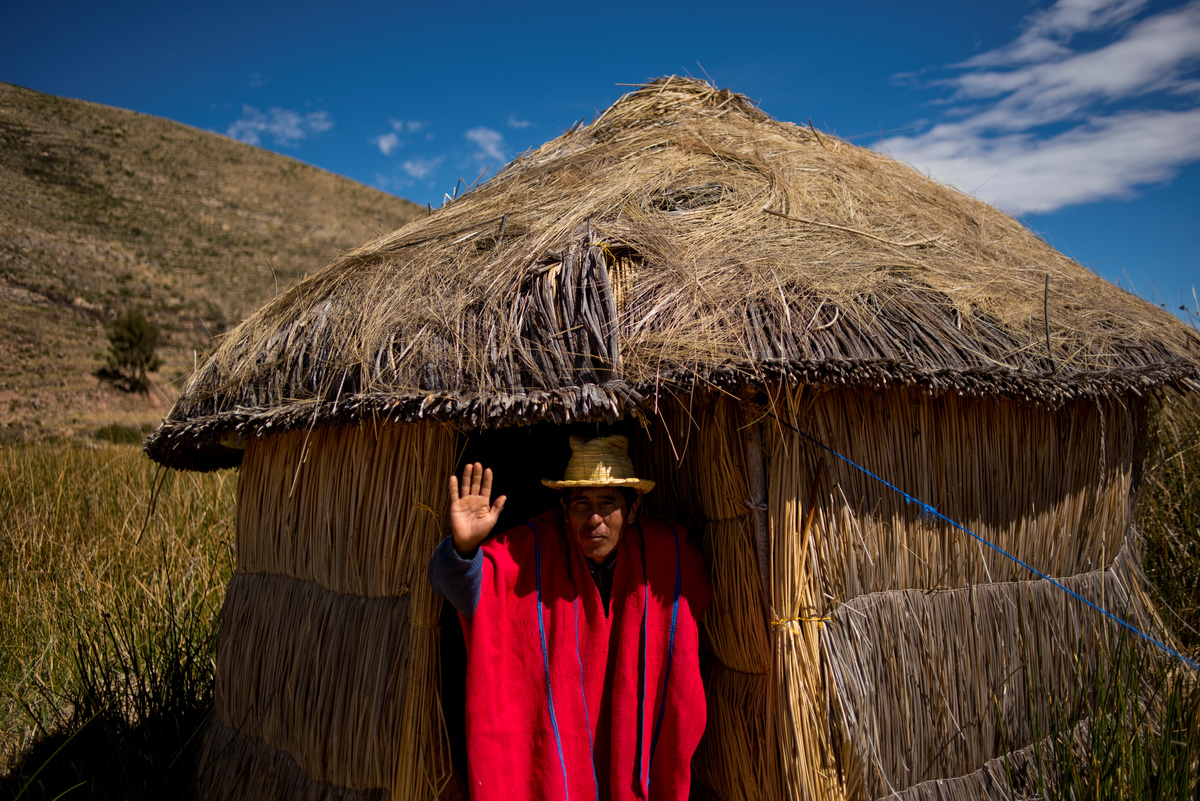
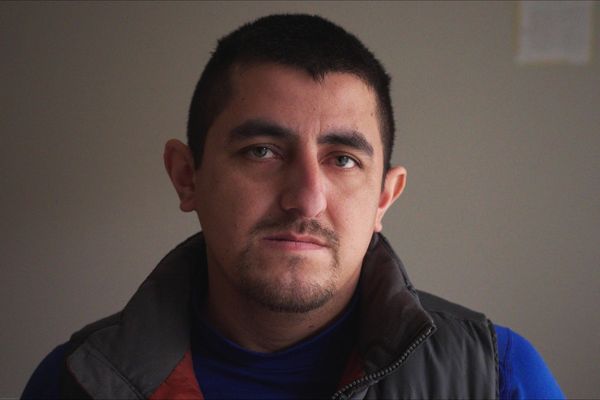
Oscar Limachi, 48, a member of the local Qewaya community who works as a tour guide on Lake Titicaca, poses for a photograph in Qewaya village, Lake Titicaca, Bolivia, July 3, 2018. REUTERS/Manuel Seoane
LAKE TITICACA, Bolivia (Reuters) - Isaac Callizaya, 39, grew up with the sound of waves lapping on the shores of Lake Titicaca, a giant body of water on the border between Bolivia and Peru that at 3,800 meters (12,500 ft) above sea level is the highest navigable lake in the world.
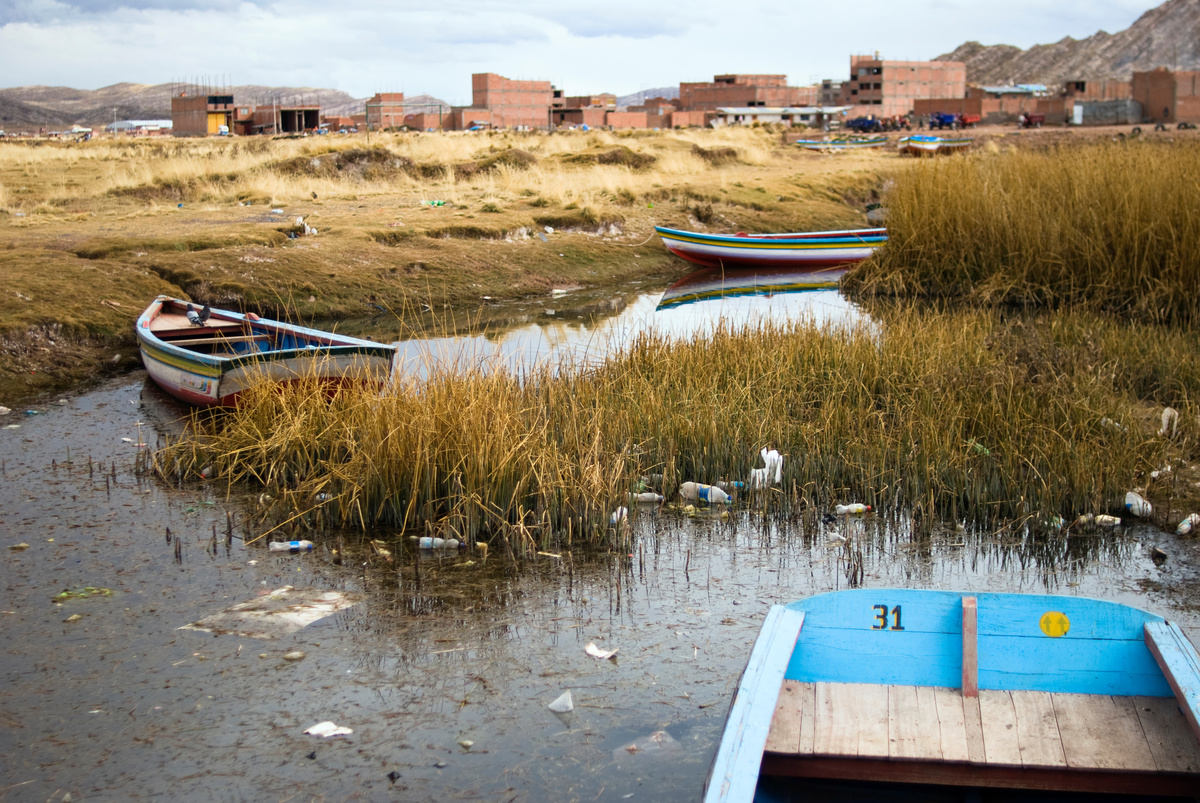
The island fishing community near Titicaca's southern tip that he was born into has seen big changes over the years. Many have moved away from the village on Pariti island, while urban sprawl from nearby cities has created a rising problem of pollution, altering the lake's landscape and forcing those that live around it to adapt.
Oscar Limachi, 48, a member of the local Qewaya community who works as a tour guide on Lake Titicaca, and his son-in-law walk on Pariti island, Lake Titicaca, Bolivia, July 3, 2018. REUTERS/Manuel Seoane
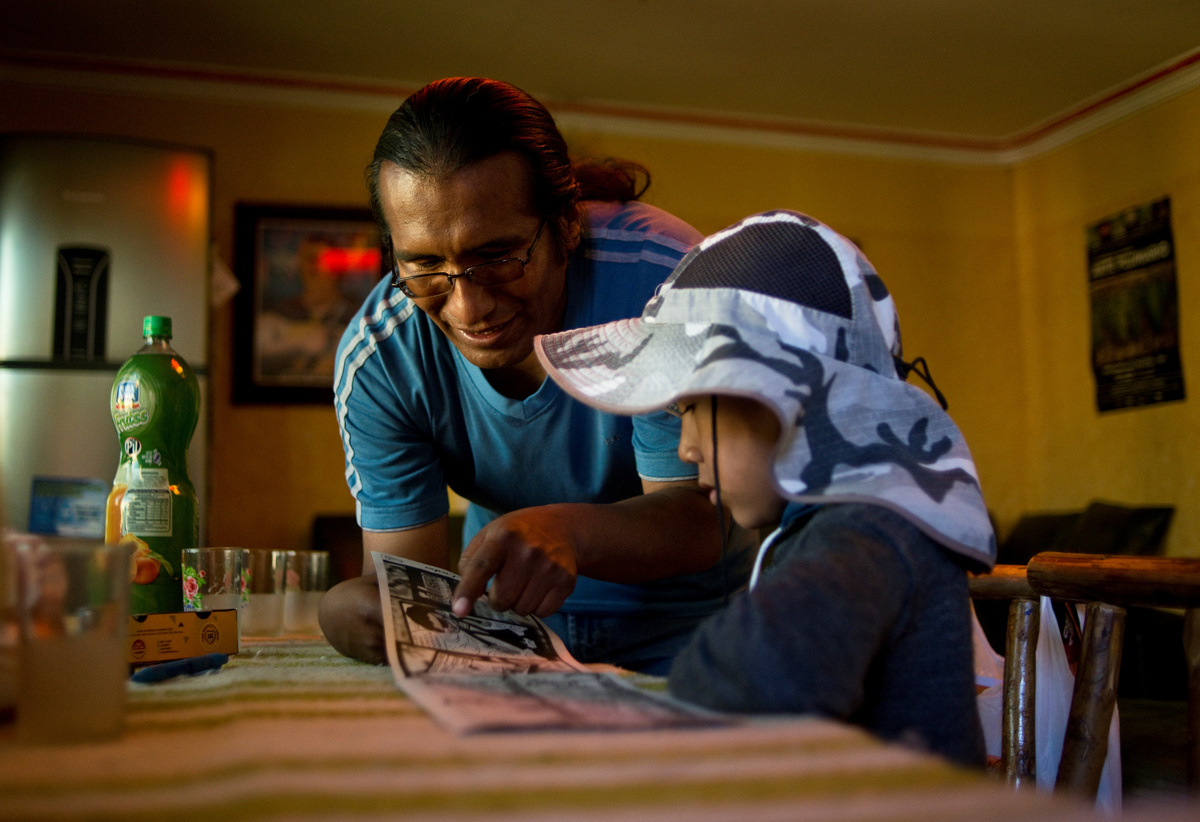
"When I was a child in the nineties, all families on the island lived off fishing. Today only three families are fishing, catching just some 20 fishes per day," Callizaya says. He himself now has a home in the nearby city of El Alto.
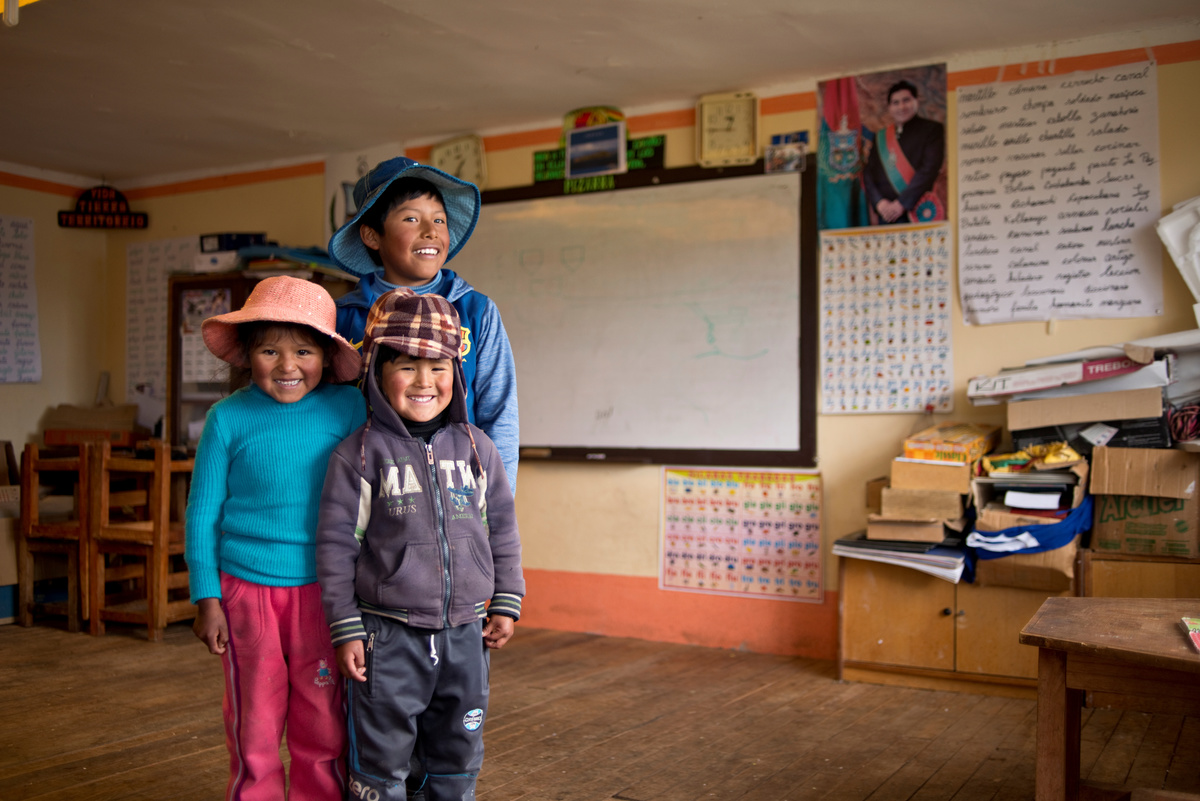
"Before the year 2000 there were around 50 students at primary level (on the island). This year we only have one."
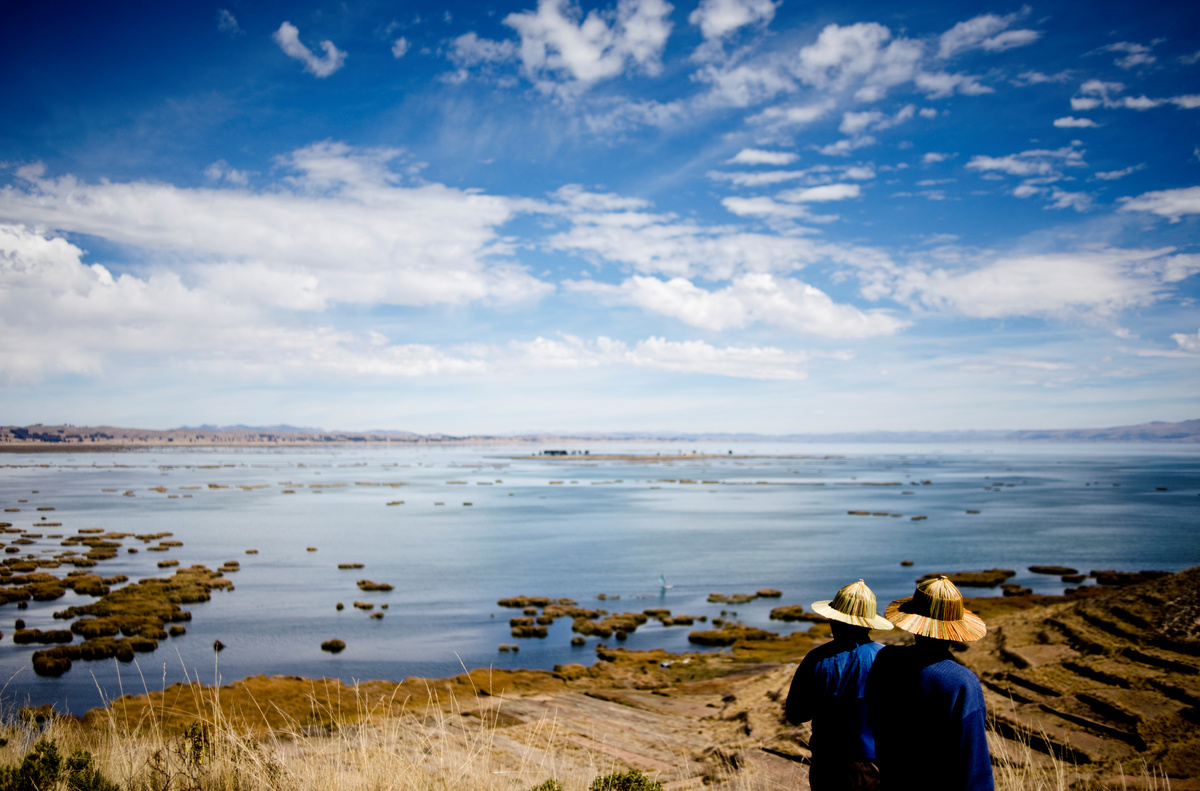
Environmentalists are getting worried about the long-term impact to the lake, a popular destination for visitors to the region, who come to see its icy azure waters with their Andean mountain backdrop and traditional communities, some of whom live on manmade islands constructed entirely from reeds.
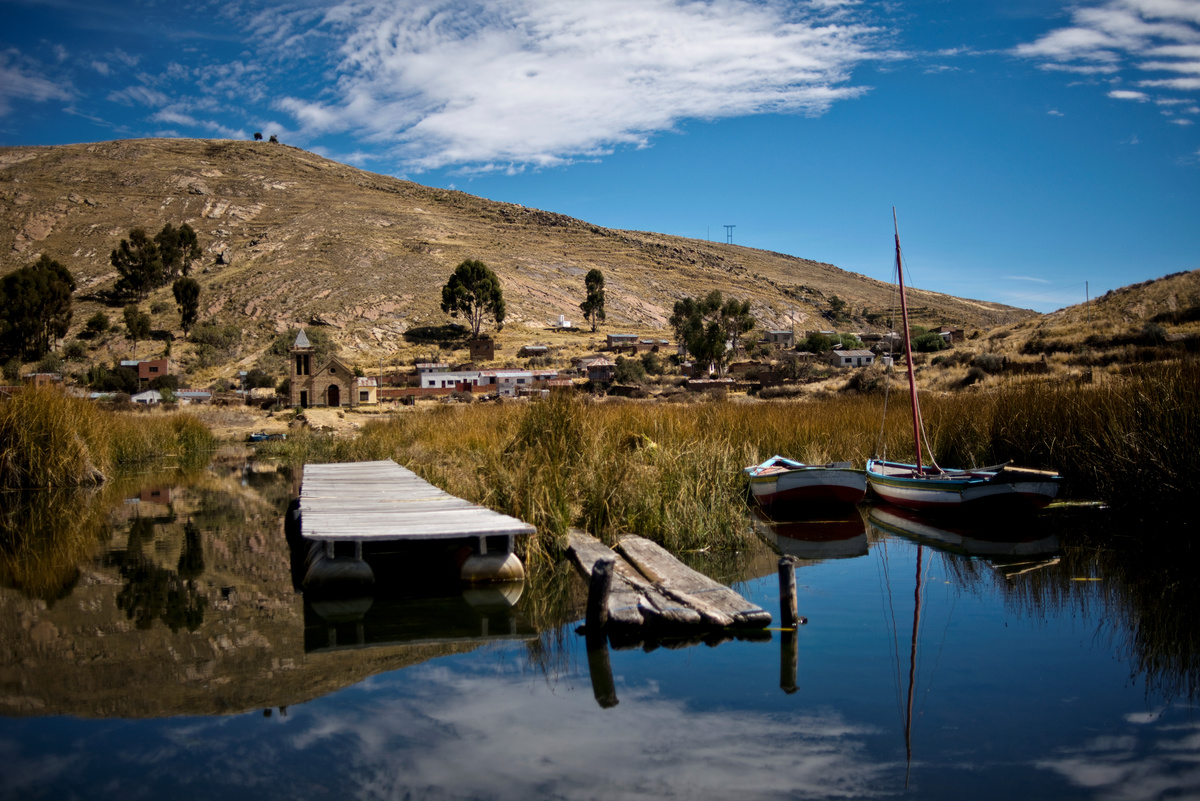
An entrance to Pariti island, Lake Titicaca, Bolivia, July 3, 2018. REUTERS/Manuel Seoane
The lake was once considered a deity by the pre-Columbian people that lived on its shores. As well as native plants and animals, such as the enormous endemic Titicaca water frog, it supports millions of human beings that live nearby – including in the rapidly expanding Bolivian city of El Alto, some 40 kilometers (25 miles) to the east.
The communities around the lake live off fishing, tourism, farming animals and local product "chuño" - potatoes that are laid out overnight to be freeze-dried.
Its high-altitude environment is of major interest to climate change researchers, too, because ecosystems of its kind are highly sensitive to global warming, making it an early-warning marker of changes happening more broadly to the planet.
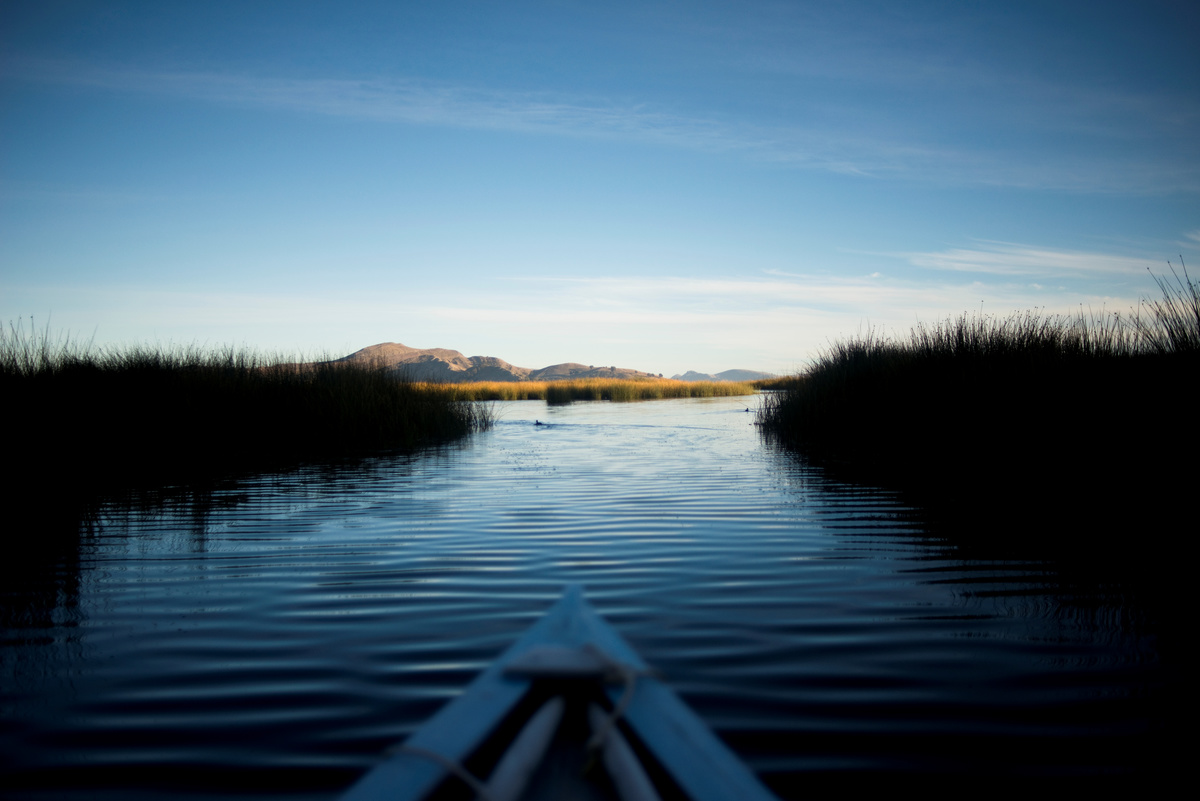
Oscar Limachi, 48, a member of the local Qewaya community who works as a tour guide on Lake Titicaca, rides his boat early morning in search of a fishing site near Qewaya village, Lake Titicaca, Bolivia, July 3, 2018. REUTERS/Manuel Seoane
Xavier Lazzaro, an aquatic systems specialist with French research institute IRD, says a shortage of water treatment plants, local industry, tourism and global warming are all affecting the lake, especially the smaller and shallower "Lago Menor."
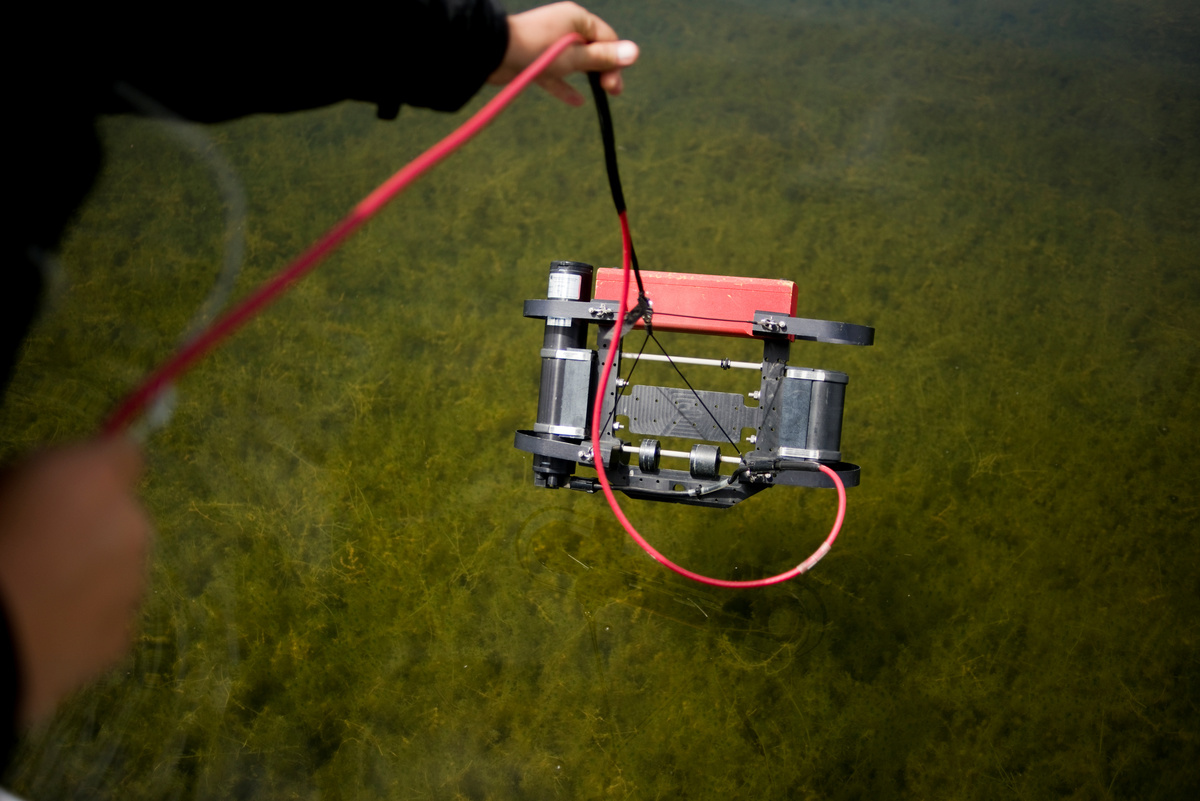
Lazzaro, who has been closely following pollutants in the lake for many years, is using a solar-powered buoy to do real-time measurements of water quality. He says there is not yet enough data to reliably illustrate the size of the problem.
Over time, a buildup of sediments, toxic blooms and climate change could cause the Lago Menor to become shallower and eventually dry up, he says.
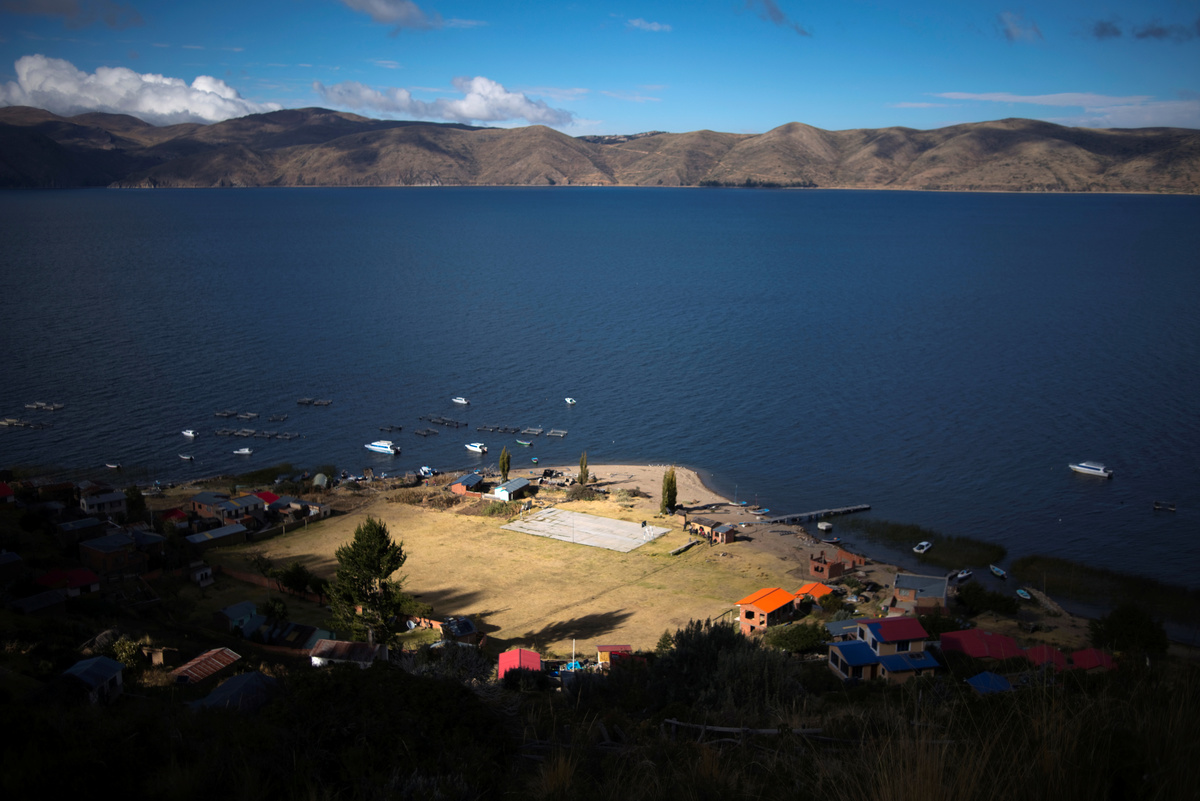
A view of the Koati community from a nearby hill on Koati Island, Lake Titicaca, Bolivia, June 8, 2018. Koati is the only Aymara community settled on the island and according to Koati Tourism Association, it is made up of 25 families and its total population does not exceed 100 people. REUTERS/Manuel Seoane RIES.
"This catastrophic scenario is not science fiction. Of course it will take decades, centuries to happen," he says, while driving through the high-altitude mountains overlooking the lake. "It will be faster if no action is taken."
The local governments have taken steps to try and clean up the lake, though it's a hard battle to win outright.
Oscar Limachi, 48, a member of the local Qewaya community who works as a tour guide on the lake, says that waste from El Alto and a lack of understanding about pollution risk changing the habitat forever.
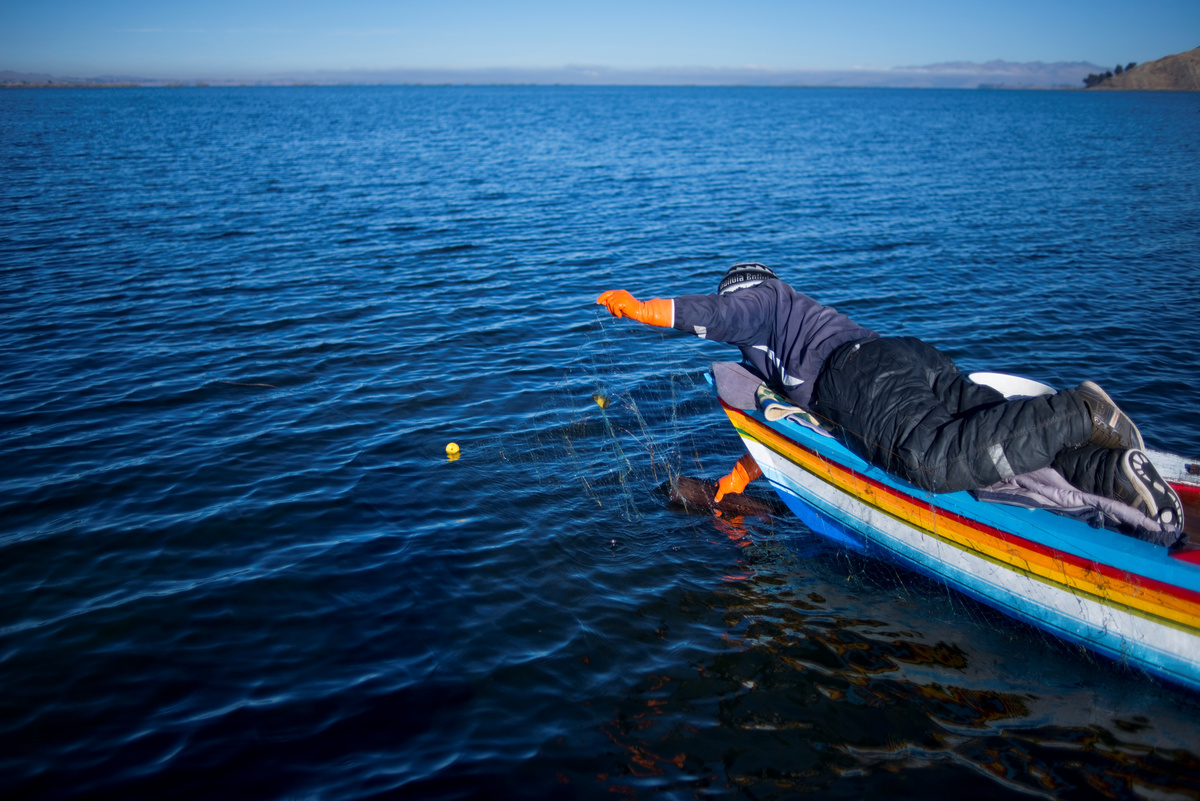
Oscar Limachi's son-in-law checks fish caught in his net near Qewaya village, Lake Titicaca, Bolivia, July 3, 2018. REUTERS/Manuel Seoane
"It is also our fault, people throw garbage and plastic everywhere, they don't understand this is polluting," he says, adding that many plant varieties in the lake had already vanished.
"Fish used to live, eat and lay their eggs amongst these plants. Now there are no plants, so no fish," he says. "We are afraid that someday the fish will disappear or migrate forever."
Algae floats in shallow water in Cohana bay, Lago Menor, Bolivia, January 30, 2019. REUTERS/Manuel Seoane
Photo essay here https://reut.rs/2lZvEm1
The photographer on this story was part of the 2018 Reuters photojournalism grant program.
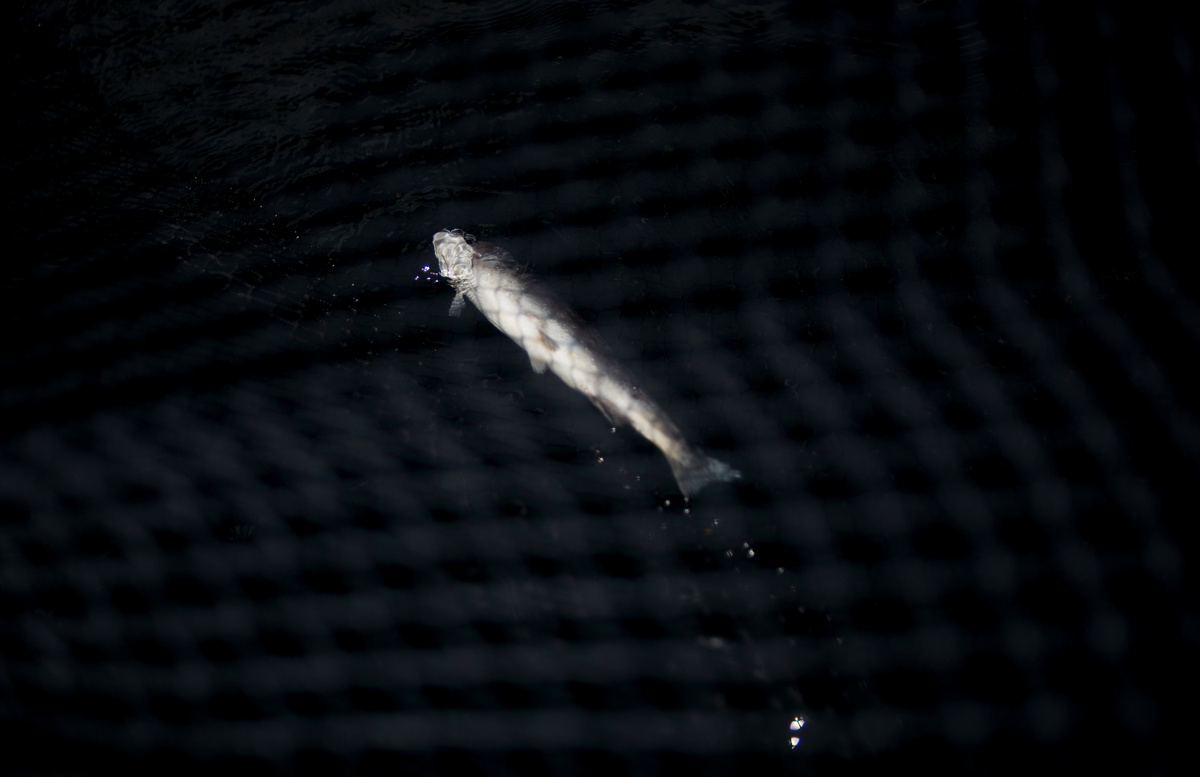
A dead trout floats inside a farm cage at a fish hatchery in Tiquina village, Lake Titicaca, Bolivia, May 08, 2019. REUTERS/Manuel Seoane
(Reporting by Manuel Seoane; Writing by Adam Jourdan; Editing by Rosalba O'Brien)
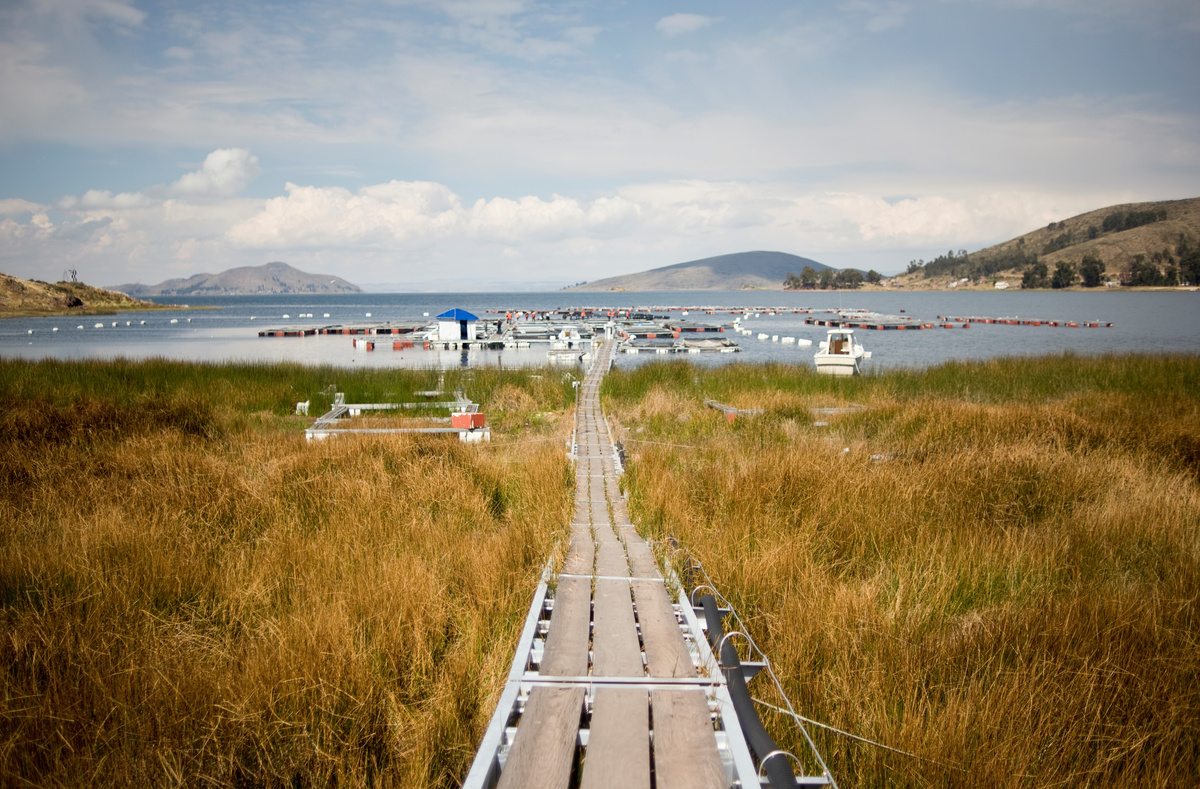
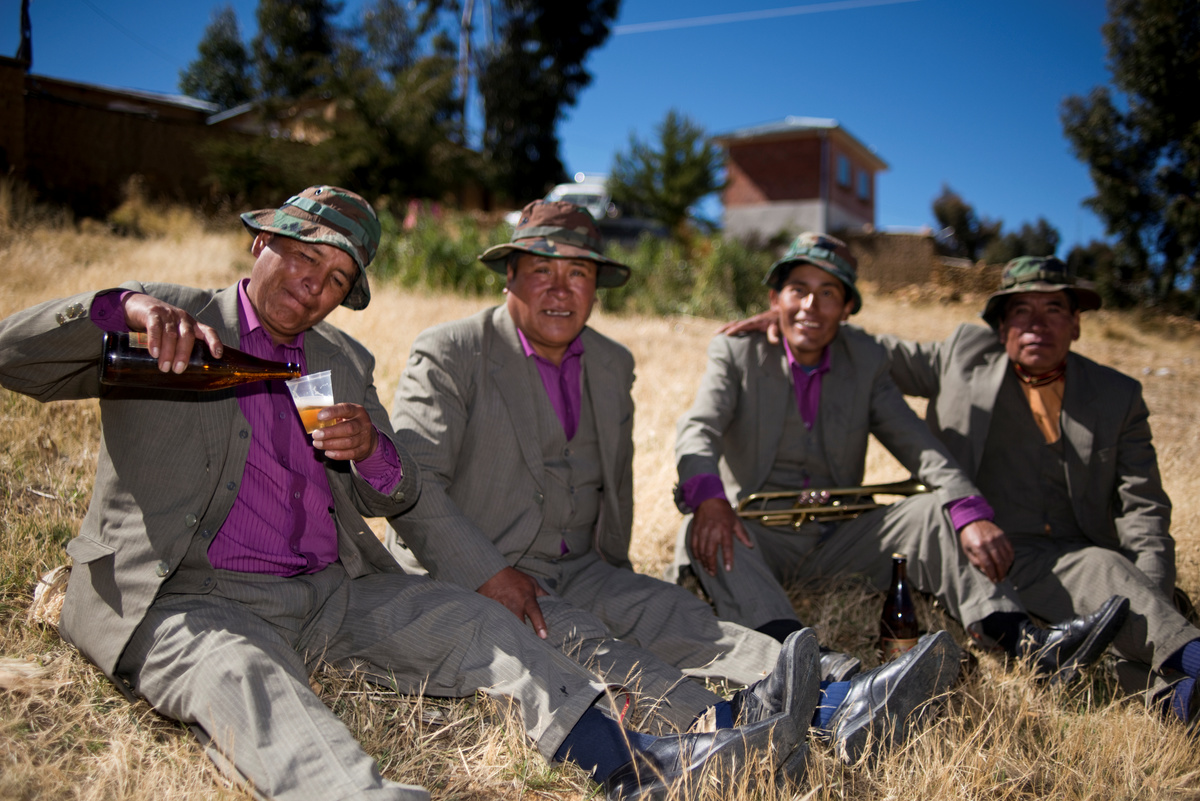
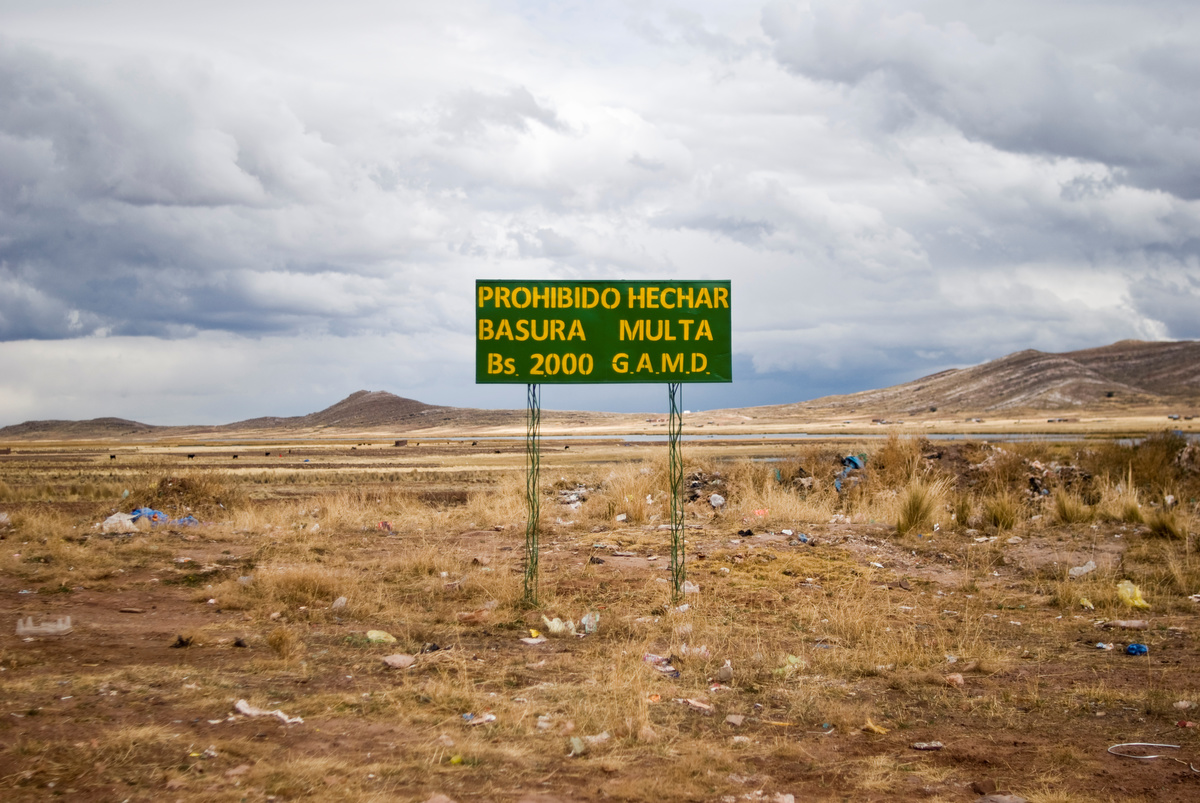
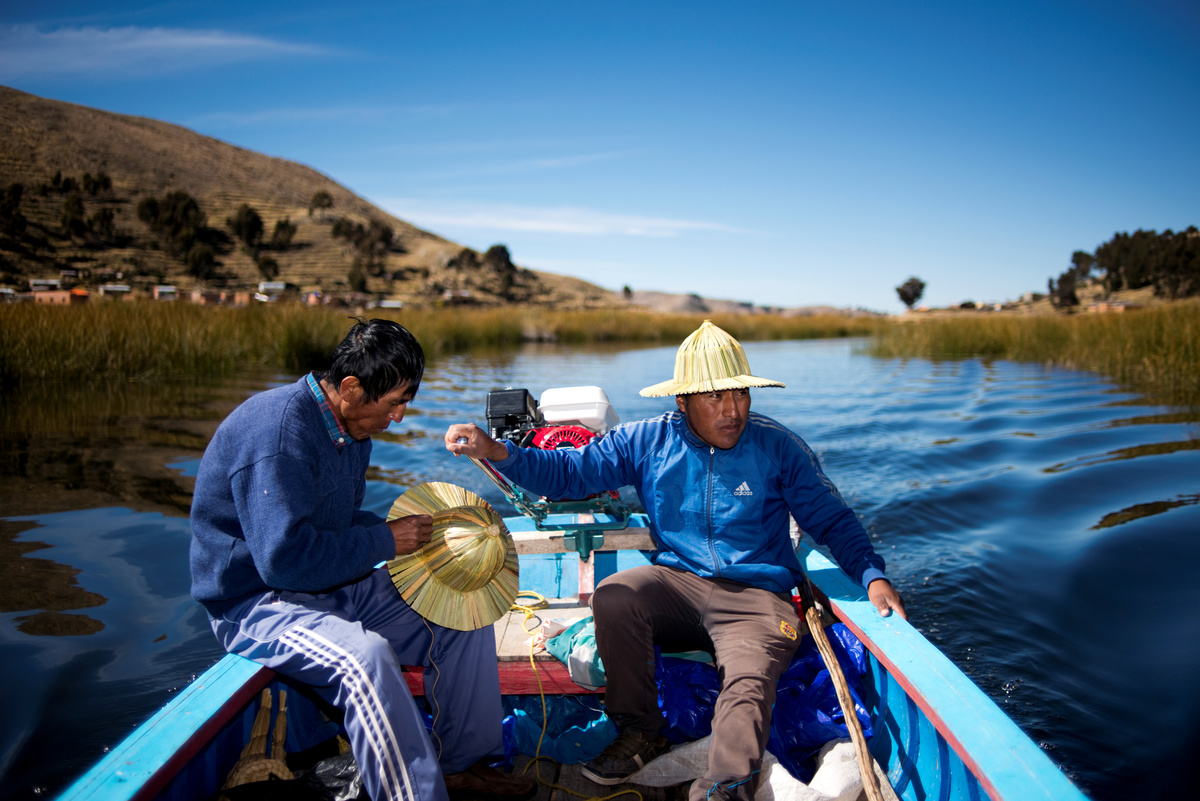
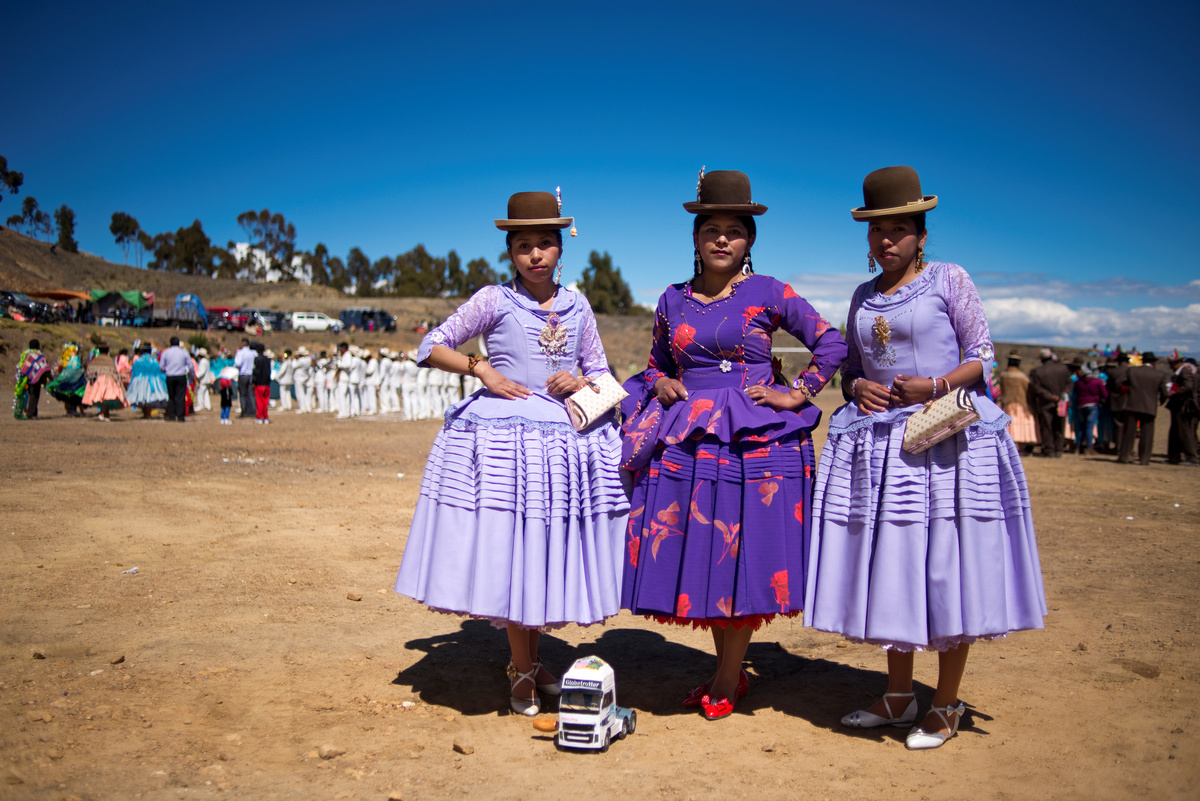
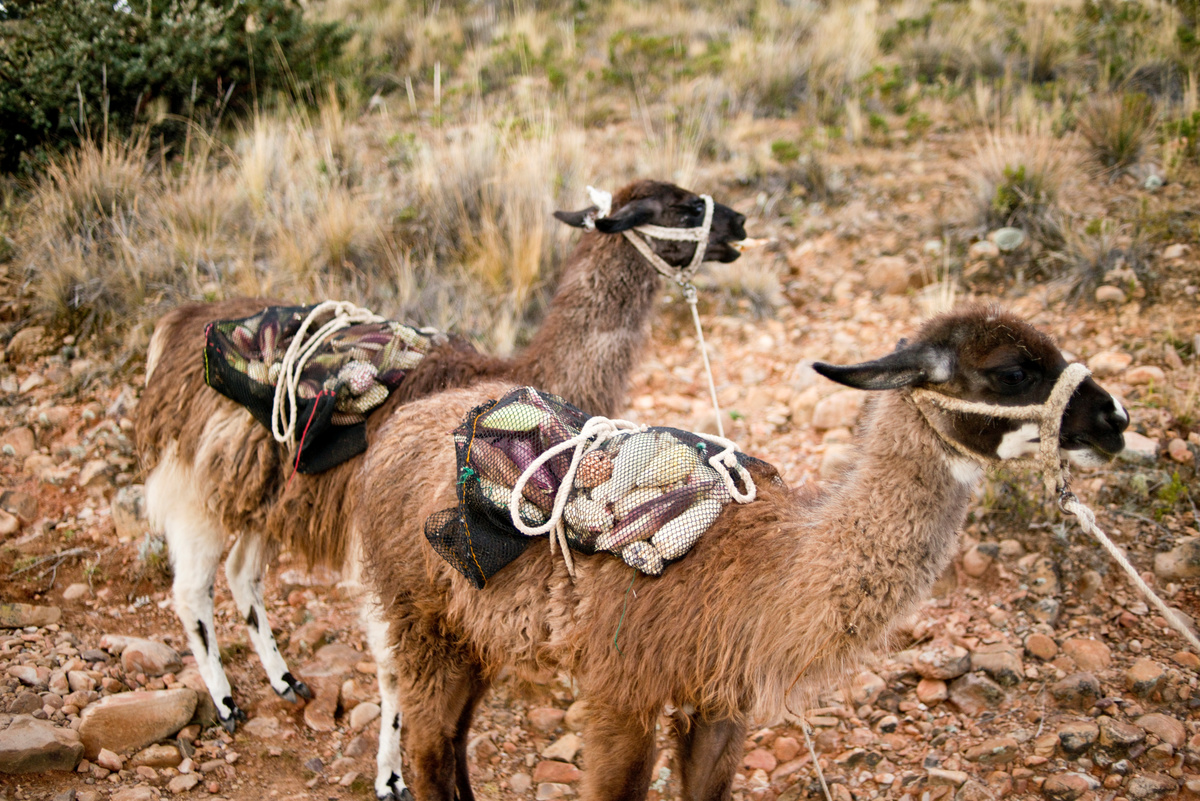
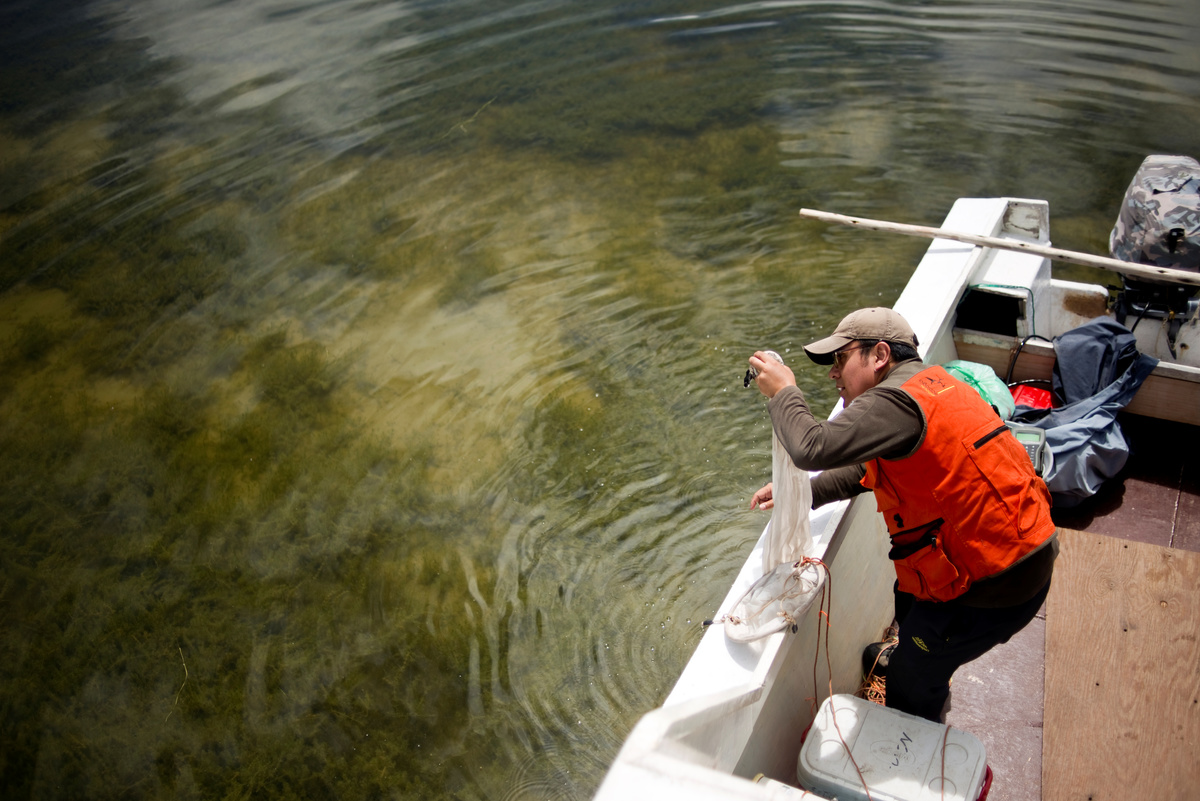
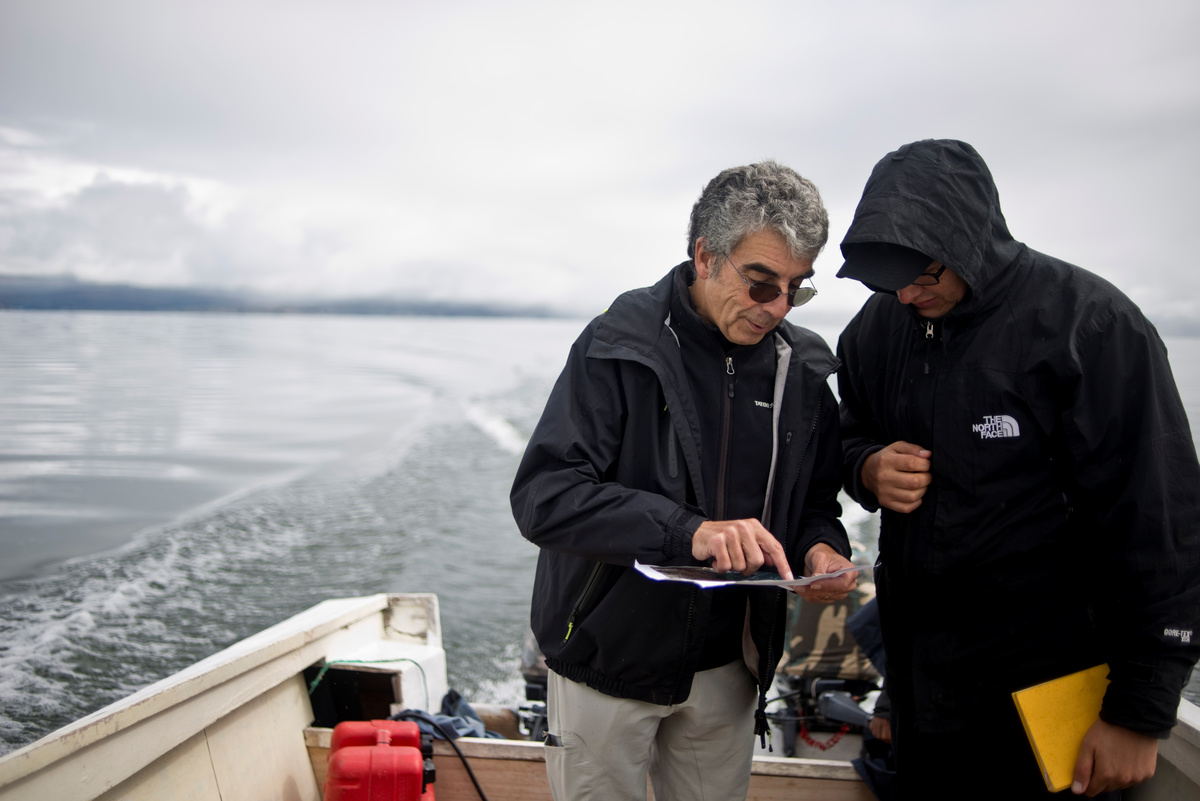
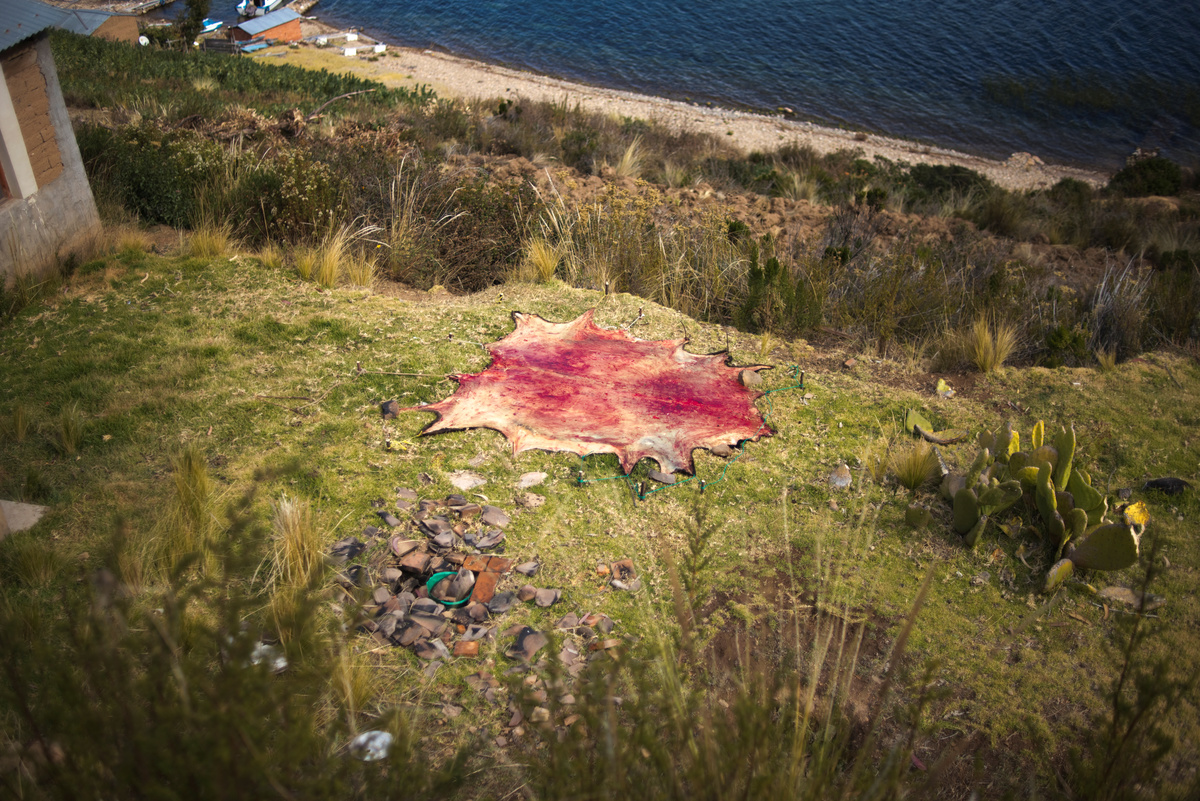
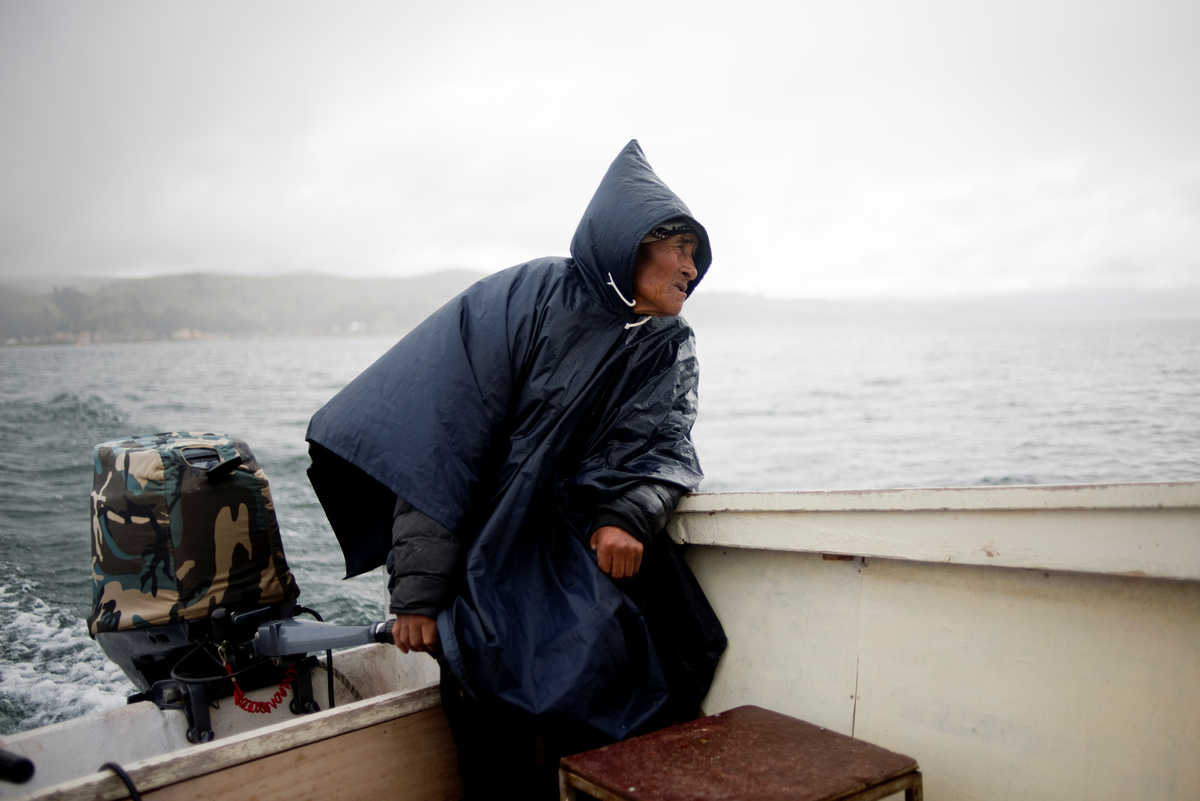
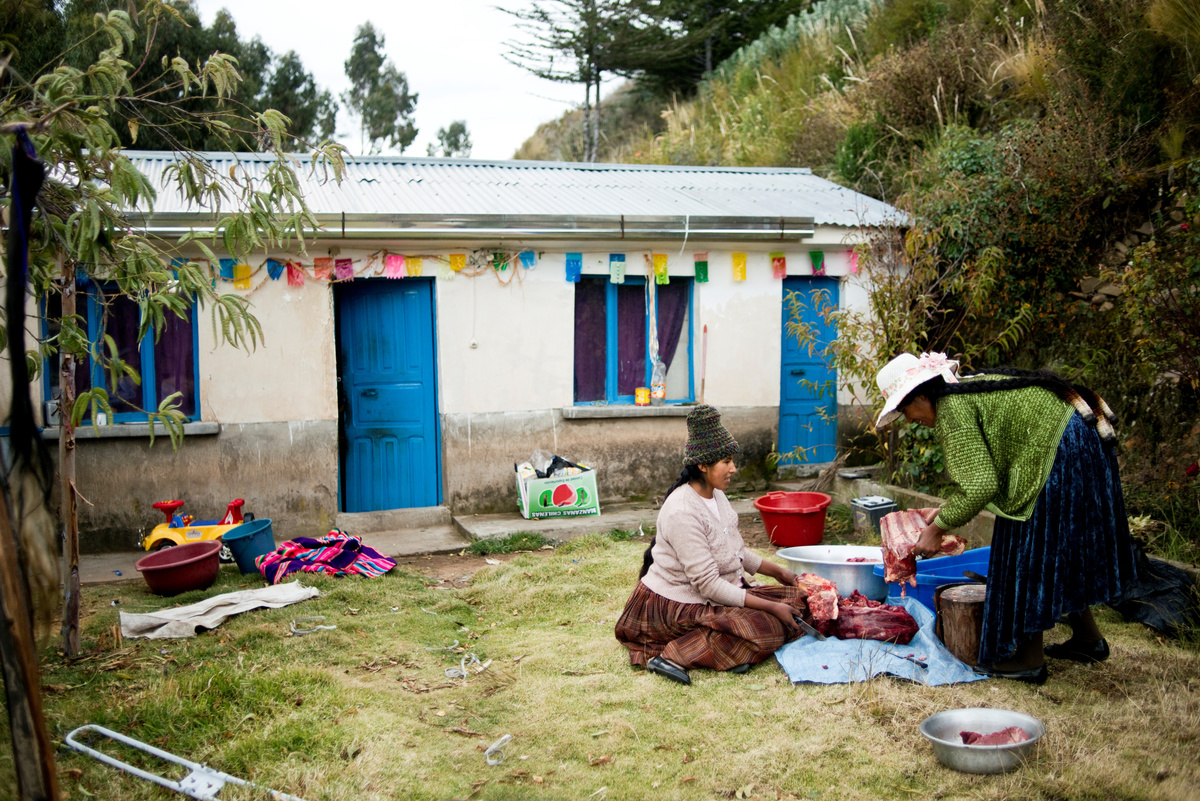
A fish hatchery is seen in Tiquina village, Lake Titicaca, Bolivia, May 8, 2019. REUTERS/Manuel Seoane Music players from Okola village drink during a celebration near Okola village, Bolivia, July 25, 2018. REUTERS/Manuel Seoane Roberto Mamani, a resident of Koati Island, rides his boat towards the island, Lake Titicaca, Bolivia, June 7, 2018. REUTERS/Manuel Seoane A sign that reads "2000 pesos fine for rubbish dumping" stands in Desaguadero village, Lago Menor, Bolivia, July 12, 2018. REUTERS/Manuel SeoaneOscar Limachi, 48, a member of the local Qewaya community who works as a tour guide, and his son-in-law ride their boat to Pariti island where they often make money as tour guides, in Qewaya village, Lake Titicaca, Boliva, July 3, 2018. REUTERS/Manuel Seoane Cholitas from Okola village pose for a photograph during a celebration near Okola village, Bolivia, July 25, 2018. REUTERS/Manuel Seoane Alpacas carry different types of corn on Koati Island, Lake Titicaca, Bolivia, June 8, 2018. Alpacas are common in the region and their wool is highly priced at market. REUTERS/Manuel SeoaneA partially-burnt card lies on the ground in Qewaya village, Lake Titicaca, Bolivia, July 4, 2018. REUTERS/Manuel Seoane A member of Professor Lazzaro's research team takes samples during a field trip in Cohana bay, Lago Menor, Bolivia, January 30, 2019. REUTERS/Manuel Seoane Rubbish is dumped on the outskirts of Desaguadero village, Lago Menor, Bolivia, July 12, 2018. REUTERS/Manuel SeoanePeople from Qewaya community celebrate the visit of Agence Francaise de Developpement (AFD) director Remy Rioux and Bolivian Minister of Environment and Water Carlos Ortuno in Qewaya village, Lake Titicaca, Bolivia, June 2, 2018. REUTERS/Manuel Seoane Professor Xavier Lazzaro, an aquatic systems specialist with French research institute IRD, shows a team member on a map where samples will be taken as they head to a polluted site in Cohana bay, Lago Menor, Bolivia, January 30, 2019. REUTERS/Manuel Seoane Animal skin is stretched and sun-dried to make leather on Koati Island, Lake Titicaca, Bolivia, June 8, 2018. REUTERS/Manuel Seoane A research boat driver steers towards a polluted area of the Lake Titicaca, near Huarina village, Bolivia, January 30, 2019. REUTERS/Manuel SeoaneWomen cut meat of a recently-killed animal to be cooked for a birthday party on Koati Island, Lake Titicaca, Bolivia, June 8, 2018. REUTERS/Manuel Seoane The island's only children pose for a photograph on Koati Island, Lake Titicaca, Bolivia, June 8, 2018. Despite their age difference, the three children are schooled in one classroom. REUTERS/Manuel Seoane A member of Professor Lazzaro's research team takes samples during a field trip in Cohana bay, Lago Menor, Bolivia, January 30, 2019. REUTERS/Manuel Seoane Rubbish floats on the shore where Lake Titicaca and Desaguadero river meet in Desaguadero village, Lago Menor, Bolivia, July 12, 2018. REUTERS/Manuel SeoaneIsaac Callizaya, 39, Environment and Culture Secretary of Puerto Perez, and his son read comics at his home in El Alto city, Bolivia, May 19, 2019. REUTERS/Manuel Seoane
Sign up to read this article
Read news from 100’s of titles, curated specifically for you.