Lagos 'go-slows' continue despite fresh measures – in pictures
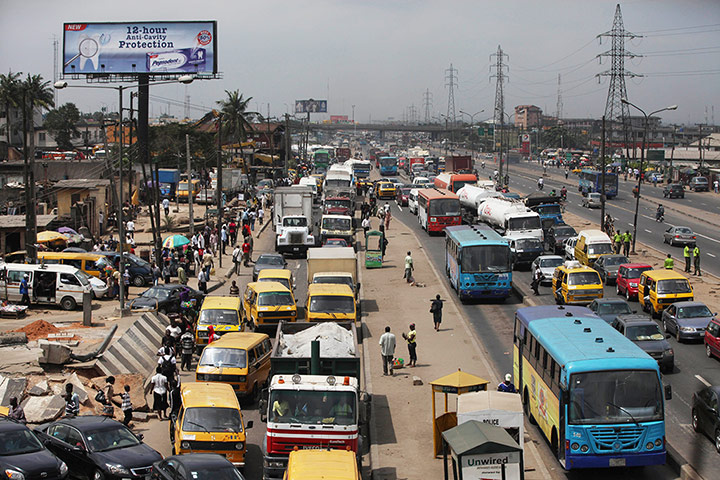
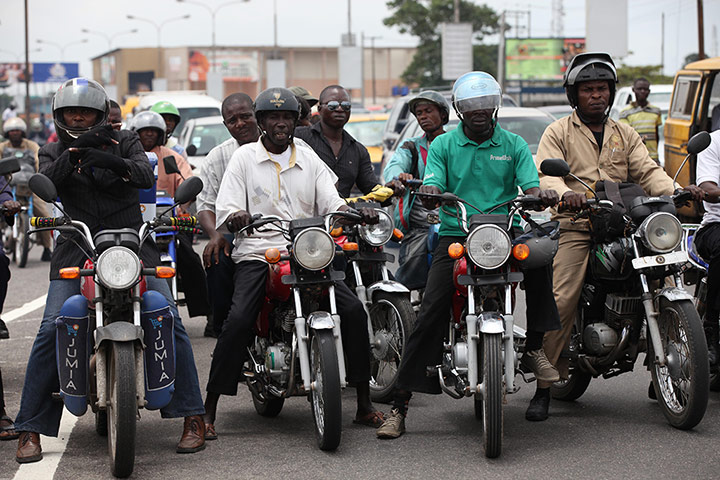
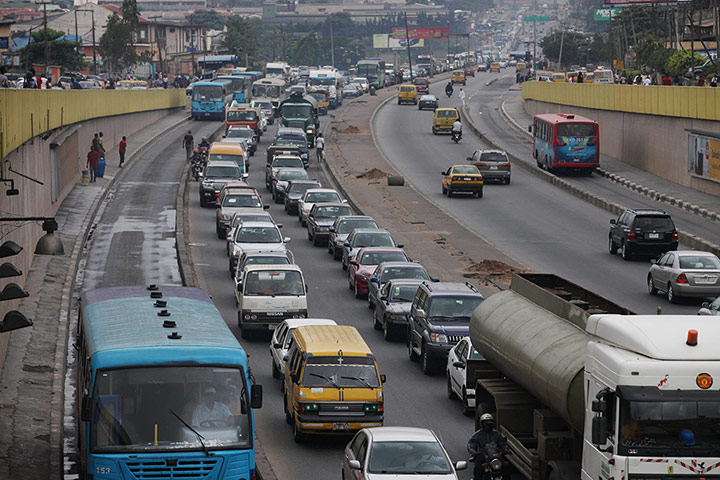
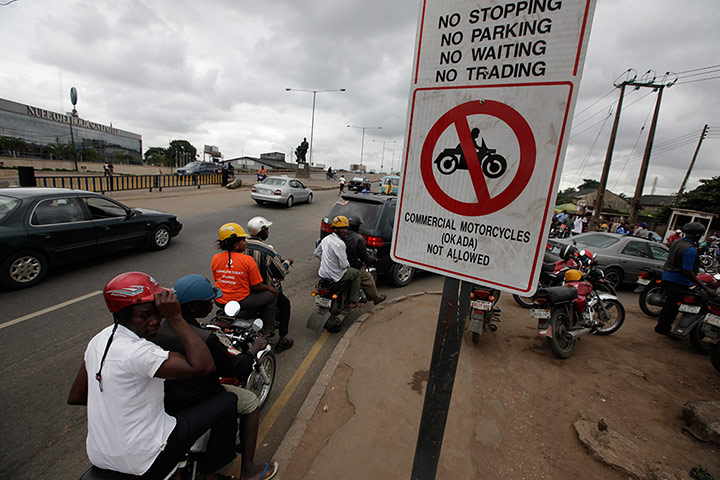
Traffic backs up along a busy road in Lagos, Nigeria, where drivers are hostage to a road network that hasn't been upgraded since the 1970s. The bustling metropolis, home to 17.5 million people, is predicted to overtake Cairo as Africa's most populous city in 2015. The traffic jams that Nigerians call 'go-slows' can strike at any momentPhotograph: Sunday Alamba/APMotorcycles on a busy road in Lagos. Known as okadas, after a now-defunct national airline, motorbikes can dart through gridlocked streets. They are the lifeblood of transport in Lagos, yet state governor Babatunde Fashola has banned them from all major arteries, including 11 highways, 41 bridges and more than 3,000 roadsPhotograph: Sunday Alamba/APTraffic builds up in one direction during a rush hour in September. Millions who live on the Lagos mainland commute to the islands, the financial hub connected by narrow slivers of land. When these motorways clog up at peak times, tailbacks can stretch for several hours, while heavy rains aggravate the problem. Many Lagosians simply acknowledge the heavy traffic as an aspect of daily life in a nation where transparency over oil revenues is oblique, people fear police harassment, and a livelihood comes only to the swift and fearless. Fashola's countermeasures have had an impact, but much remains to be done Photograph: Sunday Alamba/AP
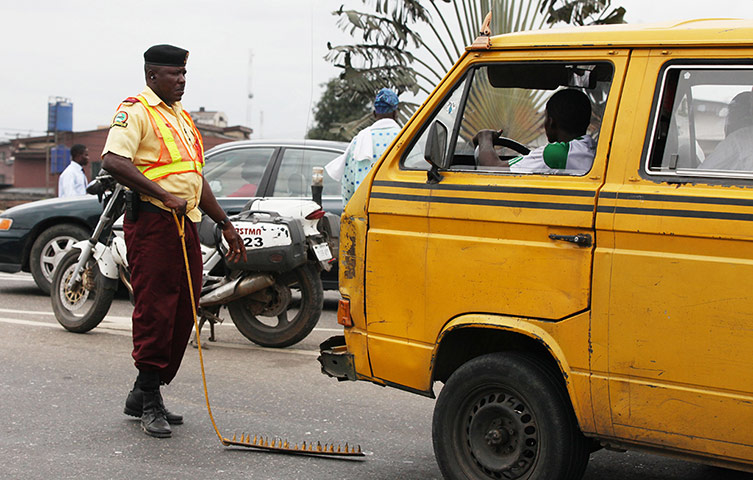
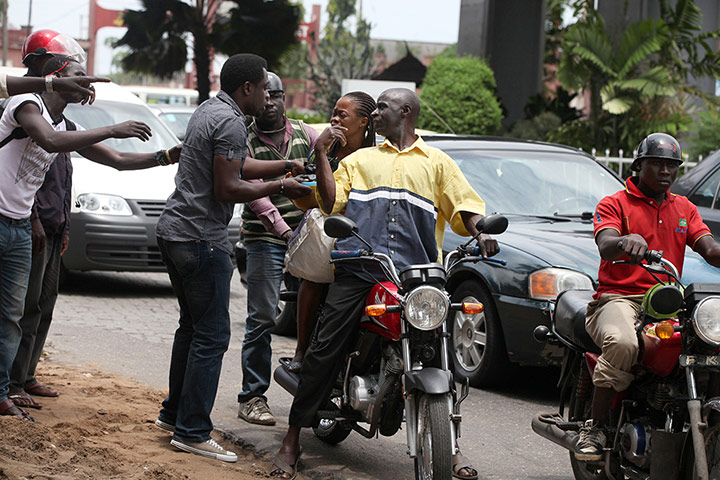
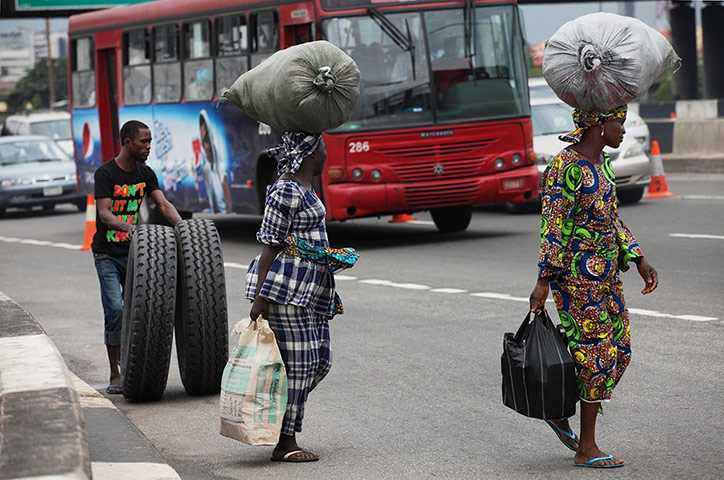
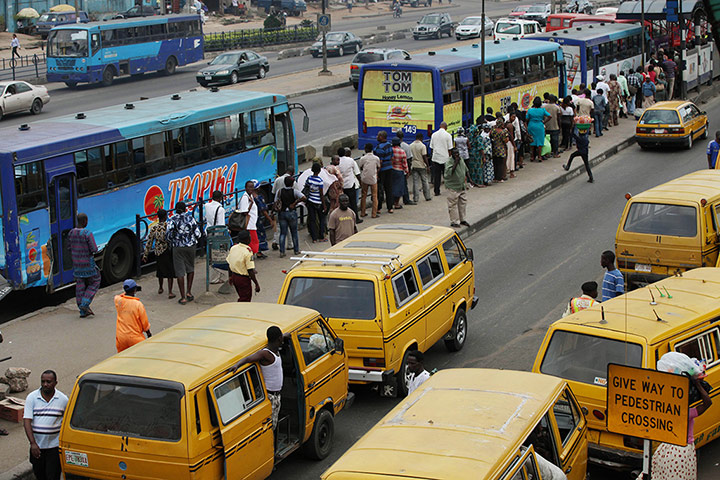
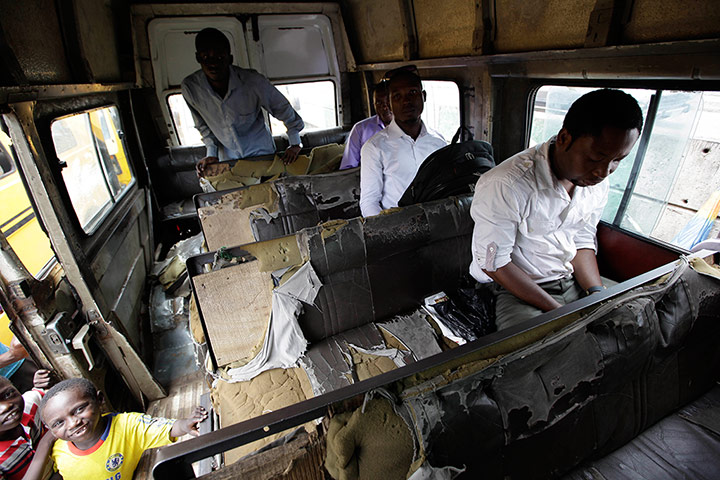
A traffic warden, holding a spiked device to stop fleeing vehicles, stops a van disobeying traffic laws in Lagos. More tough laws are coming, mandating fines of more than $200 – more than three months' income for most Nigerians – for eating, smoking or using a mobile phone behind the wheel. But the appearance of the spiked metal rods, called iron, is frequently the precursor to a spot of haggling for a bribePhotograph: Sunday Alamba/APOkadas have been progressively banned in many parts of Lagos but remain a cheap, quick way to negotiate the city’s clogged roads. Official statistics are unavailable, but the clampdown on okadas has cut off tens of thousands of drivers from their employment and denied the metropolis a key source of transport. Left with no reliable alternative means of getting around, Nigerians who cannot afford other modes of transport are angry. Others see Fashola's reform as a major step towards improved road safetyPhotograph: Sunday Alamba/APA driver plying a route in Lagos outside his designated area is confronted by motorbike taxi officials. Motorbike drivers are strictly controlled by their own co-operatives, who impose their own internal laws. Disobeying rules, for instance by driving outside assigned 'territories' – which are carved up by the constantly warring associations – causes frequent arguments between the driversPhotograph: Sunday Alamba/APWomen carrying large parcels, and a man rolling tyres, walk along a busy road in Lagos. The ban on motorbikes has forced many more people to resort to walking across the sprawling city as their only affordable means of getting aroundPhotograph: Sunday Alamba/APA lengthy queue boards a bus in Lagos. Though the state government introduced larger buses to reduce the number of small yellow (danfo) buses clogging the city, many smaller buses that should have been phased out continue to take to the roadsPhotograph: Sunday Alamba/APPassengers sit in the typically shabby interior of a commercial bus in Lagos. The buses, which are often packed to the rafters, swerve dangerously through the city, with a conductor – precariously stationed at the open door – calling out destinationsPhotograph: Sunday Alamba/AP
Sign up to read this article
Read news from 100’s of titles, curated specifically for you.