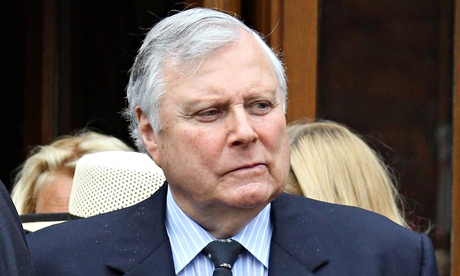
The Ladies’ Golf Union has questioned the claim of Peter Alliss that equality laws have “caused mayhem” in the sport. The LGU also contested the veteran BBC golf commentator’s assertion that it had “lost 150,000 members since equality for women came in”, admitting that membership had fallen in the past four years but by 30,000.
Alliss had claimed in a Radio Times interview that attempts to give women equal rights had “buggered up the game for many people” because some women now have to pay more to play, adding: “I’m told the Ladies’ Golf Union has lost 150,000 members since equality for women came in.”
However, Sam Burton, the finance director at the LGU, believes the fall in membership is unrelated to equality legislation. “Obviously there is a decrease of 30,000 members in four years,” she said.
“He [Alliss] is making a point, and I’m sure it’s got some validity, but personally I don’t think that explains the falling numbers. I think there are a number of other reasons for that. It’s not just ladies that have seen a drop. There is a decrease in the men’s figures as well. People have more pressure on their time – golf takes a long time. There are lots of reasons.
“Maybe for some [women] having to pay a higher membership fee is a reason but I don’t think that’s the majority. I don’t think that’s the real reason why fewer women are playing golf.
“In 2010 we had 189,000 members and in 2014 we had 159,000. I spoke to him [Alliss] three weeks ago actually, he’s a great ambassador for the game and supporter of ladies’ golf, but I don’t know what figures he’s referring to. They certainly don’t tally up with any of our figures.”
Figures from Sport England’s active people survey show that recreational participation in golf has fallen significantly in recent years, both among men and women. In 2012 the number of people playing the game once a week was 850,000 but the same figure in 2014 was 730,000.
Between October 2013 and October 2014 626,000 men played the game once a week, with the equivalent figure for women 104,000. Both these numbers fell from the previous year but not as drastically as had been the case from 2012 to 2013.
“A lot of clubs had equal rights before 2010,” said Burton. “We are concentrating on making the game of golf more attractive, to get more people in. It needs to be more accessible and appealing. We have to compete better with other sports and recreational activities.”
In September 2014 the Royal & Ancient voted to allow women to become members at St Andrews for the first time. That followed months of pressure that came to a head during the 2013 Open at Muirfield – a venue that still permits only male members – when the outgoing chief executive of the championship-organising R&A, Peter Dawson, was questioned on the subject. He was also secretary of the separate St Andrews club.
The Muirfield controversy followed on from the Equality Act of 2010, which outlawed discrimination by associations and clubs against people because of their gender, extending the previous legislation that related to discrimination with regards to race, disability and sexual orientation.
Alliss, 84, had told the Radio Times: “There’s been a hell of a row because four golf courses that hold the Open didn’t have women members. The equality thing is a great part of golf. Equality for women: a few people battled away to get it, they got it, and they have buggered up the game for a lot of people.”