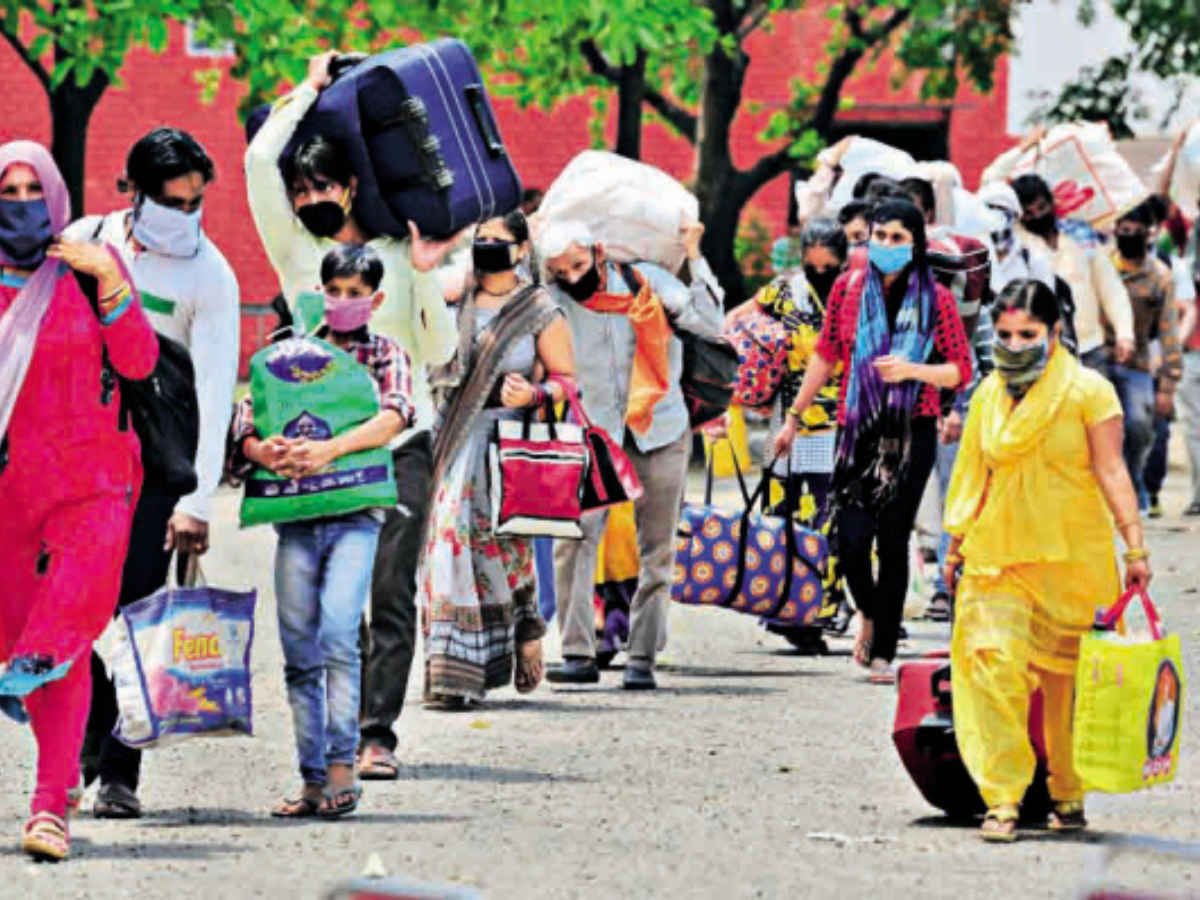
CHANDIGARH: Psychosocial support services for migrant workers at home shelters is a must, says a study. It says that lack of privacy and security have caused psychological problems among migrant workers lodged in home shelters during the pandemic induced lockdown.
The model study was conducted by a group of experts, including Dr B S Chavan, Dr Priti Arun and Dr Gurvinder Pal Singh of the department of psychiatry, Government Medical College and Hospital, Chandigarh.
A concise, yet comprehensive, 12-step model was prepared for community psychosocial intervention for migrant workers in the shelter home. The study was aimed at designing and utilising a model for psychosocial intervention for migrant workers during the extended lockdown and to identify basic problem areas. The study stated that the human suffering and uncertainty caused by the pandemic was much more pronounced among migrant workers.
To conduct the study, experts took samples from 61 migrant workers from various states lodged in a shelter home at Maloya village on the outskirts of Chandigarh. Since no specific model was available to handle the psychosocial issues of this specific population, an attempt was made to prepare a model using Maslow's hierarchy of needs, the study said.
According to the study, basic problems faced by migrant workers during the lockdown included lack of articles of basic needs, lack of privacy, lack of security, medical needs, absence of safe place for valuables, lack of trust, no contact with families, safety of their family and society, self-esteem, support from government agencies, support for SOS - saviour drugs or medicines.
Components of intervention to redress these problems and give psychosocial support were regular supply of food and water, a comfortable place to sleep; provision of privacy by making small partitions as they may not know each other, security arrangements - particularly for women and small children. Medical needs were attended to on SoS basis. Since they were returning home and were carrying valuables in all likelihood, lockers were arranged.