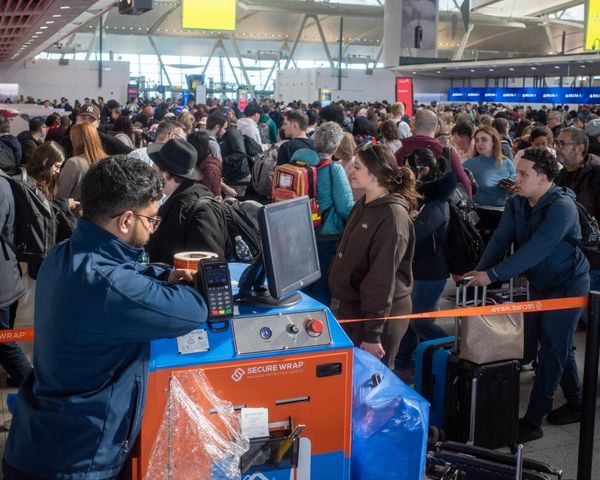
The effects of the spread of the new coronavirus on the Japanese automobile industry have become more serious. Nissan Motor Co.'s plant in Fukuoka Prefecture was temporarily shut down on Friday after parts from China failed to arrive. This is the first time that a car factory in Japan has stopped due to a viral outbreak. But with restrictions on the movement of people and products across China, there is an increased risk of supply chains being disrupted.
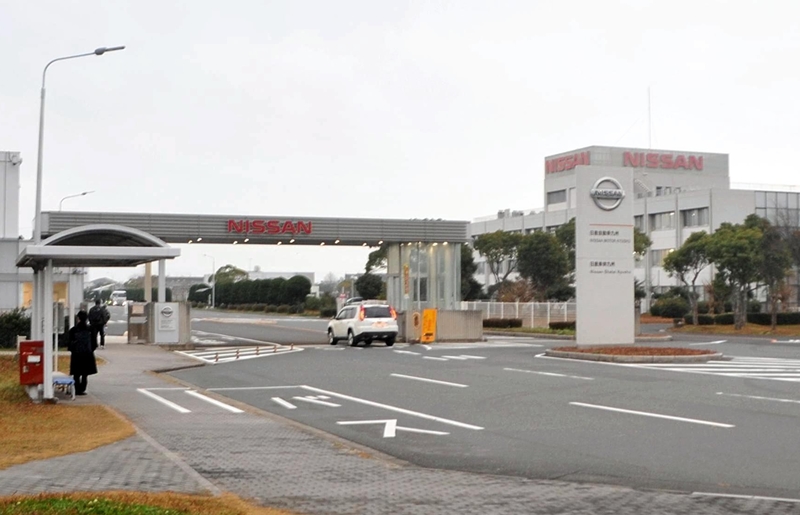
On Friday, Nissan Motor Kyushu Co., a subsidiary of Nissan Motor Co. based in Fukuoka Prefecture, stopped all two production lines of the Serena minivan and the Rogue sports utility vehicle. This stoppage was evident that day at the factory's front gate -- a place packed every morning with a long line of workers -- as only a few individuals stood awaiting entry. Nissan Kyushu will also shut down some or all of its production lines again on Feb. 17 and 24.
Automobile parts at the plant were in short supply because Chinese ports had become stricter in checking exports and not enough parts arrived at the factory.
Nissan has been trying to cut costs by sharing parts with its Chinese plants, which accounts for about 30 percent of global sales, so it is also using Chinese-made parts in Japan. However, these days, the effects of standardization and efficiency in order to improve cost competitiveness have become a disaster.
The aftermath of the temporary suspension of completed vehicle plants will also spread to parts makers. A manufacturer in Fukuoka Prefecture, which produces door parts and others, halted a section of its production line appertaining to Nissan Kyushu.
In many locations in China, except for Hubei Province where the number of infected people is high, business activities resumed on Feb. 10, but it is expected to take some time for production volume to return to the level it was before the Lunar New Year holiday.
According to the China Association of Automobile Manufacturers, of the 183 major plants, only 59 percent, or one-third, had resumed operations or started preparations for resumption as of Feb. 12. And in Hubei Province, Japanese automakers are not the only ones forced to close plants and suspend production, General Motors Co. is also facing the same issue.
After the Great East Japan Earthquake in 2011, Japanese automakers accelerated moves to diversify risks by, for example, making the same parts at multiple plants. However, in China, they have many joint ventures with local companies. "We don't know all our suppliers," a Japanese automaker official said.
Additionally, Renault Samsung Motors, a unit of Renault SA, has suspended operations at its plant in Busan, South Korea, due to difficulties in procuring parts from China. So now, automakers in Japan and around the world are being forced to walk a tightrope.
Read more from The Japan News at https://japannews.yomiuri.co.jp/